Destinations › Tokyo › Roppongi & Tokyo Tower
Tokyo Tower: Tokyo's Orange Landmark
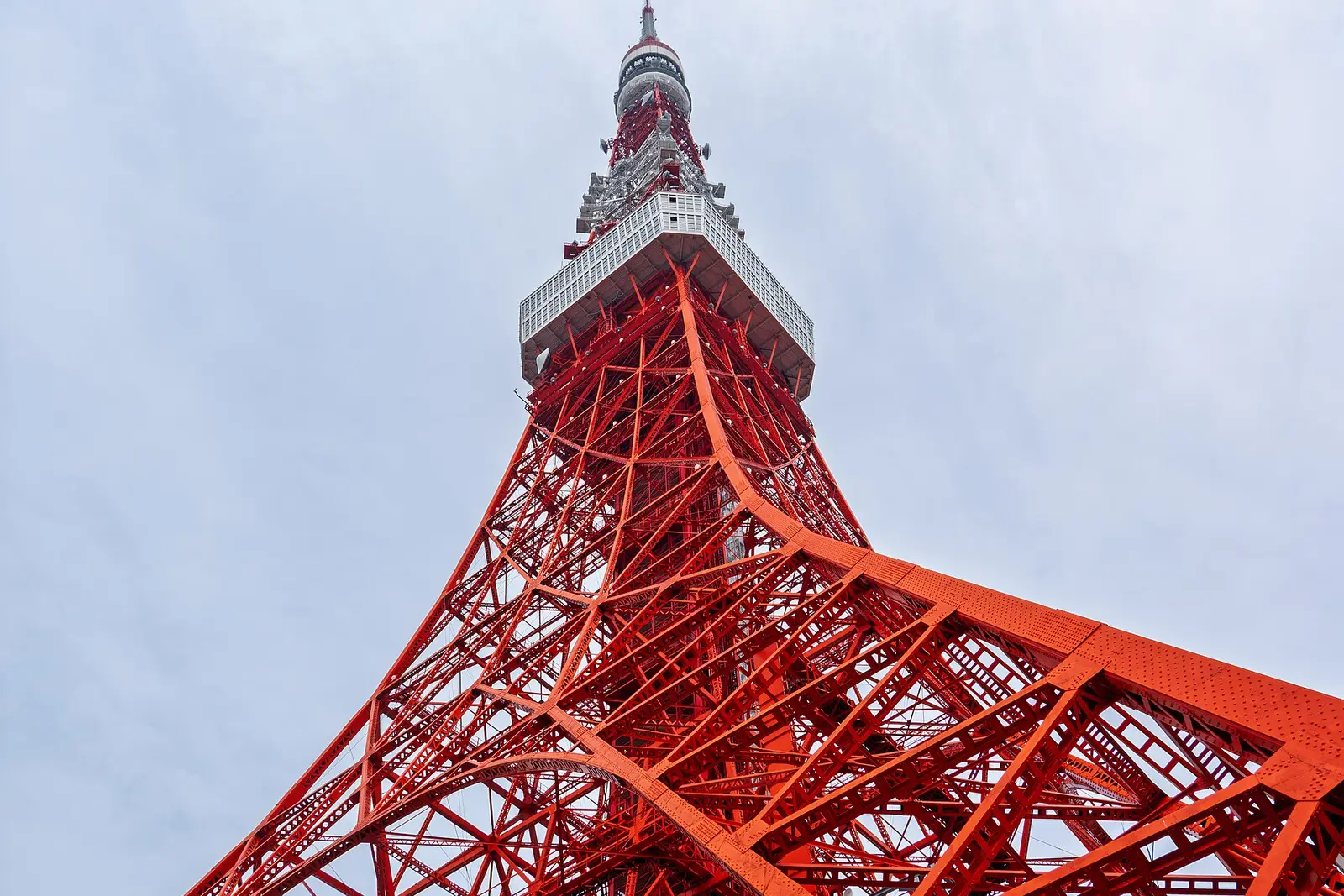
Look at the skyline from almost anywhere in central Tokyo, and you will spot a tall orange and white tower. It is Tokyo Tower, built in 1958 and still one of the best places in the city to see the lights come on.
Why Tokyo built a tower
Japanese television began in 1953, and by the late 1950s Tokyo had a problem: every broadcaster was putting up its own mast. The city wanted one tall tower that all of them could share. Tokyo Tower was finished in 1958, and at 333 meters it was the tallest freestanding tower in the world at the time. The design follows the Eiffel Tower in Paris, but this one is taller and painted in orange and white. For more than fifty years it was the tallest structure in Japan, until Skytree passed it in 2012.
The tower today
In 2012, Tokyo Skytree opened in the east of the city and took over most television broadcasting. Tokyo Tower is still an active broadcasting facility, though, and it has stayed a favorite landmark. It is lit up every night, and the lights are part of the view across the city.
At the base is Foot Town, a building with shops, cafes and restaurants. This is a good place to spend a few minutes before or after your ride up.
Main Deck or Top Deck?
There are two observation levels, and most visitors choose one of them. The Main Deck is the simple option. The Top Deck costs more, but it takes you much higher.
The Main Deck is at 150 meters. It has wide windows on all sides and a "look-down" window set in the floor, so you can see the street far below. A ticket costs ¥1,500 for adults. The deck is open from 9:00 am to 11:00 pm, and the last entry is at 10:30 pm.
The Top Deck Tour takes you to 150 meters and then up to 250 meters. The upper deck is quieter and the view is wider. On a clear day, you can see Tokyo Skytree and, if you are lucky, Mt. Fuji. It costs ¥3,300 when you book online and ¥3,500 at the counter. It is open from 9:00 am to 10:45 pm, with the last entry at 10:15 pm. The tour can be canceled in bad weather.
There is also a small group option called the Tokyo Diamond Tour, which adds a lounge. It is limited to 70 guests a day, with seven departures between noon and 6 pm, and costs ¥7,000.
Hours are different on some days, and prices can change, so check the official website before you go. Children and high school students pay less on every ticket. For example, a Main Deck ticket is ¥1,200 for high school students and ¥900 for children in elementary and junior high school.
Tips for visiting
Pick your time. Late afternoon is a good choice: you see the city in daylight, watch the sunset, and then see it turn into a field of lights.
Try the stairs. On weekends and holidays, you can walk up the stairs to the Main Deck instead of taking the elevator. It is about 600 steps. The outdoor stairs close in bad weather.
Book the Top Deck online. It is the only ticket that costs less on the website than at the counter.
Getting there
Tokyo Tower is a five-minute walk from several subway stations: Onarimon on the Mita Line, Kamiyacho on the Hibiya Line, and Akabanebashi on the Oedo Line. From JR Hamamatsucho Station, it is about 15 minutes on foot.
Nearby
The tower stands beside Shiba Park, and the old temple of Zojoji is right next to it. Many people take their photo of the tower from the temple grounds. In the other direction, Azabudai Hills is a short walk away, and Tokyo Midtown and Roppongi Hills are a short subway ride away.
More on Roppongi & Tokyo Tower
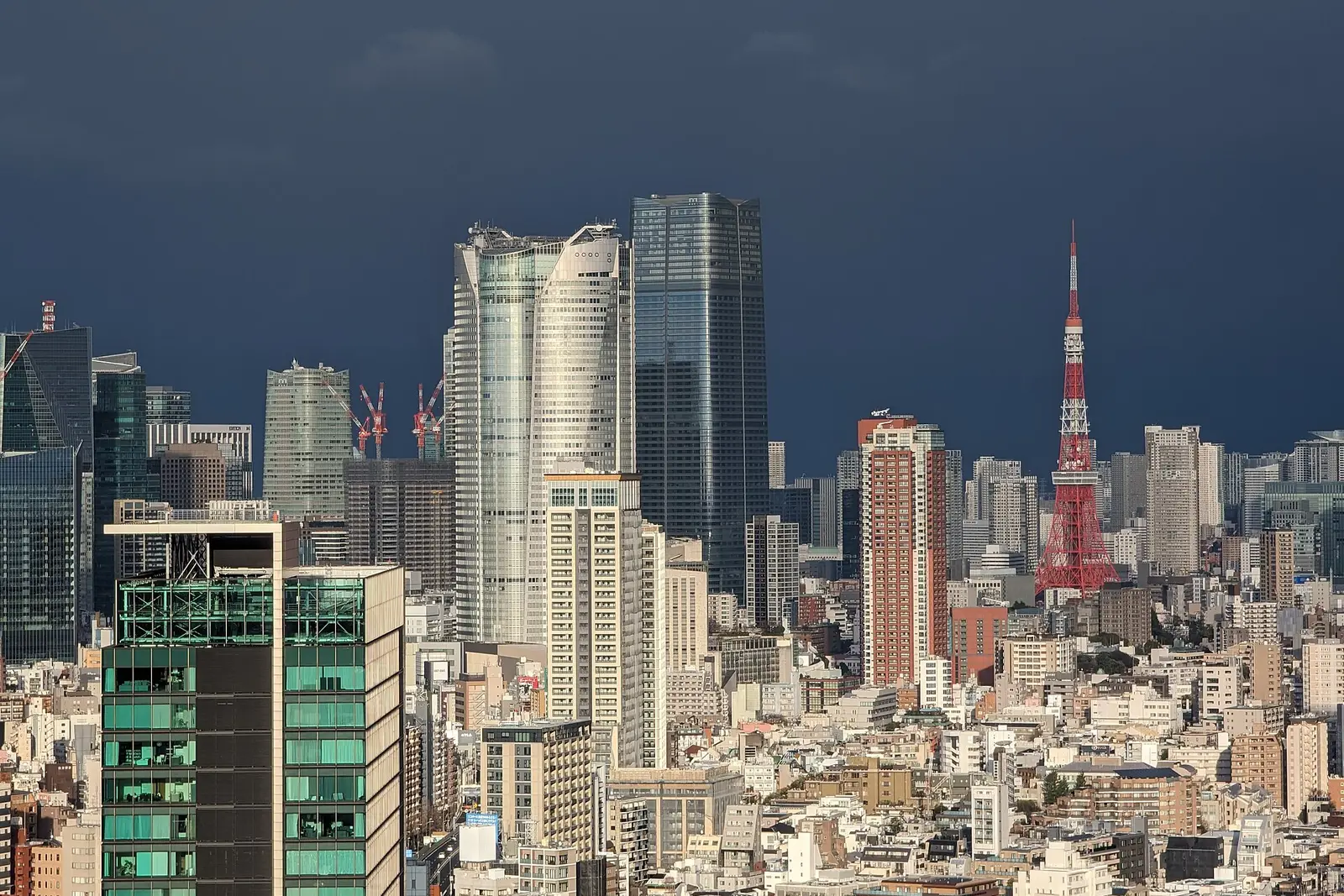 ROPPONGI & TOKYO TOWER3 min read
Roppongi Hills and Tokyo City View
A shopping and dining complex around a 54-floor tower, with a city-wide view from the 52nd floor.
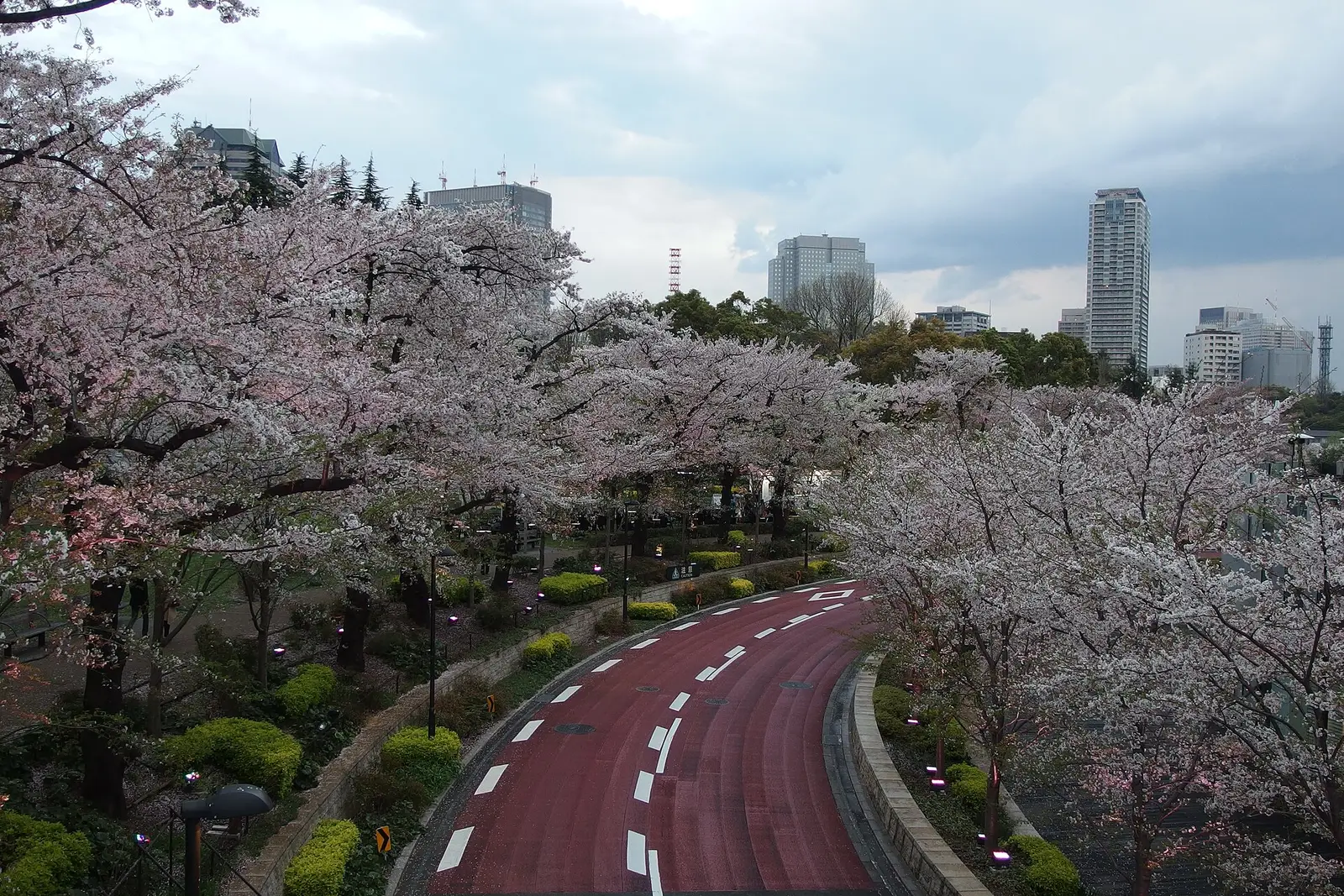 ROPPONGI & TOKYO TOWER3 min read
Tokyo Midtown: Gardens, Art and Shops
A shopping complex built around a large garden, with cherry trees, museums and a design gallery.
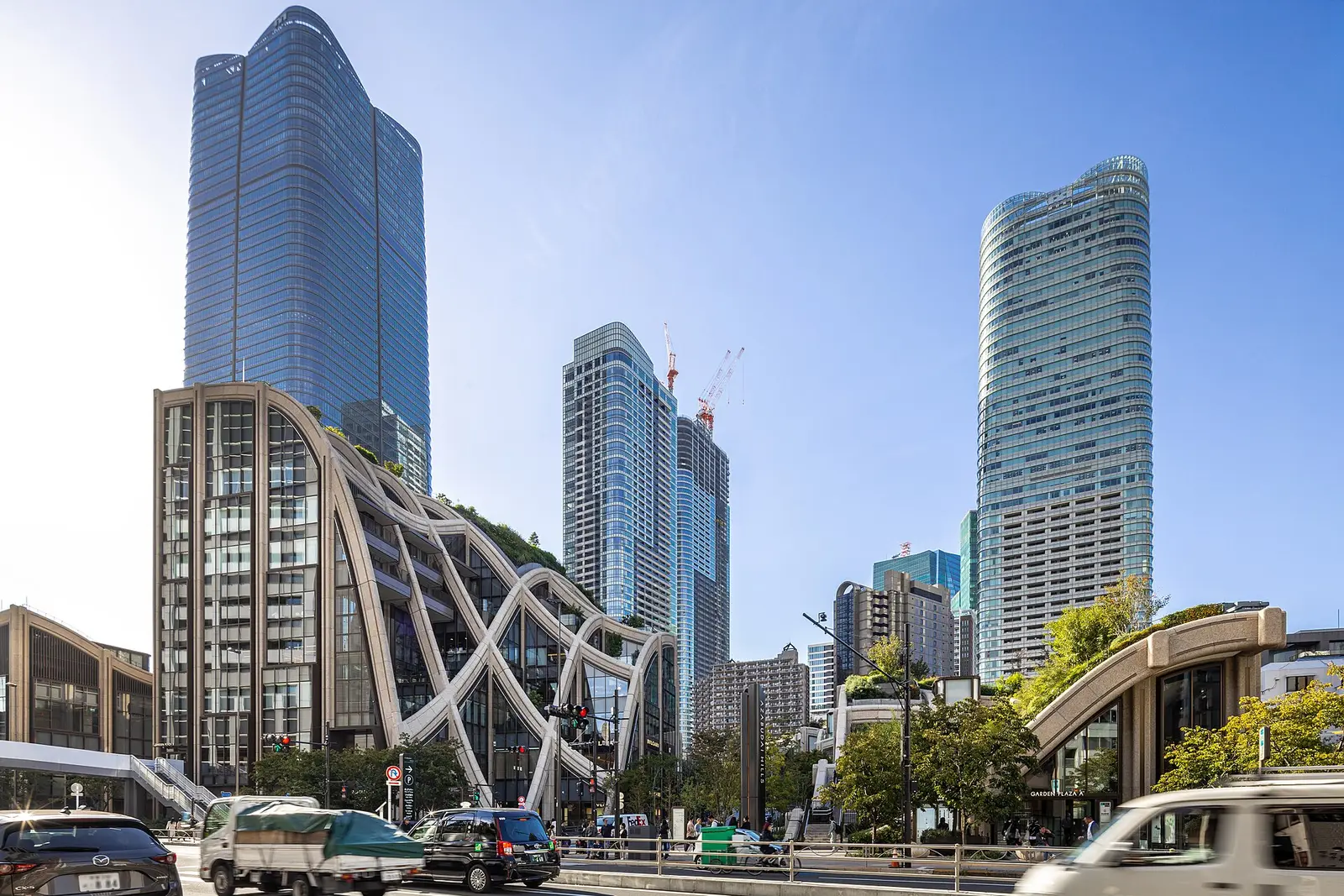 ROPPONGI & TOKYO TOWER3 min read
Azabudai Hills: A Town Wrapped in Green
Tokyo's new complex of shops, gardens and a food market, a few minutes from Tokyo Tower.