Destinations › Tokyo › Shibuya
Myth of Tomorrow: The Lost Mural in Shibuya Station
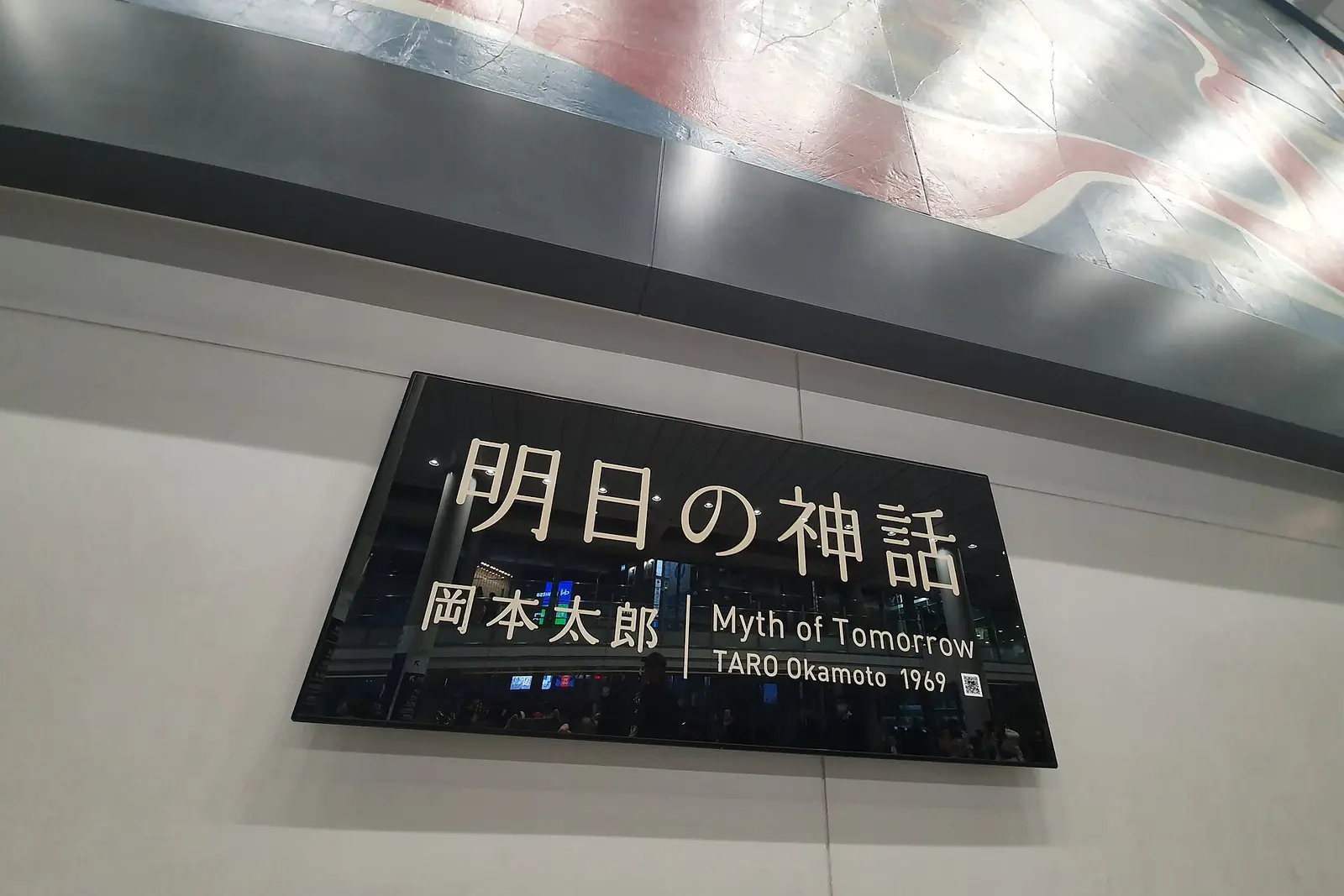
Thousands of commuters walk past it every hour without looking up. Inside Shibuya Station hangs a painting 30 meters long, by one of Japan's most famous artists, that spent more than 30 years lost in Mexico.
The artist: "Art is an explosion!"
Taro Okamoto (1911–1996) is the artist behind the Tower of the Sun, the strange giant figure built for the 1970 Osaka Expo, which still stands in Osaka today. In Japan he is also remembered for his catchphrase, shouted on TV with wide eyes: "Geijutsu wa bakuhatsu da!" "Art is an explosion!"
Myth of Tomorrow is his biggest painting. It is about 5.5 meters high and 30 meters long.
Painted for a hotel that never opened
In the late 1960s, a businessman asked Okamoto to paint a mural for the lobby of a new luxury hotel in Mexico City. Okamoto worked on it in Mexico in 1968 and 1969, at the same time as he was designing the Tower of the Sun.
Then the businessman ran out of money. The hotel was never finished, and the mural was taken down and moved. Nobody seemed to know where it went.
Found in a yard, 30 years later
In 2003, Okamoto's partner, Toshiko Okamoto, learned that the mural had been found in storage in the outskirts of Mexico City. It was in pieces, damaged and covered in dirt. The panels were shipped to Japan, and a team of restorers worked on them for about a year.
The restored mural was shown in Tokyo in 2006, and around two million people came to see it. Several cities then asked for it. In 2008, Shibuya was chosen as its permanent home over Suita, near Osaka, and Hiroshima. It was unveiled in the station in November 2008.
What you are looking at
At the center is a burning skeleton: the moment an atomic bomb explodes. Around it, flames and strange shapes spread out across the wall. Look to the right and you will find a small fishing boat. It is the Lucky Dragon No. 5, a Japanese fishing boat whose crew were caught in the fallout of an American hydrogen bomb test in the Pacific in 1954.
It sounds dark, but Okamoto did not mean it as a painting of despair. The idea is that people can face even the worst tragedy and go on, and that tomorrow's myth is born out of that moment. The colors are bright on purpose.
Why Shibuya fits
The mural hangs over a busy station passageway, not in a quiet museum, and that is the point. It was put here so that huge numbers of ordinary people would walk past it every day. Stand to one side for a minute and watch the crowd stream under it, then turn around: the windows behind you look down on the Scramble Crossing.
Restoration work on the mural began in 2023 and is being done in stages, so part of it may be covered when you visit.
Want more Okamoto?
The Taro Okamoto Memorial Museum is in Aoyama, about 20 minutes' walk from Shibuya Station. It is the house and studio where he lived and worked for more than 40 years, with a garden full of his sculptures.
Finding it
From the Hachiko Exit area, follow the signs to the Keio Inokashira Line and take the escalator up to the second floor. The mural runs along the wall of the long passageway, before the Inokashira Line ticket gates. You do not need a ticket to see it.
See it with a local guide: Shibuya after dark
See the planMore on Shibuya
 SHIBUYA3 min read
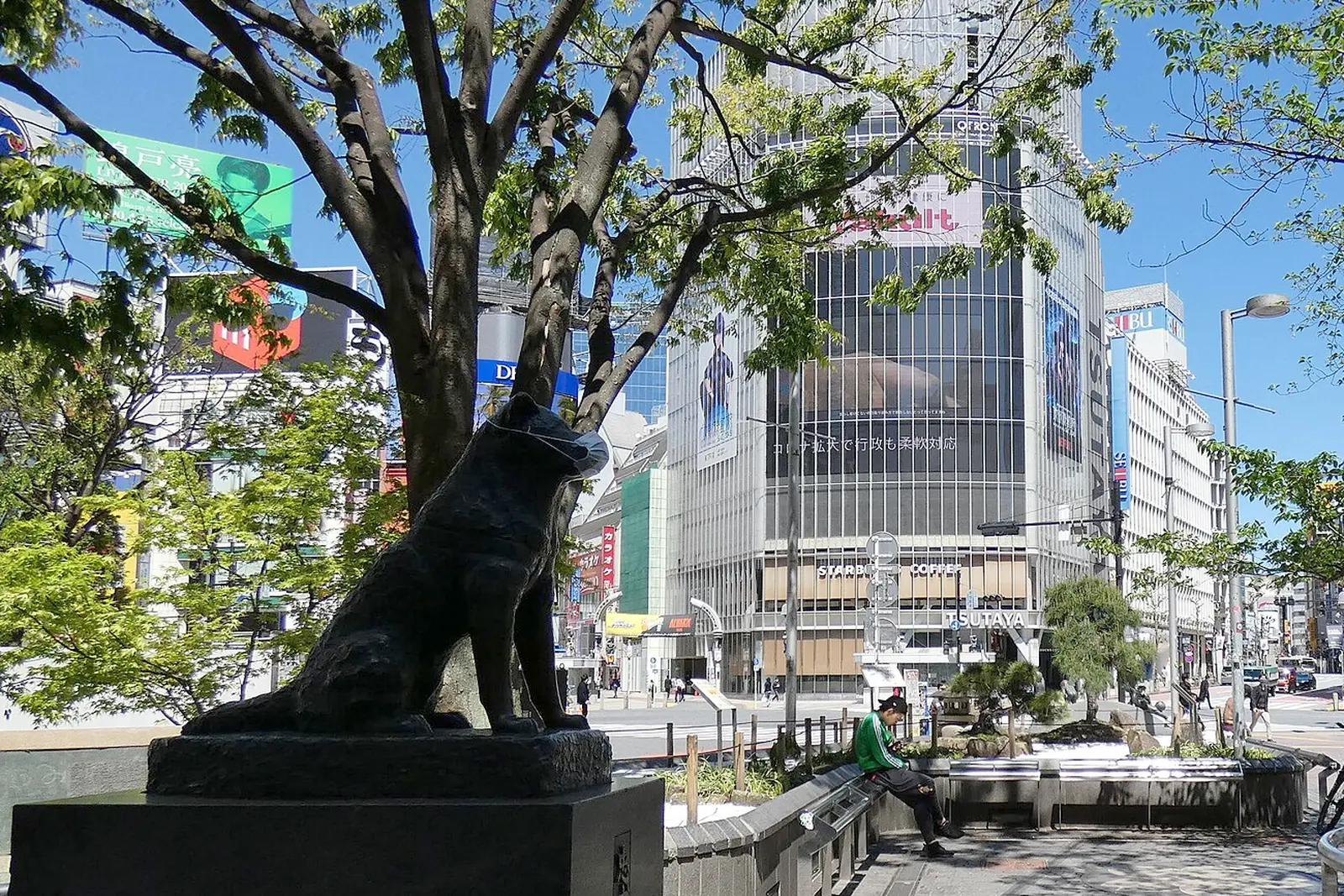
Hachiko Statue: The Dog Who Waited
The loyal dog behind Tokyo's most famous meeting spot, and how to get your photo without the line.
 SHIBUYA3 min read
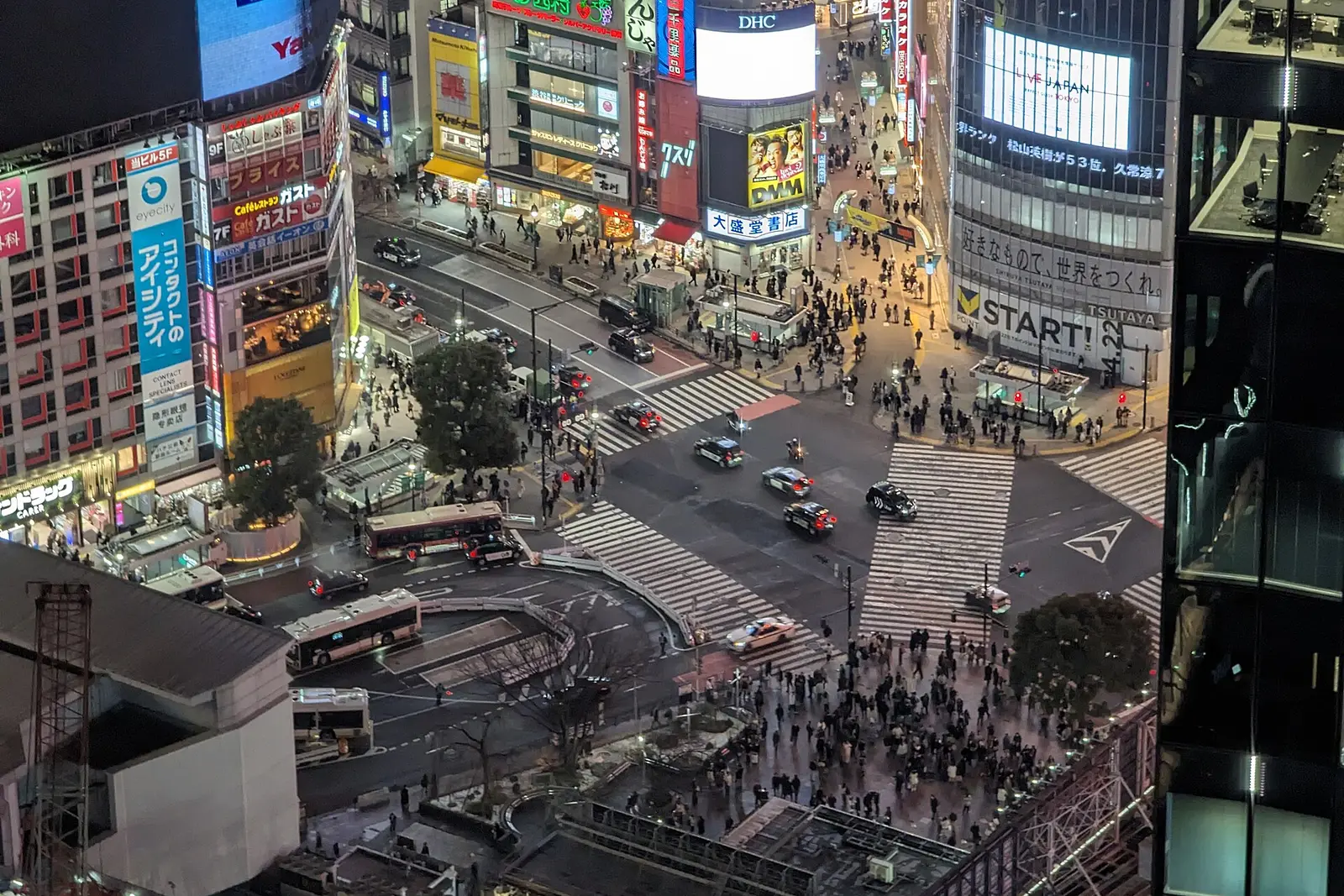
Shibuya Scramble Crossing: How to See It Best
The busiest crossing in Tokyo, the best places to watch it from above, and when to go.
 SHIBUYA3 min read
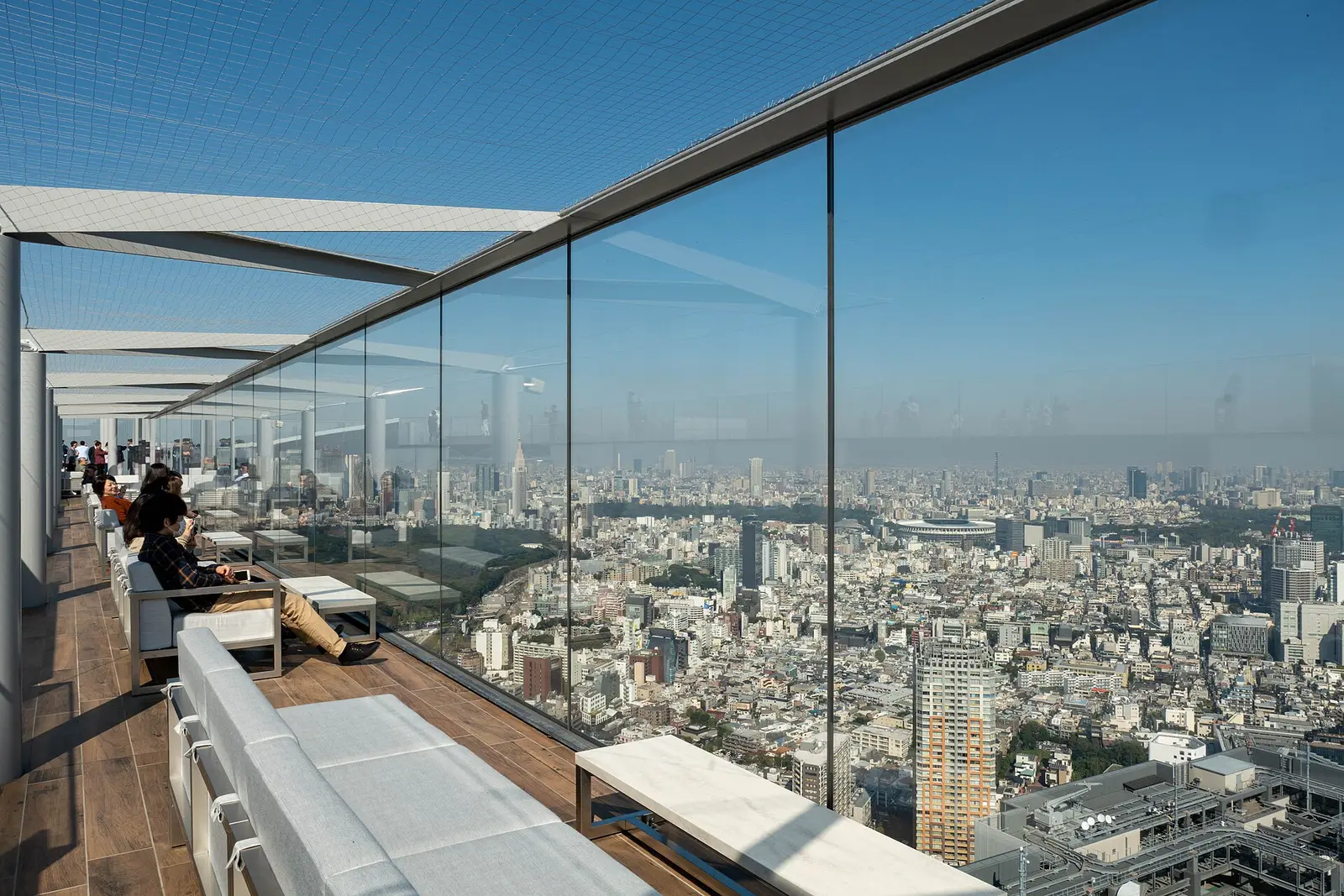
Shibuya Sky: Tokyo From an Open-Air Rooftop
An open-air rooftop 229 meters up, right above the station. Tickets, sunset timing and the rules.