Destinations › Kagawa › Takamatsu
Kotohira-gu: Climbing the 785 Steps to Konpira-san
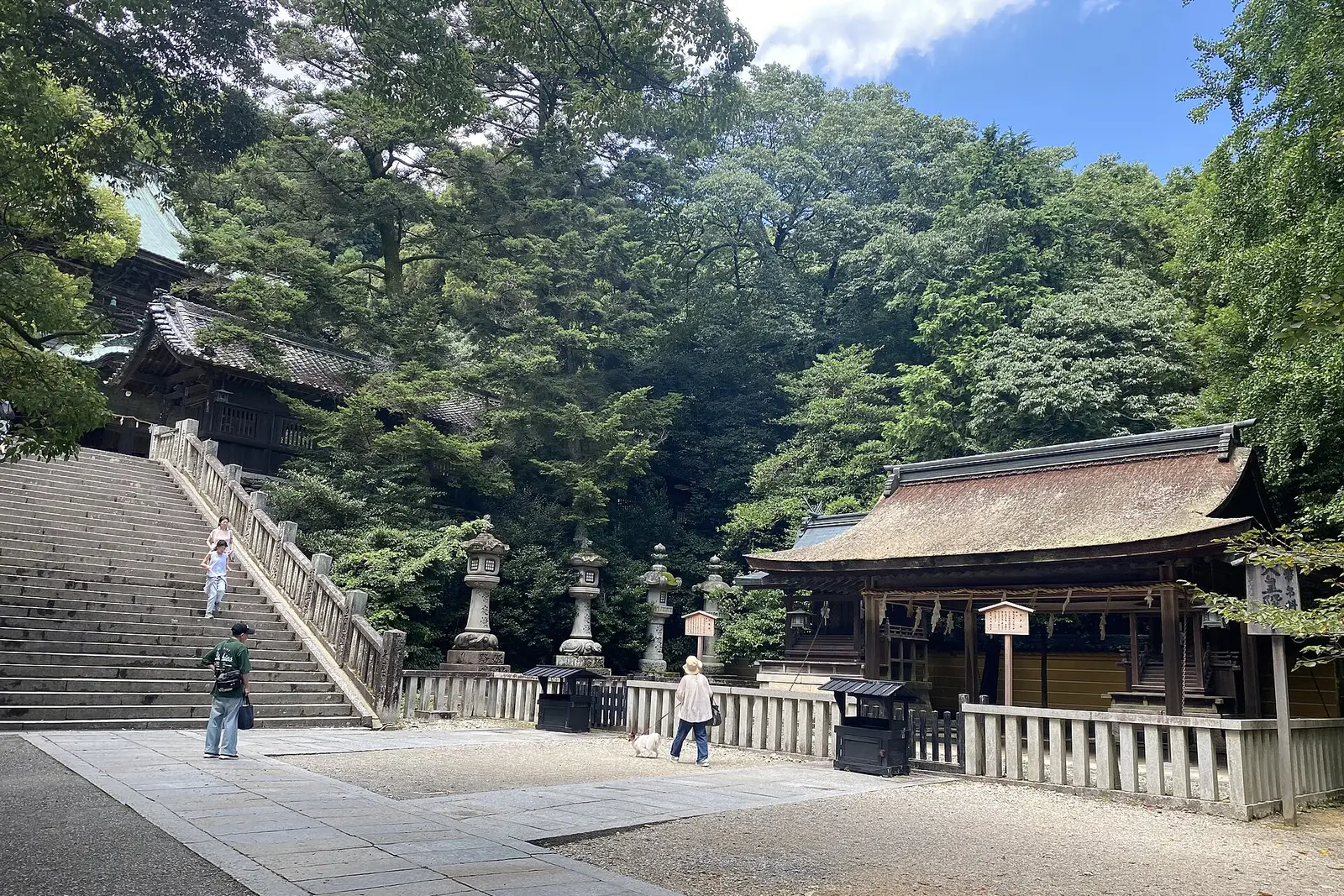
For centuries, people from all over Japan dreamed of making the trip to Konpira-san. Today the climb is the same as it always was. From a street of shops and udon restaurants, 785 stone steps lead up the side of a mountain to the main shrine, with views over the plain of Sanuki at the top.
The god of the sea
Kotohira-gu, which most people call Konpira-san, stands halfway up Mt. Kotohira, also called Mt. Zozu. Many shrines across Japan carry the name Kotohira or Konpira, and this is the head shrine of them all.
The shrine honors Omononushi no Kami, a god of farming, medicine and safety at sea, and the Emperor Sutoku, enshrined here in 1165. It is best known as the shrine of the god of the sea, and sailors and fishermen have long prayed here for safe voyages. Until 1868 it was called Konpira Daigongen.
A pilgrimage, and dogs that went alone
In the Edo period, ordinary people were not free to travel, but a pilgrimage was allowed, and a trip to Konpira-san was one of the great journeys of a lifetime.
People who could not go sometimes sent a dog instead. It wore a bag around its neck with a wooden tag giving the owner's name, an offering and money for food. Travelers passed it from one to the next until it reached the shrine. These dogs were called konpira-inu, and a bronze statue of one stands on the way up. Because of this custom, the shrine allows visitors to bring pets, which most shrines do not, though pets may not enter the buildings.
The climb
The steps begin on a street of souvenir shops, udon restaurants and inns, and you can borrow a walking stick for the climb. From the 113th step to the great Omon gate, the steps are especially steep.
The Omon gate was donated by Matsudaira Yorishige, the lord of Takamatsu. Past it you enter the sacred grounds. A stone path called Sakura no Baba runs for about 150 meters between cherry trees. Further up is Asahi-sha, the largest building on the grounds. It took 40 years to build, was finished in 1845, and is covered with carvings of clouds, people, birds, animals and flowers.
The last stretch is 133 steps in four flights. At the top, on the 785th step and 251 meters above sea level, is the main shrine, the Gohongu, an Important Cultural Property rebuilt in its present form in 1878. From the open space in front, you can see across the Sanuki plain to the Seto Ohashi Bridge and Sanuki Fuji.
The climb takes about 30 minutes. If your knees start to shake on the way down, or the steps are crowded, the shrine's own guide suggests the Ura-sando, a quieter, smoother back path through the forest that branches off partway up.
Art on the way up
Omote-shoin is a reception hall said to date from around 1658 to 1660. It and its sliding-door paintings by Maruyama Okyo, a great painter of the late Edo period, are an Important Cultural Property. The Treasure House, built in 1905, is one of the oldest museum buildings in Japan. Its best-known piece is a standing eleven-headed Kannon from the Heian period. The Takahashi Yuichi Gallery shows 27 works by a pioneer of Western-style painting in Japan.
Omote-shoin and the Treasure House are open from 9:00 to 17:00, last entry 16:30. Each costs ¥800 for adults and ¥400 for high school and university students, and children of junior high age and younger enter free. A combined ticket for all three sites costs ¥1,500 for adults.
Beside the Mokubasha, a hall that houses a wooden horse, the Shiseido Parlour runs Kamitsubaki, a café and restaurant beneath a stone-paved square.
The inner shrine
From the right side of the main shrine, a path leads about 1.2 kilometers further, up 583 more steps, to the inner shrine, Izutama Jinja. It stands 421 meters above sea level, 1,368 steps from the bottom. On the cliff above it, look for carvings of a tengu and a crow tengu, mountain spirits from Japanese legend.
Festivals
The main festival, the Reitaisai, is held from October 9 to 11, when a sacred palanquin is carried down from the main shrine in a long procession and returns late at night. Kemari, an old court ball game played by priests in colorful costume, is held in front of Omote-shoin on May 5, July 7 and in late December.
Getting there
From JR Takamatsu Station, JR trains reach Kotohira in about an hour. The Kotoden Kotohira Line from Takamatsu to Kotoden-Kotohira Station also takes about an hour. From JR Kotohira Station it is about a 10-minute walk to the shrine. There is paid public parking near the foot of the steps.
Manners
The shrine asks visitors to take photos and videos with care near the shrine buildings, so that people who have come to pray are not disturbed.
More on Takamatsu
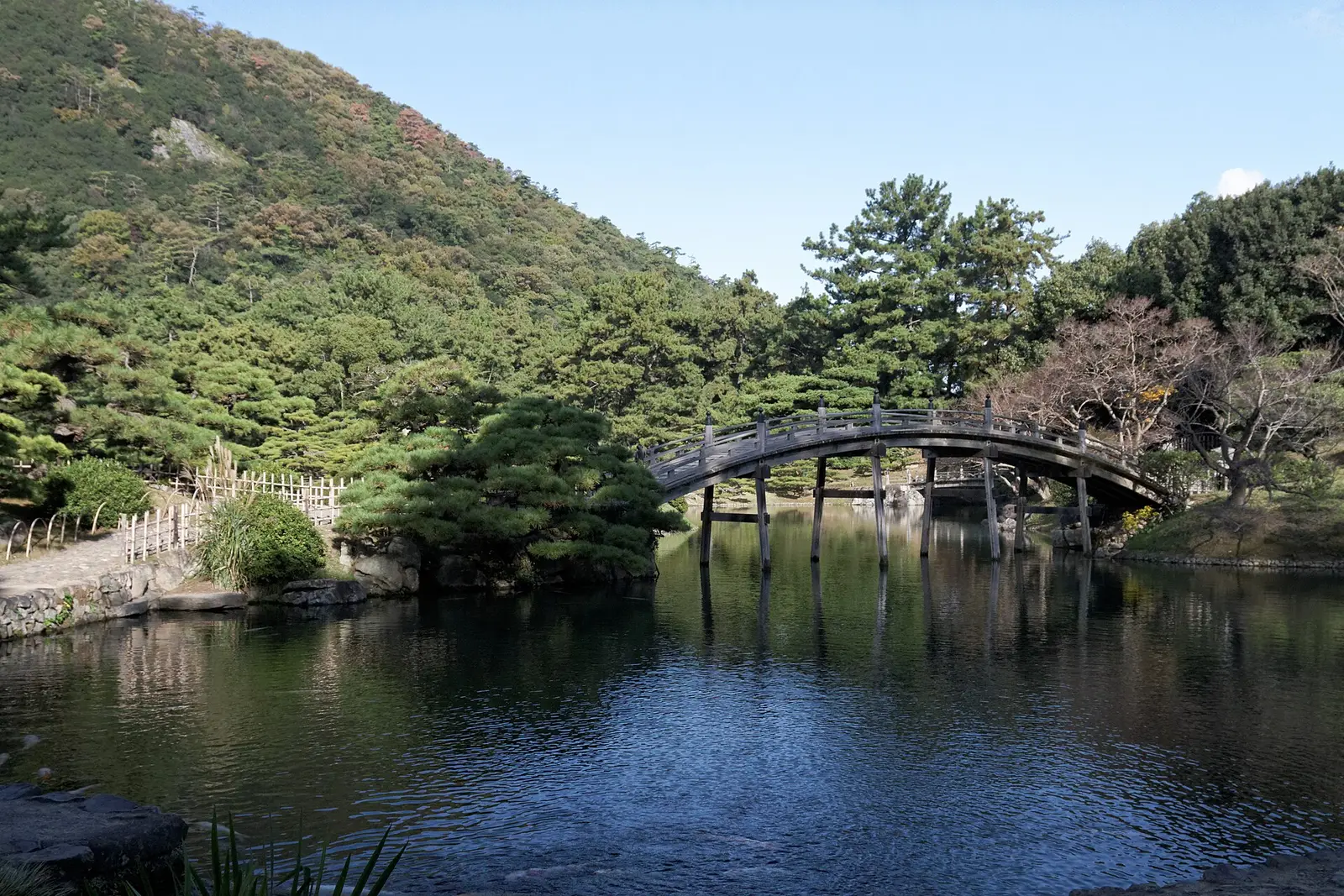 TAKAMATSU3 min read
Ritsurin Garden: The Lords' Garden of Takamatsu
A feudal lord's strolling garden with six ponds, 1,400 pines, a boat ride and a teahouse by the pond. Hours, prices and tips.
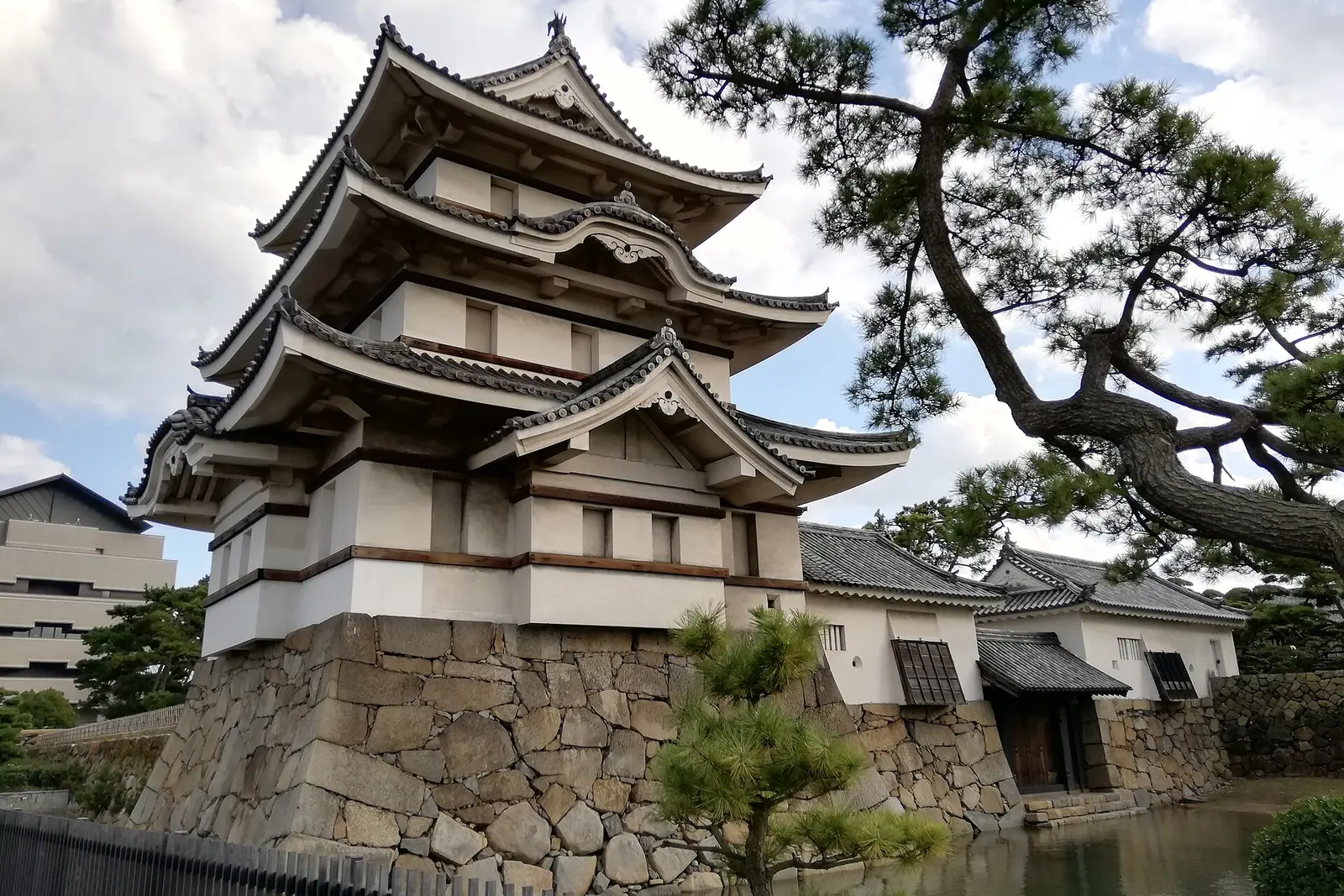 TAKAMATSU3 min read
Takamatsu Castle and Tamamo Park: A Castle on the Sea
A sea castle whose moats are filled with seawater, with old turrets, a 1917 palace and sea bream to feed.
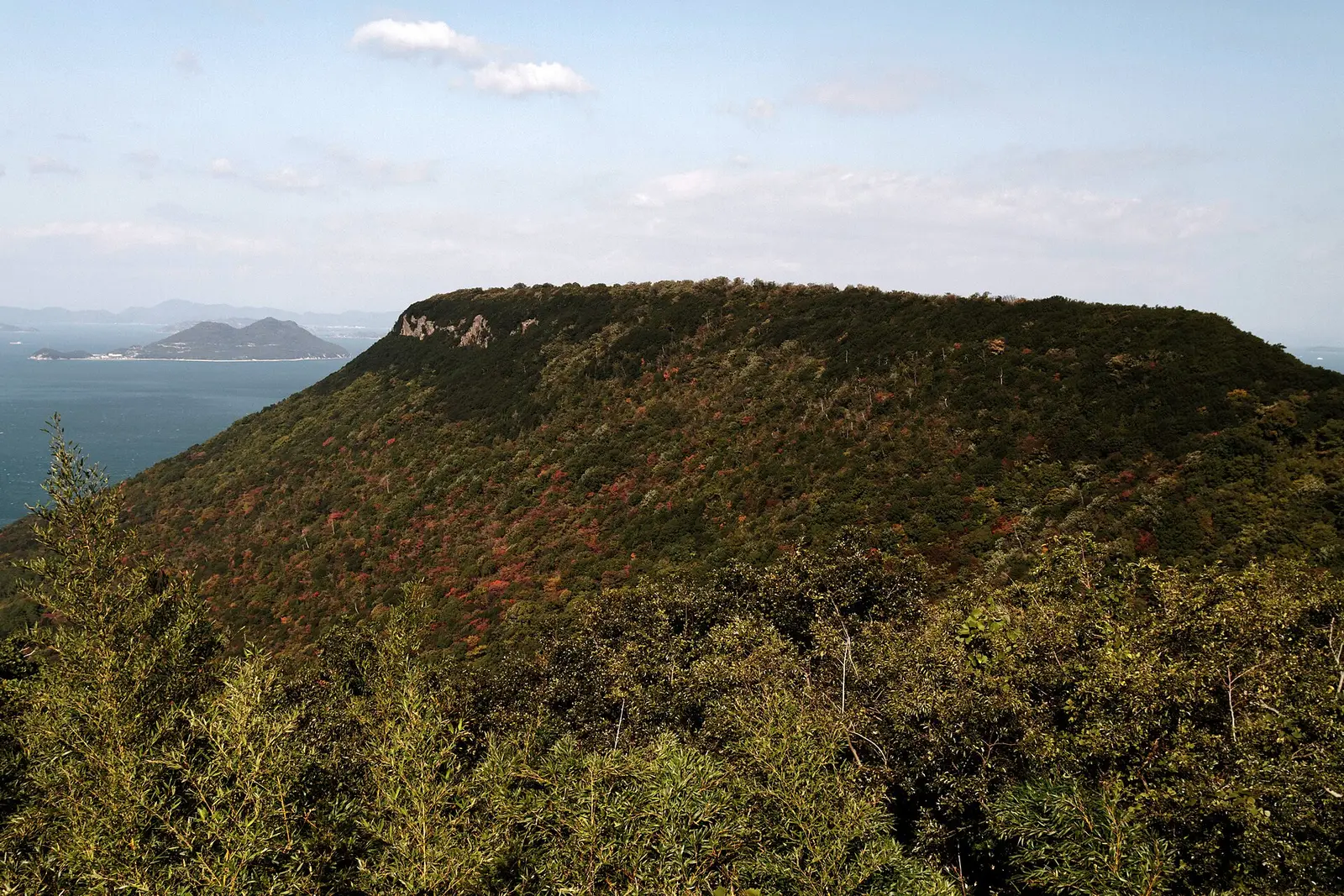 TAKAMATSU3 min read
Yashima: Takamatsu's Flat-Topped Mountain
A flat-topped plateau with a pilgrimage temple, a samurai battlefield and sunset views over the islands.