The Shimanto River: Japan's Last Clear Stream
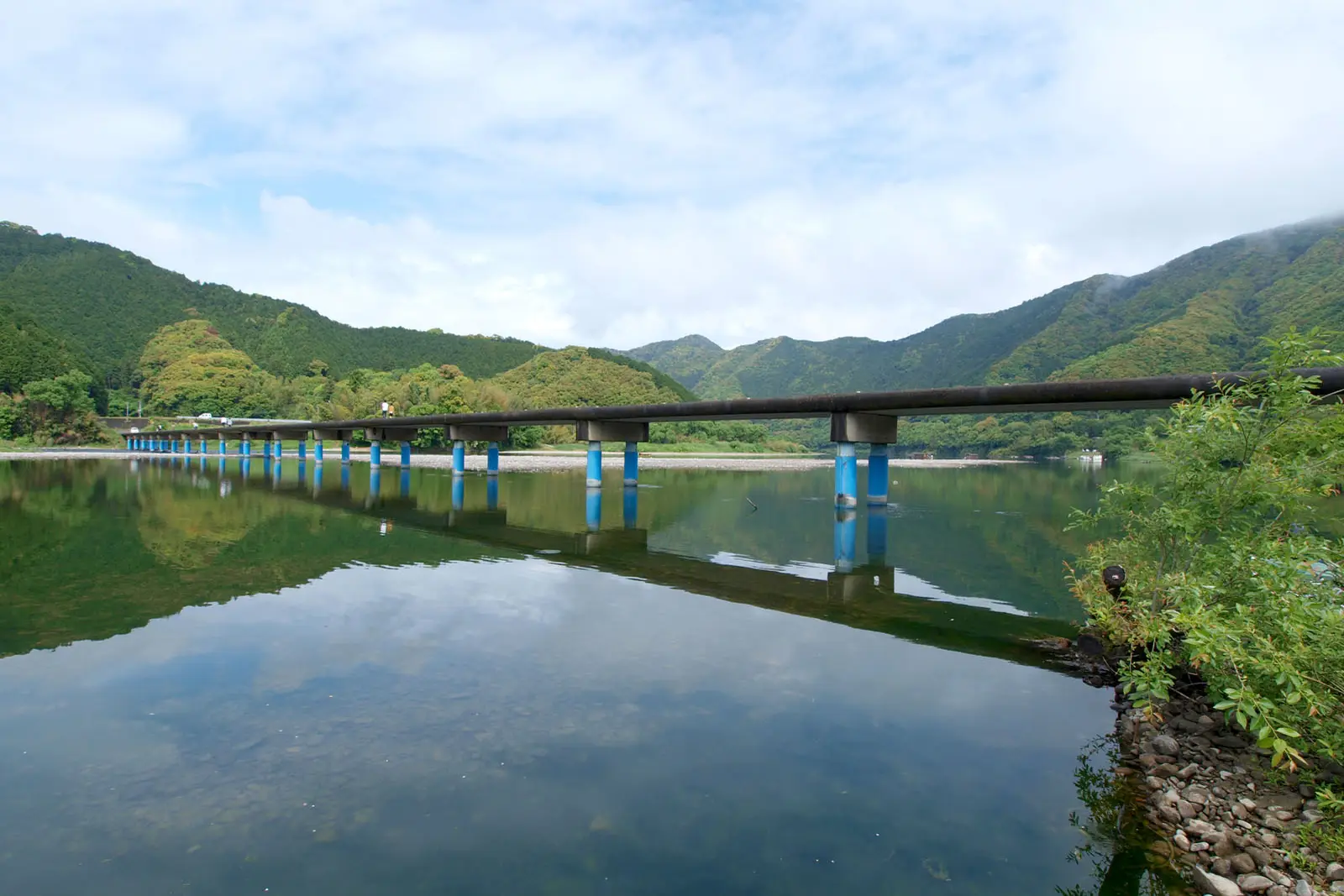
In the far west of Kochi Prefecture, a wide green river winds between wooded mountains toward the Pacific. Low concrete bridges with no railings cross it from bank to bank, built to let floods flow right over them. This is the Shimanto River, often called "Japan's last clear stream."
The river
The Shimanto River begins on Mt. Irazu, deep in the mountains of Kochi, and winds for about 196 kilometers before it reaches the Pacific. Its official name used to be the Watari River. After television called it "Japan's last clear stream," it became famous across the country, and in 1994 the name was officially changed to the Shimanto River.
In its lower reaches the river flows slowly through Shimanto City, the main town of the area. People here have long fished the river and used it to carry charcoal and crops downstream. The area is also hit often by typhoons, and in heavy rain the river still floods.
The chinkabashi bridges
The bridges on the Shimanto are called chinkabashi, "sinking bridges." They are built with no railings, so that in a big flood the water, and any trees it carries, can pass over the top. This puts less pressure on the bridge and keeps the river from backing up. The local tourism association sees them as a symbol of living with nature instead of fighting it.
There are 22 chinkabashi on the main river and 26 more on its branches. The best known is the Sada chinkabashi, officially Imanari Bridge. It is the longest on the river and the closest to the sea, at 291.6 meters long and 4.2 meters wide, and it was built in 1972. Upstream, the Takase, Katsuma and Iwama bridges are also popular.
On the water
The easiest way to enjoy the river is on a yakatabune, a wooden boat with a roof. Shimanto-no-Ao, based at Misato, runs a regular cruise of about 60 minutes every hour, and you can board without a reservation, though reservations get priority. It costs ¥2,000 for adults and ¥1,000 for children, and its Misato pier is open from 8:30 to 16:30 every day. Other boat companies also run cruises, and canoeing and stand-up paddleboarding are popular ways to see the valley.
By bicycle
The Shimanto City Tourism Association, by Nakamura Station, rents bicycles from 8:30 to 17:30. An electric-assist bicycle costs ¥2,000 for up to 5 hours, and there are also e-bikes and tandem bicycles. The ride to the Sada chinkabashi takes about 50 minutes.
What to eat
The clean water gives the area famous river food. Look for sweetfish (ayu) from June to October, river prawns and wild eel from May to October, and mitten crab from September to November. Suji aonori, a fine river seaweed from near the river mouth, is often served as tempura. The area also grows tea and chestnuts.
Getting there
From JR Kochi Station, take a limited express train to Nakamura Station, about 2 hours. Buses to the river are limited, so most visitors rent a bicycle or a car, or take a taxi.
On weekends and holidays, and every day during Golden Week and in August, the Shimanto River Bus leaves Nakamura Station at 7:50 and stops at chinkabashi along the river. Routes cost ¥1,000 to ¥1,600 for adults. On the same days, the Nuo-go loop bus around the town costs ¥500 for a day.
Tips
- People live along the river and use the bridges every day. When you take photos on a bridge, watch for cars and do not block them, and be careful not to photograph residents without asking.
- Do not try to cross a chinkabashi when the river is high.
Nearby
Back in Kochi City, see Kochi Castle and Hirome Market, or the beach at Katsurahama.
More on Kochi
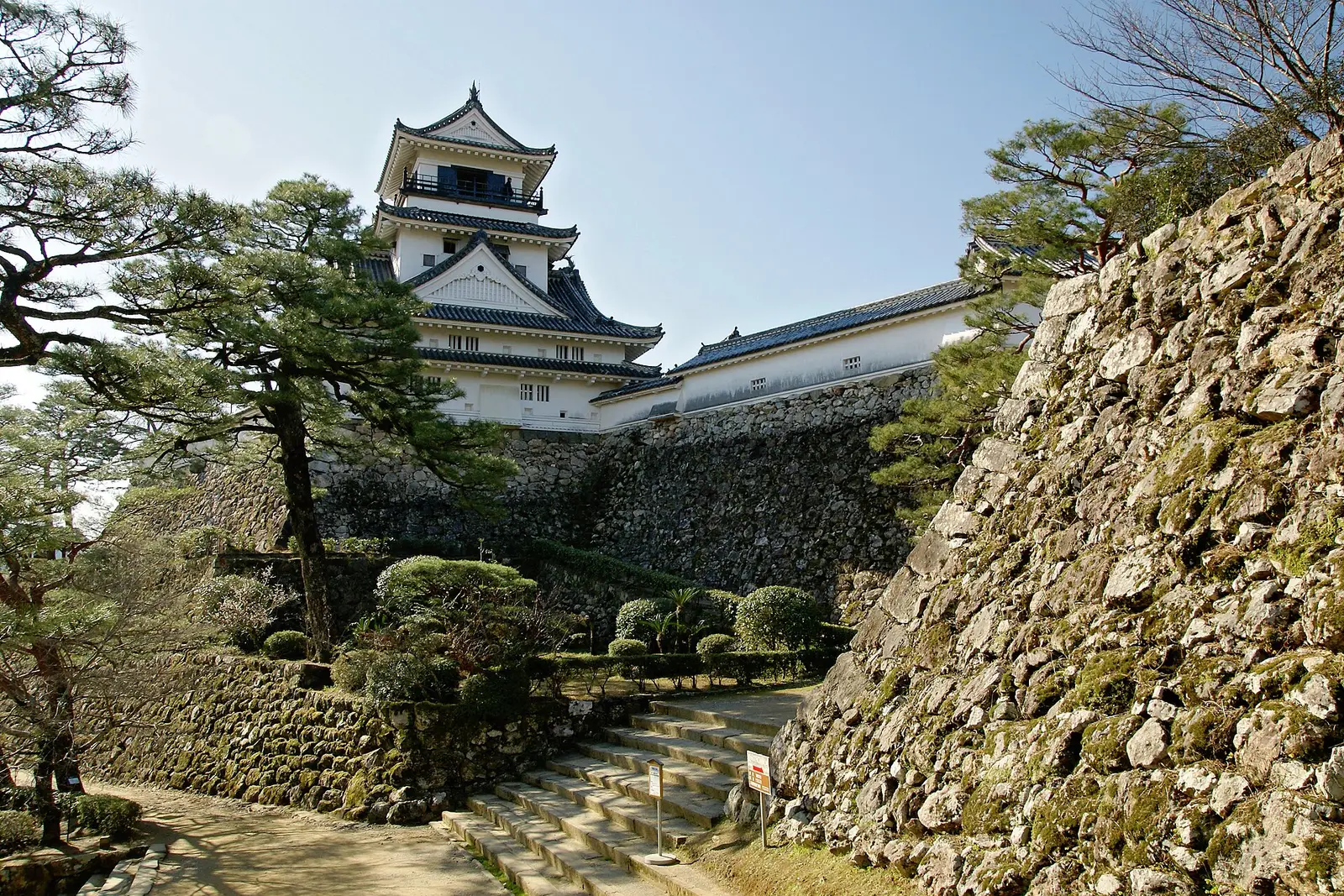 KOCHI3 min read
Kochi Castle: An Original Keep and the Sunday Market
One of Japan's twelve original castle keeps, still joined to the lord's palace, with a 300-year-old street market at its gate. Tickets and hours.
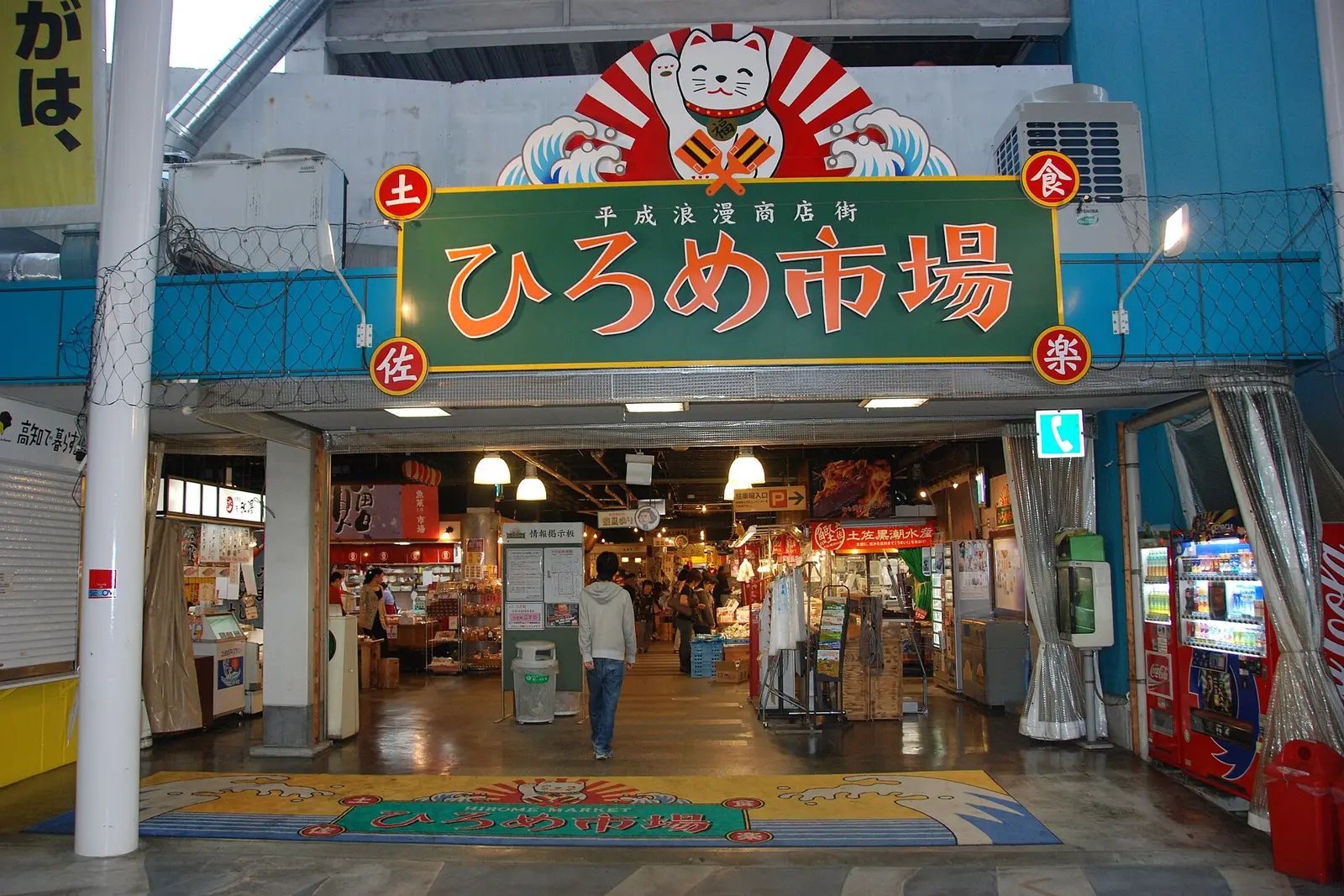 KOCHI3 min read
Hirome Market: Kochi's Food Hall
Kochi's lively food hall, where you buy seared bonito and a drink from different stalls and share a table with locals. How it works and hours.
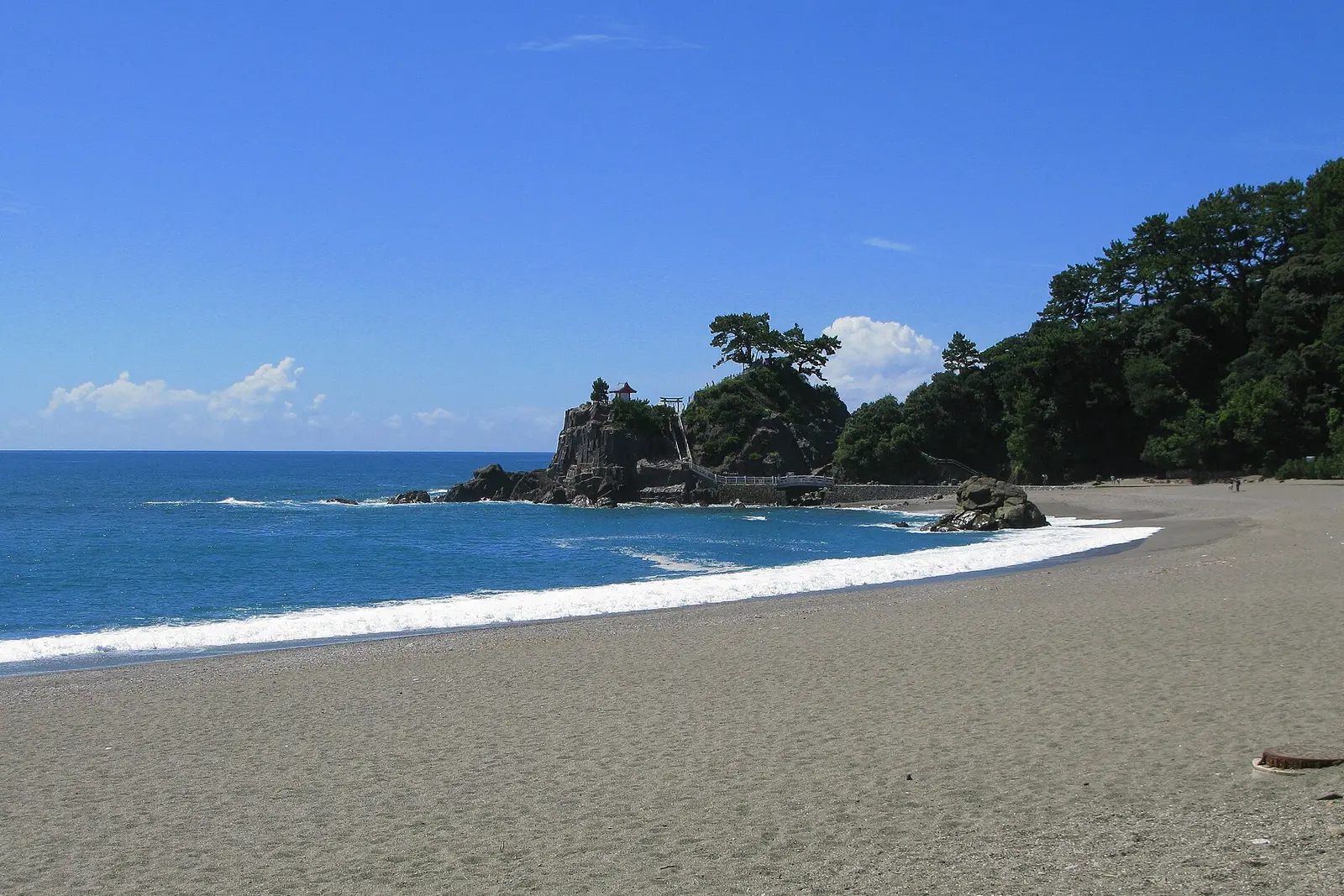 KOCHI3 min read
Katsurahama: Sakamoto Ryoma's Beach
A pine-backed Pacific beach with the famous statue of Sakamoto Ryoma, a shrine on a cape and a museum about his life. Access and tips.