Destinations › Gifu › Takayama & Shirakawa-go
Sanmachi Suji: Takayama's Old Merchant Streets
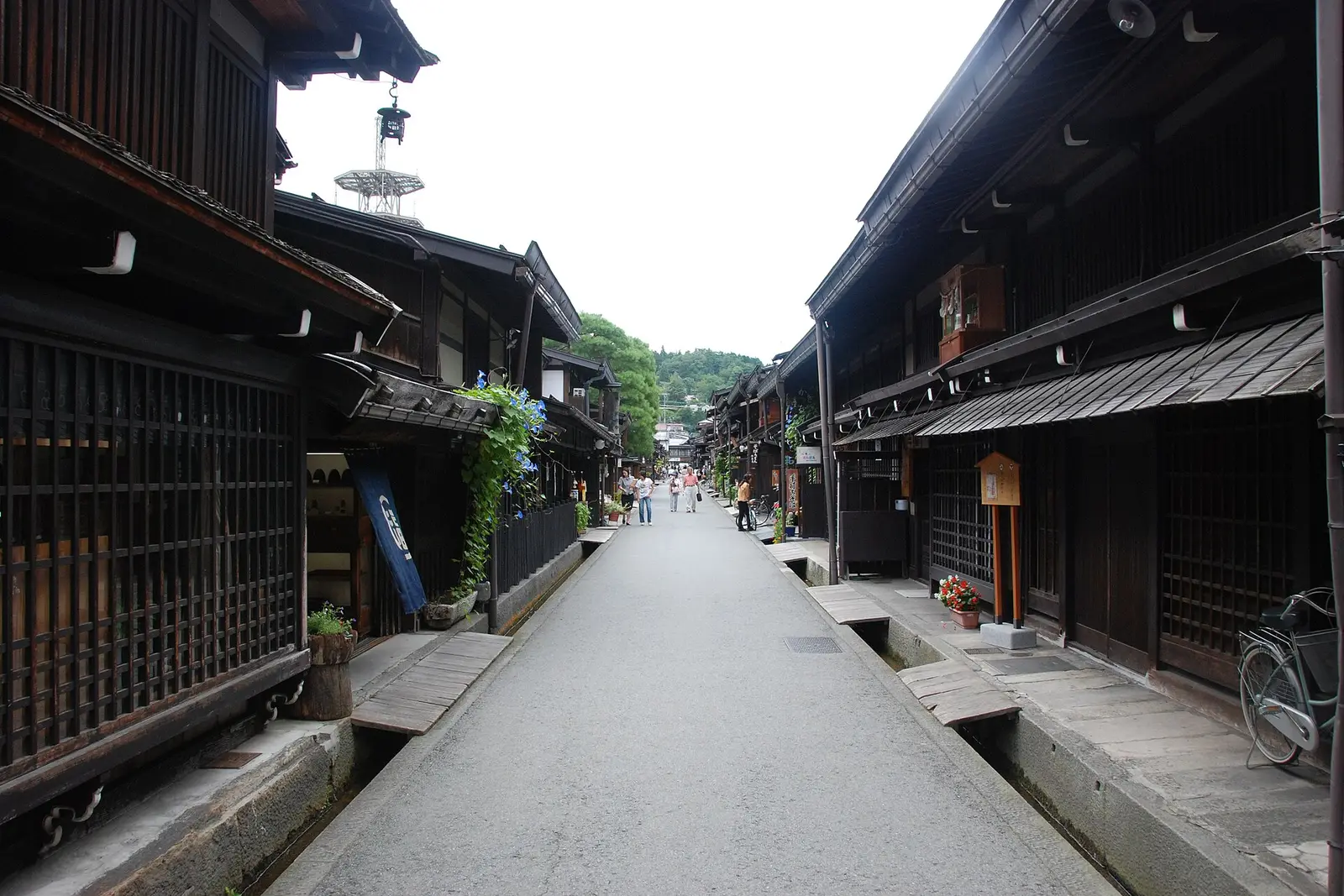
Walk ten minutes from Takayama Station and the modern town fades away. The streets narrow, the buildings turn dark brown, and small channels of clear water run beside the road. This is Sanmachi Suji, the old merchant district, and it is the heart of Takayama.
A rich town in the mountains
Takayama sits deep in the mountains of Gifu Prefecture, far from any big city. It is hard to guess that it was once rich. But the mountains were full of good timber, and the town became known for skilled carpenters. The shogun's government in Edo saw how valuable this region was and took direct control of it in 1692. That brought officials, money and trade, and a class of merchants to serve them.
Those merchants lived in the streets we now call Sanmachi Suji. The name means roughly "the three streets": Ichinomachi, Ninomachi and Sannomachi. Today they are protected as a preservation area for traditional buildings. The old houses are still here, and many of them are still shops, cafés and homes.
What to look for
Look at the fronts of the buildings first. Most have dark wooden lattice screens across the windows and doors, one beside the next, all the way along the street. Look down, too. Narrow channels of clear water run along the edges of the road, beneath the eaves of the houses.
The southern part of the district, along Sannomachi Street, is the best preserved, and it is where most visitors spend their time. It is lined with old homes, souvenir shops, cafés and sake breweries. If you only have an hour, start here.
Sake and the cedar balls
Takayama has a long tradition of sake brewing, and several old breweries still stand in the district. You can spot them by the round balls hanging over their doors. These are called sugidama, and they are made of cedar branches. If you see one, you have found a brewery.
Some breweries sell small tasting cups, so you can try a few kinds without buying a whole bottle. If you are not sure, just ask. Staff are used to visitors who do not speak Japanese.
Houses you can enter
Several merchant homes are open to the public, and they show you what life was like behind those dark fronts.
Yoshijima Heritage House was once both a family home and a sake brewery. Entry is about ¥500, and it is usually open from 9:30 am to 3:30 pm. Kusakabe Heritage House was the home of a family of money lenders. It costs about ¥1,000, opens from 10 am to 4 pm, and is closed on Tuesdays. Both close earlier than most shops, so see them first. Hours can change in summer and winter, so check at the door.
Food and shopping
Many of the eateries in the district serve local ingredients, so it is an easy place to have lunch. The shops sell crafts, sweets and sake. Most open around 9 am and close around 5 pm, so the streets get quiet in the evening. Plan to do your walking in daylight.
How to walk it
The streets are short, and you can cover the main part on foot in under an hour. A better way is to go slowly, look into the shops, and leave time for a break. If you would rather not walk, you can ride in a rickshaw. A 30-minute ride for two people costs roughly ¥7,000.
Early morning is best, when the street is empty and the light is soft on the wood. By late morning, tour groups fill the main street. Rain is not a big problem here. The wet wood looks even darker, and you can duck into a shop or café whenever you need to.
Takayama also holds one of Japan's best-known festivals, on April 14 and 15 and again on October 9 and 10. If your trip lines up, the old town is the place to be. Hotels fill up many months ahead.
Nearby
Takayama Jinya, the old government office, is close by, and so are the two morning markets: one along the Miyagawa River and one right outside the Jinya. If you want a quiet walk afterward, the Higashiyama Walking Course runs through the temples on the eastern edge of town.
More on Takayama & Shirakawa-go
 TAKAYAMA & SHIRAKAWA-GO3 min read
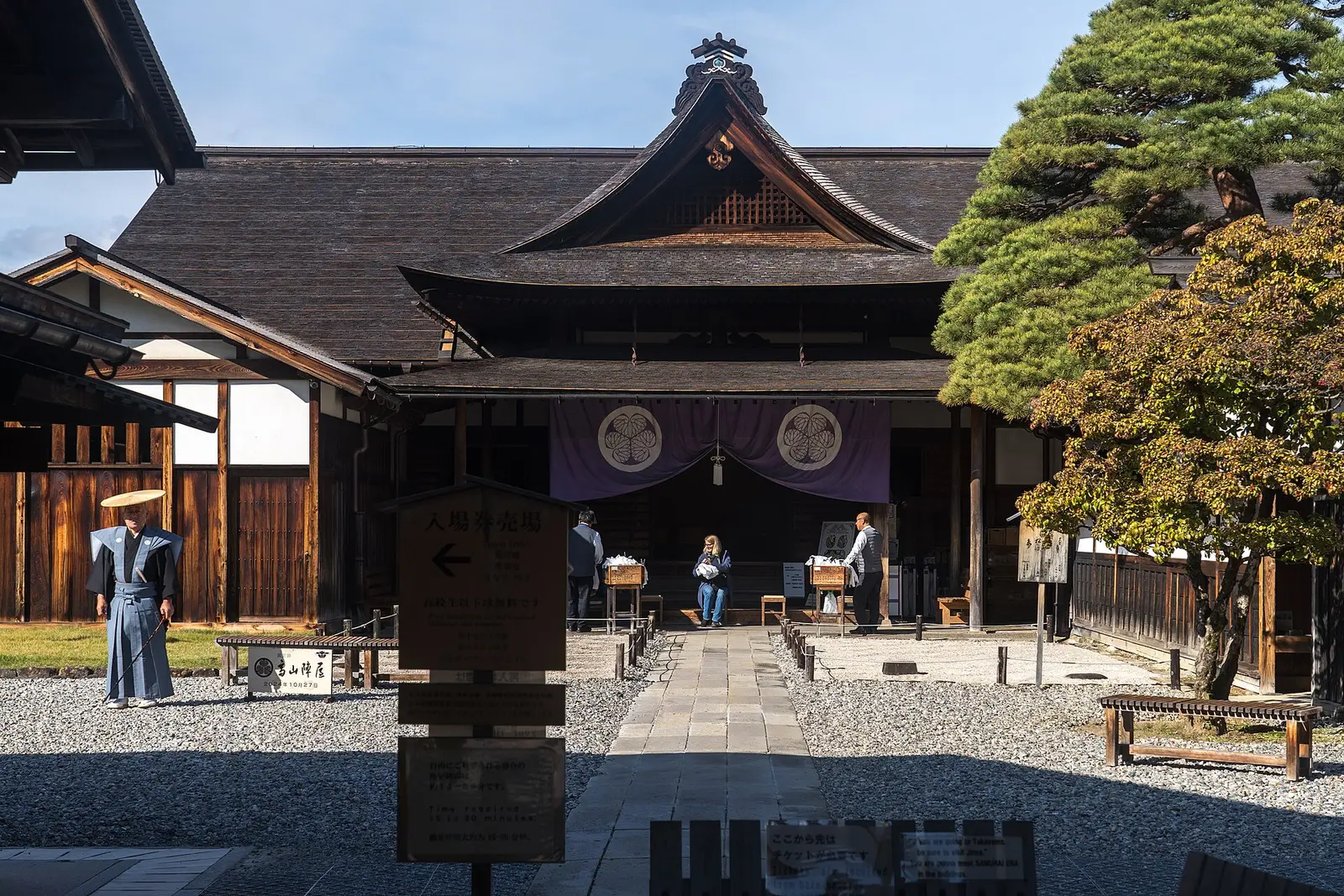
Takayama Jinya: The Last Samurai-Era Government Office
The old government house where officials from Edo ruled the mountains, now a museum you can walk through.
 TAKAYAMA & SHIRAKAWA-GO3 min read
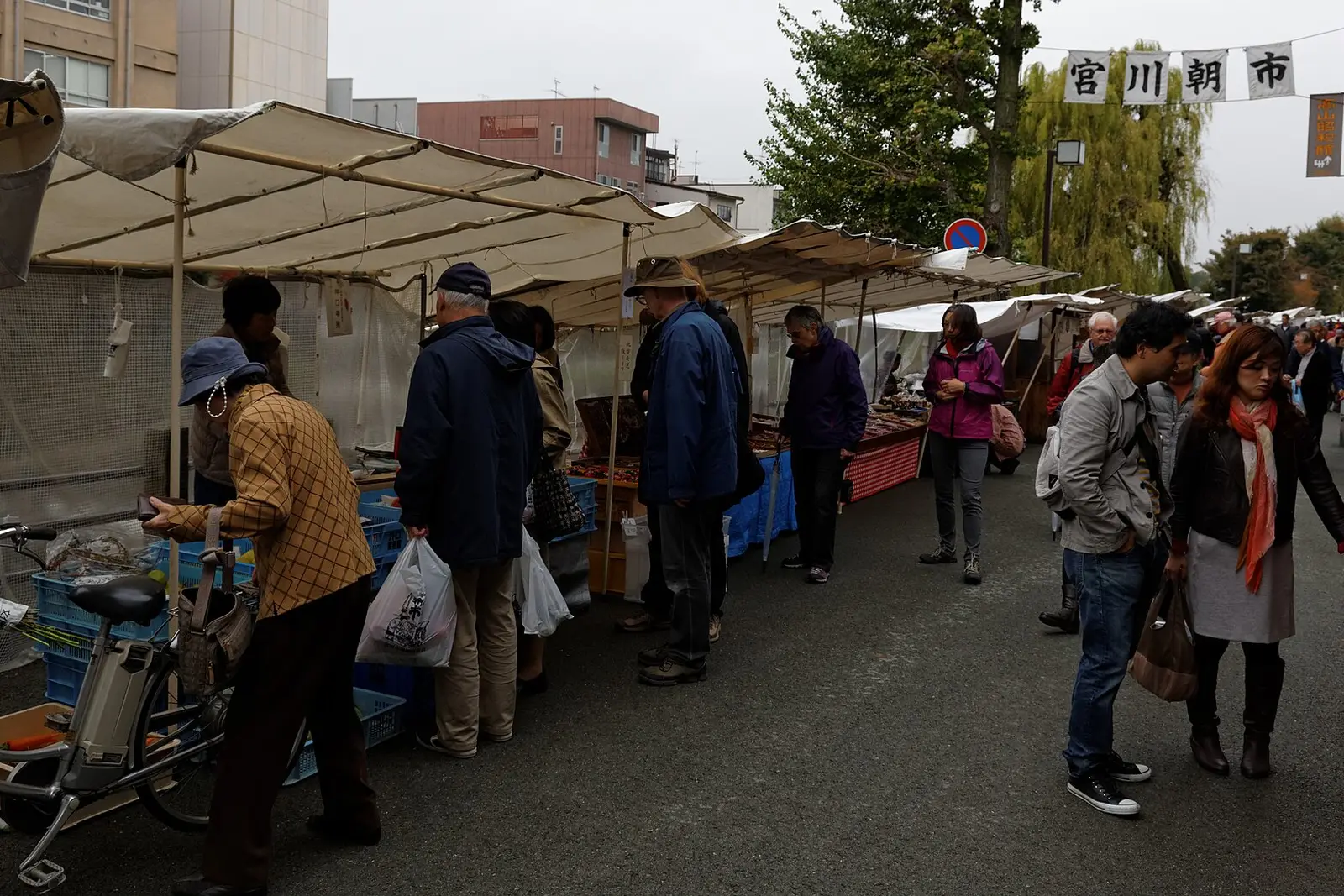
Takayama Morning Markets: Two Stalls Streets by the River
Two daily markets in the old town where local farmers and craft sellers set up before breakfast.
 TAKAYAMA & SHIRAKAWA-GO3 min read
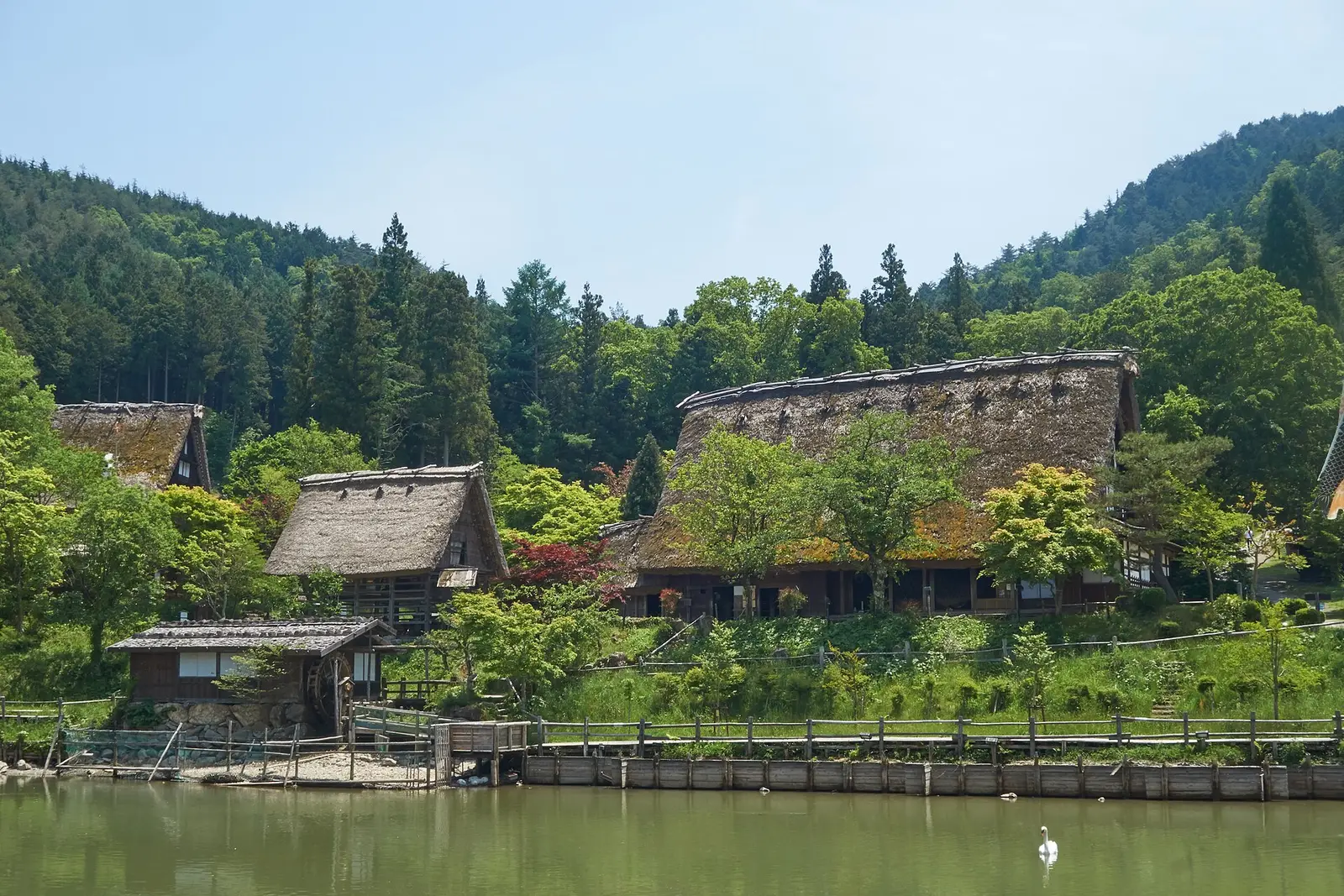
Hida Folk Village: Old Farmhouses on a Hillside
An open-air museum of more than 30 old mountain houses, a good warm-up for Shirakawa-go.