Dazaifu Tenmangu: Fukuoka's Shrine of Learning
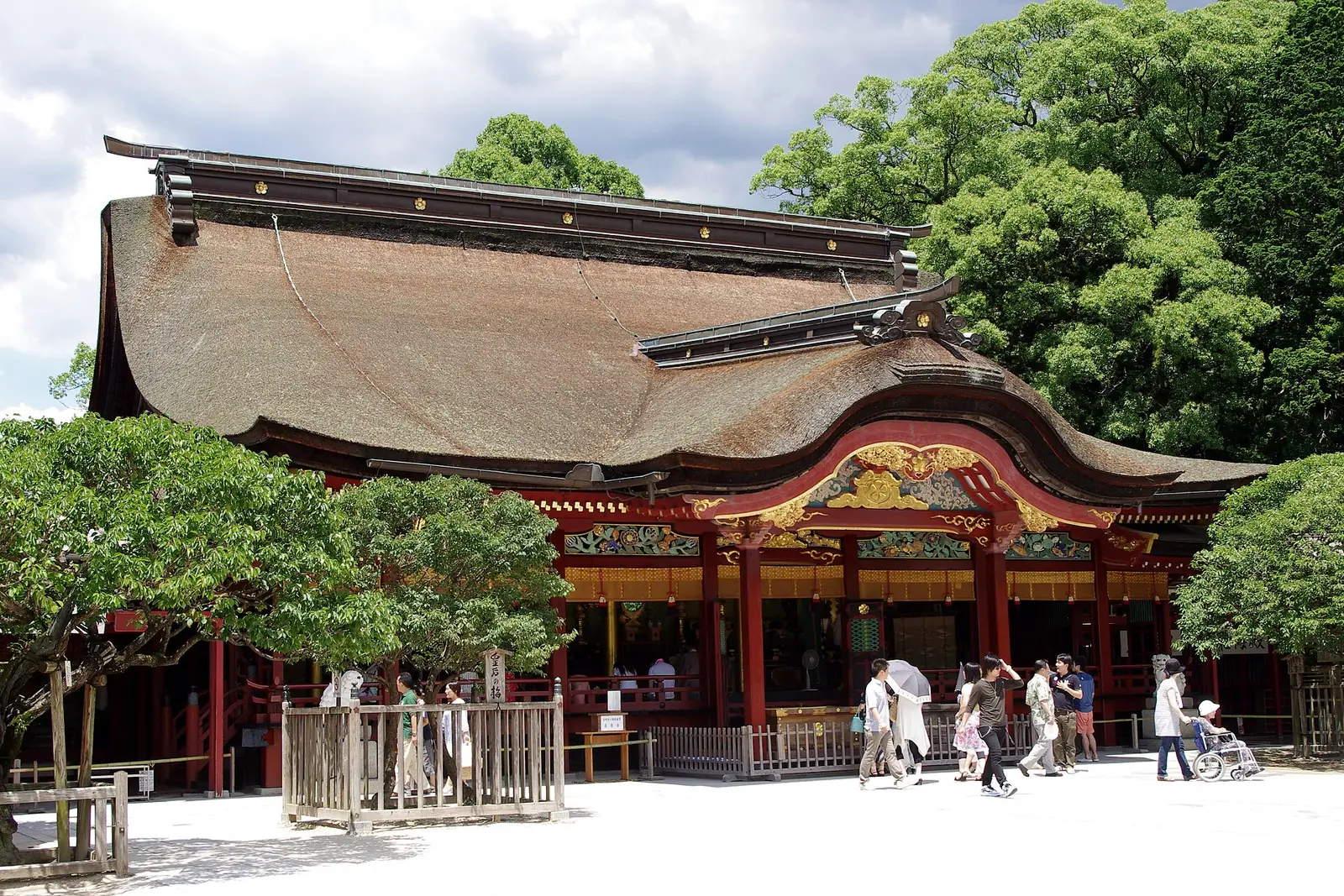
Every year, more than ten million people visit this shrine, and many come to pray for success in their studies. The story behind it is one of exile, a loyal ox and a plum tree that flew. It is an easy half-day trip from Fukuoka.
A scholar sent away
Sugawara no Michizane was born in 845 into a family of scholars. Then the rival Fujiwara family made a false accusation against him, and he was sent into exile at Dazaifu, a regional government center at the time. He died there in 903, at the age of 59.
Legend says the ox pulling his body to its burial place lay down and refused to move. His followers took this as a sign and buried him on that spot. In 905, a disciple built a small shrine at the grave. The main hall stands over it today.
From exile to god of learning
In the years after his death, Michizane was honored as Tenjin, the god of learning. Today there are about 12,000 Tenjin shrines across Japan, and Dazaifu Tenmangu is the head of them. Students and parents come here before exams to pray and buy amulets.
The main hall, the honden, was built in 1591 and is an Important Cultural Property. It went through a large restoration that began in May 2023, the first full-scale one in 124 years, and the work was due to finish in 2026. Worship moved to a temporary hall in the meantime. Check the shrine's website for the current state before you go.
Walking the grounds
The path from the station passes under several torii gates. Near the entrance, a bronze ox sits on a stone base. Its head is worn shiny, because visitors pat it for wisdom. There are 11 ox statues in total around the shrine.
Next come three red bridges over a pond called Shinji-ike. They stand for the past, the present and the future. The middle one is flat, and the path ahead is hidden from view.
Beside the main hall stands the Tobiume, or "flying plum." Michizane loved plum trees. Before he left Kyoto, he wrote a poem to his favorite one, and the legend says it flew to Dazaifu to join him. The grounds hold about 6,000 plum trees, which bloom from late January into early March. Cherry blossoms come in spring, irises in early summer, and chrysanthemums and maple leaves in autumn.
For a quiet corner, walk to the small Nakashima Shrine near the main hall, which has a pond and a small waterfall. Further up, the Tenkai Inari Shrine sits on a wooded hill with rows of small red torii.
Practical tips
Prayers are offered in front of the main hall. Morning prayers begin at 8:30 am, so that is a good time to see priests in formal robes. Prayers and blessings are open to everyone, but amulets, fortune slips and special ceremonies need a donation. The Dazaifu Tenmangu Museum charges a fee. It holds about 50,000 items related to the shrine, including Michizane's poems.
On the street between the station and the shrine, shops and teahouses sell umegaemochi, a toasted rice cake filled with sweet bean paste. It is the local snack. You will also pass a Starbucks designed by the architect Kengo Kuma.
Getting there
From Nishitetsu Fukuoka (Tenjin) Station, take the Nishitetsu Tenjin Omuta Line, change at Nishitetsu Futsukaichi to the Dazaifu Line, and ride two stops to Dazaifu. The trip takes about 30 minutes. From Hakata Station, buses leave from the Hakata Bus Terminal next door and take about 40 minutes.
Nearby
The Kyushu National Museum is a short walk away, through a walkway from the shrine grounds. Kanzeonji Temple and the ruins of the old government office are also close. The ruins are about 30 minutes on foot. Back in Fukuoka, Kushida Shrine in Hakata is the city's own old shrine.
More on Fukuoka
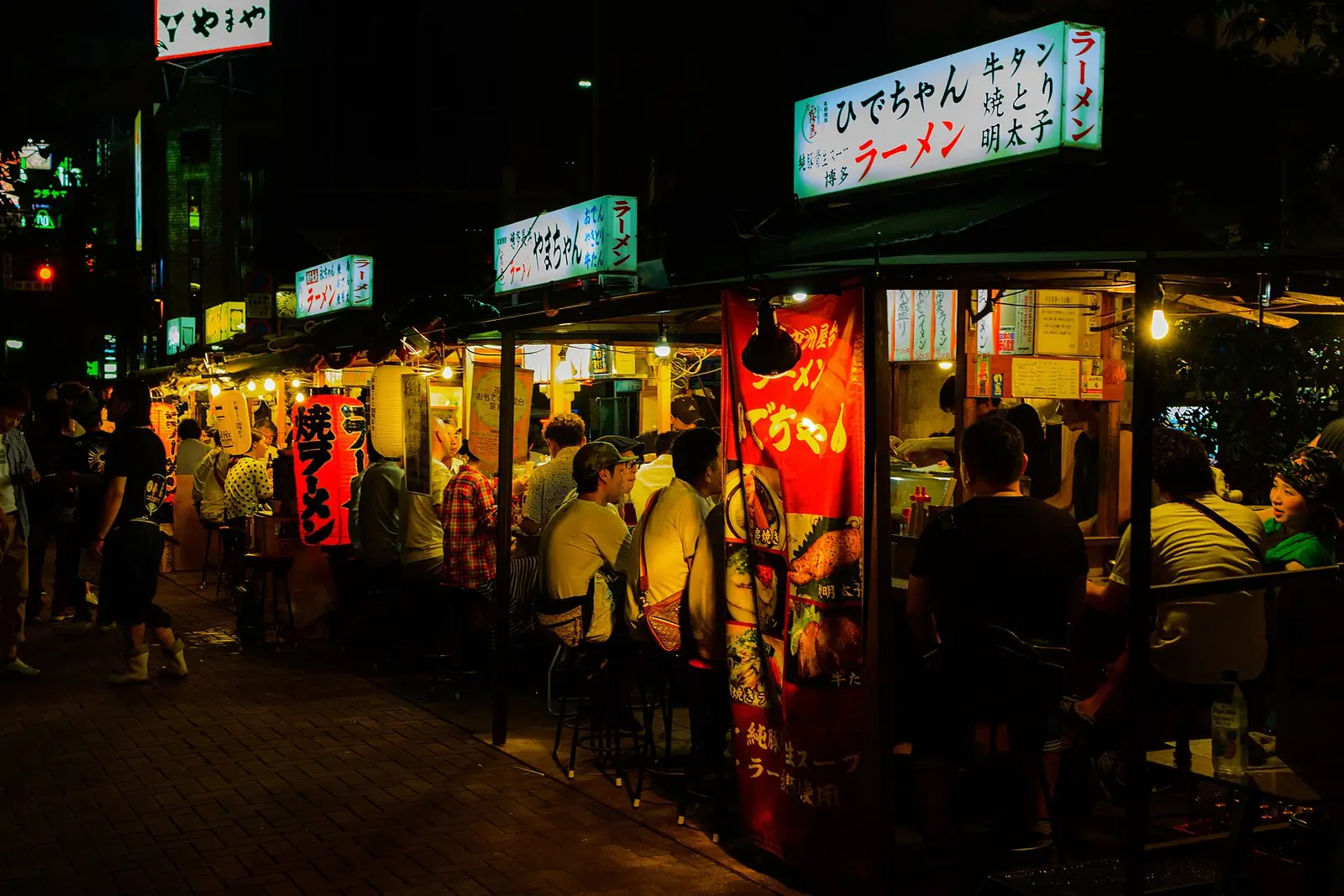 FUKUOKA3 min read
Fukuoka Yatai: Street Food Stalls After Dark
Over 100 open-air food stalls with a few stools each. What to eat, how to get a seat and how to pay.
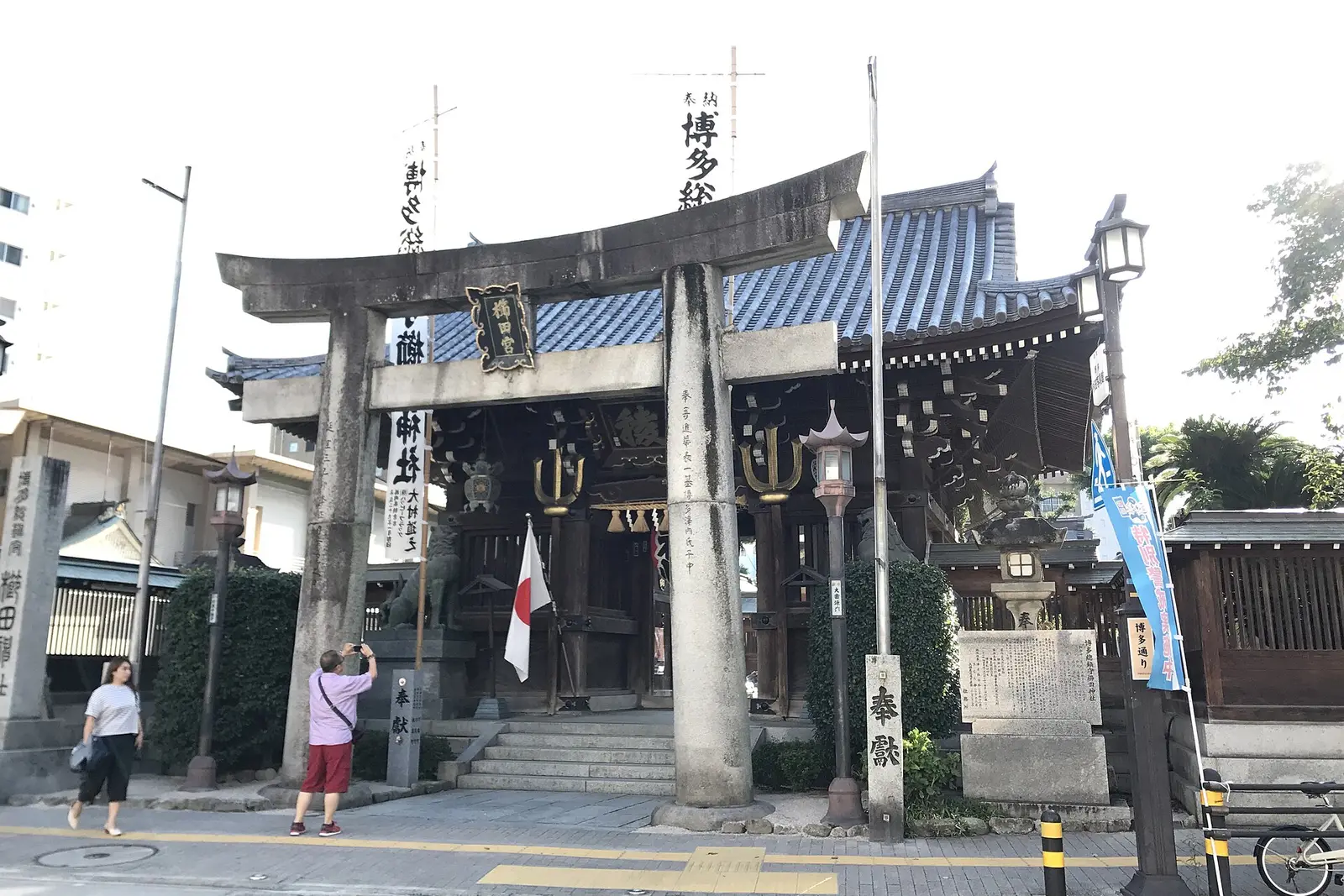 FUKUOKA3 min read
Kushida Shrine: Hakata's Guardian Shrine
Fukuoka's oldest shrine and the start line of the Yamakasa festival. Open every day from 4 am, with a huge float on show.
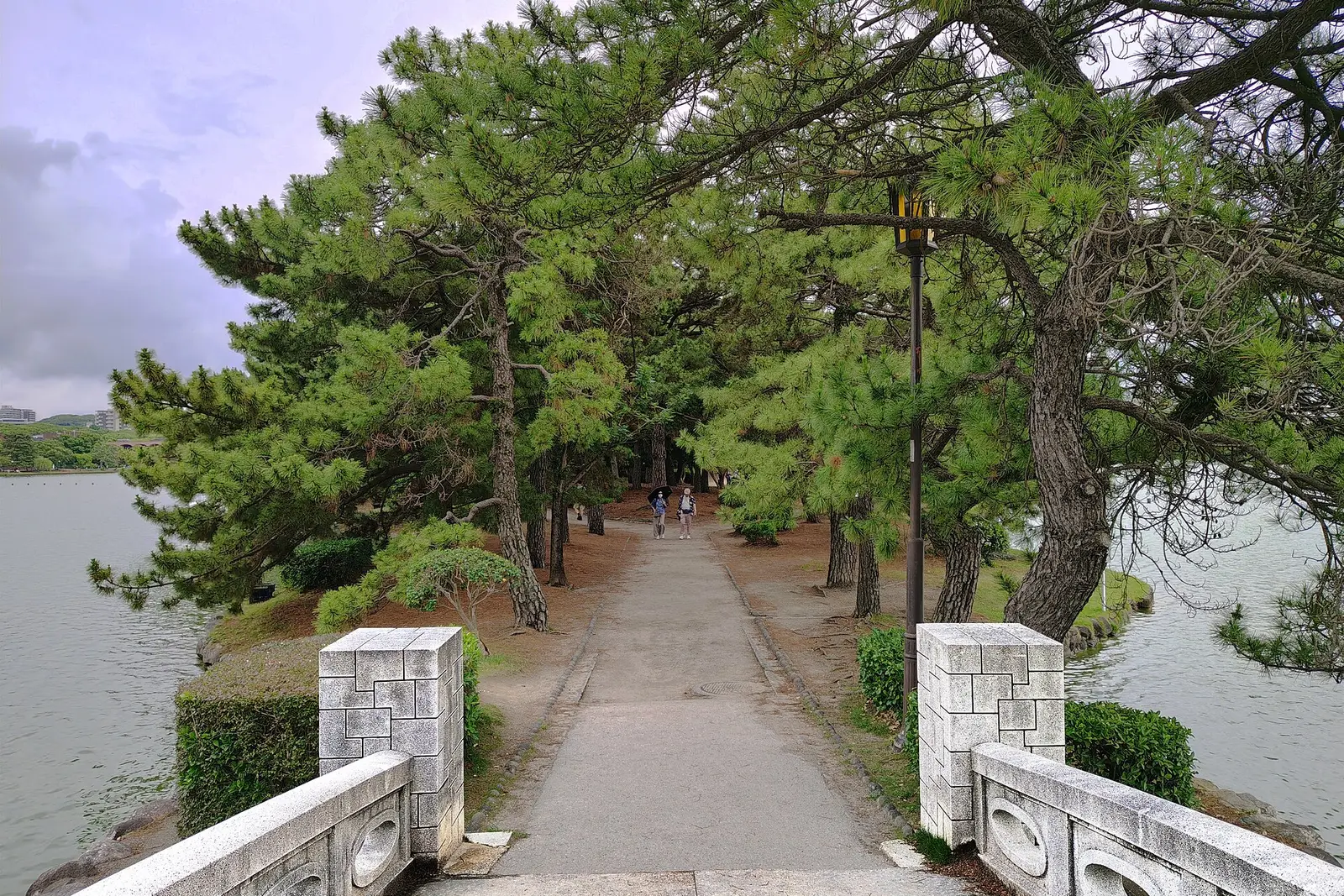 FUKUOKA3 min read
Ohori Park: A Walk Around Fukuoka's Castle Moat
A 2 km lakeside path in the middle of the city, with swan boats, a Japanese garden and the old castle ruins beside it.