Destinations › Hyogo › Himeji
Himeji Castle: Japan's White Heron Castle
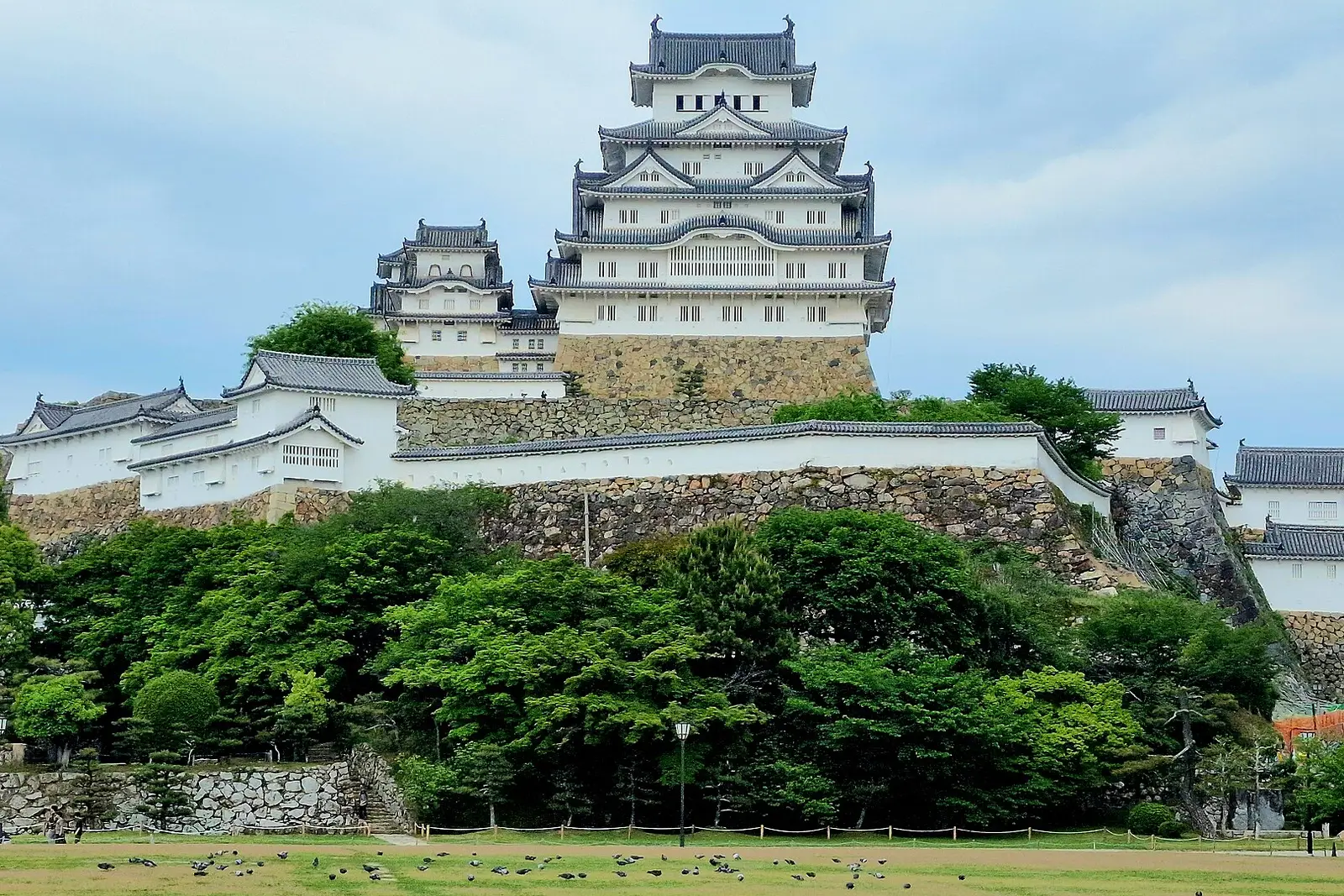
Step out of Himeji Station and look straight down the main street. At the far end, on a hill, a white castle rises over the city. It looks like a drawing, but it is real, and you can climb every floor of it.
The White Heron
Himeji Castle is nicknamed Shirasagi-jo, or White Heron Castle. The name comes from its bright white walls and the layered roofs, which look a little like a bird opening its wings.
It is a National Treasure, and in December 1993 it became one of the first two World Heritage Sites in Japan, together with Horyu-ji temple in Nara. It is one of Japan's twelve original castles, with a wooden keep that has stood for more than 400 years.
A small fort stood on this hill as early as the 1300s. In 1581, the warlord Toyotomi Hideyoshi built a three-story keep here. After the Battle of Sekigahara in 1600, the new lord, Ikeda Terumasa, pulled it down and built the huge castle you see today. Work ran from 1601 to 1609, and later lords added more buildings.
The main keep has six floors above ground. Around it are more than eighty buildings, linked by gates, walls and winding paths.
Built in layers, made to confuse
Himeji was built to be hard to attack. From the gate to the main keep, the path twists and turns for about 325 meters, even though the straight distance is only about 130 meters. Attackers would be slowed down and watched from above the whole way.
Look at the walls as you walk. They are full of small holes, around a thousand in total, for firing arrows and guns. Some windows were made for dropping stones on anyone climbing below.
It survived everything
Most of Himeji was bombed and burned in 1945, but the castle was spared. A bomb that landed on the top floor did not go off. In 1995, a great earthquake damaged much of the region, and the castle came through almost untouched. A restoration that finished in 2015 brought the roof back to its bright white.
Inside the main keep
You enter in your socks, so wear a pair you like. The floors are bare wood and can be slippery, and you carry your shoes in a bag that the staff give you after the ticket gate.
The stairs are steep and narrow, and each floor is smaller than the one below. There is no elevator. The rooms are mostly empty, but signs in English point out the gun holes and stone chutes. On the top floor, there is a small shrine and a view over the city. You can also see the fish-shaped roof ornaments up close, which people believed would protect the castle from fire.
After the keep, walk on to the Nishinomaru, the western area. It was once a princess's home, and it has a long covered corridor and a good view back at the keep.
Tickets, hours and crowds
Adults pay 2,500 yen, and children under 18 go in free. A combined ticket with Koko-en Garden, next door, costs 2,600 yen, so buy that one if you want both. Timed e-tickets can be bought online up to 90 days ahead. The castle is open from 9 am to 5 pm, and the last entry is at 4 pm.
On busy days, such as cherry blossom season in early April, Golden Week and summer holidays, you may wait about an hour to enter the main keep. Come when the gates open, or on a weekday, to avoid the worst of it. At night, the castle is lit white from sunset until midnight, and you can see it from the outside for free.
From Himeji Station, walk north along Otemae-dori Street for about 20 minutes, with the castle in front of you the whole way. A bus from the station takes about five minutes. Himeji is about 30 minutes from Shin-Osaka by Shinkansen, so many people come on a day trip from Osaka or Kyoto.
Nearby
Koko-en Garden is just next to the castle, on the western side, and takes about an hour. If you have a half day left, take a bus out to Engyo-ji temple on Mount Shosha for a quiet, wooded walk.
More on Himeji
 HIMEJI3 min read
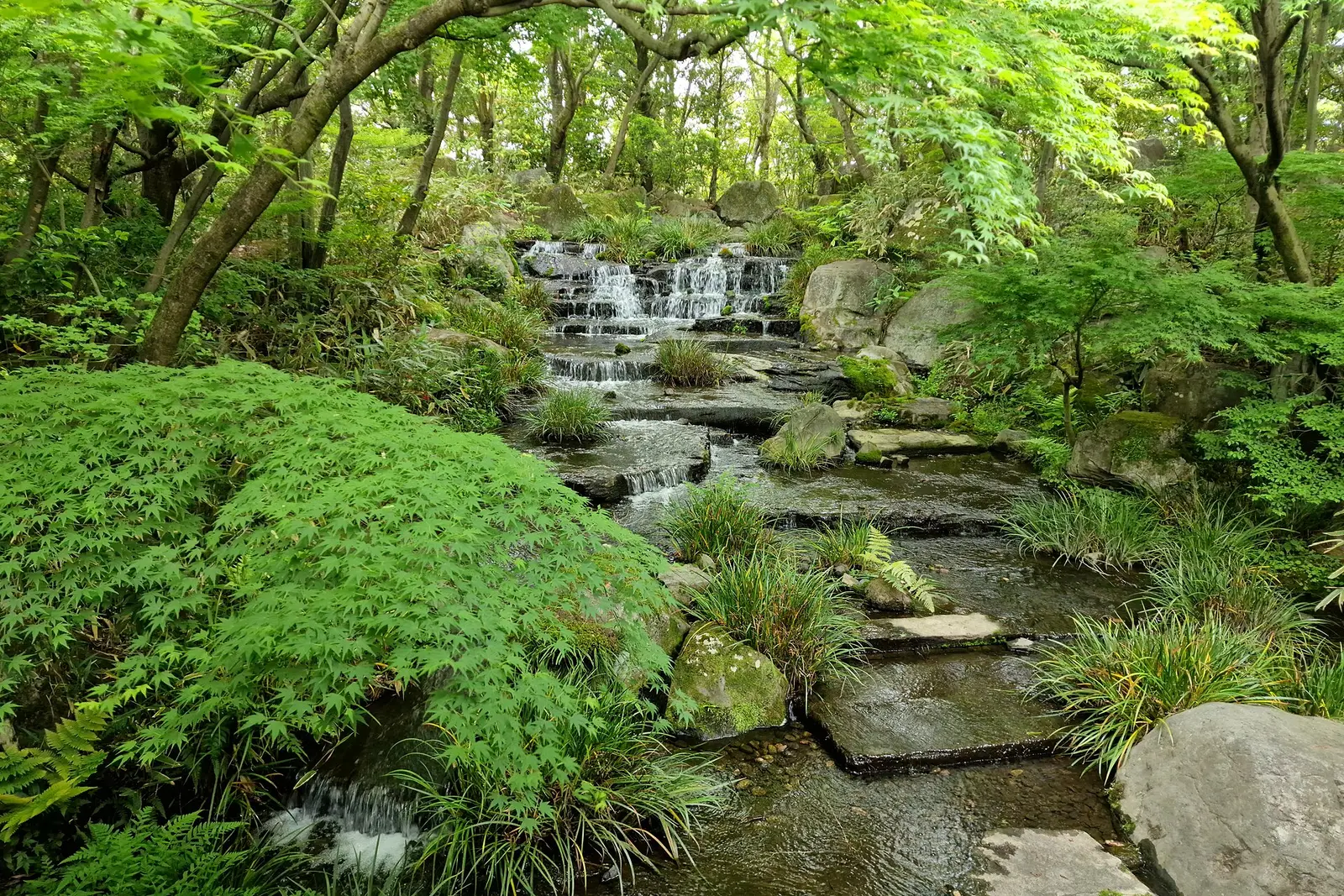
Koko-en Garden: Nine Gardens Beside Himeji Castle
Nine small Japanese gardens beside Himeji Castle, with a koi pond, a bamboo grove and a tea house.
 HIMEJI3 min read
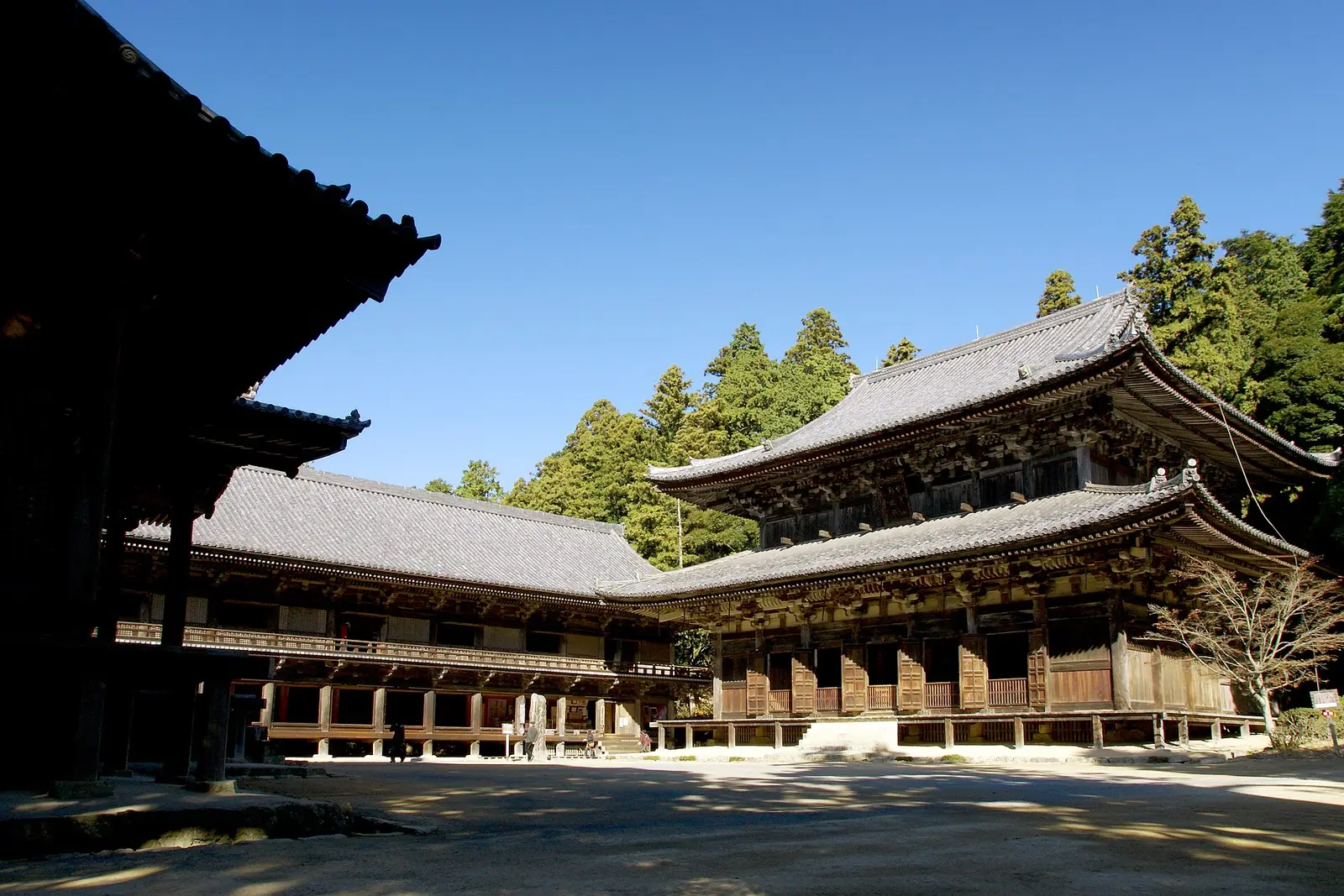
Engyo-ji: A Mountaintop Temple Above Himeji
A temple of old wooden halls in the forest on Mount Shosha, reached by ropeway.