Destinations › Iwate › Hiraizumi
Chuson-ji: The Golden Hall of Hiraizumi
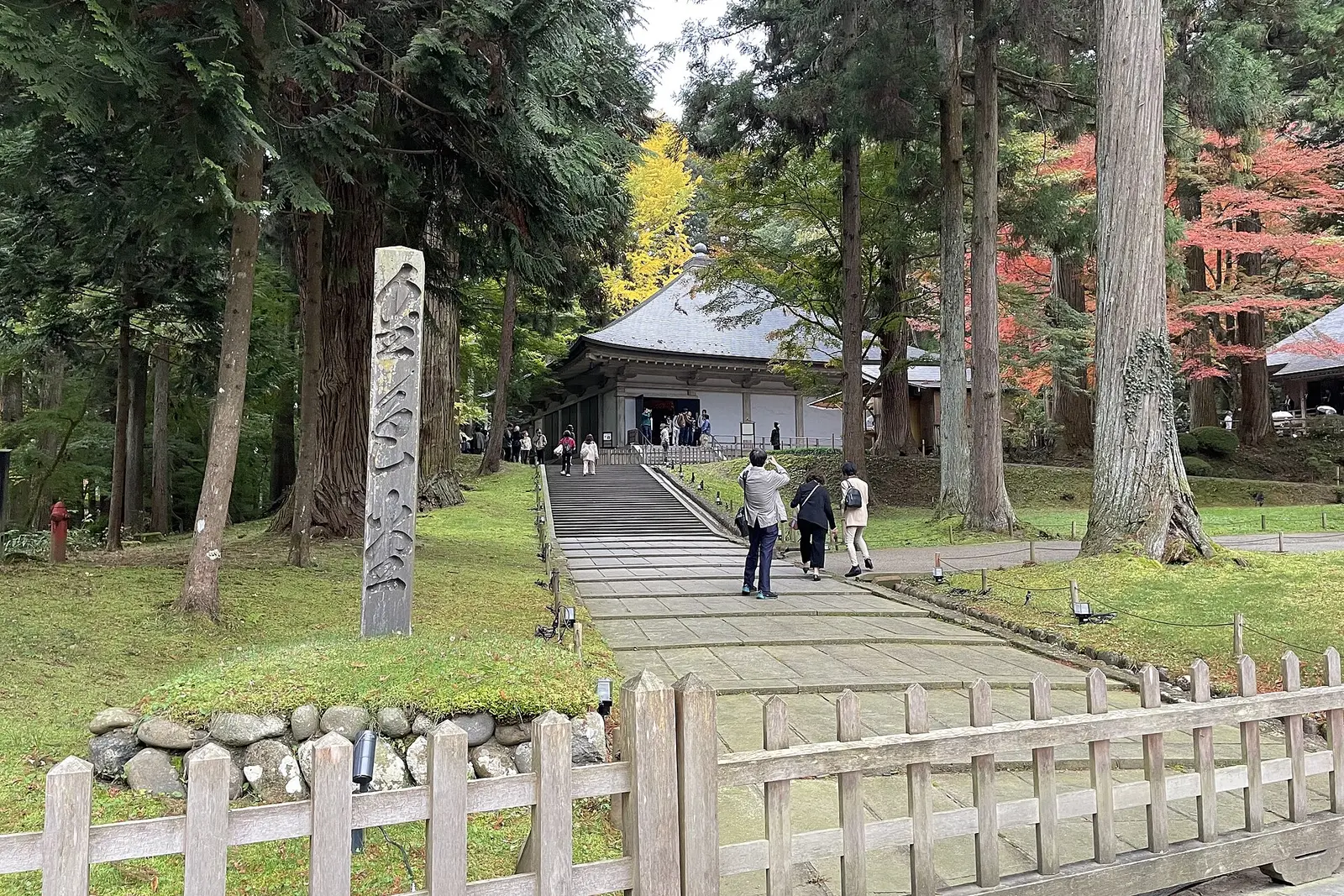
A path lined with tall cedars climbs a wooded hill above the Kitakami River. At the top, inside a protective hall, stands a small temple building covered in gold, inside and out. This is the Konjikido of Chuson-ji, built in 1124, and the four lords who made Hiraizumi great still rest beneath its altar.
A temple for peace
Chuson-ji is said to have been founded in 850 by Ennin, a great monk of Enryaku-ji on Mt. Hiei, the head temple of the Tendai school. Its golden age began in the early 12th century, when Fujiwara no Kiyohira, the first of the Oshu Fujiwara lords, began building on this hill in 1105.
Kiyohira had lived through the long wars that tore through northern Japan in the late 11th century, and he lost his father, wife and children in them. He built Chuson-ji to comfort the spirits of everyone who had died in those wars, friend and enemy alike, and to create a land of peace based on the teachings of the Buddha. At its height the temple had more than 40 halls and pagodas and more than 300 lodgings for monks.
The Fujiwara ruled for about 100 years, until 1189, when Minamoto no Yoritomo's army destroyed them. A fire in 1337 burned many of the temple buildings, but the most precious things survived. In 2011 Chuson-ji became part of the Hiraizumi World Heritage Site.
The walk up Tsukimizaka
The visit starts with Tsukimizaka, the old main approach. The slope is steep at first, and it is lined with old cedars planted by the Date lords of Sendai in the Edo period. Near the top, at the eastern lookout, you see the Kitakami River and the Koromo River below, and Mt. Tabashine across the valley. The rice fields below are the old Koromogawa battlefield of the Former Nine Years' War, one of those 11th-century wars.
Along the path stand smaller halls such as Benkei-do, which holds statues of the warrior Yoshitsune and his loyal follower Benkei. Further up is the Hondo, the main hall, rebuilt in 1909, where the "inextinguishable light," a flame kept burning since Saicho founded the Tendai school, is tended beside the main Buddha.
The Konjikido, the Golden Hall
The Konjikido is the only building left from the temple's first years. Its ridgepole was raised in 1124. It is a small hall, but it is covered in gold leaf inside and out. The four inner pillars, the altar and the beams are decorated with mother-of-pearl from shells brought from the southern seas, along with lacquer, ivory and openwork metal. The whole hall feels like a single work of art.
On the altar sits Amida Buddha with two attendant bodhisattvas, six Jizo and two guardian kings, an arrangement found nowhere else. Inside the altar platform lie the remains of Kiyohira, his son Motohira and grandson Hidehira, and the head of the fourth lord, Yasuhira. The temple says no other place in the world holds the remains of four generations of one family like this.
The Konjikido was the first building named a National Treasure under Japan's postwar law. A major repair from 1962 brought back its original shine. Today it stands inside a newer protective hall. The old shelter hall, said to have been built in 1288, was moved nearby during the repair, and you can walk through it too.
Treasures and the noh stage
Your ticket also covers the Sankozo museum, which holds about 3,000 treasures left by the Fujiwara, including Buddhist statues from the Heian period and the National Treasure sutras of Chuson-ji, and the Kyozo, the old sutra hall.
The noh stage of Hakusan Shrine was rebuilt by the Date clan in 1853 and is an Important Cultural Property. Priests of the temple still perform noh here on May 4 and 5.
Tickets and hours
The grounds are open all year. The ticket for the Konjikido, the Sankozo museum, the Kyozo and the old shelter hall costs ¥1,000 for adults, ¥700 for high school students, ¥500 for junior high and ¥300 for elementary school students. The halls are open from 8:30 to 17:00 from March 1 to November 3, and from 8:30 to 16:30 from November 4 to the end of February. Ticket sales end 10 minutes before closing, and if you arrive late you may only have time for the Konjikido.
Getting there
Take the Tohoku Shinkansen to Ichinoseki, then the JR Tohoku Line to Hiraizumi, 8 to 9 minutes. Chuson-ji is about 1.6 km from Hiraizumi Station. A regular Iwate Kotsu bus runs from Ichinoseki Station via Hiraizumi Station to Chuson-ji, and the Runrun loop bus runs around town on weekends and holidays. The town car parks below the temple cost ¥400 for a car, and a private car park closer to the top costs ¥500.
Tips
- There are no coin lockers at the temple. Use the lockers at Hiraizumi Station.
- Pets can walk on the grounds, but not into the Konjikido area or any building.
- The Chrysanthemum Festival is held from October 20 to November 15.
Nearby
Motsu-ji, the temple of the second Fujiwara lord, is about 1.6 km away, closer to the station.
More on Hiraizumi
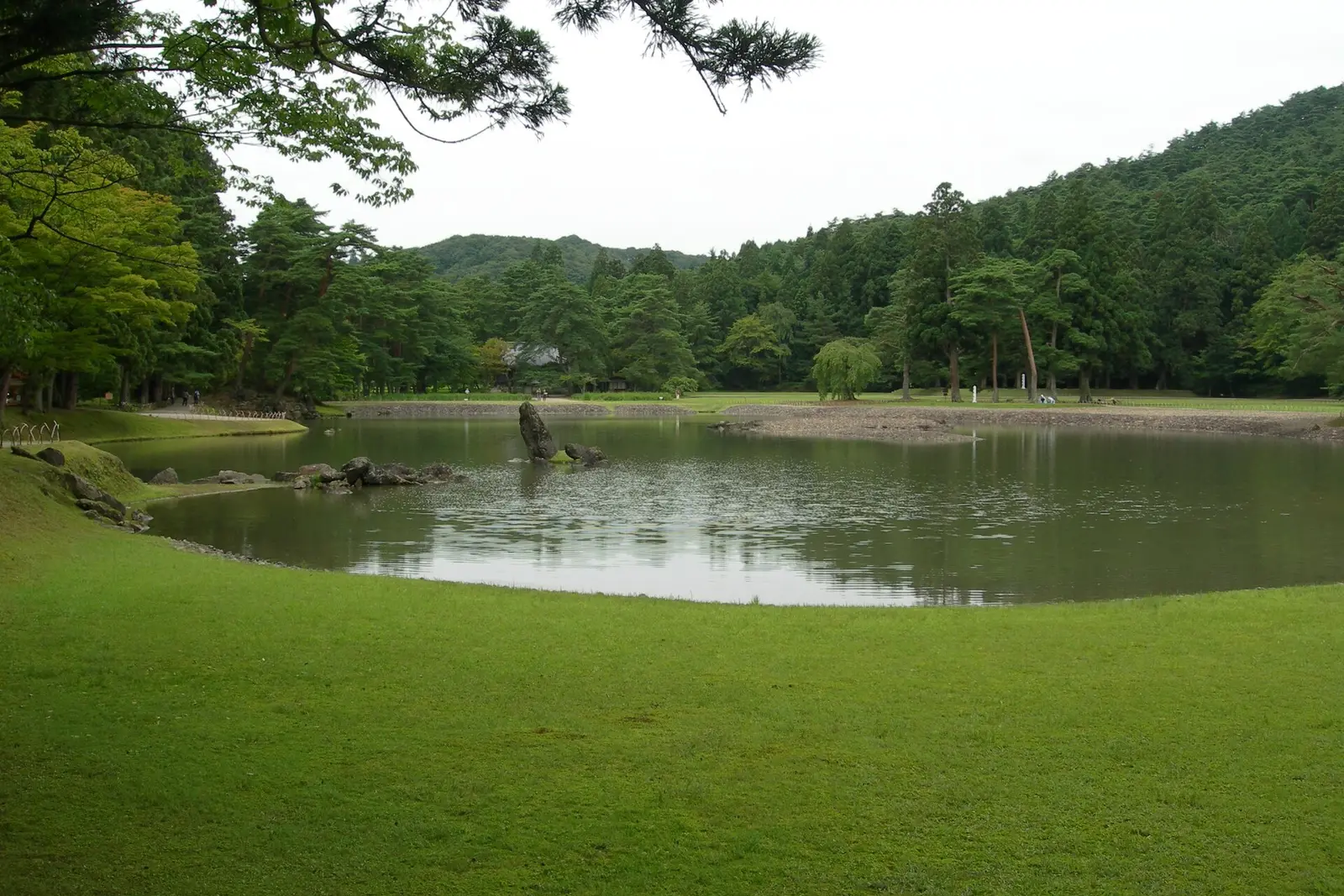 HIRAIZUMI3 min read
Motsu-ji: A Pure Land Garden from the Heian Period
A wide pond garden from the 12th century, the foundations of a vanished temple, and a famous haiku. Hours, prices and events.
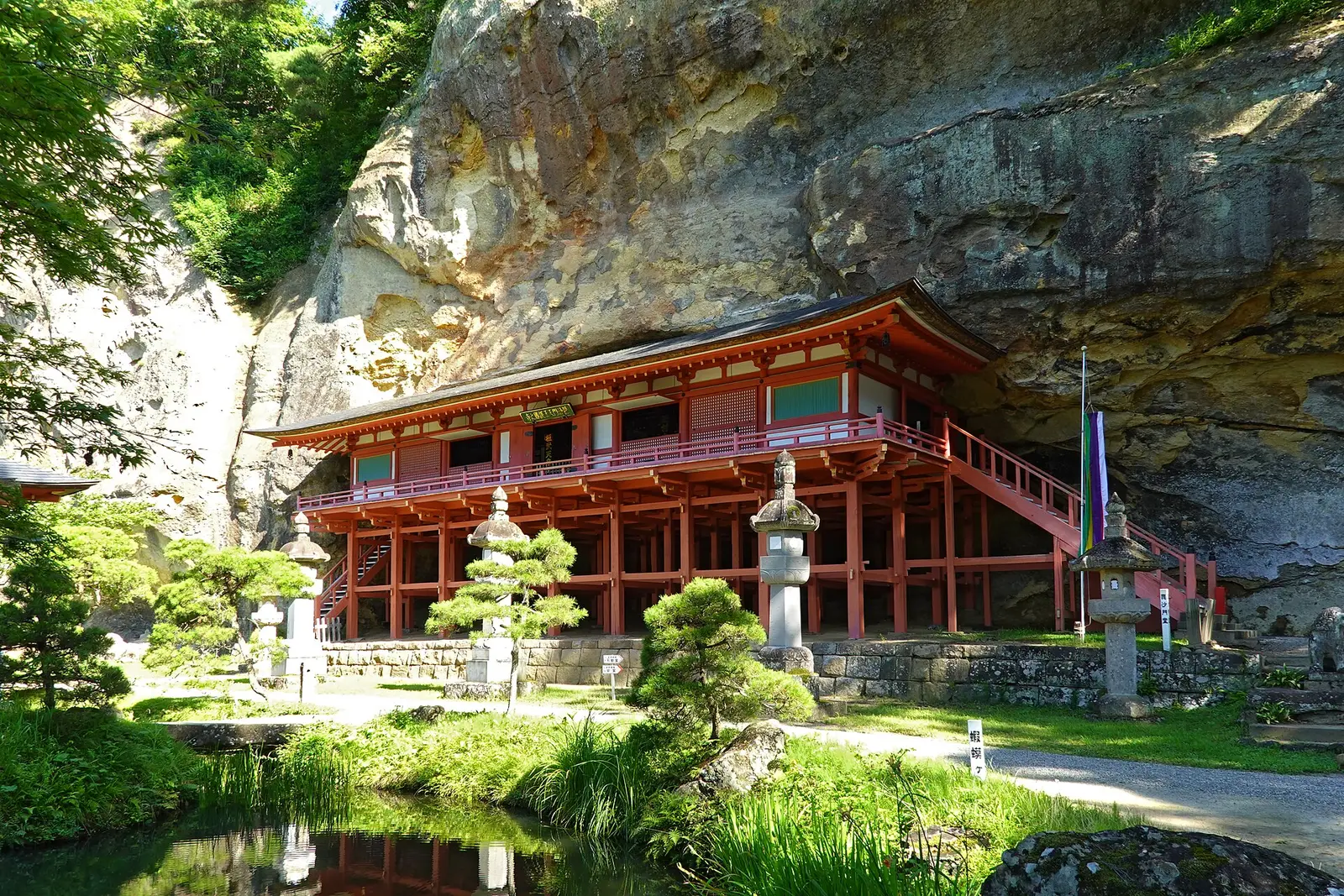 HIRAIZUMI3 min read
Takkoku no Iwaya: The Temple Hall Built into a Cliff
A red hall tucked under an overhanging cliff, a giant Buddha face carved in the rock, and a legend of a general and a bandit king.
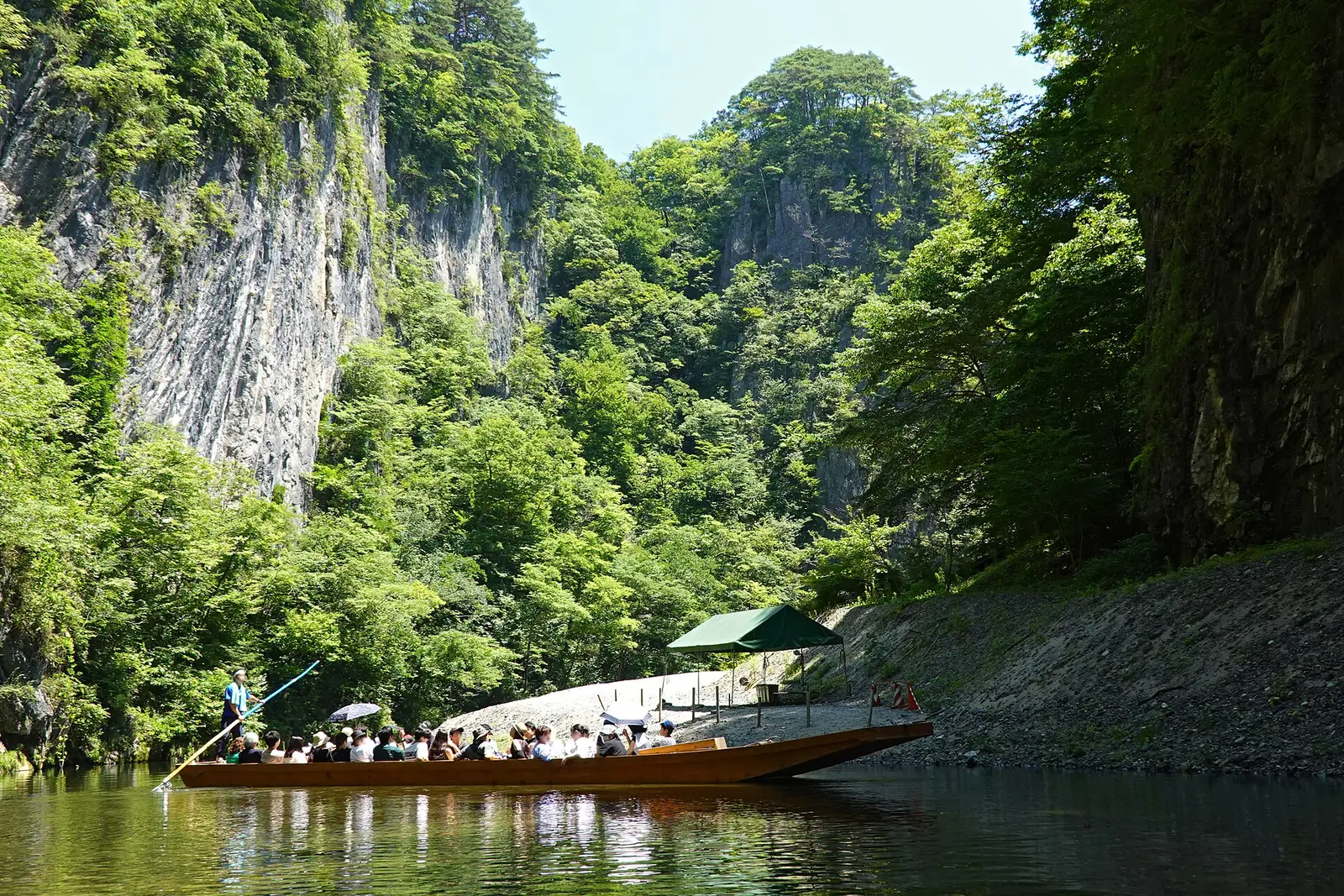 HIRAIZUMI3 min read
Geibikei Gorge: A Boat Ride Between 100-Meter Cliffs
A calm river between towering limestone cliffs, a boatman with a single pole and a folk song. Fares, timetable and access.