Destinations › Iwate › Hiraizumi
Motsu-ji: A Pure Land Garden from the Heian Period
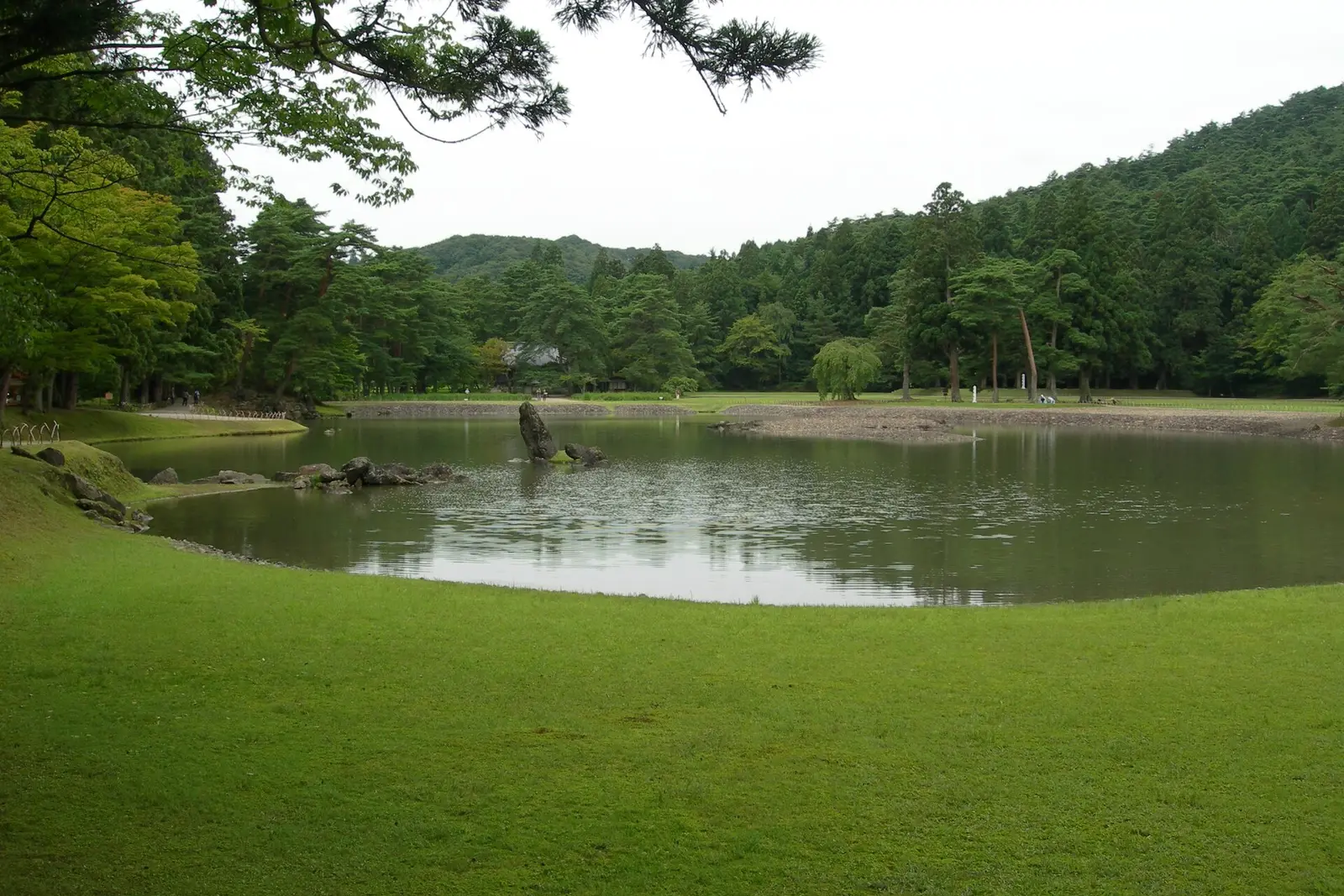
The halls of Motsu-ji burned down centuries ago, but its garden survived. Around a broad pond, a pebble beach curves like a seashore, a single tall stone rises from a rocky point, and a little stream winds through the grass, just as they were laid out more than 800 years ago. The temple calls it one of the most valuable gardens surviving from the Heian period.
The temple that was greater than Chuson-ji
Like Chuson-ji, Motsu-ji is said to have been founded by the monk Ennin in 850. Its great buildings were begun by Fujiwara no Motohira, the second Fujiwara lord, and completed under his son Hidehira. At its height it had more than 40 halls and pagodas and more than 500 lodgings for monks, and was praised as having no equal in the country.
After the Fujiwara fell, fire after fire destroyed every building. What survived was the garden and the stone foundations of the old halls. Today the temple grounds are both a Special Historic Site and a Special Place of Scenic Beauty. According to the Hiraizumi Tourism Association, only nine places in Japan held this double designation as of 2016.
The Pure Land garden
A Pure Land garden places the temple halls and a pond together to show the paradise of the Buddha on earth. At Motsu-ji, a small hill to the north forms the backdrop. The garden follows the ideas and techniques of the Sakuteiki, the oldest book on garden making in Japan.
At its center is Oizumi-ga-ike pond, about 180 meters from east to west and 90 meters from north to south, with a curved island in the middle. Look for these spots as you walk around it:
- The rocky point: On the southeast shore, rocks run out into the water like a wild coast, and on the tip stands a stone about 2 meters tall. It is one of the most beautiful views in the garden.
- Suhama: In the southeast corner, a shallow beach of round pebbles curves gently like a sandy shore. As the water level changes, more or less of it appears.
- Tsukiyama: In the southwest corner, rocks are set on a mound about 4 meters high to look like a cliff over a deep pool.
- Yarimizu: On the northeast side, a winding stream carries water into the pond, with stones placed to split and slow the flow. The temple says it is the only yarimizu stream left from the Heian period.
Long ago, an arched bridge ran from the Great South Gate to the island. Two of its old posts are kept in the treasure hall. The temple says they are the oldest bridge remains in Japan.
Buildings and a haiku
The main hall, built in 1989 in the Heian style, enshrines a Yakushi Buddha from the Heian period. Jogyo-do, a hall rebuilt in 1732 for the Date lord of Sendai, enshrines a secret deity, Matarajin, whose doors are opened only once every 33 years. On January 20, priests perform old rites and the Ennen-no-Mai dances here.
On the way from the gate to the main hall stands a stone carved with Basho's famous haiku, "Summer grasses, all that remains of warriors' dreams," written in his own hand, with a second stone carrying an English translation by Nitobe Inazo. Basho wrote it in 1689 at Takadachi, where Yoshitsune died 500 years earlier.
The treasure hall shows Buddhist statues, books and crafts from the Heian period, finds from the excavations and the tools of the Ennen dances. It has an elevator.
Seasons and events
- Gokusui no En: On the fourth Sunday of May, a poetry party in the elegant style of the Heian court is held along the yarimizu stream.
- Iris Festival: About 30,000 irises of 300 varieties bloom from mid-June to mid-July. The festival runs from June 10 to 30.
- Autumn: The bush clover festival runs from September 25 to October 20, and the autumn leaves festival from October 26 to November 15.
Tickets and guides
Entry costs ¥700 for adults, ¥400 for high school students and ¥200 for elementary and junior high school students. The temple is open every day from 8:30 to 17:00, and to 16:30 from November 5 to March 4.
At the gate you can rent an audio guide pen in seven languages, including English, for ¥500. You can return it at Hiraizumi Station or Chuson-ji. Licensed local guides of the Iwate Hiraizumi interpreter guide group give tours in foreign languages.
Getting there
Motsu-ji is about 0.7 km from JR Hiraizumi Station, a 7-minute walk. The parking lot costs ¥300 for a car.
Nearby
Right next door to the east are the ruins of Kanjizaio-in, a temple said to have been built by Motohira's wife, now a historic park. Chuson-ji is about 1.6 km away.
More on Hiraizumi
 HIRAIZUMI3 min read
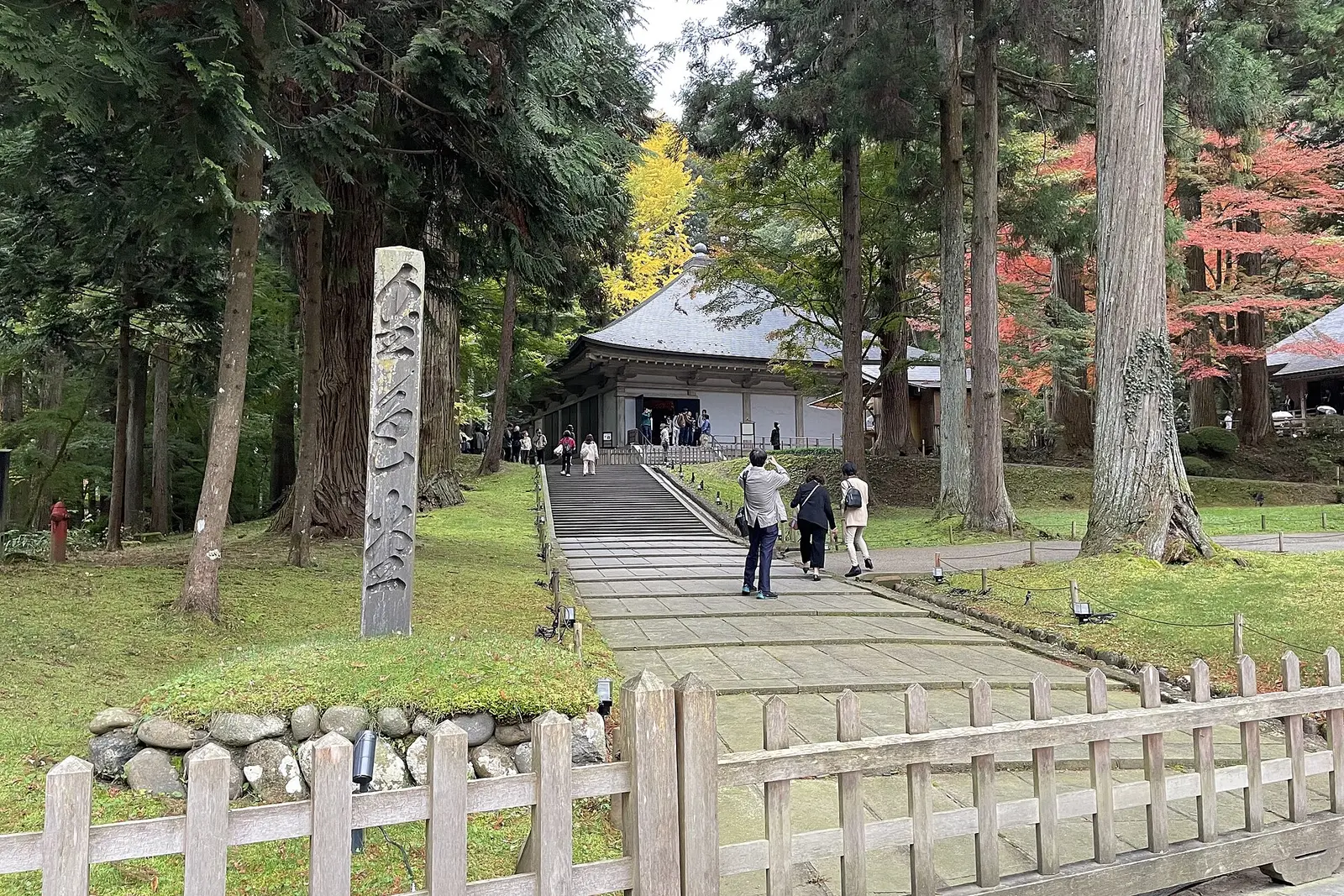
Chuson-ji: The Golden Hall of Hiraizumi
A hilltop temple of the Fujiwara lords, with a hall covered in gold leaf from 1124. What to see, hours and tickets.
 HIRAIZUMI3 min read
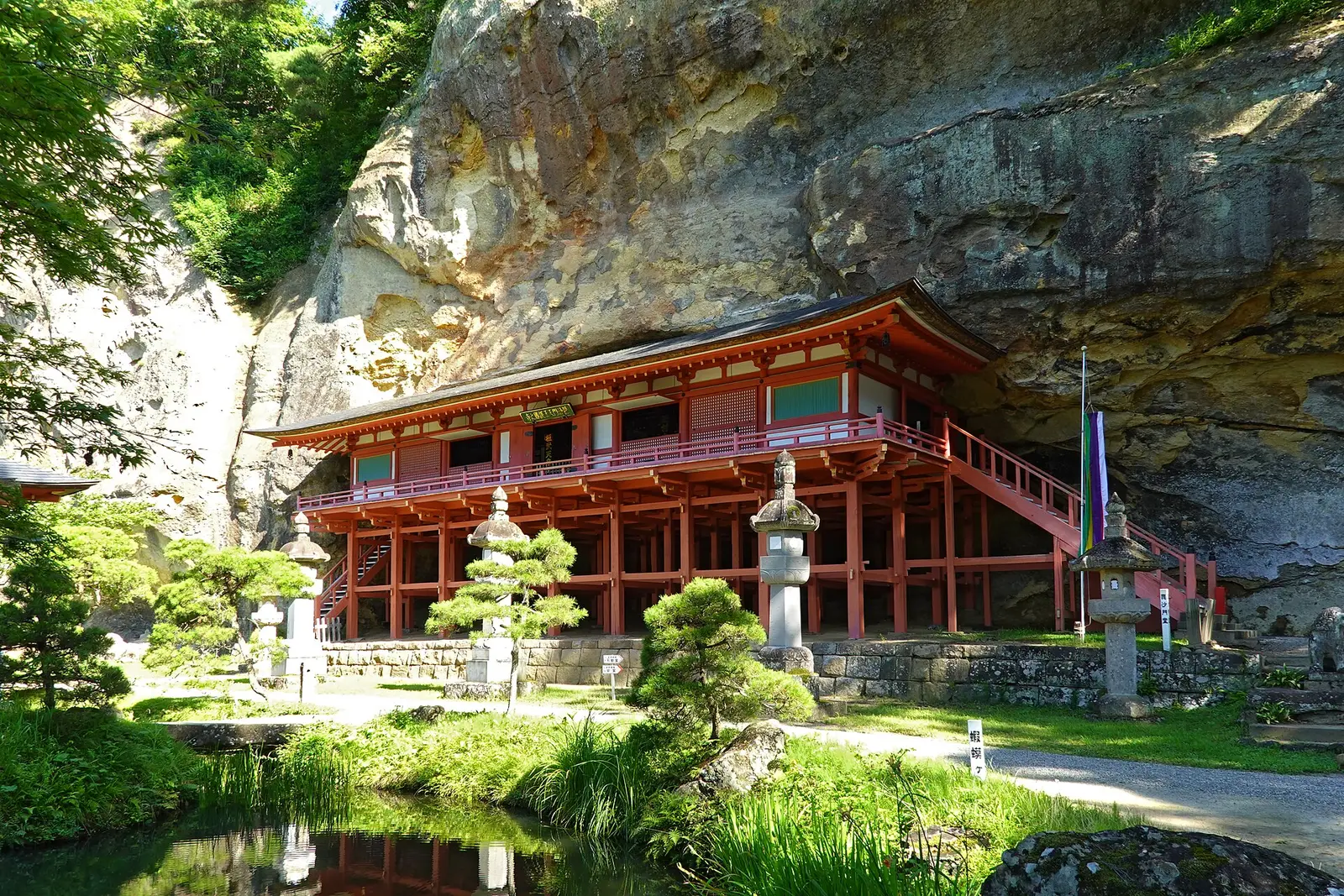
Takkoku no Iwaya: The Temple Hall Built into a Cliff
A red hall tucked under an overhanging cliff, a giant Buddha face carved in the rock, and a legend of a general and a bandit king.
 HIRAIZUMI3 min read
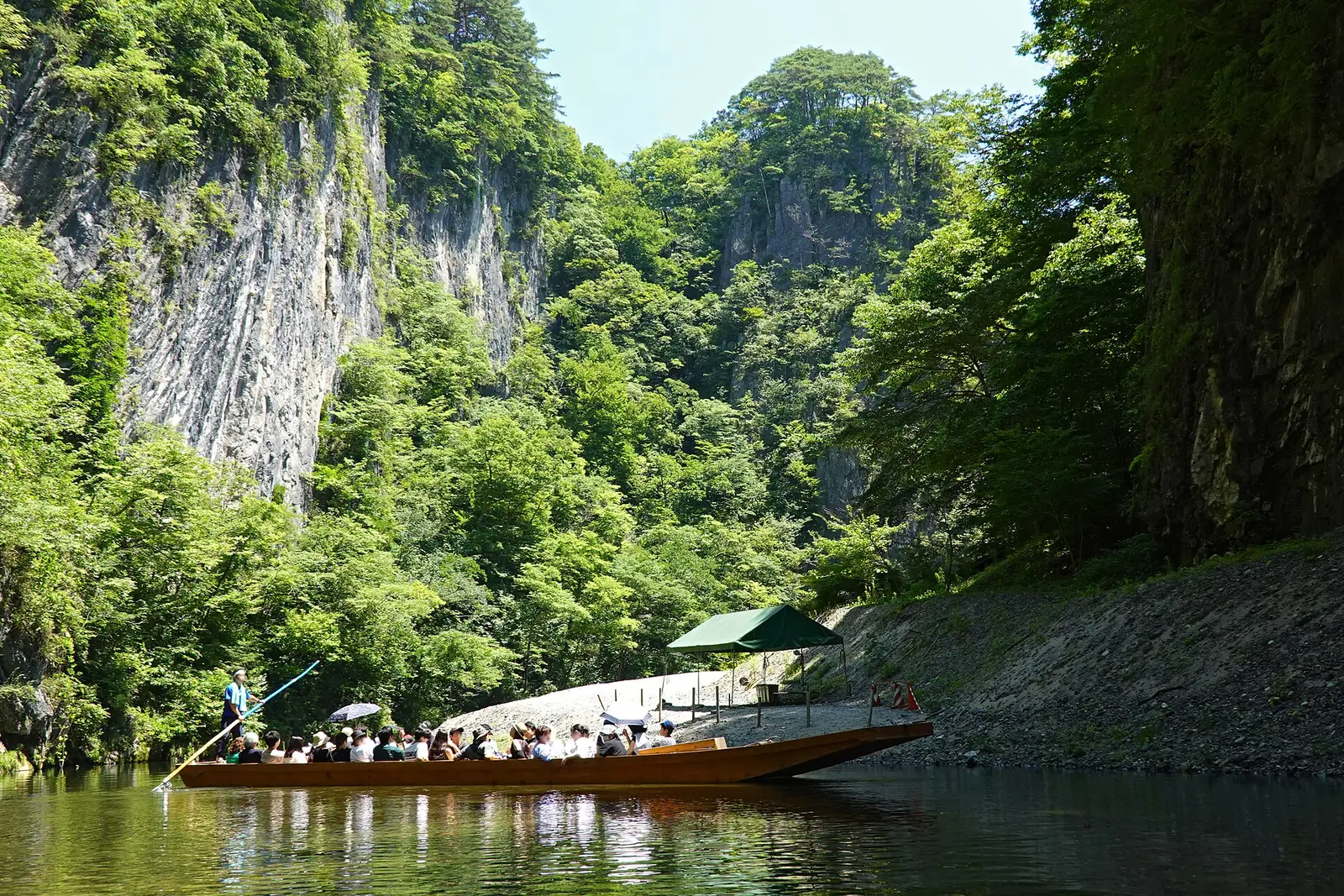
Geibikei Gorge: A Boat Ride Between 100-Meter Cliffs
A calm river between towering limestone cliffs, a boatman with a single pole and a folk song. Fares, timetable and access.