Destinations › Aomori › Hirosaki
Hirosaki Castle and Park: Cherry Blossoms and an Original Keep
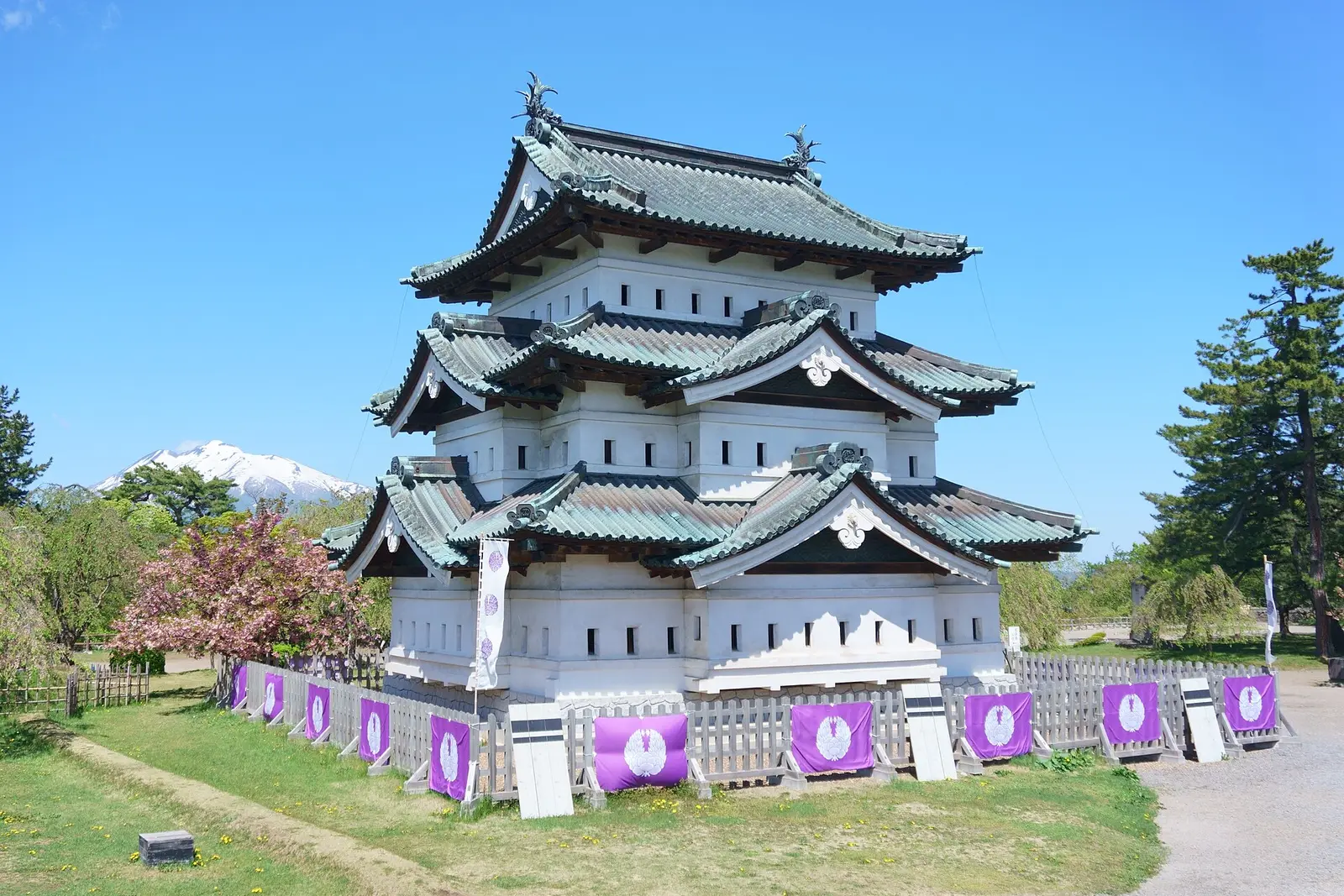
In the middle of Hirosaki, the grounds of the old castle of the Tsugaru lords are now a huge public park. A small white keep from 1810 still stands inside, surrounded by moats, gates and thousands of cherry trees. In spring the whole park turns pink, and the city holds one of the best-known cherry blossom festivals in Japan.
The castle of the Tsugaru lords
Hirosaki Castle was planned by Tsugaru Tamenobu, the first lord of the Hirosaki domain, and completed in 1611 under the second lord, Nobuhira. It was a large castle for its region, made up of six enclosures and about 500 meters wide and 1,000 meters long. Three rings of moats guard it on three sides, and on the west side a pond and the West Moat, once a channel of the Iwaki River.
The first keep had five stories and stood at the southwest corner of the main enclosure. In 1627 it was struck by lightning and burned down. For almost two centuries the castle had no keep at all. In 1810 the ninth lord, Yasuchika, rebuilt one, officially as a corner turret, and this is the keep you see today.
An original keep
The Hirosaki keep is one of only 12 castle keeps in Japan that survive from the Edo period, and the only one in the Tohoku region. It is small, three stories high, but it is a real building from 1810, not a modern copy. Together with three corner turrets and five castle gates, it is an Important Cultural Property.
The castle grounds opened to the public as Hirosaki Park in 1895, and the whole site is a National Historic Site. Today the park covers about 49 hectares in the center of the city.
The keep that moves
The stone walls under the keep began to bulge, so in 2015 the keep was lifted and moved about 70 meters toward the center of the main enclosure. Workers then took apart about 2,200 stones of the wall, one by one, and rebuilt it. The last stone went back in December 2024.
In 2026 the keep began its slow journey back to its old base. The city now expects it to reach its original position in March 2027 and to be fixed in place by around autumn 2027. During this work the inside of the keep is closed, and the city plans to keep it closed until about 2033 for repairs and earthquake strengthening. You can still see it from outside until about 2028. After that it will be covered for several years of repair work.
What to see
The red Gejo-bashi bridge crosses the inner moat to the main enclosure. In the days of the lords, retainers had to get off their horses before crossing it. Today the view of the keep from this bridge is the classic photo of Hirosaki.
Look for the five old gates. Their lower roofs sit unusually high, which is said to be a design for the heavy snow. The North Gate, Kamenoko-mon, was the castle's main entrance when it was built. Along the West Moat, cherry trees arch over the water from both banks.
Across from Gejo-bashi, the Hirosaki Castle Information Center explains the castle's history and sells the castle's goshuin, a paper souvenir of your visit. In the third enclosure, the Hirosaki Castle Botanical Garden has about 1,500 kinds of plants.
Four seasons of festivals
Hirosaki Park has about 2,600 cherry trees of 52 varieties. Thanks to careful care, the old trees produce thick clusters of blossoms, often four or five flowers from a single bud. The Hirosaki Cherry Blossom Festival in 2027 runs from April 16 to May 5, and the trees are lit up after sunset until 22:00. During the festival you can take a boat on the moats and buy food at about 200 stalls.
In autumn, about 1,000 maples and the cherry trees turn red, and the Chrysanthemum and Autumn Foliage Festival is held. In winter, the Snow Lantern Festival fills the park with snow sculptures and lanterns.
Tickets and hours
Most of the park is free and always open. The main enclosure (Honmaru) and the north enclosure (Kita-no-Kuruwa) are a paid area from April 1 to November 23. Entry is ¥320 for adults and ¥100 for elementary and junior high school students, from 9:00 to 17:00. During the cherry blossom festival the paid hours run to 21:00. From November 24 to March 31 the paid area is free. It is also free on the last Sunday of May.
A combined ticket for the castle, the Botanical Garden and Fujita Memorial Garden costs ¥520 for adults.
Getting there
From the central exit of JR Hirosaki Station, take the Dotemachi Loop Bus from stop D100 to Shiyakusho-mae, in front of City Hall and the park. It runs every 10 minutes and costs ¥200 in cash or ¥180 with an IC card such as Suica.
Tips
- Dogs are allowed in the park only in a cage or cart, except assistance dogs.
- Part of the south side of the main enclosure is closed for the keep work until about March 2027. Use the temporary stairs.
Nearby
Fujita Memorial Garden is right next to the park. Tsugaru-han Neputa Village and the Nakacho samurai district are outside the North Gate.
More on Hirosaki
 HIROSAKI3 min read
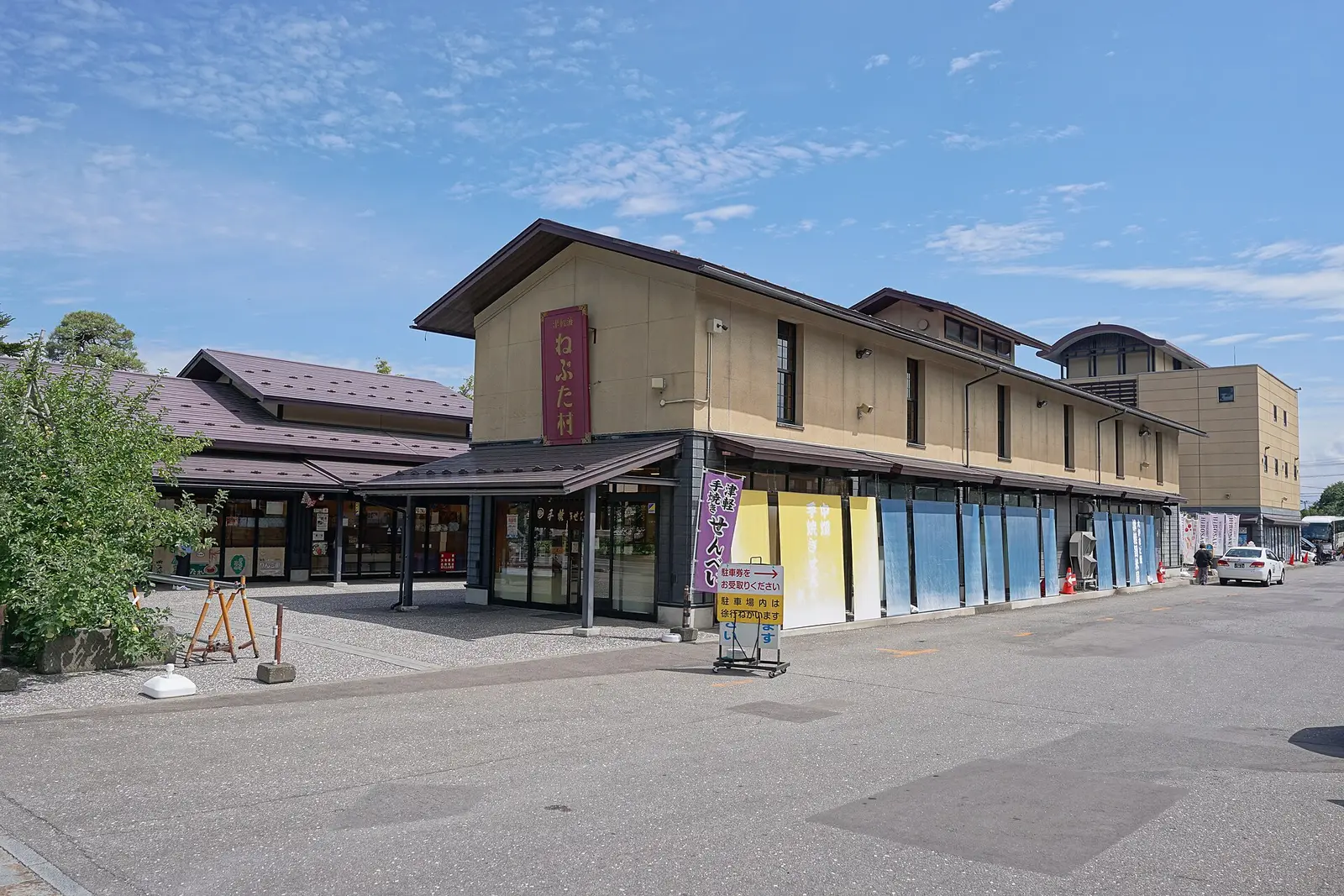
Tsugaru-han Neputa Village: Hirosaki's Festival All Year Round
Giant fan-shaped lantern floats, live Tsugaru shamisen and local crafts, next to Hirosaki Park. Plus the August Neputa Festival.
 HIROSAKI3 min read
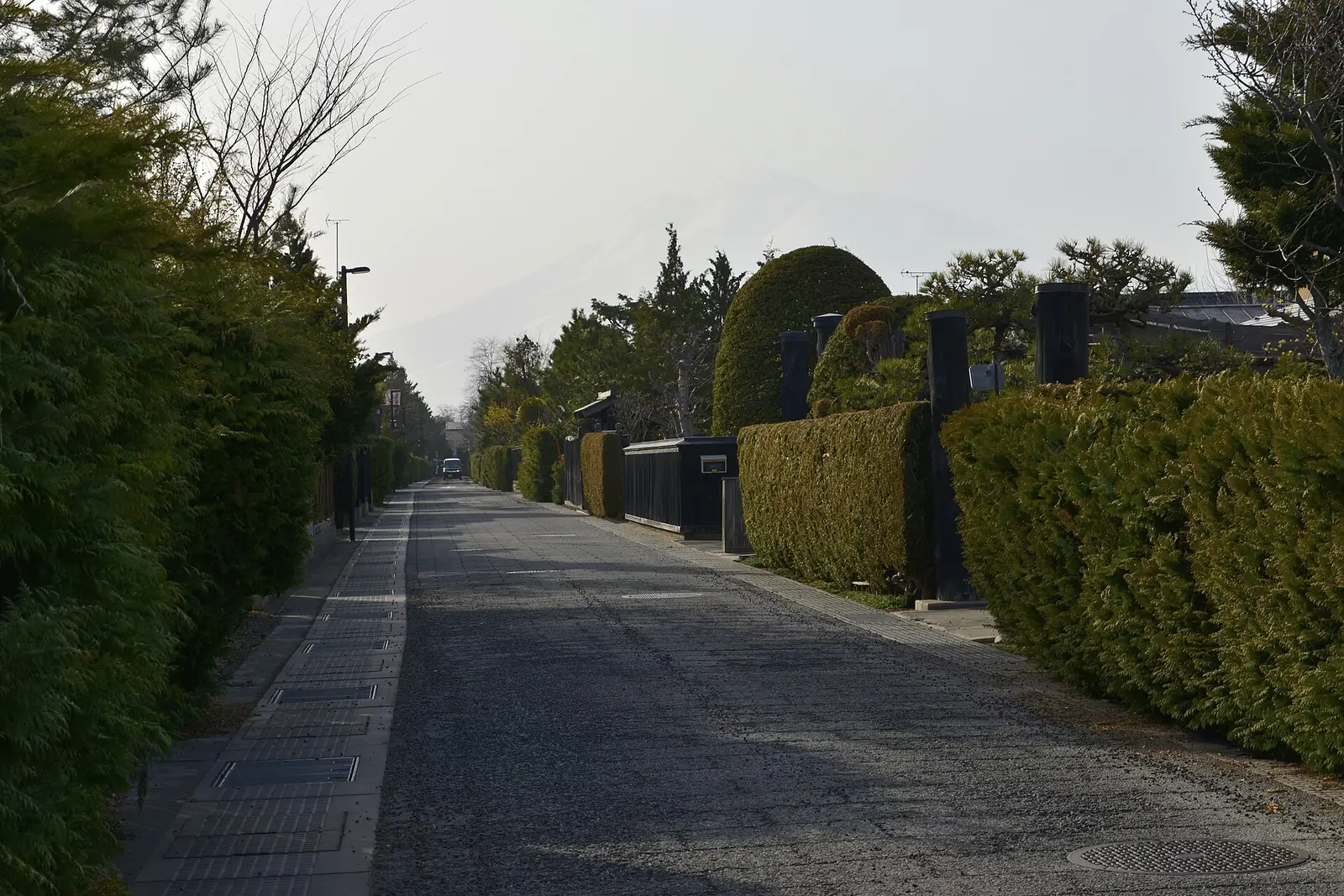
Nakacho: Hirosaki's Old Samurai District
Quiet lanes lined with cypress hedges and black gates, north of Hirosaki Castle, with four old samurai houses to step inside.
 HIROSAKI3 min read
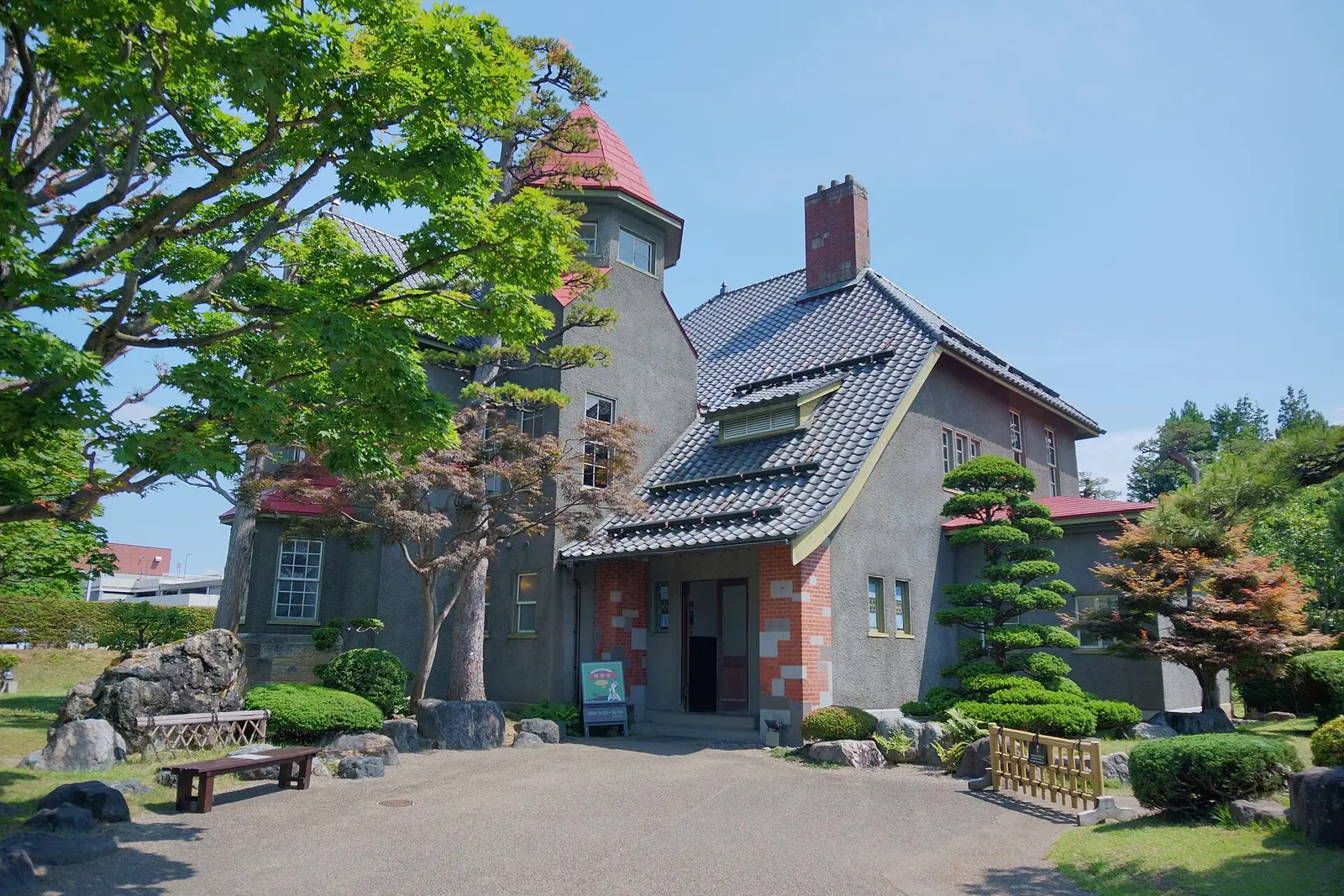
Fujita Memorial Garden: A Taisho-Era Villa and Garden in Hirosaki
A Western-style house with a café, a Japanese house facing Mt. Iwaki and a pond garden, right next to Hirosaki Park.