Destinations › Hyogo › Kobe
Arima Onsen: Kobe's Ancient Hot Spring Town
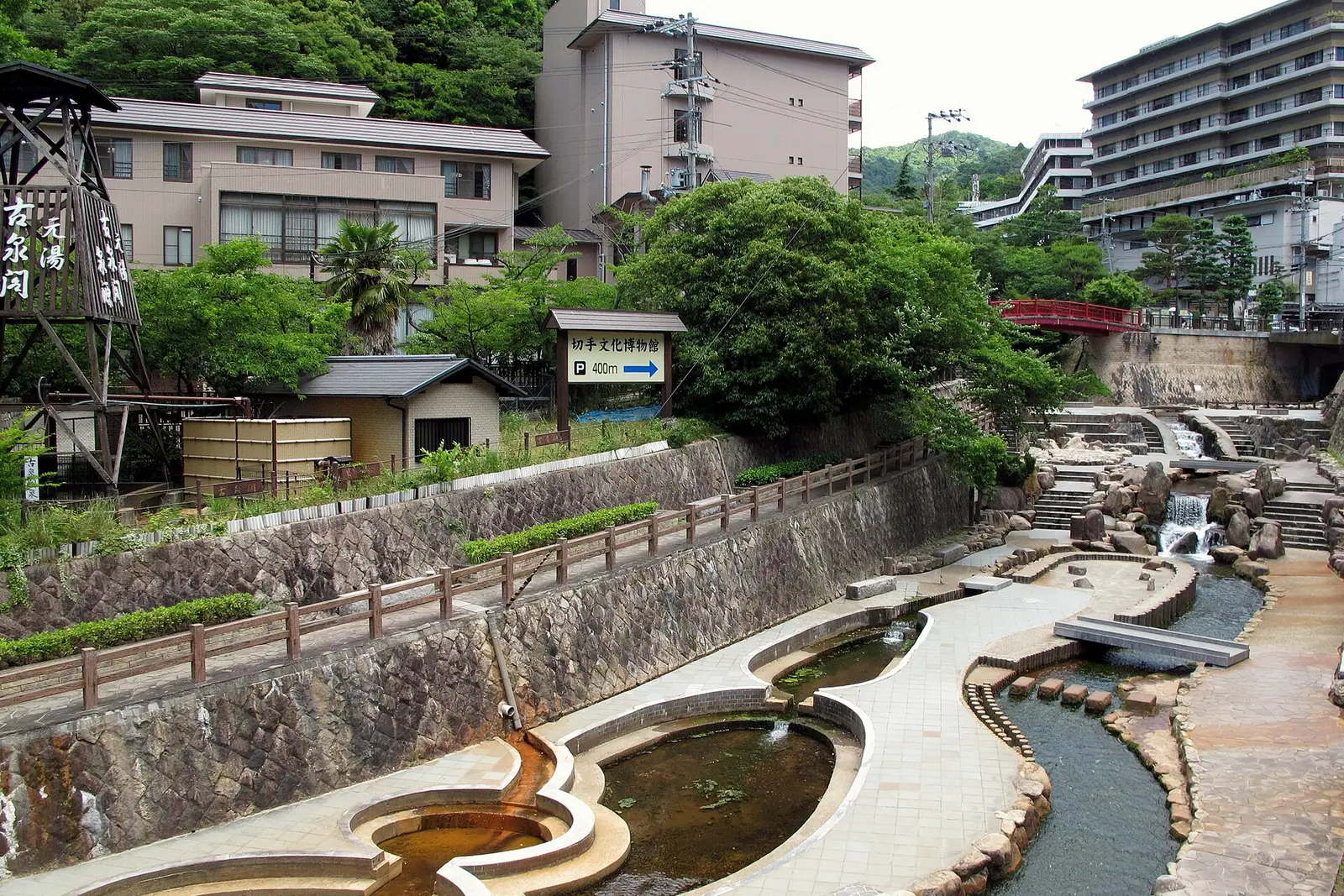
Behind Kobe's skyscrapers and harbor, a short ride into the Rokko Mountains brings you to a village of narrow, winding lanes and steaming water. Arima Onsen has been welcoming bathers for well over a thousand years, and you can visit it in a day.
One of Japan's oldest hot springs
Arima Onsen lies in the mountains behind Kobe, at roughly 350 to 500 meters above sea level. Its first known mention dates to the year 631, when Emperor Jomei is said to have bathed here. In the Edo period, hot springs were ranked in lists like sumo wrestlers, and Arima held the high rank of ozeki in the Kansai region. The warlord Toyotomi Hideyoshi, who ruled much of Japan in the late 1500s, loved the place too. Each November, the town holds a tea ceremony in his memory.
Today it is a small town of old inns, temples, shrines and shops along narrow lanes that climb and bend with the hills. It feels very far from the city, but it is inside Kobe's borders.
The gold water and the silver water
Arima is known for two kinds of water, and the difference is easy to see.
Kin no Yu, "gold water," is full of iron, and the iron turns the water a reddish brown when it meets the air. It is also very salty, about one and a half to two times as salty as seawater. It has no smell. The town says it is good for sore joints and cold hands and feet.
Gin no Yu, "silver water," is the opposite: clear and colorless. It is a carbonated spring, and Arima also has a mildly radioactive radium spring in this group. The town says these waters help blood flow and tired muscles.
The two public baths
You do not need to stay at an inn to bathe. Two public bathhouses sit close together in the center of town, one for each type of water.
Kin no Yu is the more popular one. Hours are 8 am to 10 pm, with the last entry at 9:30 pm. It is closed on the second and fourth Tuesday of each month, and on January 1. Entry is ¥800, or ¥650 on weekdays.
Gin no Yu is open from 9 am to 9 pm, with the last entry at 8:30 pm. It is closed on the first and third Tuesday of each month, and on January 1. Entry is ¥700, or ¥550 on weekdays.
A ticket for both baths is ¥1,200. Bring your own towel, or buy one at the counter. Kin no Yu provides body soap, shampoo and hair dryers. Outside Kin no Yu there is also a free foot bath, if you only want to rest your feet. Tattoo rules vary from place to place, so if you have tattoos, ask at the counter before you pay.
If you have never used a Japanese bath, rinse and wash yourself before getting in, and keep your towel out of the water.
What else to do in town
Arima is the birthplace of a few small treats. Japan's first cider was made here, and so were tansan senbei, crisp rice crackers made with the carbonated spring water. In the Meiji era, around the late 1800s, doctors in Arima also worked out that the carbonated water was good for people, not harmful as many had believed.
Walk the lanes and stop at the shops for crackers, sweets and local crafts such as Arima doll brushes. Onsen-ji, a temple in town, keeps old Buddhist statues that are nationally protected.
The town is small, so a half day is enough for a walk and one bath. For a longer visit, leave time for a second bath in the evening. Weekdays are quieter than weekends, and the baths are cheaper then too.
Getting there
From Sannomiya, the trip takes about 30 minutes. From Osaka, Kyoto and Himeji, it takes about an hour. If you are short on time in Kobe, this is an easy half-day trip from the city.
Nearby
Arima sits in the hills north of the city, so it makes a good contrast with the harbor side. Back in town, the Nunobiki Herb Gardens are on the same mountain side of Kobe, a ropeway ride above Shin-Kobe Station. If you would rather end the day with food, Nankinmachi, Kobe's Chinatown, is the easiest place to eat near the waterfront.
More on Kobe
 KOBE3 min read
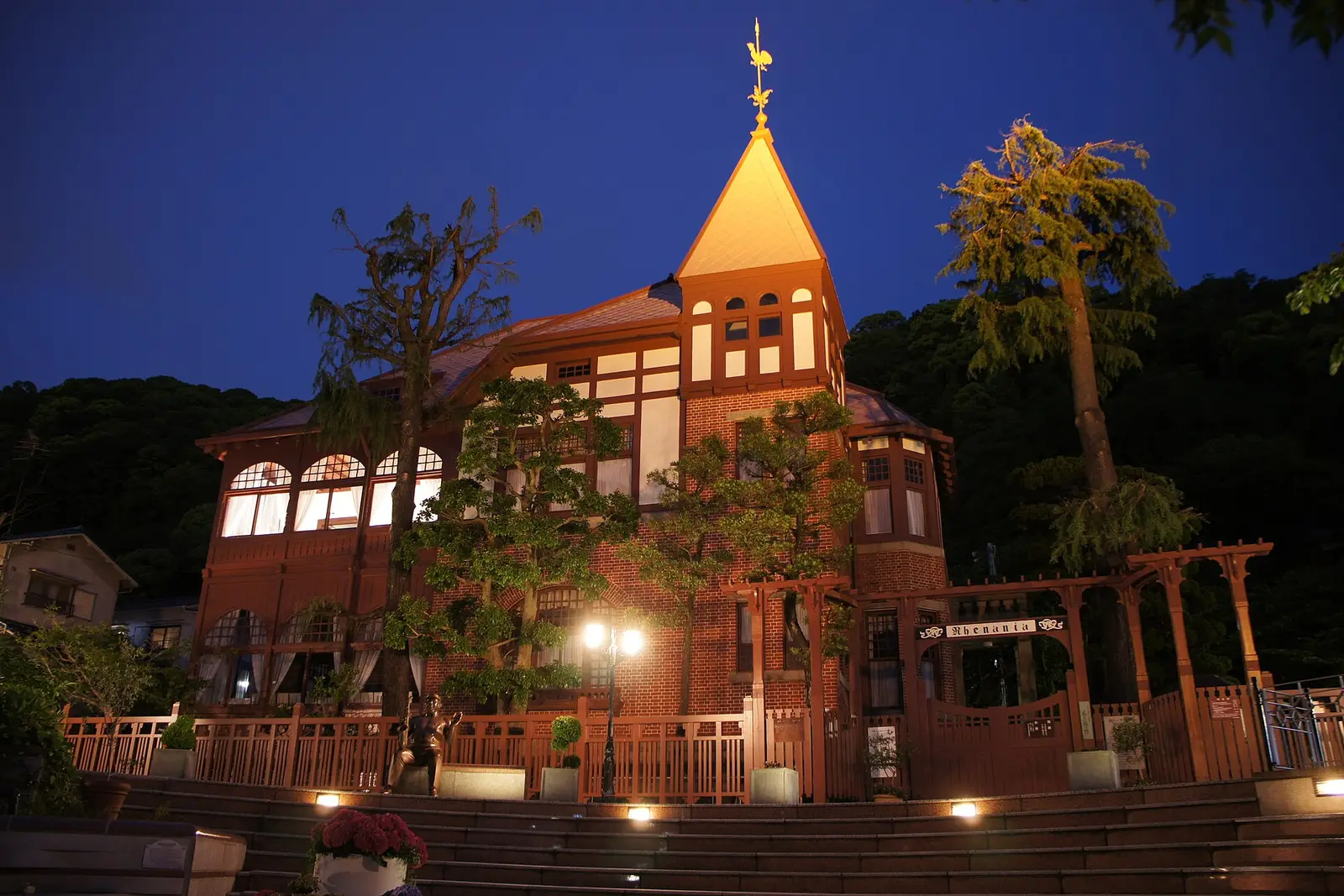
Kitano Ijinkan: Kobe's Old Foreign Houses
Western-style houses from Kobe's early days as a treaty port, a short walk up from downtown.
 KOBE3 min read
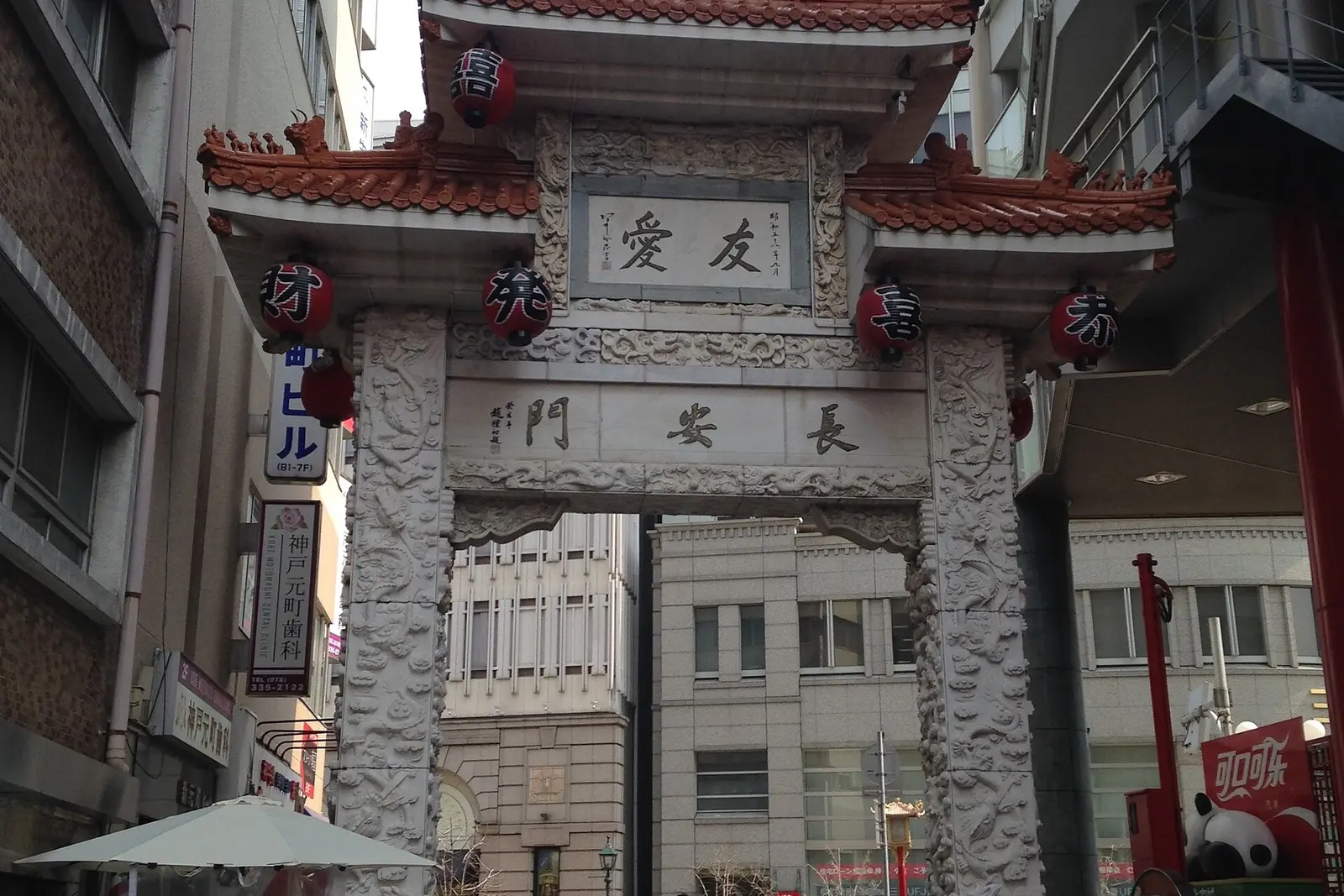
Nankinmachi: Kobe's Chinatown
A small, busy Chinatown of red gates and street snacks, a few minutes from Motomachi Station.
 KOBE3 min read
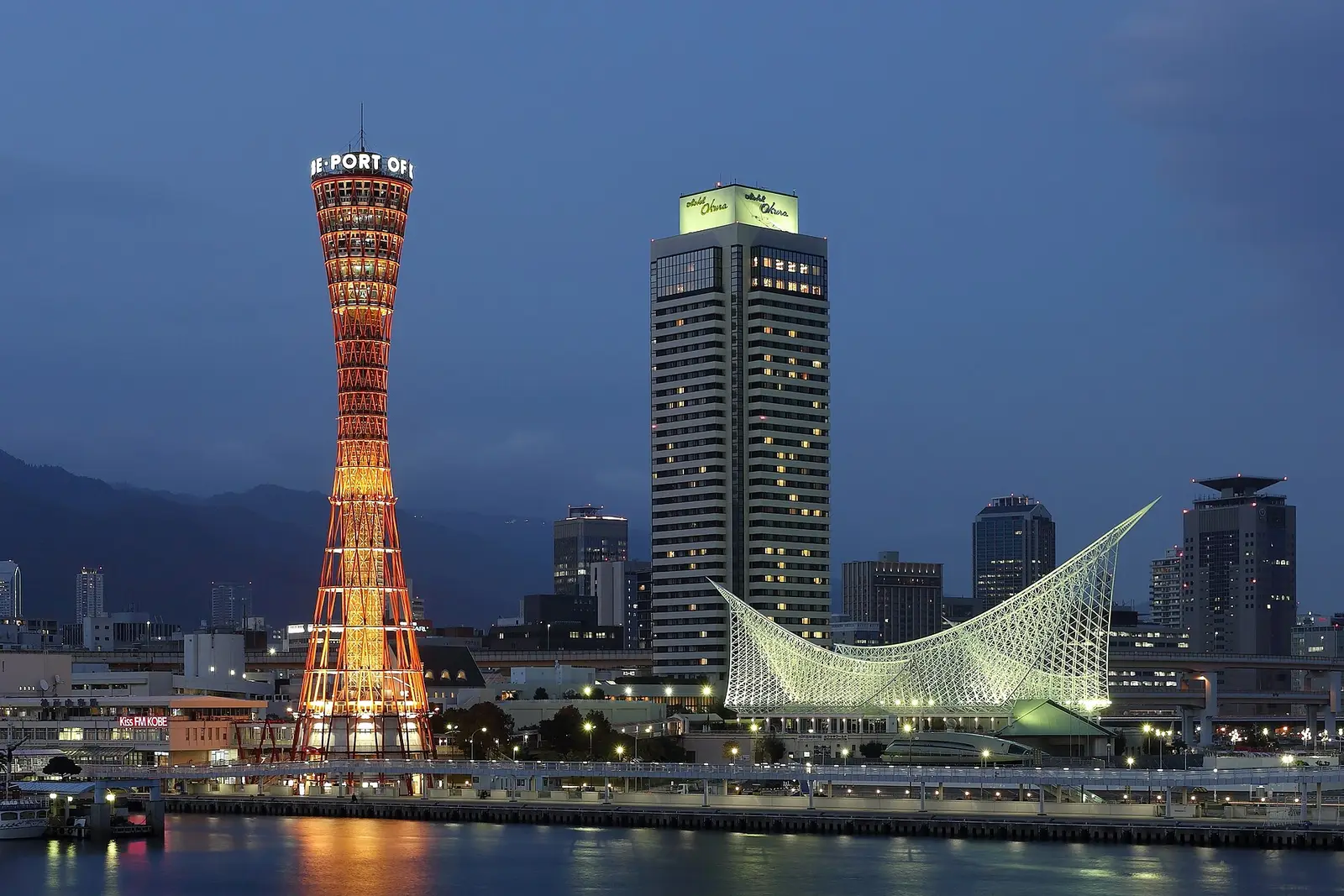
Meriken Park and Kobe Port Tower
Kobe's waterfront park, with the red Port Tower, a maritime museum and a memorial, best at night.