Fushimi Inari: The Shrine of Ten Thousand Gates
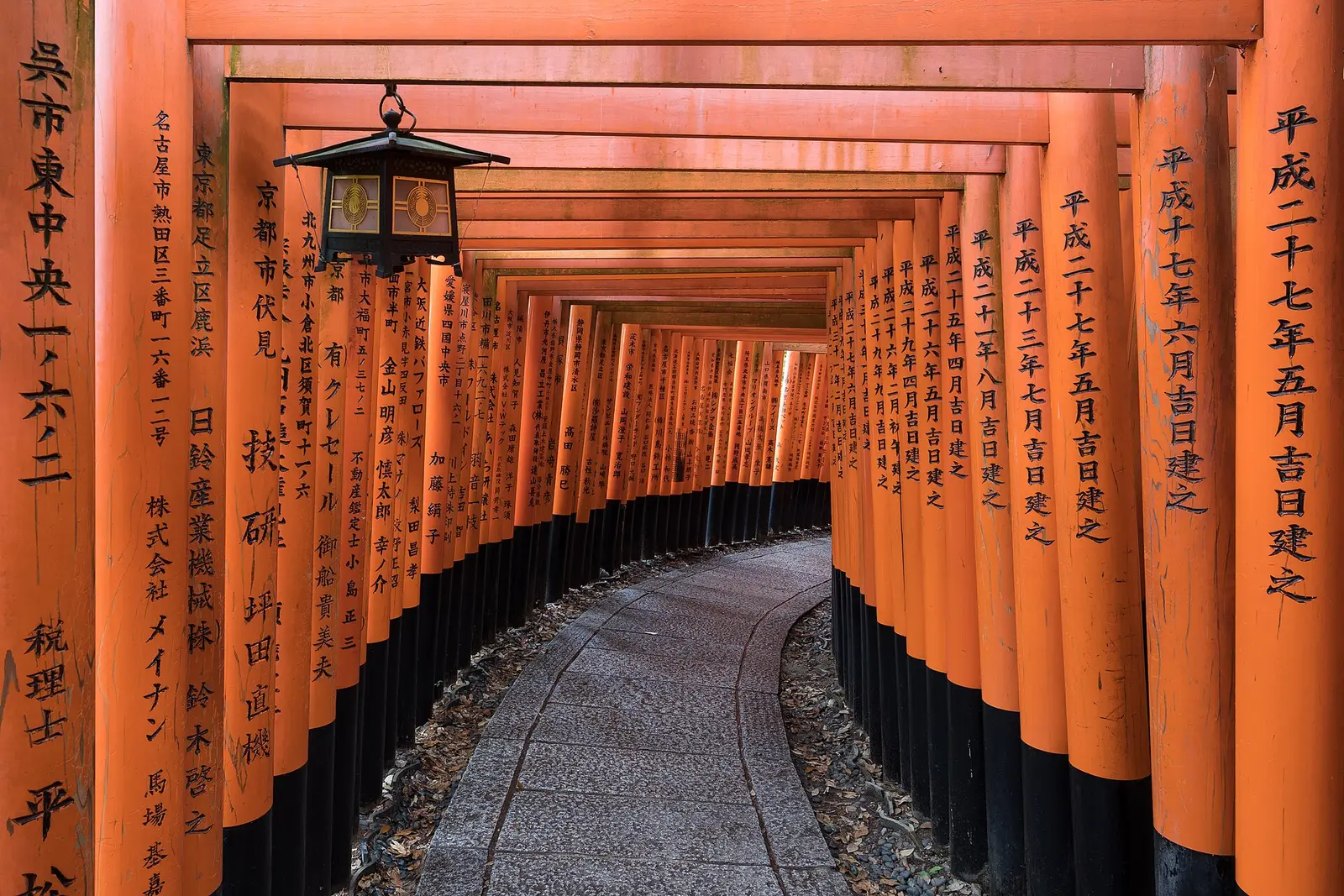
Behind a quiet shrine in southern Kyoto, a path begins that is lined with bright red gates. They stand so close together that you walk through a tunnel of orange light. This is Fushimi Inari Taisha, and you can go as far up the mountain as you like.
A shrine for the god of rice
Fushimi Inari Taisha is the head shrine of about 30,000 Inari shrines across Japan. According to the shrine, the god Inari was enshrined here in the year 711. Inari is the god of rice. The shrine is older than Kyoto as a capital, because the court moved here only in 794.
The shrine sits at the foot of Inariyama, a mountain 233 meters high. The mountain itself is thought to be where the god lives, which is why the paths of gates climb it. The main buildings stand at the bottom. Near the entrance, look for the large Romon Gate, which was given to the shrine in 1589 by the warlord Toyotomi Hideyoshi.
Why there are so many red gates
The red gates are called torii. A torii marks the entrance to a sacred place. At Fushimi Inari, people and companies donate them, and there are thousands along the trails. Turn around and look at the back of a gate, and you can read the name of the donor and the date it was given.
A small gate costs around ¥400,000, and a large one can cost more than ¥1 million. That is why the paths keep growing as the years go by.
The foxes
You will see stone foxes all over the grounds. In Inari belief, the fox is the god's messenger. Take a moment to look at them closely, because they are everywhere once you start to notice.
How far to walk
The hike to the summit and back takes about 2 to 3 hours. You can turn back at any point. The first stretch, where the gates are packed closest together, is the most photographed. Do not stop in the middle of the path to take pictures, because it is narrow and other people need to pass.
About halfway up is a crossing called Yotsutsuji. The climb to here takes around 30 to 45 minutes, and you get a view over the city of Kyoto. Many visitors turn around here, because past this point the gates are spread out and the path changes less. That also means the upper trails are quieter, if you want to keep going.
It is a real walk on a mountain, with steps and slopes. Bring water, wear shoes you can walk in, and keep your phone charged for photos.
What to eat
The streets in front of the shrine have food stands and small restaurants. Two local favorites are inari sushi, which is rice wrapped in a pocket of sweet fried tofu, and kitsune udon, which is noodle soup topped with the same fried tofu. Both are made with aburaage, the Japanese word for fried tofu, and both are easy to find near the shrine.
Getting there
Take the JR Nara Line from Kyoto Station to Inari Station. It is the second stop, about 5 minutes, and costs ¥150 one way. The station is right in front of the shrine. You can also use Fushimi Inari Station on the Keihan Main Line, which is a short walk away.
The grounds are always open and free, so you can go at any hour. Keep in mind that this is a place of worship. Be quiet on the paths, and do not climb on or touch the gates.
Nearby
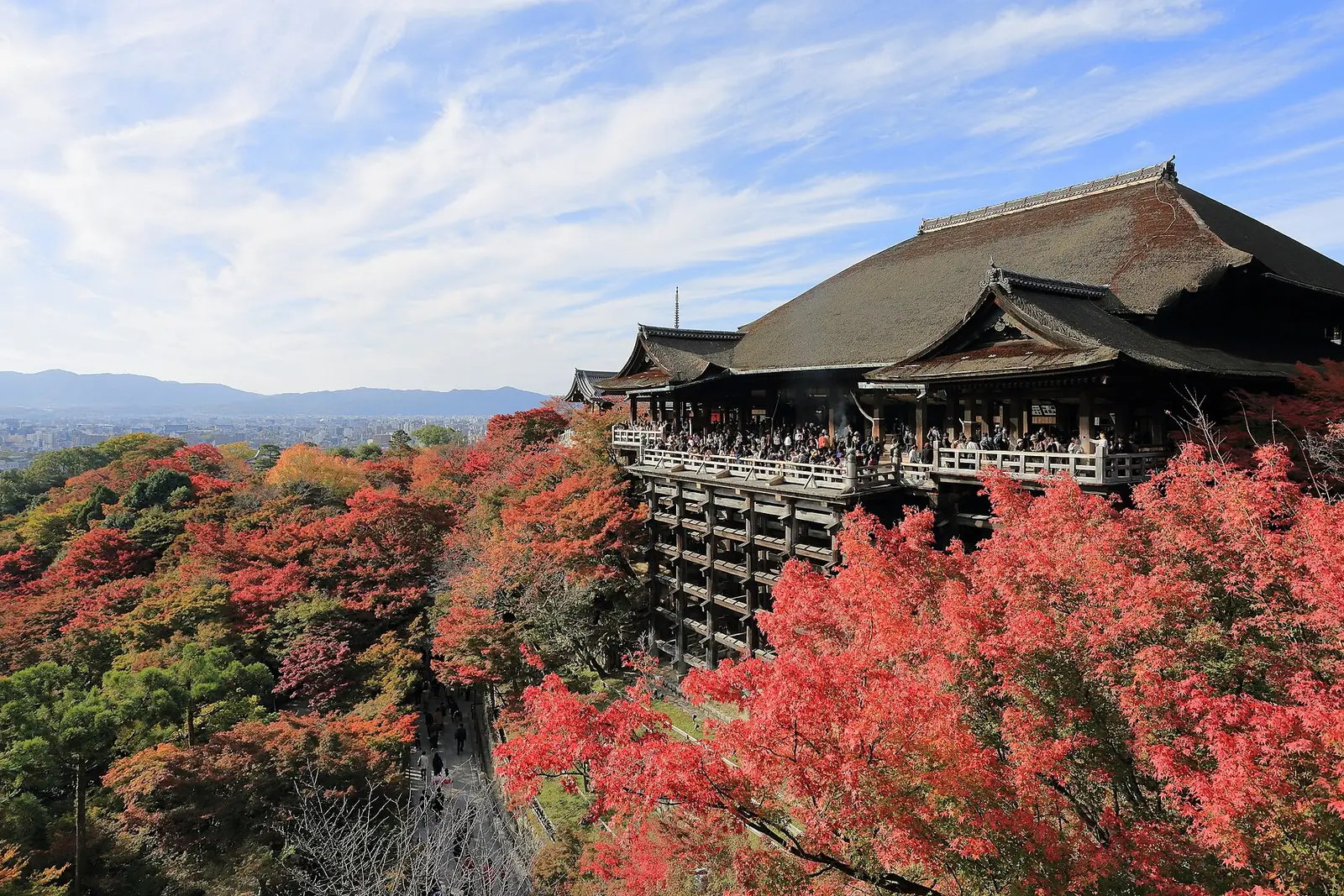
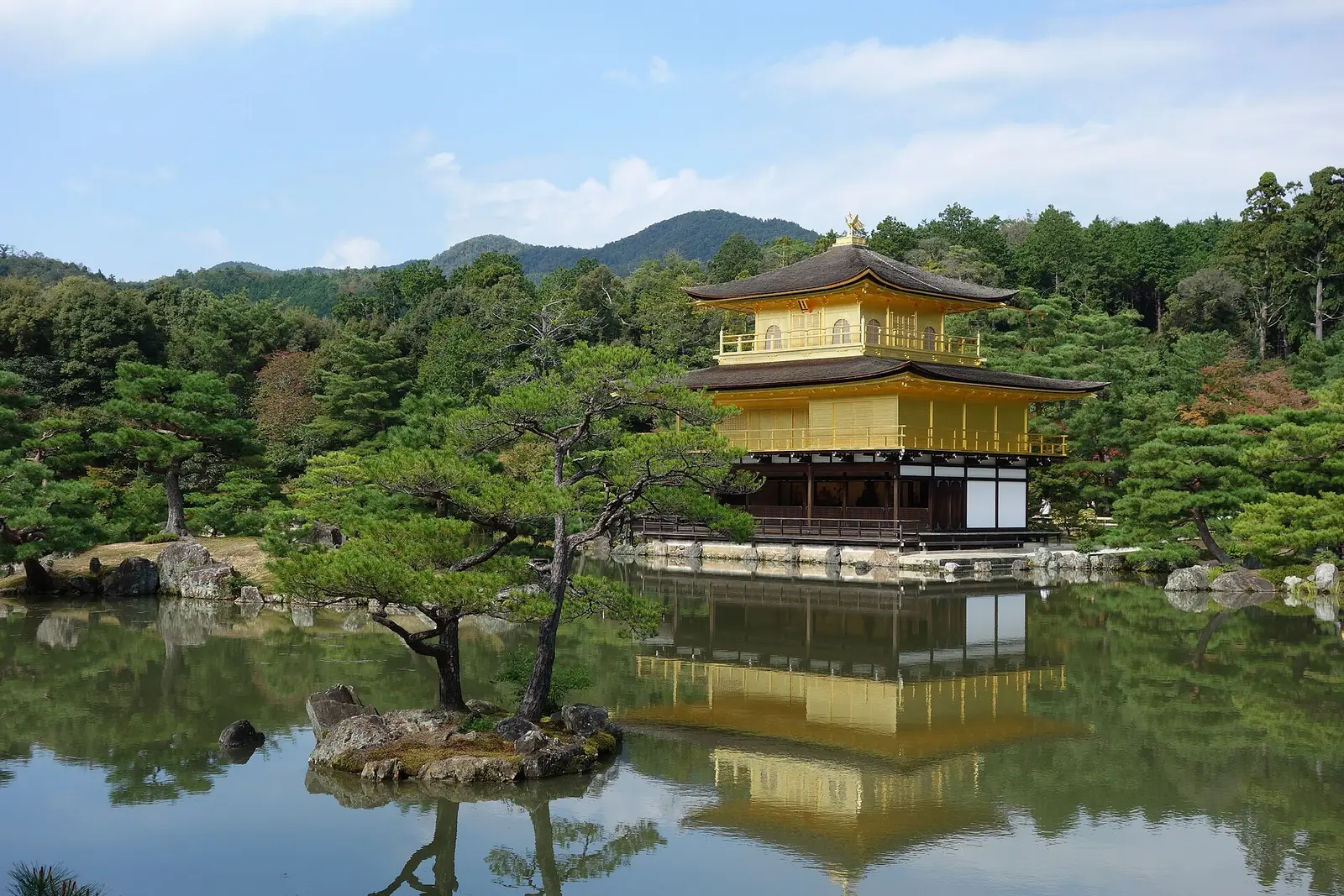
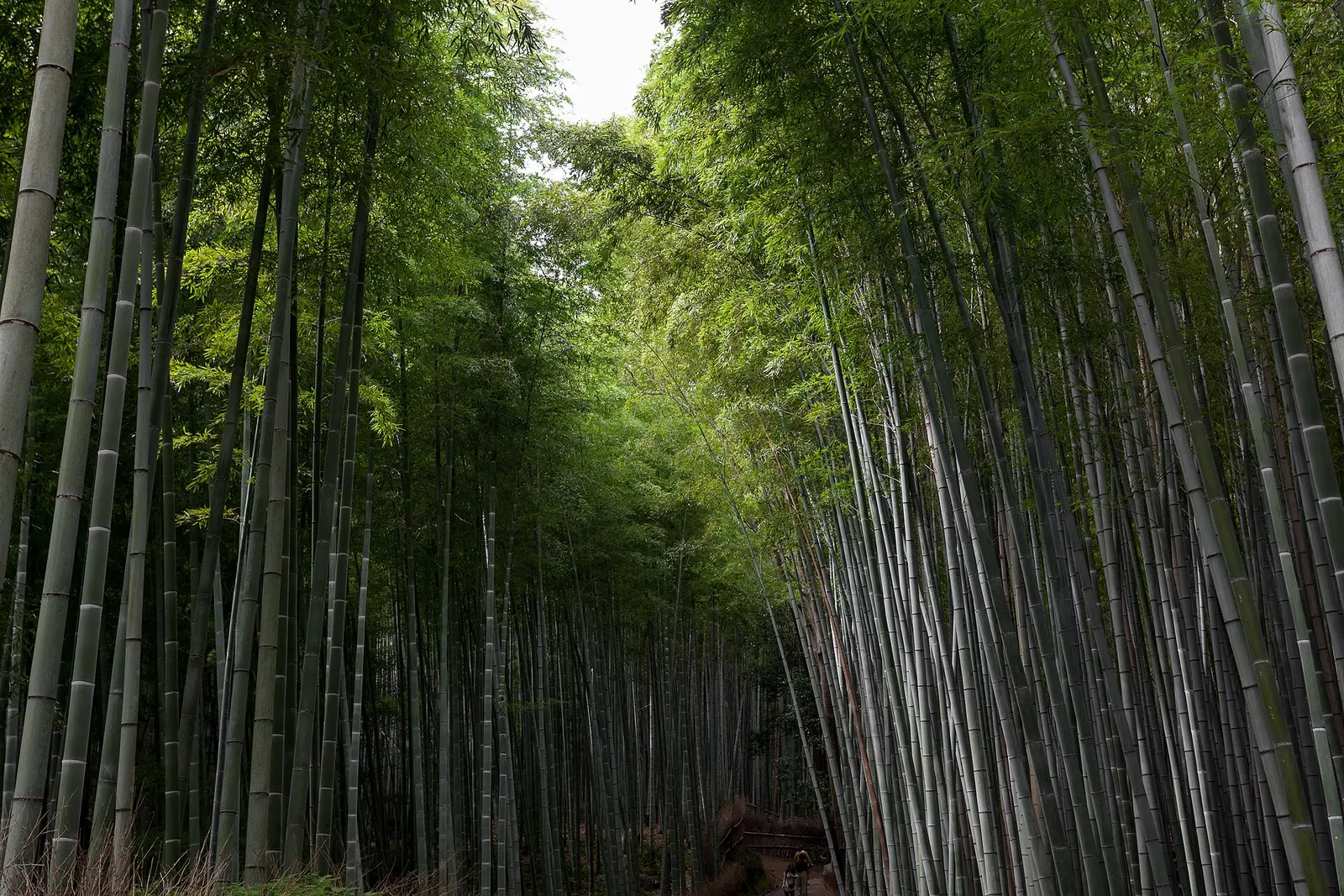
Central Kyoto is only a few minutes away by train. On the same day, many visitors continue to Kiyomizu-dera, where a wooden stage looks out over the city, or to Nishiki Market for lunch. The Golden Pavilion of Kinkaku-ji and the Arashiyama Bamboo Grove are on the other side of the city, so give them their own day.
More on Kyoto
 KYOTO3 min read
Kiyomizu-dera: The Temple on a Wooden Stage
A hillside temple with a huge wooden stage and a spring of clear water. Hours, price and the best way up.
 KYOTO3 min read
Kinkaku-ji: The Golden Pavilion
A three-story pavilion covered in gold, reflected in a still pond. Its story, ticket price and the bus there.
 KYOTO3 min read
Arashiyama Bamboo Grove: A Walk Between Green Walls
A path between tall green bamboo, free and always open. What else to see nearby and how to avoid the crowds.