Destinations › Aichi › Nagoya
Atsuta Jingu: Nagoya's Great Shrine
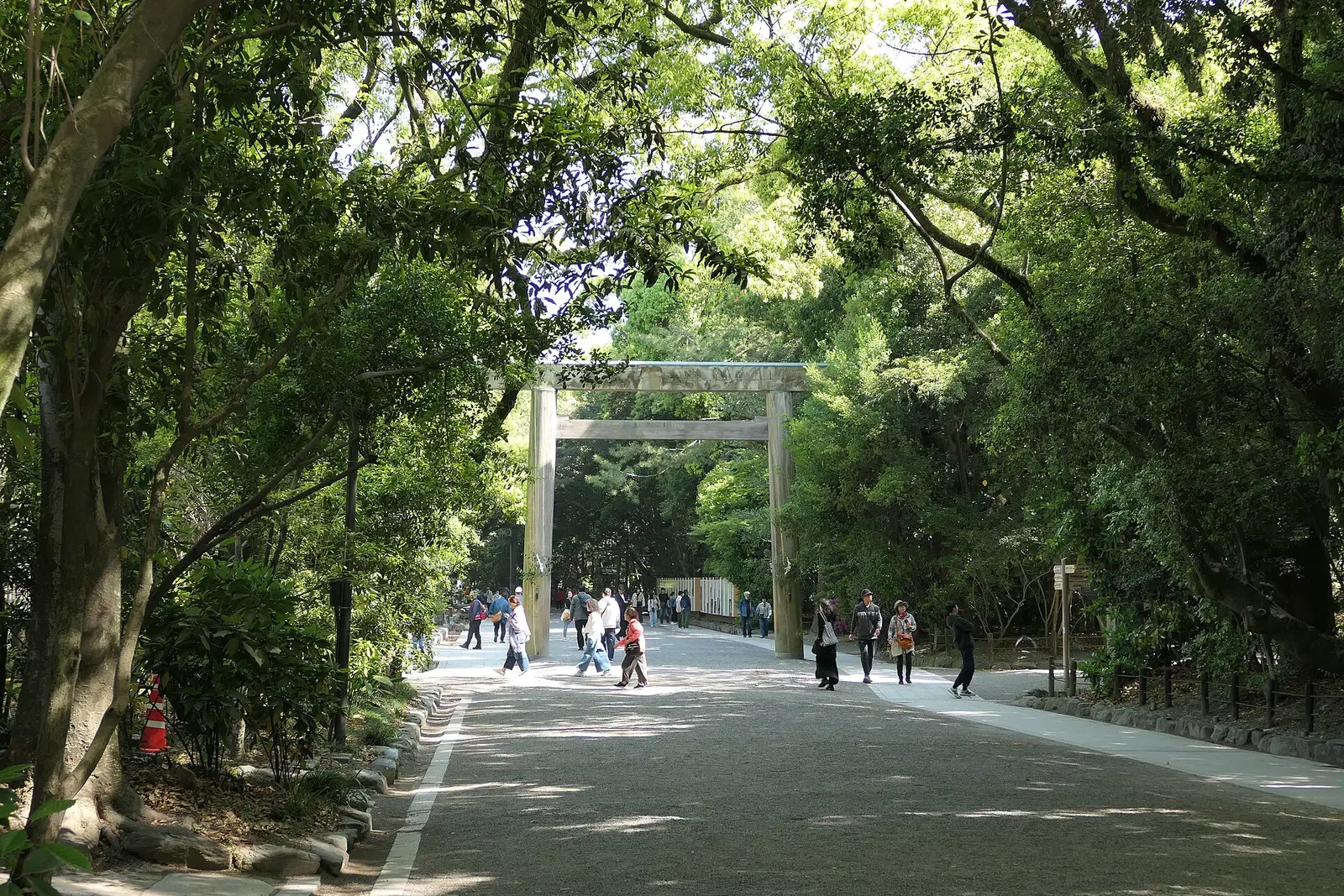
In the middle of a busy city, a forest of tall trees hides one of Japan's most important Shinto shrines. Atsuta Jingu is said to be almost 1,900 years old. Locals call it "Atsuta-san."
A shrine built for a sword
Atsuta Jingu is tied to one of Japan's oldest legends. The Kojiki, an old chronicle, says the shrine was founded to keep the sacred sword Kusanagi, one of the Three Sacred Treasures of the imperial family. Tradition links this to the hero Yamato Takeru, and by the chronicles' count that points to around the year 113. Dates this old come from legend, not from records.
The main god is Atsuta-no-Okami. Five great gods are honored here, including the sun goddess Amaterasu and Yamato Takeru himself.
The sword nobody sees
The Kusanagi sword is kept at the shrine, but it is never shown to the public. So do not go looking for it. Its presence is the reason the shrine matters so much, and that is part of what you feel when you walk the grounds.
Walking the grounds
People of the imperial court and samurai families have prayed here since ancient times, and the shrine is open around the clock, all year. It is free to enter. There is also a souvenir shop on site, and a restaurant.
The grounds cover about 200,000 square meters of forest in the middle of the city. Leave the street, walk in under the torii gate, and the noise fades quickly. The main buildings were remodeled in 1893 in the Shinmei style, the same plain style as Ise Shrine. You will see worshippers stop, bow, clap twice and pray. You are welcome to do the same.
One thing worth finding is the Nobunaga Wall, a long roofed earthen wall that the warlord Oda Nobunaga gave to the shrine in 1560, after he won the Battle of Okehazama. The gate that went with it, Kaijo-mon, was a National Treasure, but it was lost in a bombing raid on May 17, 1945.
Kusanagi-kan and the treasure hall
The Kusanagi-kan is a museum that opened in 2021. It shows a collection of historic swords, and it has a hands-on corner where you can lift sample swords and feel their weight. It is open from 9 am to 4:30 pm, with last entry at 4 pm, and it sometimes closes on short notice. Entry is about ¥500. A separate, older treasure hall nearby holds more swords and shrine documents, and a combined ticket for both is available. Allow about 30 minutes for the museum. The treasure hall is closed on the last Wednesday of each month and the day after, and from December 25 to 31, so check the date before you plan your day.
Festivals
More than 70 ceremonies and festivals are held here each year. The biggest is the Atsuta Festival on June 5, with lantern displays at night. Other events include a sacred dance on May 1 and a portable-shrine procession on May 5. If your trip falls on one of these days, expect crowds and a livelier shrine.
Eating nearby
A restaurant next to the Kusanagi-kan serves kishimen, the flat wheat noodles that are a Nagoya specialty. It is an easy way to end your visit.
Getting there
From Nagoya Station, take the Meitetsu Nagoya Line to Jingu-mae Station. The ride takes about 5 minutes and costs ¥250, and the shrine is a 3-minute walk. You can also take the Meijo subway line to Atsuta Jingu Nishi Station, about 5 minutes on foot, or the JR Tokaido Line to Atsuta Station, about 10 minutes on foot.
Nearby
Atsuta Jingu is a calm contrast to Osu Kannon, where shops and snack stalls fill the streets. Together they show the quiet and the lively sides of Nagoya. Nagoya Castle, the Tokugawa lords' castle, is a short ride to the north.
More on Nagoya
 NAGOYA3 min read
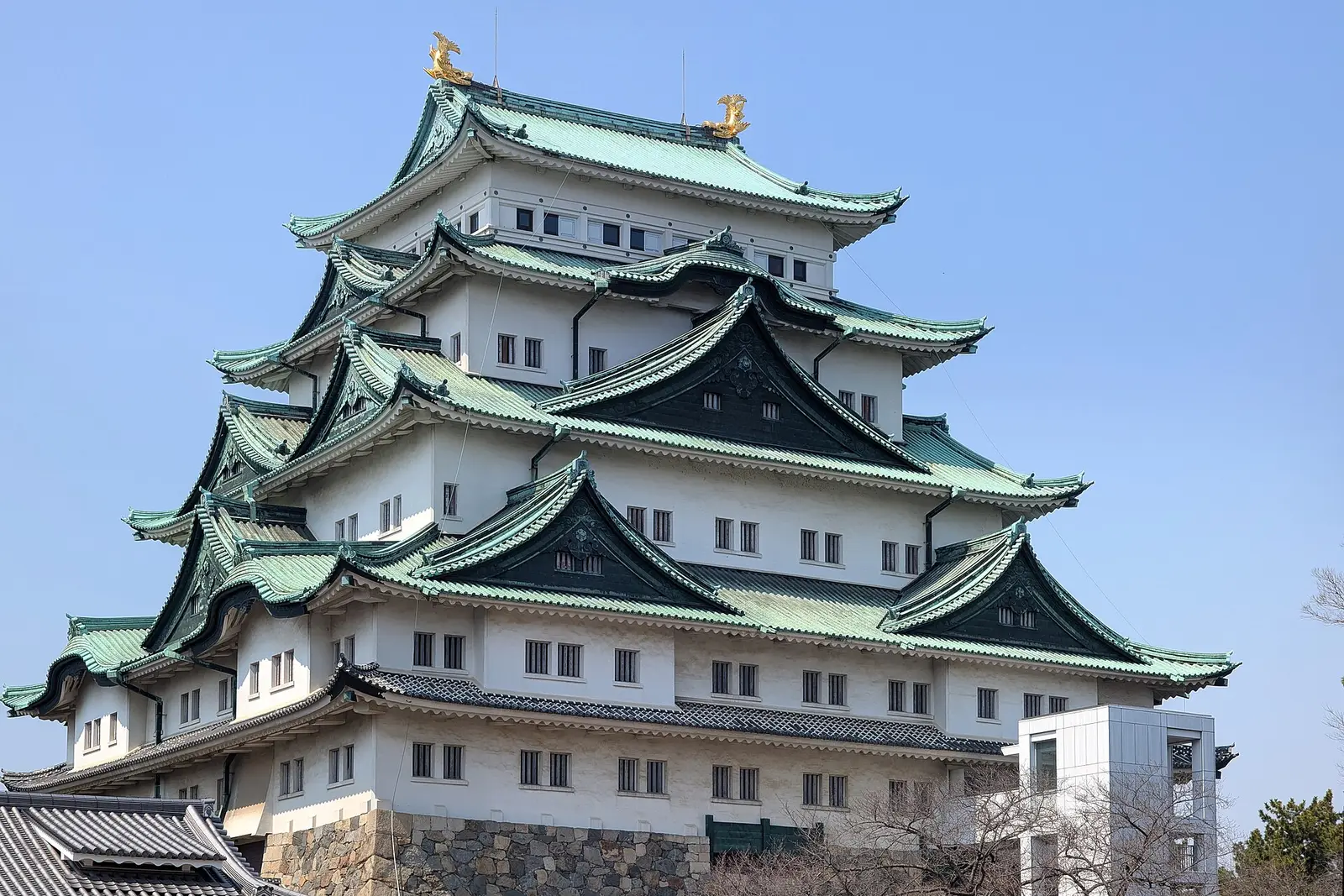
Nagoya Castle: Golden Dolphins and a Rebuilt Palace
The Tokugawa castle with golden roof ornaments. The keep is closed, but the rebuilt palace is the reason to go.
 NAGOYA3 min read
Ghibli Park: Tickets, Areas and How to Visit
The Studio Ghibli park outside Nagoya, where tickets must be booked well ahead. How the areas and tickets work.
 NAGOYA3 min read
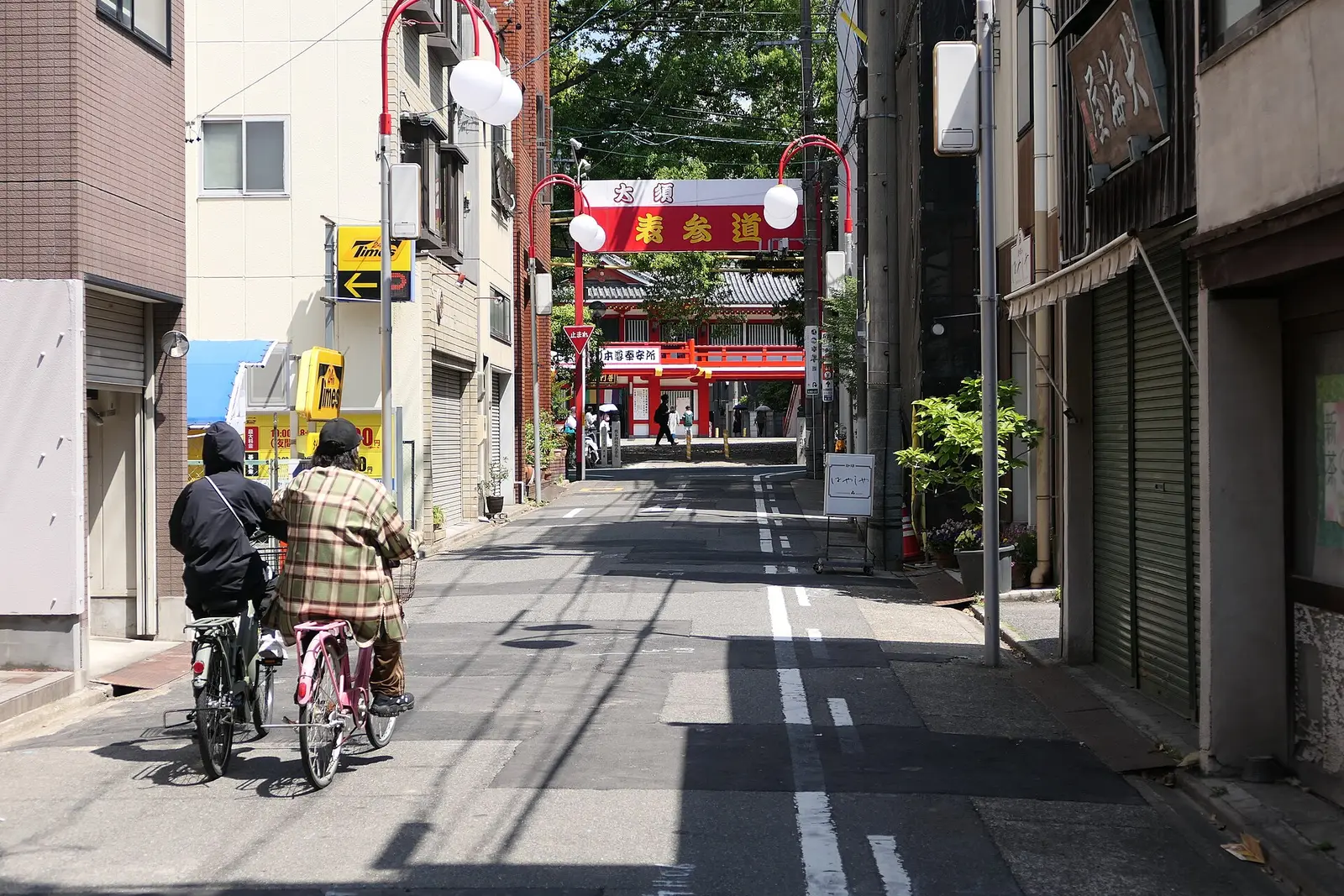
Osu Kannon and Osu Shopping Street
An old temple surrounded by covered shopping streets full of snacks, anime shops and cosplay.