Bunshokan: Yamagata's Old Prefectural Office
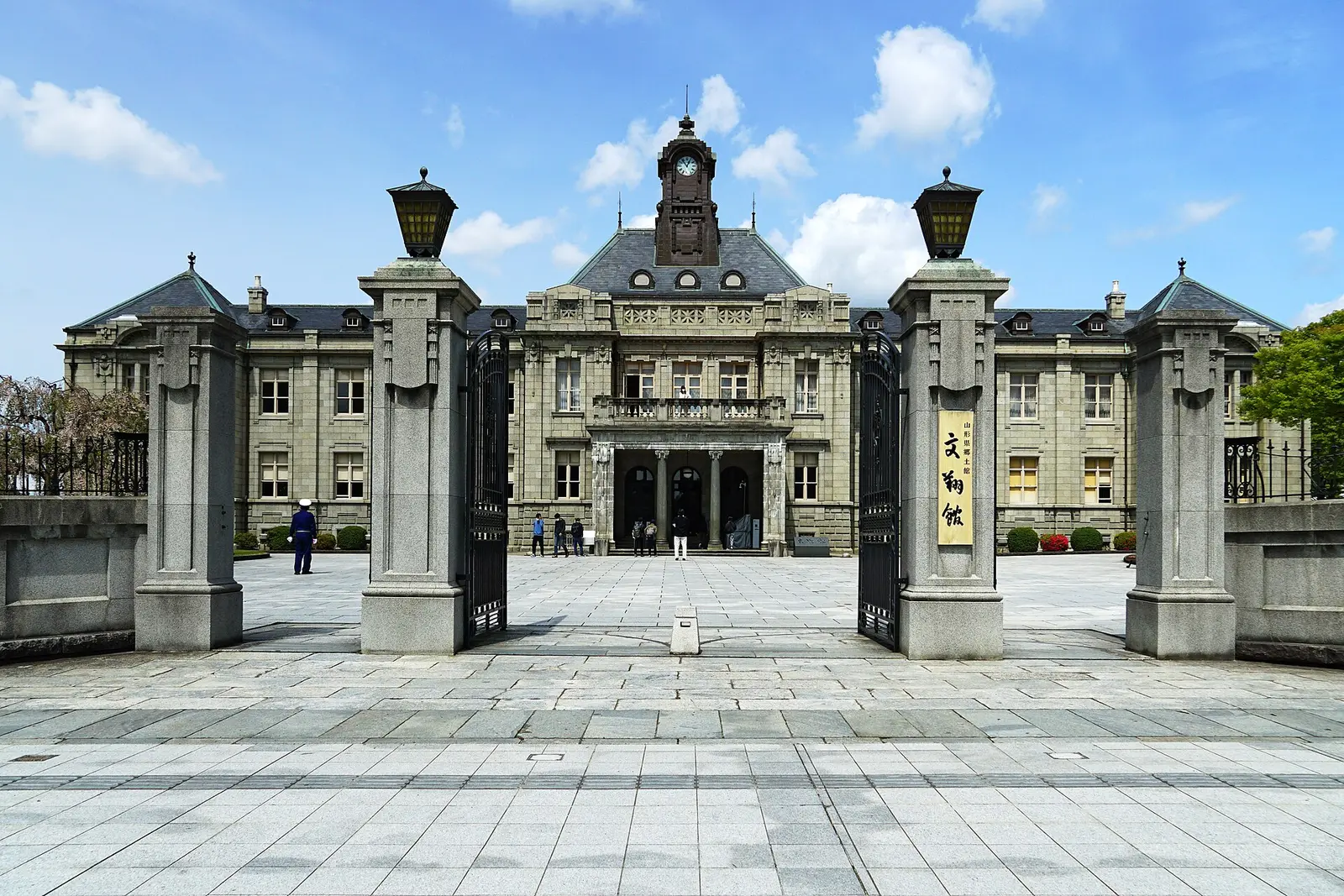
At the end of a long, straight avenue in central Yamagata stands a grand stone-faced building with a clock tower. For nearly 60 years it was the office of the prefectural government. Today the Bunshokan is a free museum, and its restored halls show how Japan built in the Western style a century ago.
A government office from 1916
The Bunshokan was built in 1916 in the English neo-Renaissance style. Until 1975 it was the Yamagata Prefectural Office and the prefectural assembly hall. It is one of the important Western-style buildings of the early Taisho period (1912 to 1926).
The building was named a national Important Cultural Property in 1984. From 1986, it was restored over ten years using the same methods as when it was built, and it opened as the Yamagata Prefecture Hometown Pavilion, nicknamed the Bunshokan. Entry is free.
The former office is three stories of brick, with outer walls faced in stone. The former assembly hall next to it is also brick.
The clock tower
The clock tower in the middle of the roof shows a face on each of its four sides. According to the prefecture, it is the second-oldest clock tower still working in Japan, after the Sapporo Clock Tower. For many years a clockmaker wound the weights that drive the pendulum by hand every five days, and the clock still keeps time today.
Inside the old office
You enter on the second floor. Marble columns and a wide staircase lead up to the third floor. On the landing, look for the stained glass window with a wreath of laurel leaves, and for the old wavy window glass, which dates from when the building was new.
On the third floor, the Main Hall was used for speeches, appointments and important meetings. It has marble pillars and a plaster ceiling covered in flowers, each petal made by hand. Look closely: the prefecture says Yamagata products such as safflowers and cherries are hidden in the decoration. When the weather allows, you can step onto the balcony and look straight down Nanukamachi Street.
The Governor's Office has been set up as it was, with desk, chairs and wallpaper copied from the original pattern of pomegranates and grapes. The carpet, woven in Yamagata in 1960, was used in this very room.
Other rooms show the history of the prefecture, a model of the streets around the office after the great fire of 1911, and films of the craftsmen who restored the building. Some smaller offices keep their original fireplaces and parquet floors.
The assembly hall and courtyard
A covered walkway leads to the former assembly hall. Since 1916 its hall, with a barrel-vaulted ceiling, has been used for concerts and lectures when the assembly was not meeting, and it is still used for events today. Look at the floor of the stairs and corridors for linoleum with a Greek pattern, restored from traces of the original, which was imported from Germany. There are also old flush toilets, state of the art in their day, kept for display only.
Between the buildings is a courtyard with stone paving and brick walls, where concerts are sometimes held.
Getting there
From JR Yamagata Station, take any bus that goes via the city hall and get off at Yamagata Shiyakusho-mae, a 1-minute walk away. On the Beni-chan bus from the station's east exit, get off at Hatagomachi Nichome and walk 5 minutes. By car, it is about 10 minutes from the Yamagata Zao interchange, and there is free parking for about 40 cars on the north side.
Tips
- Volunteer guides can show you around for free.
- The elevator is being replaced and cannot be used from November 17, 2026.
Nearby
Kajo Park, the site of Yamagata Castle, with its free museums, is also in the city center. Zao Onsen is about 40 minutes by bus from Yamagata Station.
More on Yamagata
 YAMAGATA3 min read
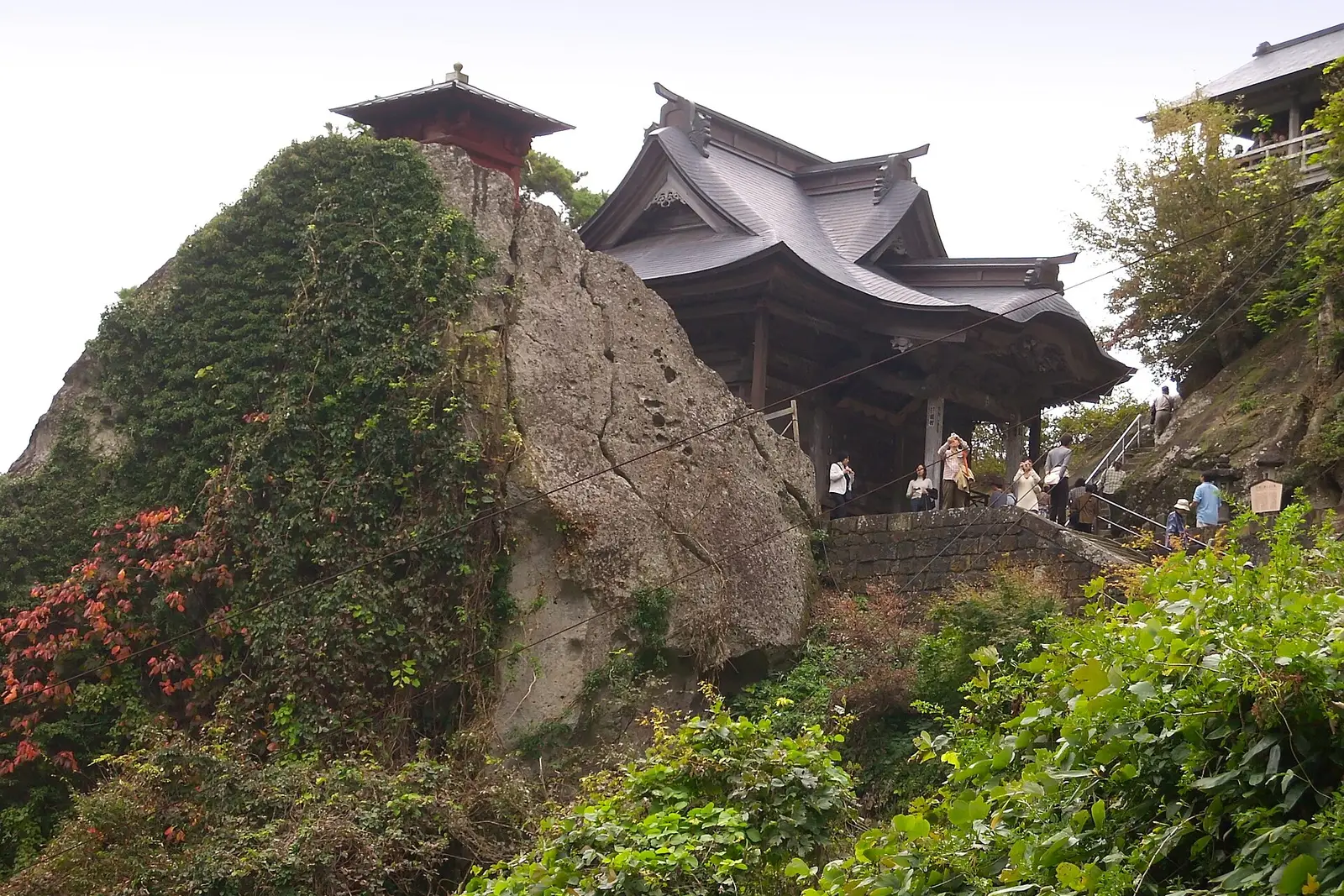
Yamadera: The Mountain Temple of 1,015 Steps
A temple on a rocky mountain, reached by 1,015 stone steps, with one of the best views in Tohoku.
 YAMAGATA3 min read
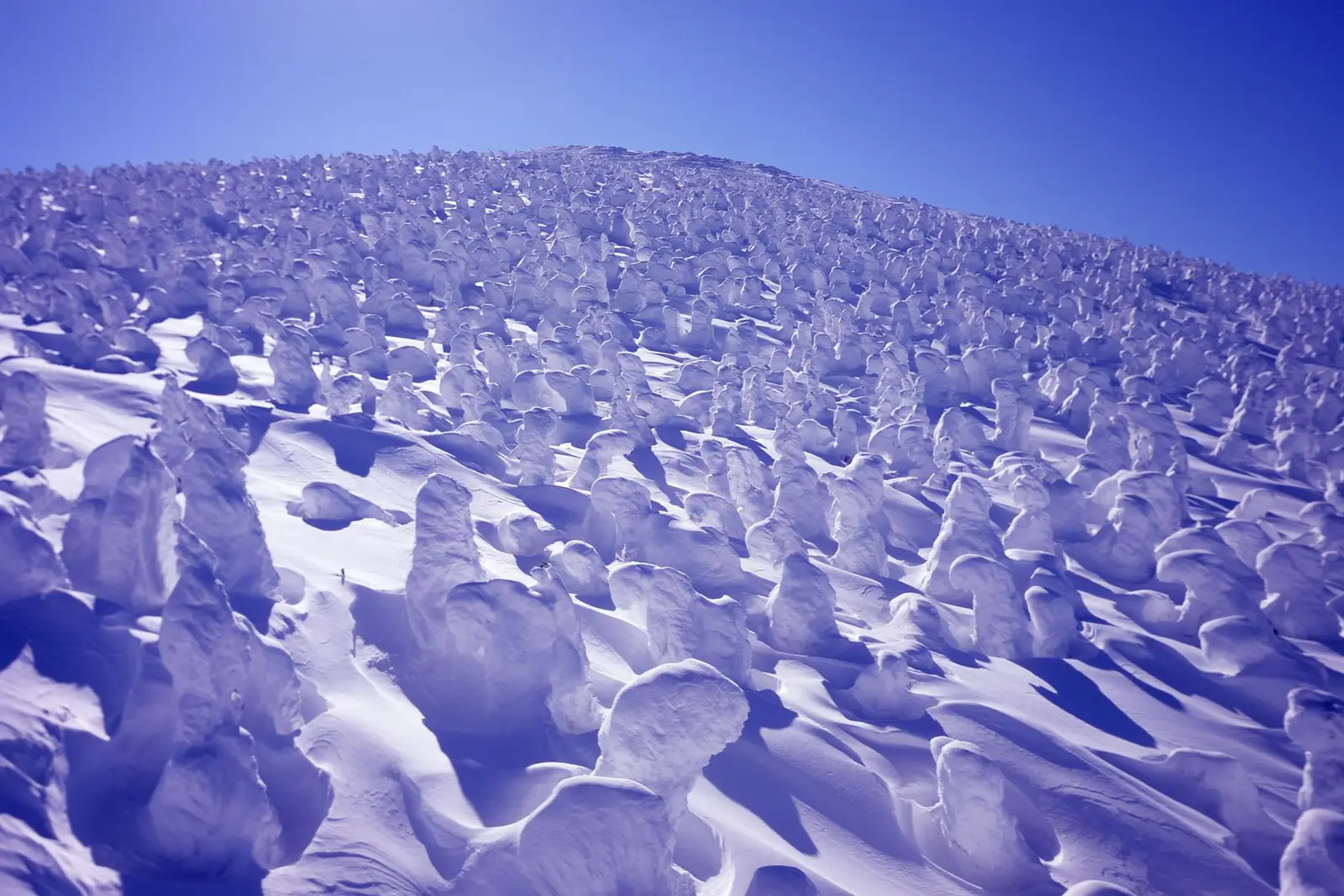
Zao Onsen: Hot Springs and the Snow Monsters
An ancient hot spring town above Yamagata, and the ropeway up to the frozen "snow monsters" of winter.
 YAMAGATA3 min read
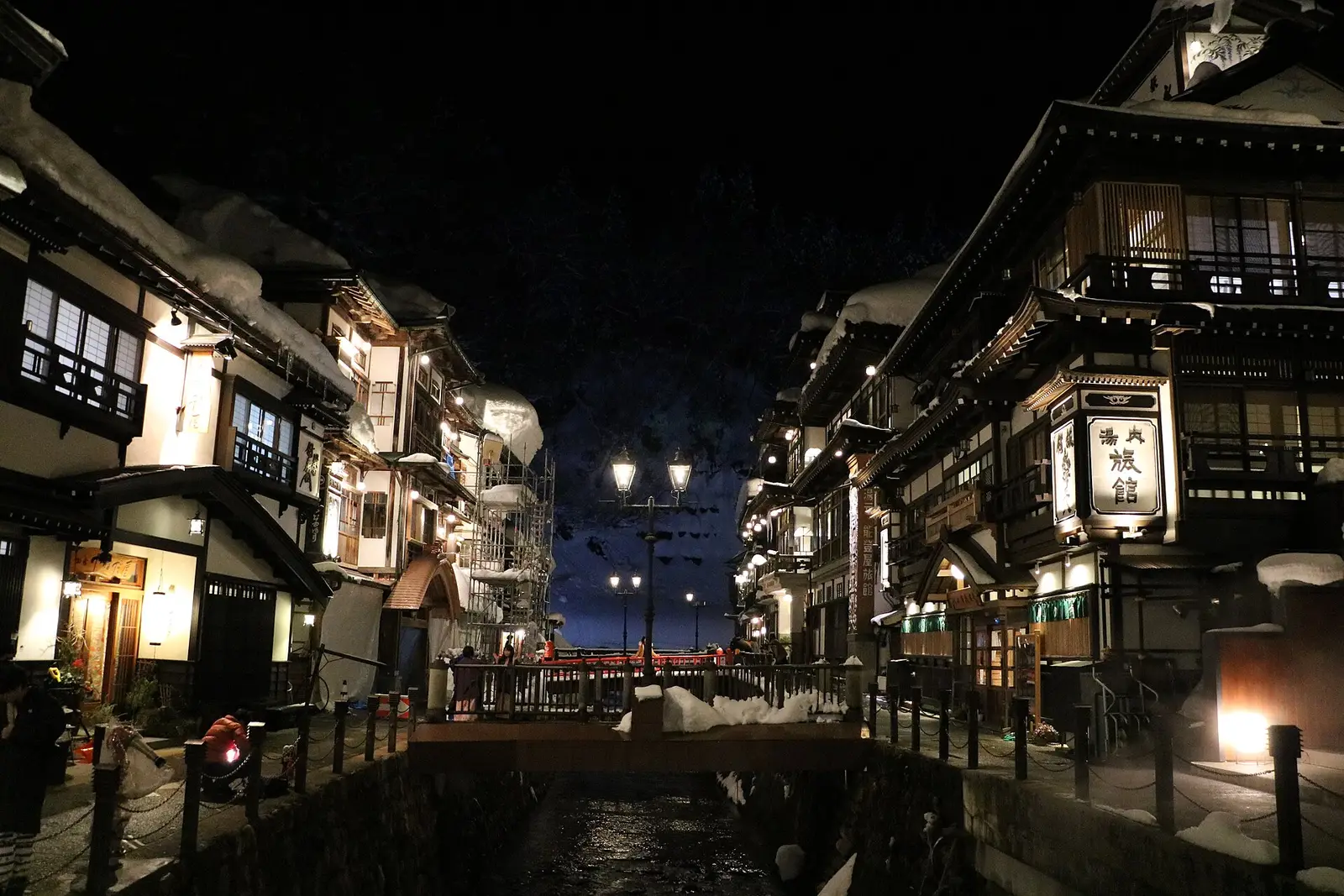
Ginzan Onsen: A Lamp-Lit Hot Spring Town of the Taisho Era
Wooden inns from the 1920s along a lamp-lit river, a waterfall and an old silver mine. Plus the winter shuttle rules.