Zao Onsen: Hot Springs and the Snow Monsters
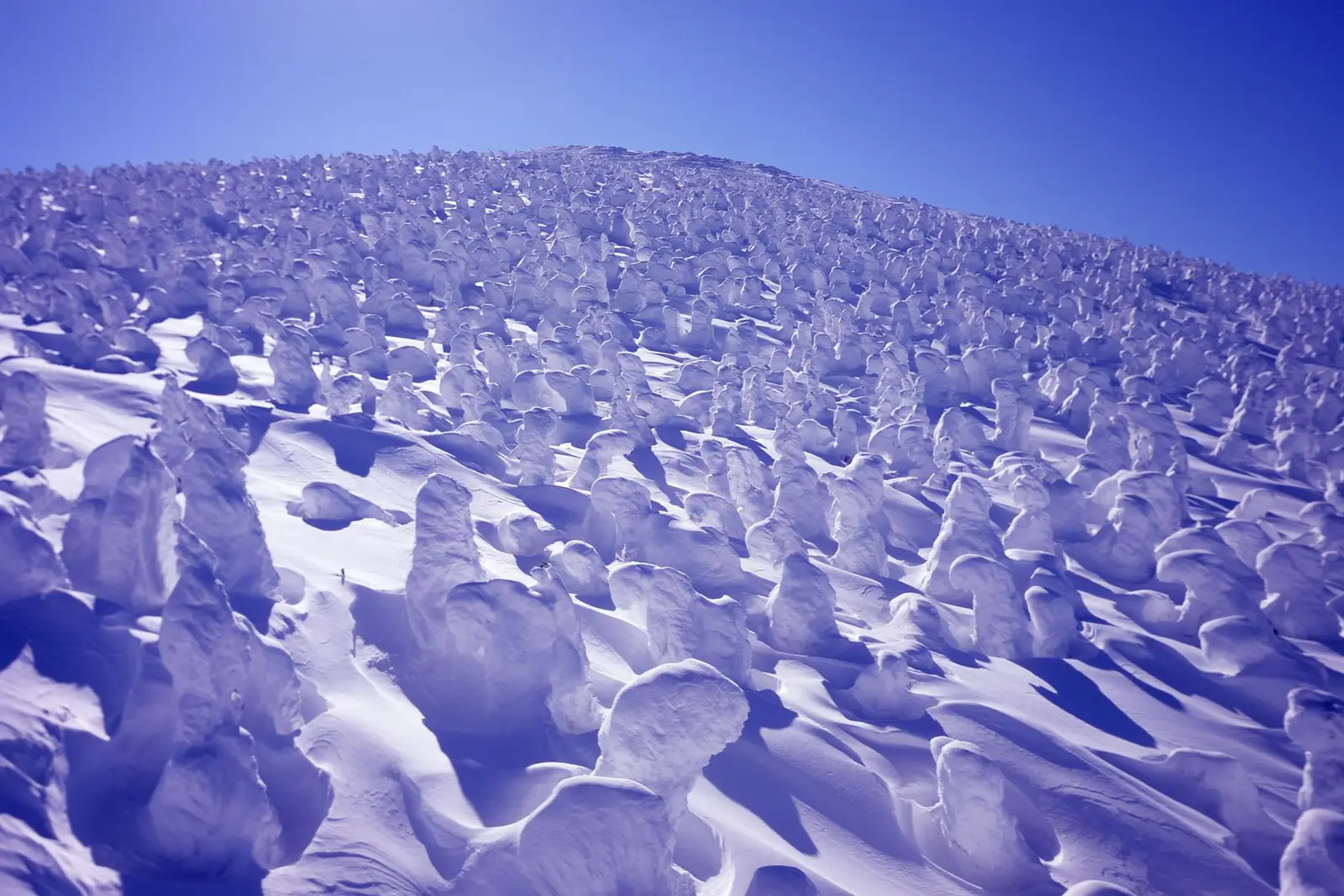
High on the slopes of the Zao mountains, a hot spring town has drawn bathers for centuries with its milky, strongly acidic water. In the coldest weeks of winter, the fir trees above it disappear under thick coats of ice and snow and turn into strange white figures known as "snow monsters."
An old hot spring town
According to the local tourism association, Zao Onsen was found about 1,900 years ago by a warrior traveling with the legendary prince Yamato Takeru. In the Edo period it was busy as the western starting point for pilgrims climbing Zao to worship the mountain god. In the 20th century came roads, ski slopes and ropeways, and today it is one of the largest mountain resorts in Tohoku, with inns, hotels and guesthouses.
The water is strongly acidic sulfur water, with a pH of about 1.25 to 1.6, and the springs are plentiful, at about 5,700 liters a minute. It is known locally as "the water that makes you beautiful."
The public baths
You don't need to stay at an inn to try the water. The town has three public baths, Kami-yu, Shimo-yu and Kawara-yu, all within a short walk of each other. They are open from 6:00 to 22:00 all year. Adults pay ¥300 and children ¥100, by putting the money in a box at the entrance. Shimo-yu also has a foot bath.
The town also has several day-use bath houses. The best known is the Zao Onsen Dai-rotenburo, a large open-air bath beside a mountain stream. It costs ¥850 for adults and is closed in winter, from late November to mid-April. In 2026 it is open until November 23. There are no showers or soap there.
The snow monsters
The snow monsters, or juhyo, are Aomori fir trees covered in ice and snow. In winter, cold winds from Siberia pick up moisture over the Sea of Japan and bring clouds full of tiny water droplets that stay liquid below freezing. When they hit the trees, they freeze at once. Snow gets caught in the gaps, the ice and snow harden, and the process repeats until the trees become huge white shapes.
The trees start to be coated in November and December, grow through January, and are biggest in February. In March they melt and collapse. The usual viewing season is from late December to February. The weather near the top is harsh: in January and February clear days are rare, the wind averages 10 to 15 meters per second, and temperatures are around minus 10 to minus 15°C.
Riding the Zao Ropeway
You don't have to ski to see the snow monsters. The Zao Ropeway runs in two sections from Zao Sanroku Station in the town: about 7 minutes to Juhyo Kogen Station (1,331 meters), then about 10 minutes to Jizo Sancho Station (1,661 meters). A round trip to the top costs ¥4,400 for adults and ¥2,200 for elementary school children.
The ropeway runs from 8:30 to 17:00, and the last car up to the top for a round trip leaves at 16:00. It stops in bad weather and for maintenance, as in early November. About 100 meters from the top station stands the Zao Jizo, a stone statue 2.34 meters tall made in 1775, believed to protect people from accidents and disaster.
On certain winter evenings the snow monsters are lit up in color from 17:00 to 21:00. There is also a tour in a heated snow vehicle, the Night Cruiser, which takes you close to the lit-up trees.
Getting there
Buses for Zao Onsen leave from the East Exit bus terminal of JR Yamagata Station and take about 40 minutes to the Zao Onsen Bus Terminal. The ropeway station is about 15 minutes on foot from there.
Tips
- At the top it can be below minus 10°C. Dress as warmly as you can, with gloves and a hat.
- Skis and snowboards are not allowed on the evening light-up trips.
- Pets are not allowed on the ropeway in winter.
Nearby
Back in Yamagata City, Kajo Park and the Bunshokan are in the city center. Yamadera is a short train ride from Yamagata Station on the JR Senzan Line.
More on Yamagata
 YAMAGATA3 min read
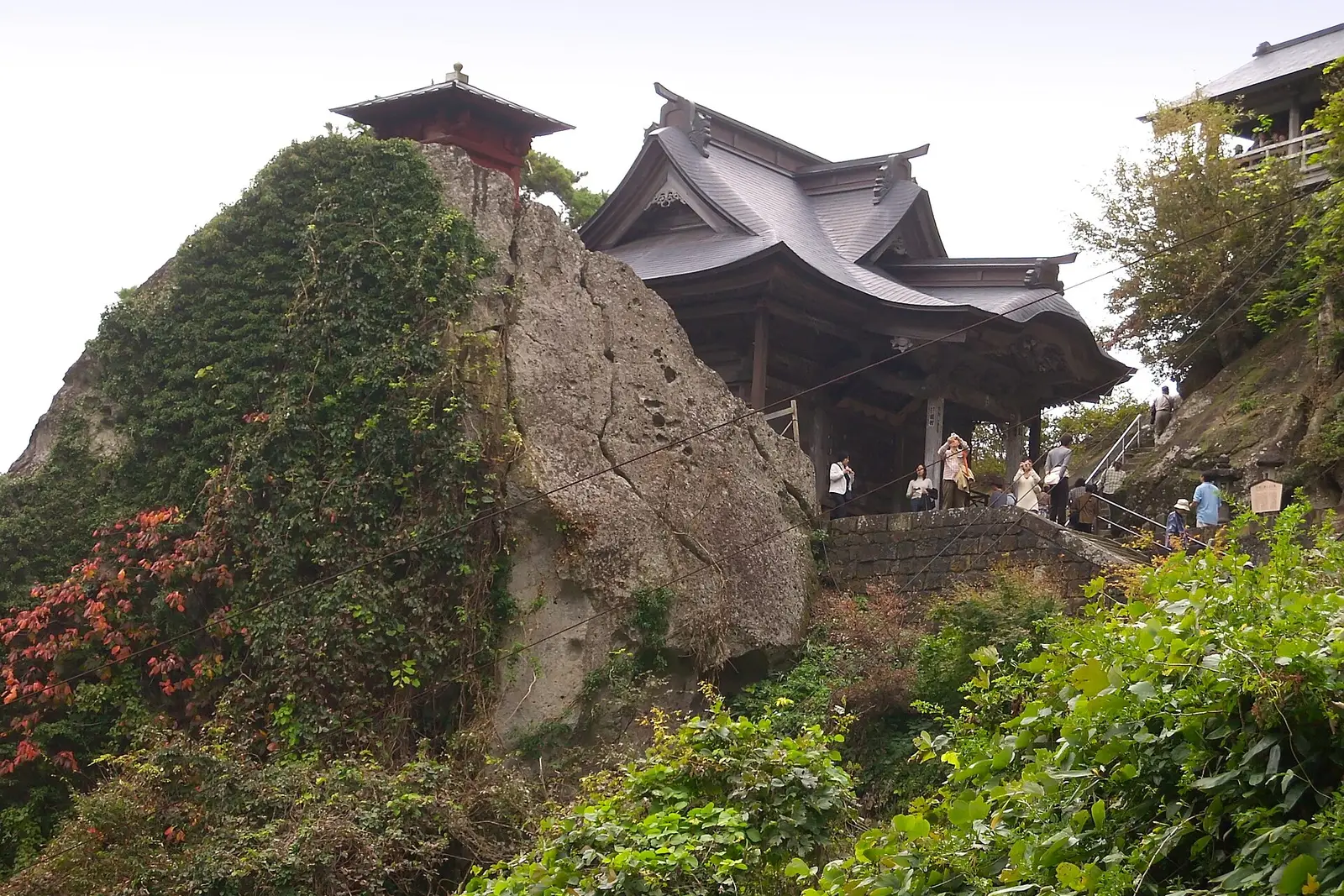
Yamadera: The Mountain Temple of 1,015 Steps
A temple on a rocky mountain, reached by 1,015 stone steps, with one of the best views in Tohoku.
 YAMAGATA3 min read
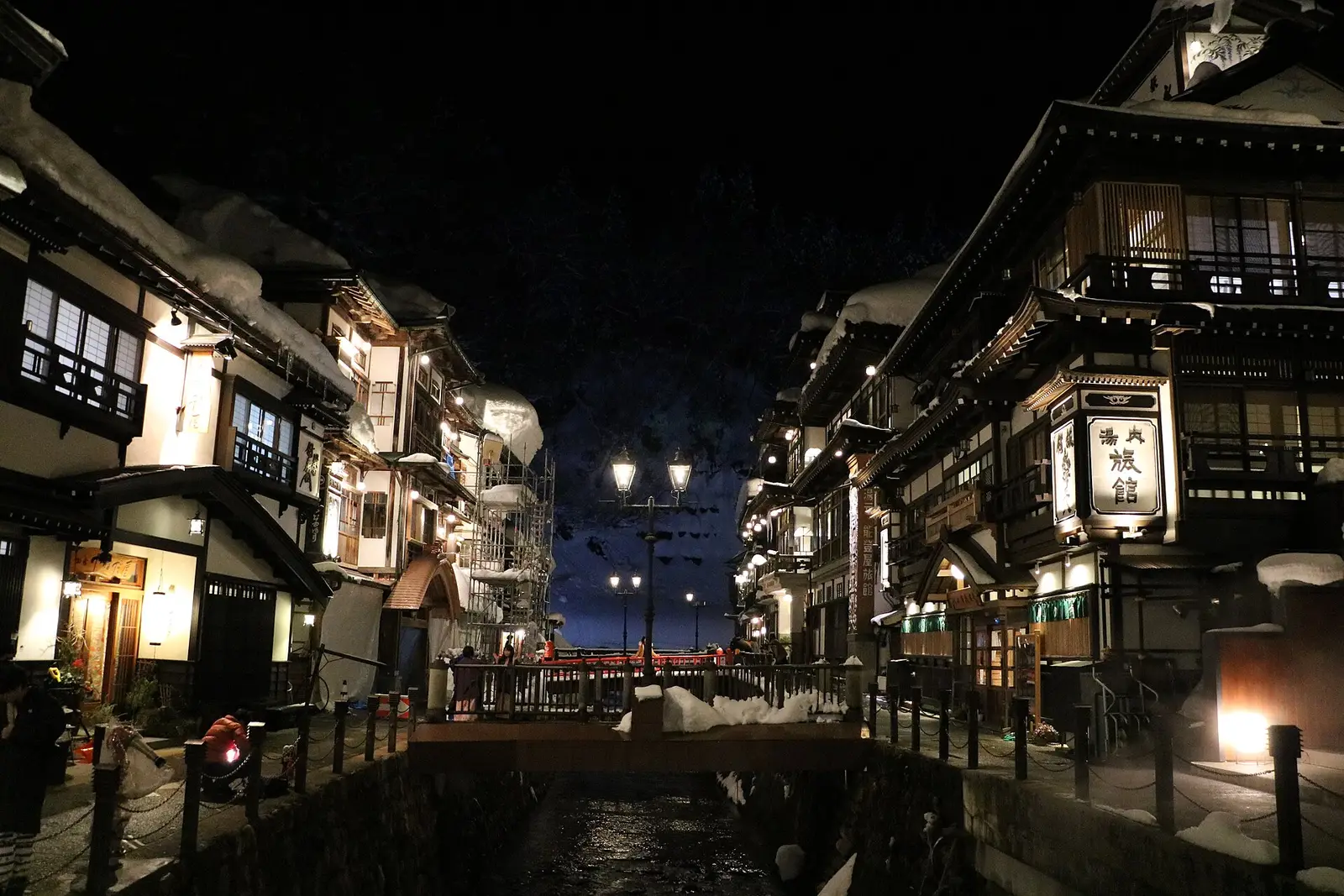
Ginzan Onsen: A Lamp-Lit Hot Spring Town of the Taisho Era
Wooden inns from the 1920s along a lamp-lit river, a waterfall and an old silver mine. Plus the winter shuttle rules.
 YAMAGATA3 min read
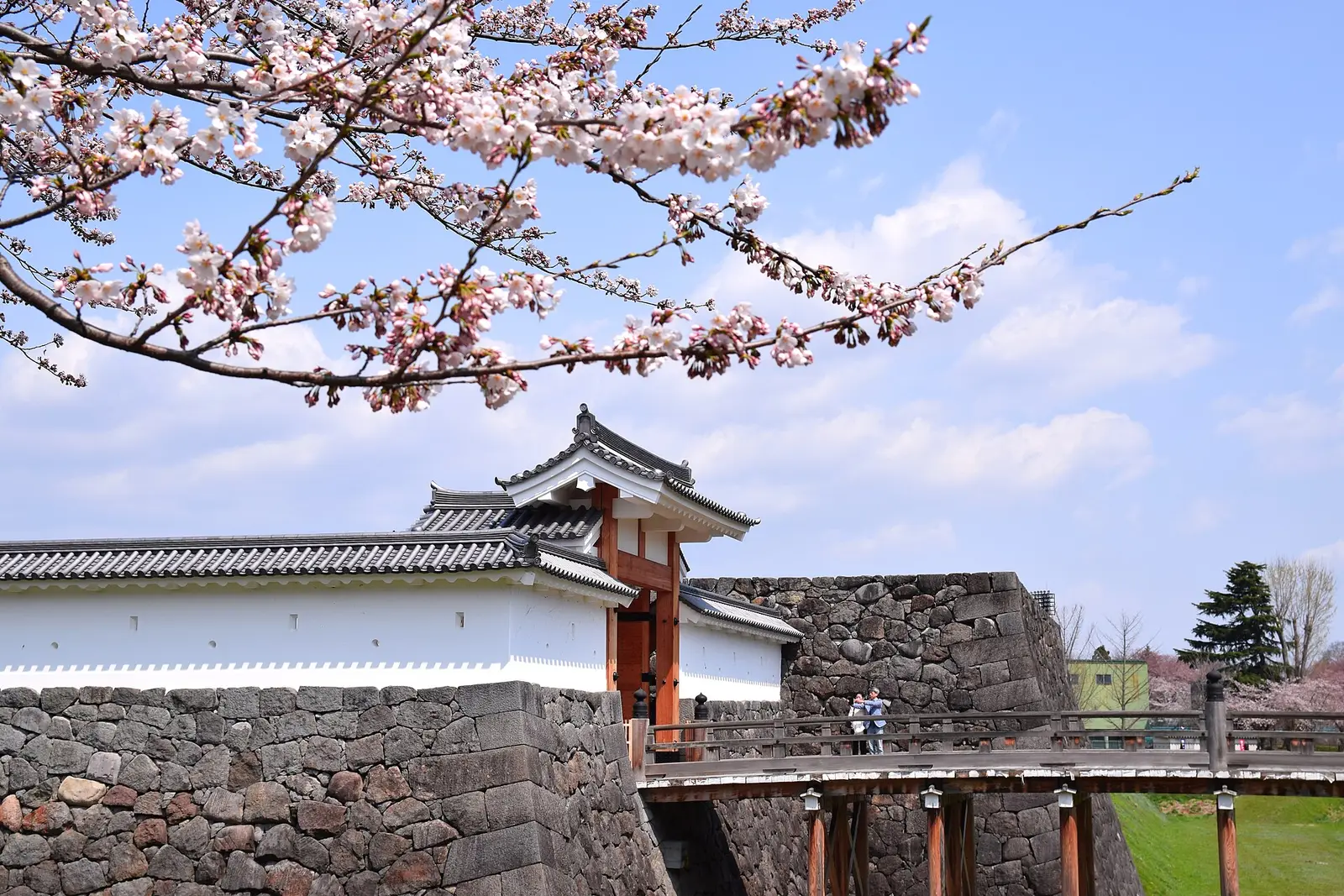
Kajo Park: The Site of Yamagata Castle
A huge castle site in central Yamagata with a rebuilt gate, 1,500 cherry trees and free museums.