Destinations › Fukushima › Aizu-Wakamatsu
Iimoriyama and the Sazaedo: The Byakkotai Hill
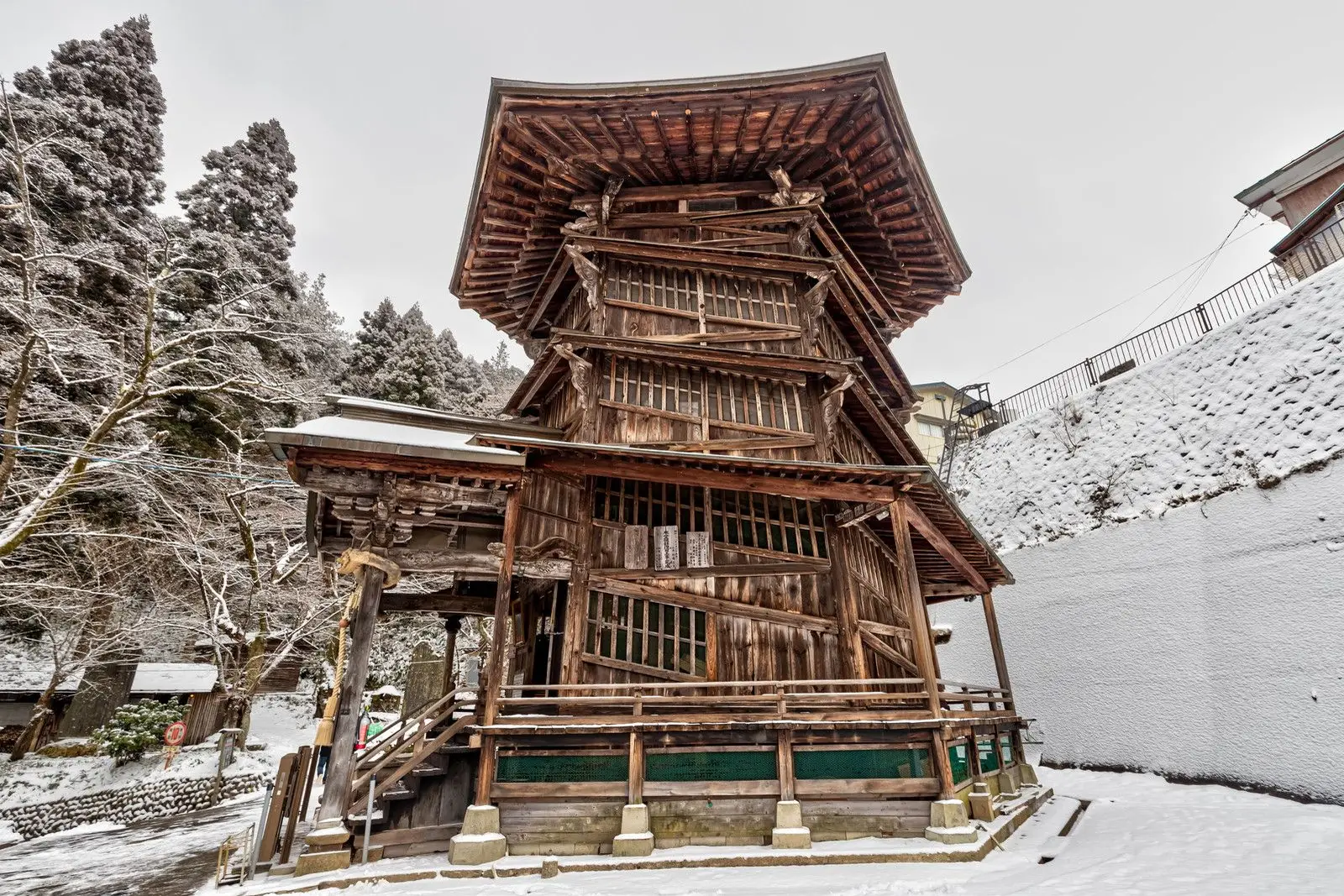
On a small hill in Aizu-Wakamatsu stand nineteen gravestones. They belong to teenage samurai of the Byakkotai who died here in 1868. A few steps away stands one of the strangest wooden buildings in Japan, the Sazaedo, where you walk up and down a spiral ramp without ever meeting anyone coming the other way.
Who were the Byakkotai?
The Byakkotai, or "White Tiger Force," was a unit of boys aged 16 and 17 that fought for Aizu in the Boshin War of 1868. They were meant to be a reserve, but the boys of one unit, the Shichu Nibantai, asked to be sent to the front to defend their home.
After the battle at Tonoguchihara, the boys pulled back. They crossed a steep mountain pass and went through the tunnel of the Tonoguchi irrigation channel to reach Iimoriyama. From the hill they saw black smoke over Tsuruga Castle. Believing the castle had fallen, they decided to die for their lord.
One boy, Iinuma Sadakichi, survived. The story was passed down through him. In fact the castle had not fallen yet, and it held out for about another month.
The graves on the hill
The graves of the nineteen Byakkotai members who died here stand quietly on the hillside. Every spring and autumn, memorial rites are held here, with a sword dance offered to their spirits. From the hill you can look out over the town toward the castle, as the boys did.
To reach the graves, climb 183 stone steps, or ride the moving slope, a kind of flat escalator. It costs ¥250 for adults and ¥150 for children, and runs from 8:00 to 17:00 from March 21 to November 20, and from 9:00 to 16:00 the rest of the year. Ask about winter operation before you go. Next to the path at the foot of the hill, the Byakkotai Memorial Hall shows objects from the war and tells more of Aizu's history.
The Sazaedo
The Sazaedo is a six-sided, three-story wooden hall about 16.5 meters tall. Its official name is Entsu Sansodo. It was completed in 1796, and a monk named Ikudo designed it.
Inside there are no floors or stairs. A sloping wooden walkway winds up through the hall in a double spiral. You go up one and a half turns, cross a small bridge at the top, and come down one and a half turns on a separate path. The way up and the way down never cross, so even when it is busy, people do not have to pass each other. The hall is a national Important Cultural Property.
The name sazae means turban shell, after the building's twisting shape. Sanso means "circling three times," for the three turns you make in total.
A pilgrimage in a few minutes
Ikudo built the hall so that ordinary people could make a pilgrimage without a long journey. The famous route of the 33 Kannon images in western Japan took weeks or months on foot. In the Sazaedo, 33 statues of Kannon, the bodhisattva of compassion, were placed along the ramp, and visitors could pray at each one in a few minutes. The statues you see today are replicas.
Look at the walls and ceilings. They are covered with old paper slips called senjafuda, which pilgrims pasted up to show that they had visited.
Prices and hours
The hill and the graves are free to visit. The Sazaedo costs ¥400 for adults, ¥300 for high school and university students, and ¥200 for elementary and junior high school students. It opens at 8:15 and closes at sunset from April to November, and is open from 9:00 to 16:00 from December to March.
Getting there
From Aizu-Wakamatsu Station, take the Haikara-san or Akabe loop bus to Iimoriyama-shita. The graves are about 5 minutes on foot, and the Sazaedo about 7 minutes. By car, Iimoriyama is about 15 minutes from the Aizu-Wakamatsu interchange. The Sazaedo has no parking of its own, so use the city parking lot at the foot of the hill.
Tips
- The steps are steep. Wear comfortable shoes, and take the moving slope up if you want to save your legs. The way down is a gentle path.
- The moving slope cannot be used in a wheelchair or with a stroller. Wheelchairs can be borrowed at the Iimoriyama tourist information center, which also has an accessible toilet.
Nearby
Tsuruga Castle, the castle the boys looked toward, is a short ride away on the loop bus. To see the school where many of them studied, visit the rebuilt Nisshinkan.
More on Aizu-Wakamatsu
 AIZU-WAKAMATSU3 min read
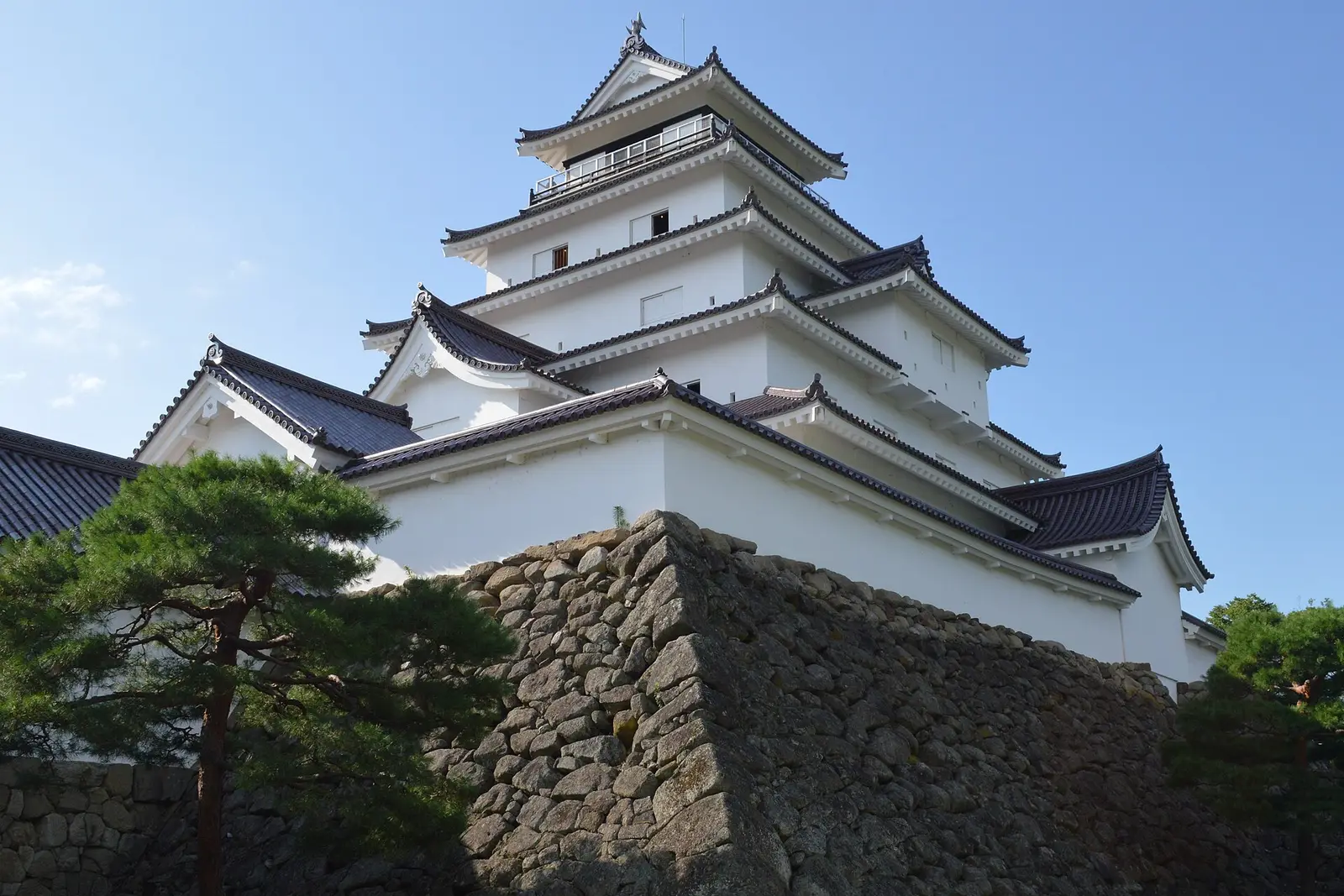
Tsuruga Castle: The Red-Roofed Castle of Aizu
The castle of the Aizu samurai, with Japan's only red-tiled keep, a museum inside and a teahouse in the grounds. Tickets, hours and access.
 AIZU-WAKAMATSU3 min read
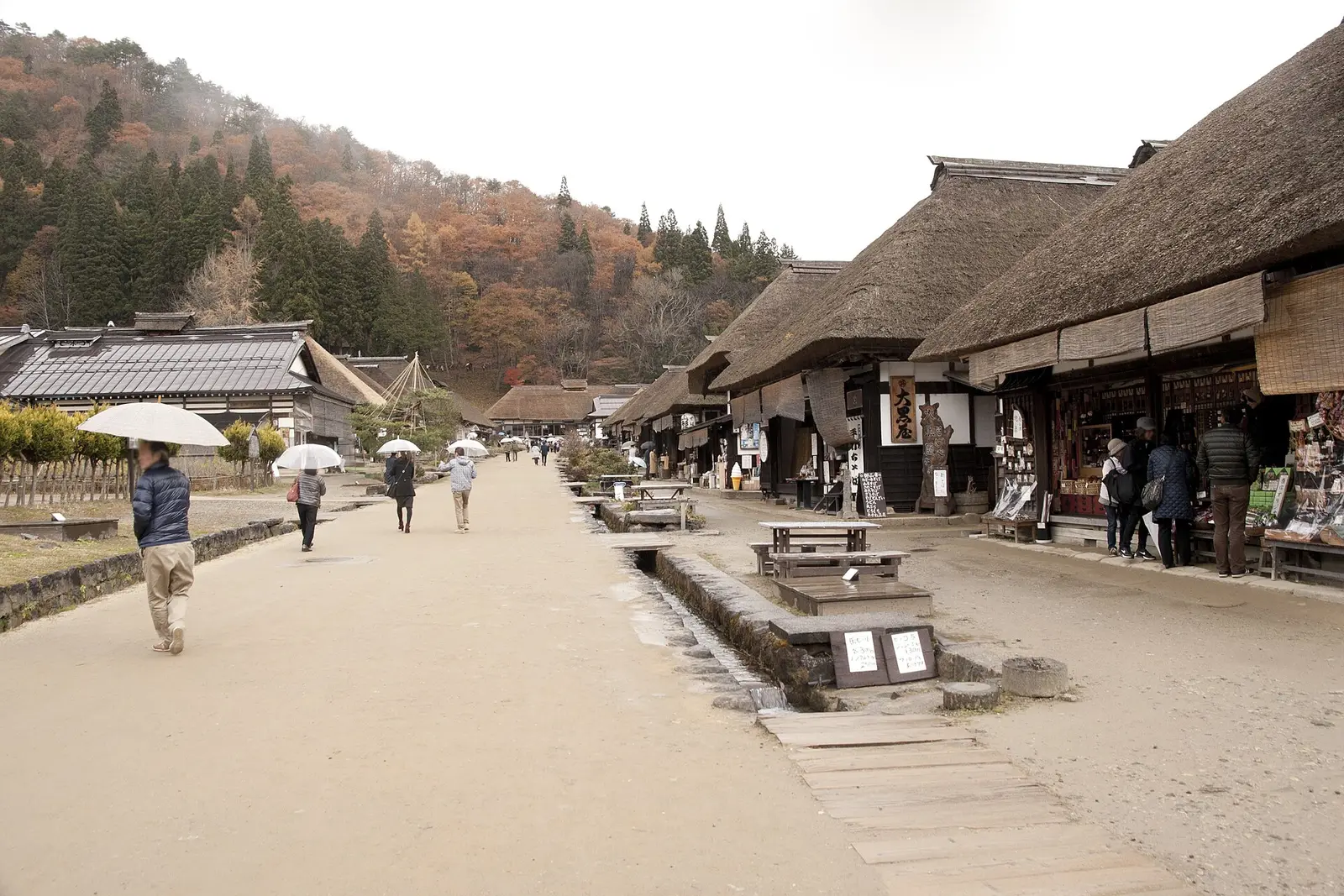
Ouchi-juku: A Thatched Post Town in the Mountains
An old post town of thatched houses on the road from Aizu to Nikko. What to see, what to eat, festivals and access.
 AIZU-WAKAMATSU3 min read
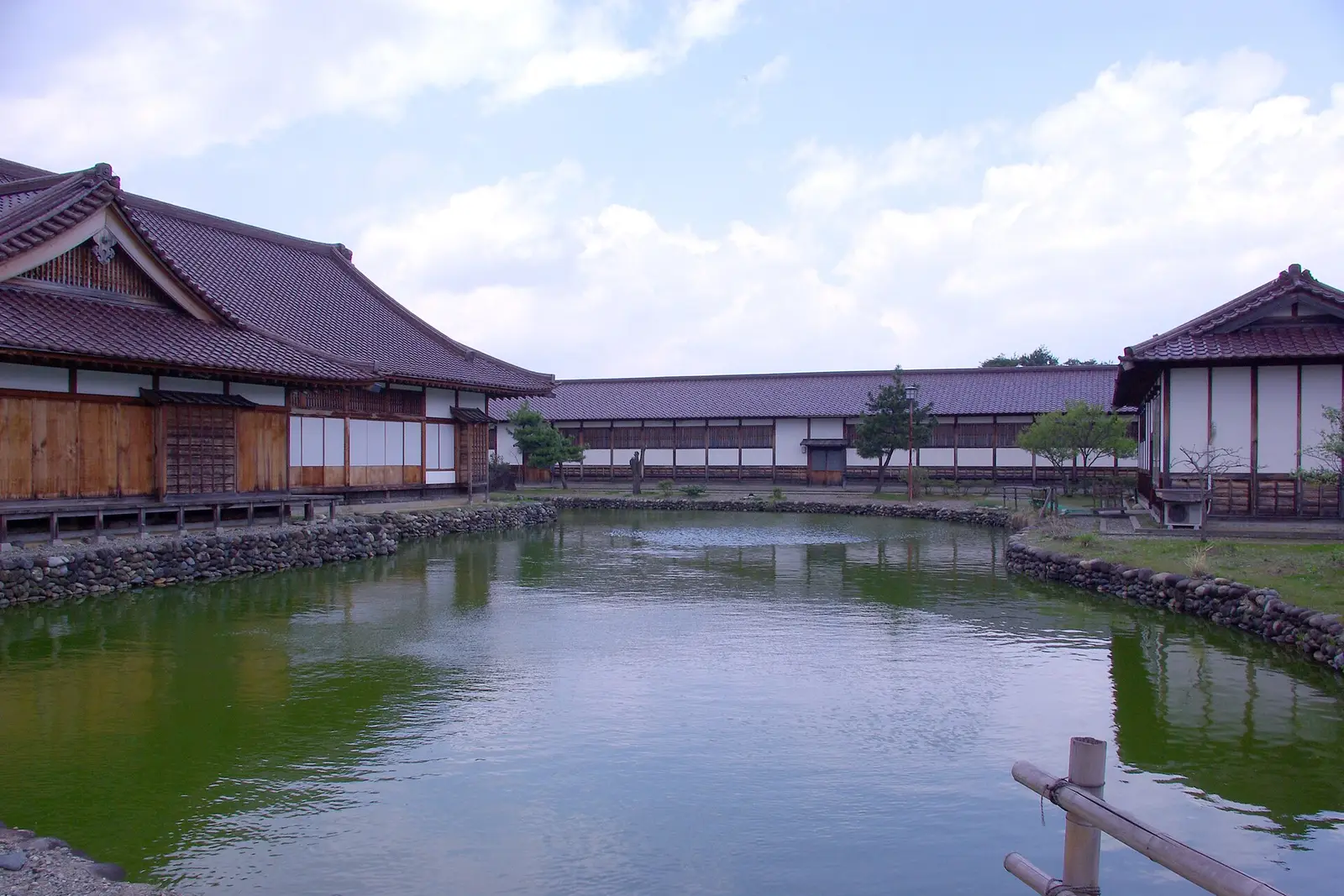
Nisshinkan: The School of the Aizu Samurai
A full-size rebuilding of the Aizu samurai school, with Japan's oldest school pool, archery and akabeko painting. Tickets, hours and access.