Destinations › Fukushima › Aizu-Wakamatsu
Oyakuen: The Medicinal Herb Garden of the Aizu Lords
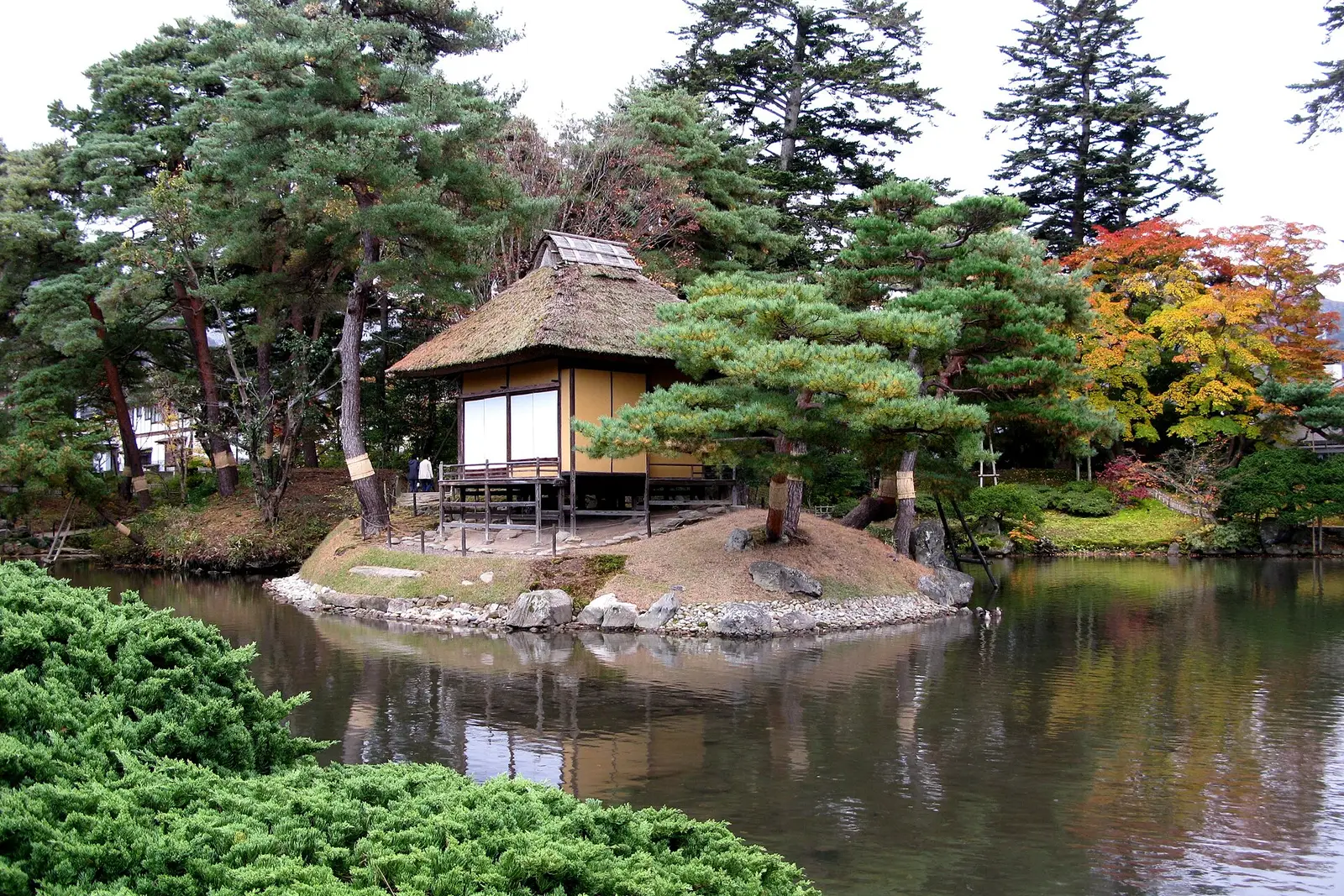
A short ride from Tsuruga Castle, a quiet garden wraps around a pond with a thatched pavilion on an island. This was the garden of the Aizu lords. Next to it they grew medicinal herbs to protect their people from disease, which is how it got its name, Oyakuen, "the lord's herb garden."
A garden by a sacred spring
The story of Oyakuen goes back to a spring that local people believed could heal. Around 1432, the lord Ashina Morihisa built a country house here. After a long period of war, Hoshina Masayuki, the first lord of the Aizu Matsudaira line, laid out a garden on the site and used it as a place to rest.
The garden you see today was made in 1696, under the third lord, Matsudaira Masakata. The garden designer Meguro Jojo, who followed the style of the famous designer Kobori Enshu, enlarged it into a strolling garden around a pond and used the mountains beyond as part of the view. The site covers about 1.7 hectares. It was named a national Place of Scenic Beauty in 1932 and opened to the public in 1953.
The lord's herb garden
In 1670 the second lord, Hoshina Masatsune, started a garden of medicinal plants here. He wanted to protect the poor people of his domain from epidemics and to help prevent and treat illness. The third lord grew ginseng here on a trial basis and encouraged farmers across Aizu to grow it. Because of this, people began to call the place Oyakuen, the lord's herb garden.
Aizu ginseng later became a valuable product. In 1830, with the shogunate's permission, Aizu ginseng left Nagasaki for China as the first ginseng exported from Japan. Today about 400 kinds of medicinal trees and herbs still grow in the herb garden on the north side.
What to see
At the center of the garden is a pond in the shape of the Chinese character for "heart." On its island stands Rakujutei, a small thatched pavilion where the lords relaxed, held tea gatherings and, it seems, met in secret. Its water comes from Lake Inawashiro and from a river in the Higashiyama hills.
On the west side of the pond is the Ochaya Goten, the lord's rest house. From its main room you see the pond, Rakujutei and the Higashiyama mountains behind. It is said that the lords built it partly from old farmhouse timber instead of new wood, as an example of thrift for their people.
In the northwest corner stands Choyokaku, a building moved here in 1973. It was first built at a hot spring inn to welcome Princess Setsuko, a granddaughter of the last Aizu lord, when she was engaged to Prince Chichibu in 1928.
Marks of the Boshin War
During the siege of 1868, shells fell even into the garden's pond. But the Ochaya Goten had been turned into a field hospital for wounded soldiers of the new government's army, so the garden was spared. Apart from the gatehouse, which burned, the buildings and garden survived much as they were. Look for the sword cuts that still mark the pillars.
Tea with a view
You can sit and look out over the garden with a bowl of matcha and a slice of handmade sesame yokan, a firm sweet. It costs ¥600 (¥700 from December 1, 2026). Tea is served from 9:30 to 16:00, with last orders at 15:30, from mid-March to the end of November. The shop sells herbal teas and Aizu crafts.
Tickets and hours
The garden is open every day from 8:30 to 17:00, with last entry at 16:30. There are no lights in the garden, and the sun sets early in winter, so come in good time. Adults pay ¥330, high school students ¥270, and elementary and junior high school students ¥160. A ticket for the Tsuruga Castle keep, the Rinkaku teahouse and Oyakuen costs ¥730.
Getting there
From Aizu-Wakamatsu Station, take the Haikara-san loop bus to the Oyakuen stops, about 30 minutes. The Akabe bus, which runs the other way around, takes about 15 to 22 minutes to Aizu-Wakamatsu Shoko Kaigisho-mae, a 5-minute walk away. There is free parking for 40 cars.
Nearby
Tsuruga Castle is a short ride away on the loop bus. The hot spring town of Higashiyama Onsen is on the same bus route.
More on Aizu-Wakamatsu
 AIZU-WAKAMATSU3 min read
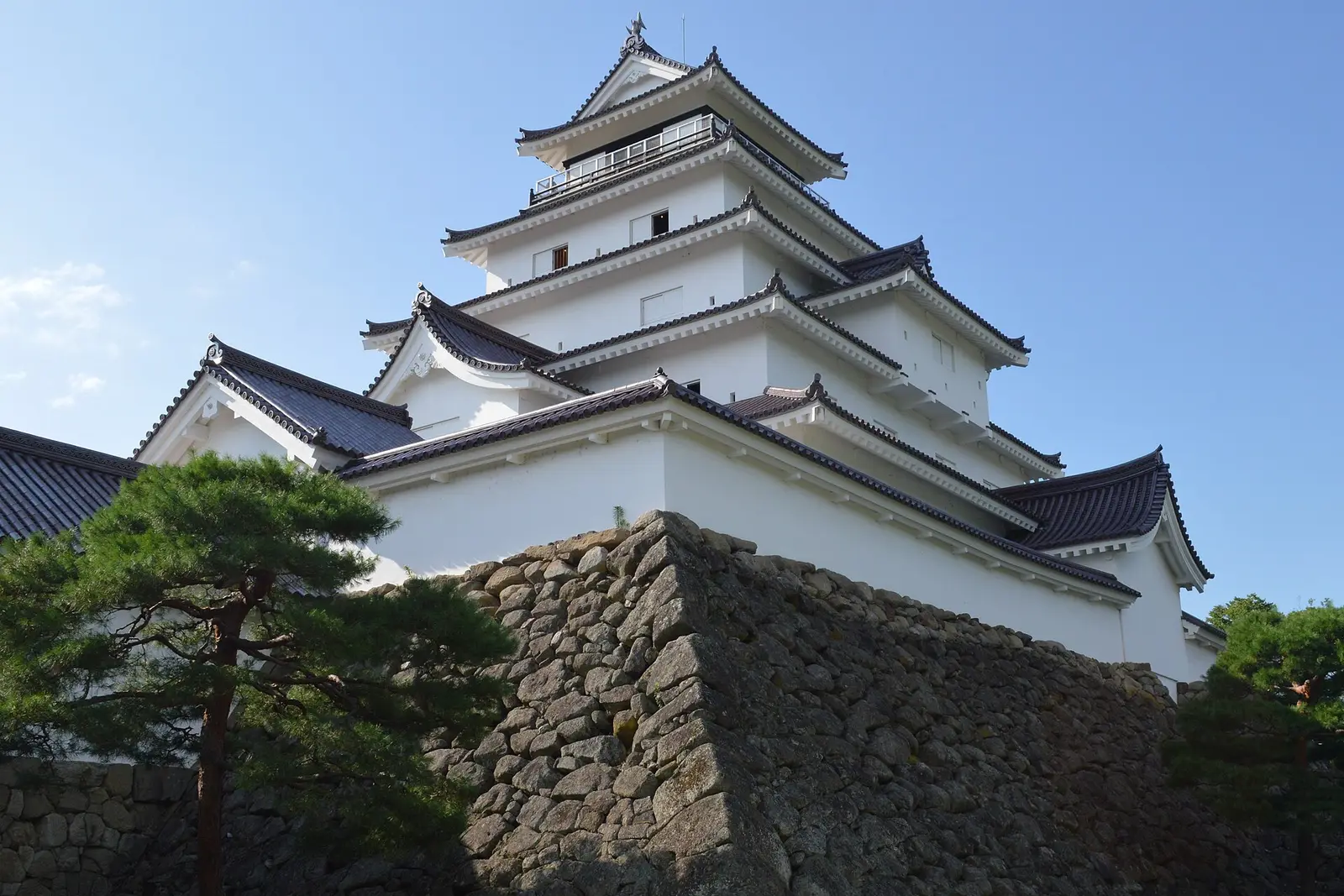
Tsuruga Castle: The Red-Roofed Castle of Aizu
The castle of the Aizu samurai, with Japan's only red-tiled keep, a museum inside and a teahouse in the grounds. Tickets, hours and access.
 AIZU-WAKAMATSU3 min read
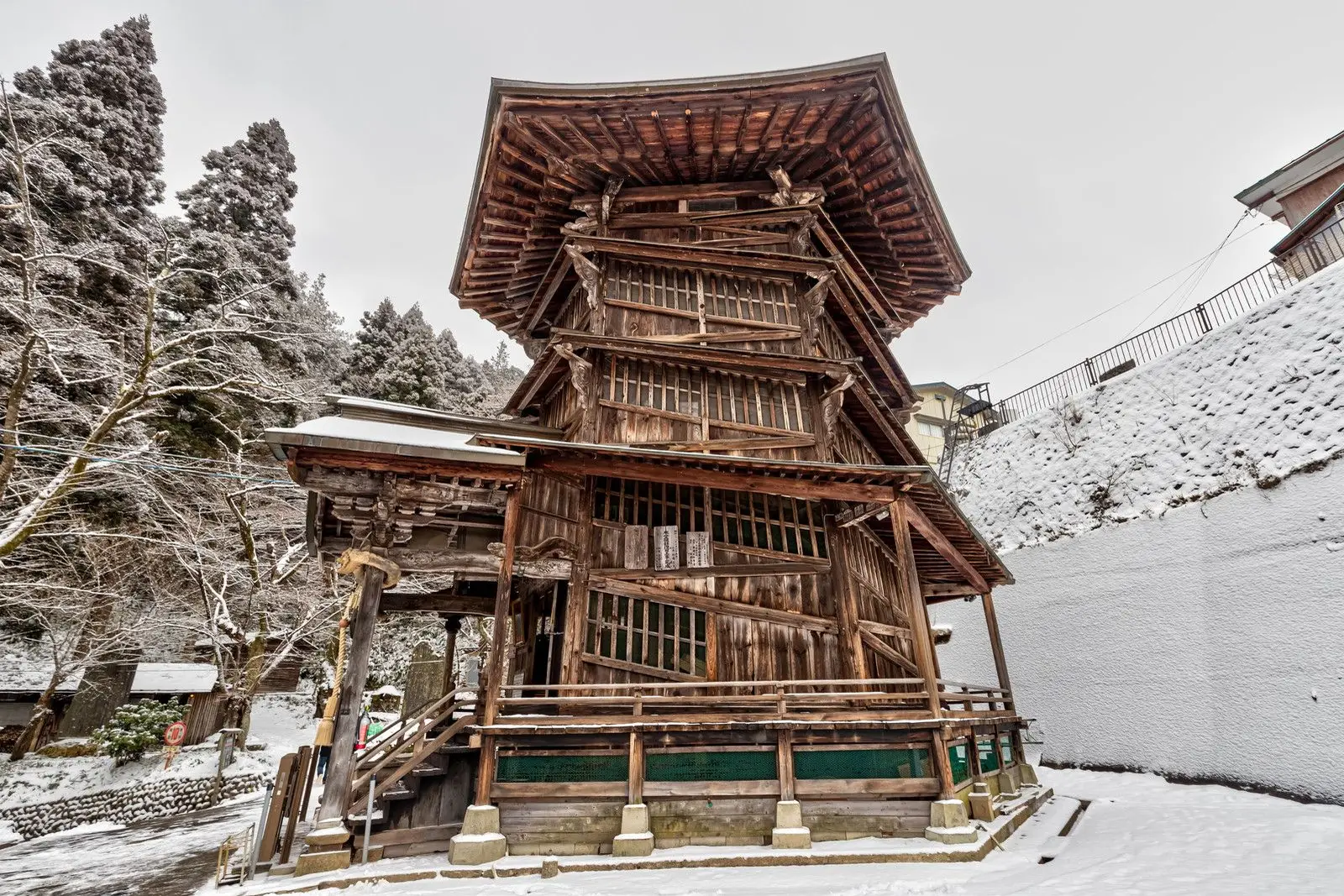
Iimoriyama and the Sazaedo: The Byakkotai Hill
The hill of the Byakkotai boy soldiers and the Sazaedo, a wooden hall where the way up and the way down never meet. Story, prices and access.
 AIZU-WAKAMATSU3 min read
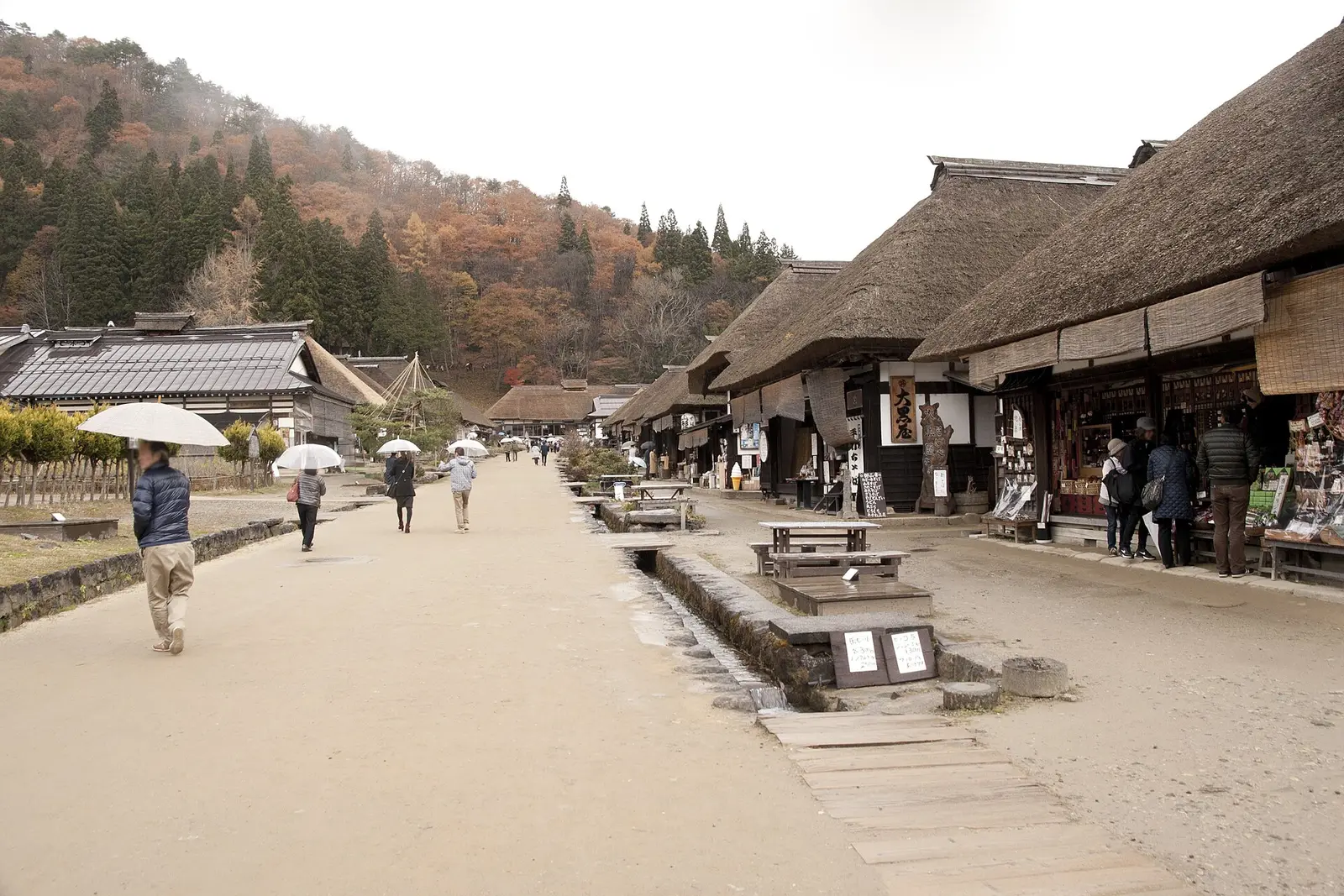
Ouchi-juku: A Thatched Post Town in the Mountains
An old post town of thatched houses on the road from Aizu to Nikko. What to see, what to eat, festivals and access.