Destinations › Tokyo › Akihabara
Chuo Dori: Akihabara's Main Street and Its Sunday Car-Free Hours
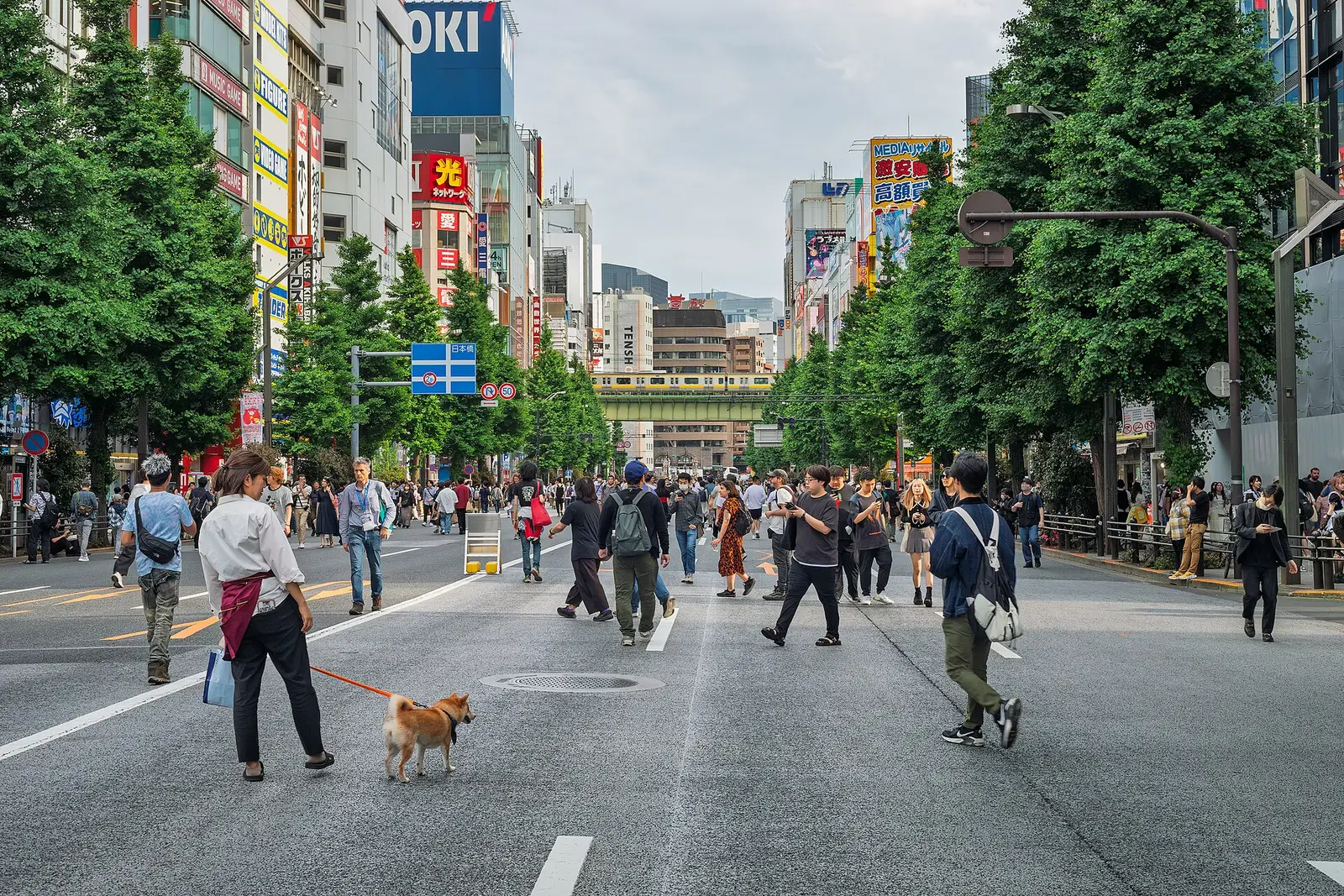
Tokyo's Electric Town is not one building. It is a street, with a long row of tall shops on both sides, and on Sunday afternoons the cars leave and the whole road belongs to people on foot.
Where the name Akiba comes from
Akihabara is known around the world as Electric Town, and Chuo Dori is its main street. Most visitors who say they are going to "Akiba" mean this street and the side streets around it.
The name is older than the electronics. In the Edo period, low-ranking samurai lived here, and fires were a constant problem. After a big fire in 1869, the new Tokyo government cleared about 30,000 square meters as a firebreak. In 1870 it set up a small shrine there to a fire-protecting god. People began to call the open ground Akibahara, after the shrine, and later the short form "Akiba" stuck. When a railway station opened here in 1890, it was named Akihabara.
How it became Electric Town
According to the local shopkeepers' association, Electric Town started after World War II. A black market near Surugadai and Ogawamachi slowly began to specialize in radio parts. In 1951, street stalls were ordered off the streets, and the sellers moved under the railway tracks. That is usually told as the start of the district.
In the 1950s, the shops sold the big new household items: televisions, washing machines and refrigerators. By the 1970s, tall buildings were going up along the street, and it took roughly the shape you see now. From the late 1990s, shops selling anime and game software began to fill the gaps between the electronics stores, and maid cafes opened. Today the two worlds sit side by side.
The Sunday car-free hours
Every Sunday, a stretch of Chuo Dori about 570 meters long is closed to cars. It runs from the Sotokanda 5-chome intersection to the Manseibashi intersection. The Japanese name for this is hokoten, or "pedestrian paradise."
The hours are 1 pm to 5 pm from October to March, and 1 pm to 6 pm from April to September. It is canceled in rain, strong wind or other bad weather, so check the day before you go. The tradition began in 1973. It was paused in 2008 and came back as a trial in January 2011.
There are rules. You cannot sell goods, perform, play street music or ride a bicycle in the zone, so push your bike if you have one. Smoking on the street is also banned in this area.
What you will find
Hundreds of shops line the main street and the lanes beside it. Some are large stores, such as Sofmap and Laox, which run several branches. Others are tiny shops that sell only one type of part. You can find computers, cameras, televisions, phones, home appliances and second-hand goods. The biggest single store is the Yodobashi Camera complex, on the east side of the station.
Between the electronics shops are stores for anime, manga, figures, card games and retro video games. If you only want to look, go after dark. The street is very bright then, with signs stacked on top of signs.
Shopping tips
Check before you buy. Some electronics are made only for use in Japan. They can have a different voltage, Japanese-only manuals, and a limited warranty. Several stores sell models made for overseas use, and most offer tax-free shopping to tourists. Ask at the counter, and compare two or three stores before you decide. Stock and prices change from shop to shop.
Nearby
Retro game fans can visit Super Potato, a shop and arcade that is also in Akihabara. A few minutes' walk from the Manseibashi end of the street, the old railway arches of mAAch ecute hold cafes and small shops by the river. For something quieter, Kanda Myojin shrine is a seven-minute walk from the station.
More on Akihabara
 AKIHABARA3 min read
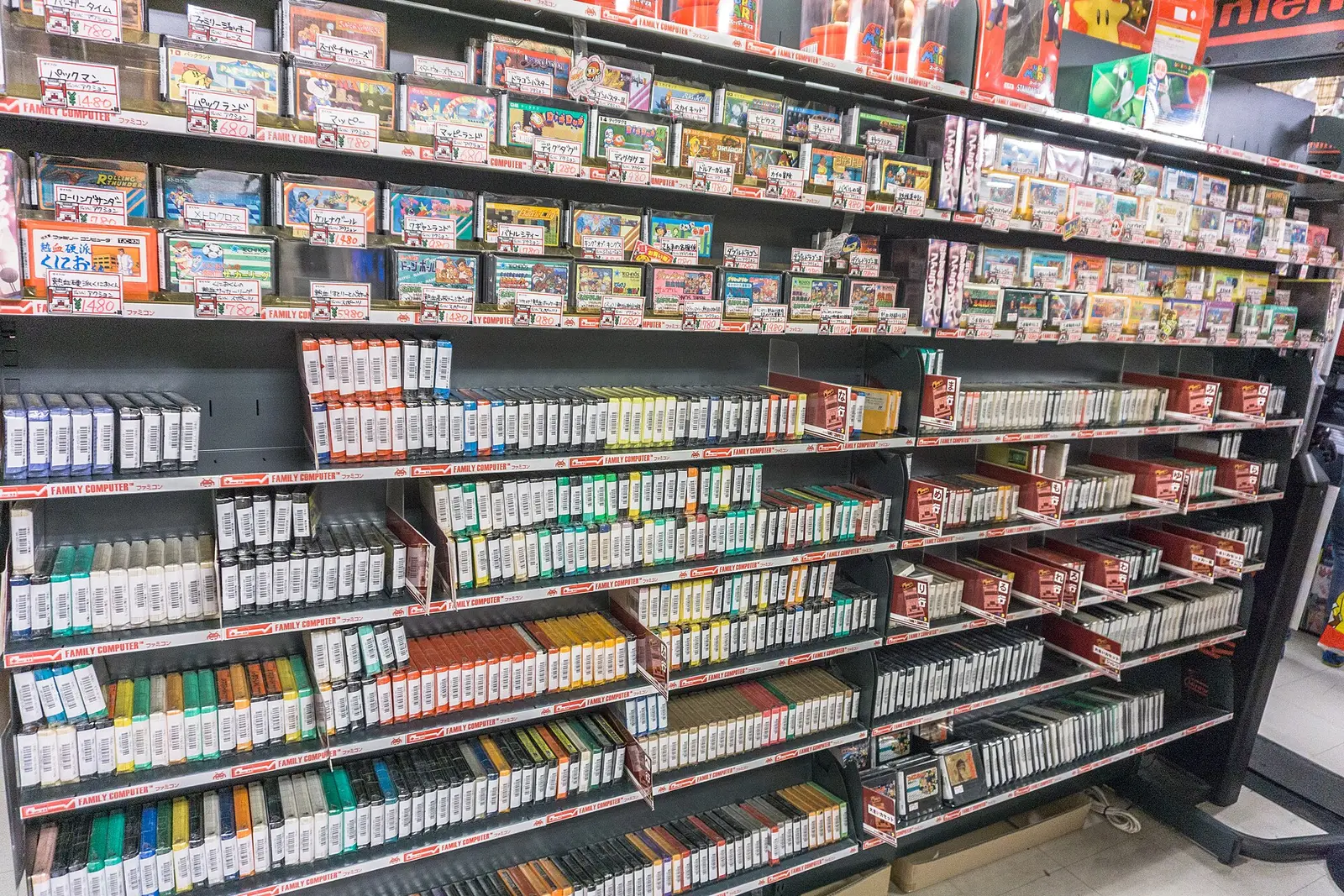
Retro Game Shops in Akihabara: Super Potato and More
Shelves of old cartridges, a retro arcade on the top floor, and a few tips for buying games in Tokyo.
 AKIHABARA3 min read
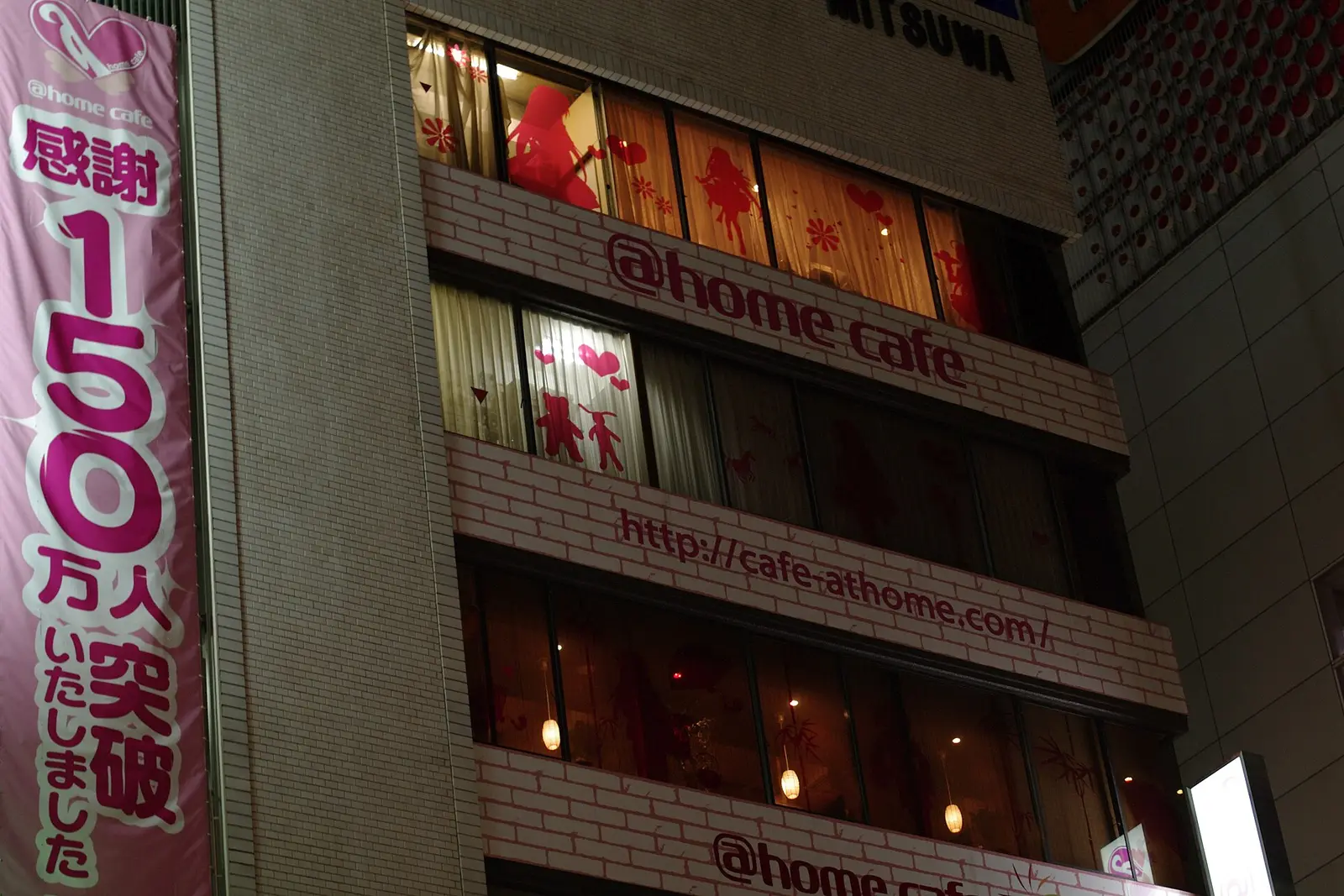
Maid Cafes in Akihabara: What to Expect on Your First Visit
What a maid cafe is, how the entry fee works, and the simple rules for a first visit.
 AKIHABARA3 min read
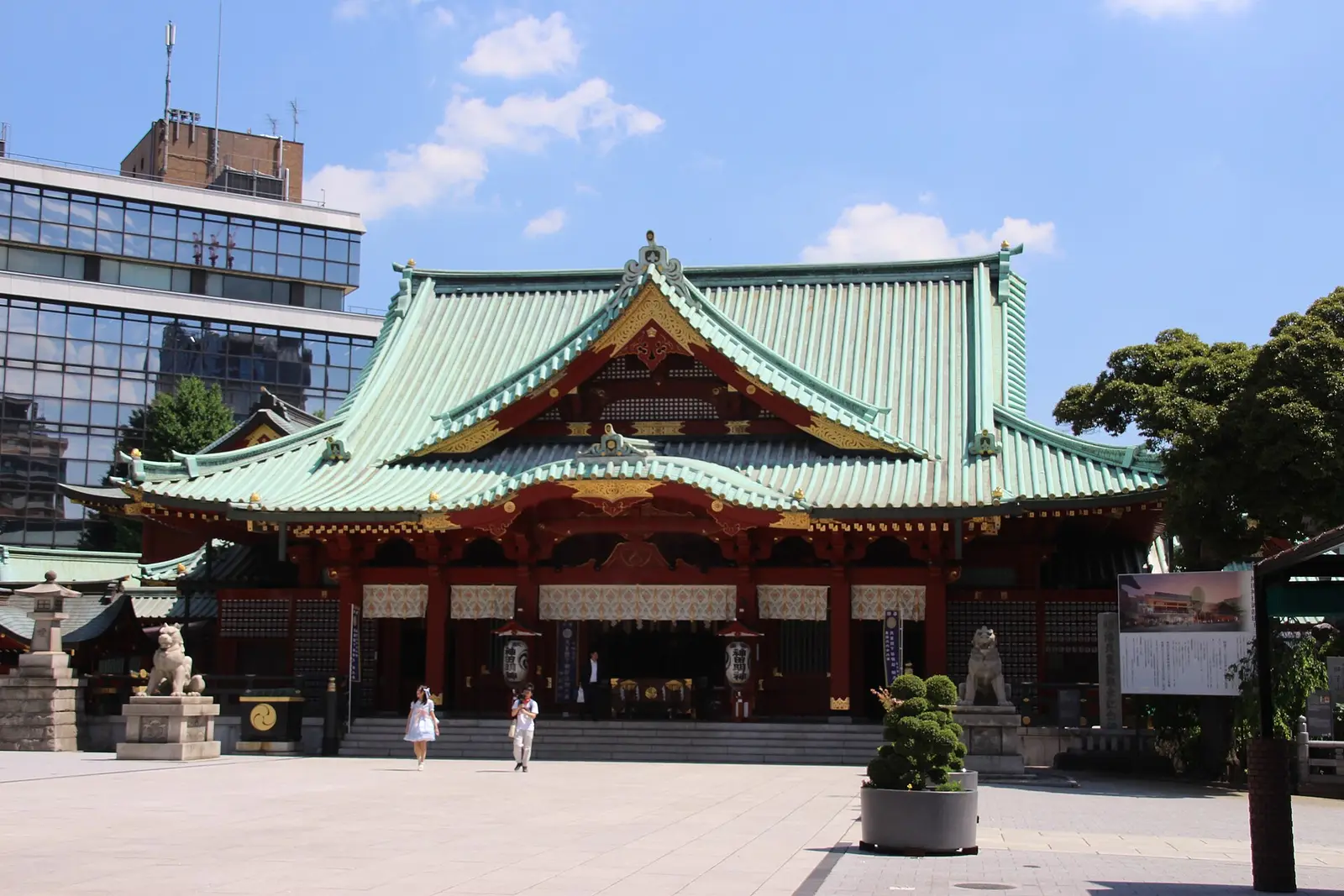
Kanda Myojin: The Shrine Next to Electric Town
A vermilion shrine that has watched over Edo and Tokyo for centuries, a short walk from the game shops.