Destinations › Tokyo › Asakusa
Kaminarimon: The Thunder Gate of Asakusa
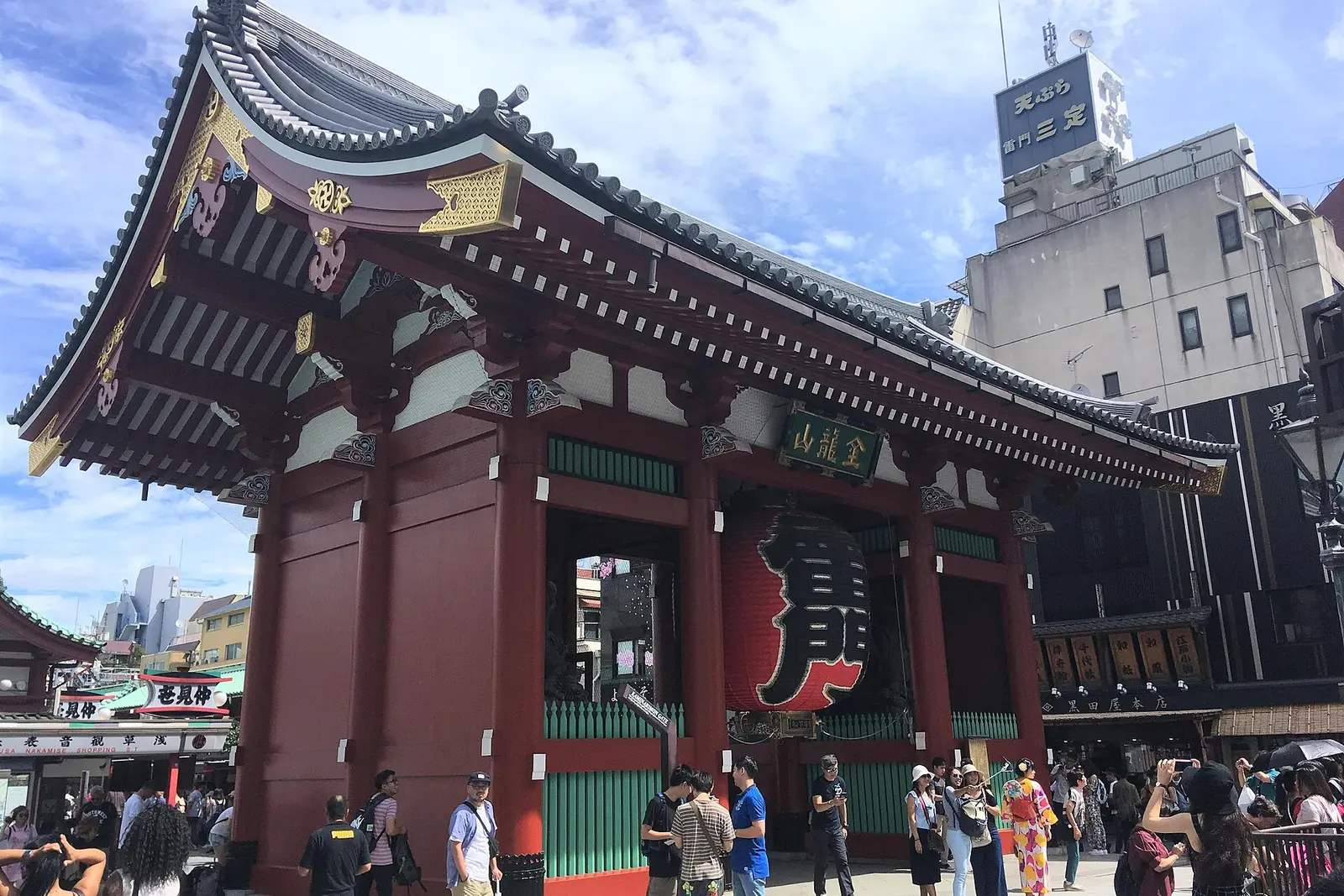
Almost every visitor to Asakusa starts under a huge red lantern. The gate it hangs from is called Kaminarimon, the Thunder Gate. It is the front door to Senso-ji, and the easiest place in Asakusa to find on a map.
What the name means
The gate's formal name is Furaijinmon, the Wind and Thunder God Gate. It is named for the two gods inside it. The wind god is about 2.2 meters tall, and the thunder god about 2.1 meters. They are said to protect the temple and to guard against storms and floods. People shortened the name to Kaminarimon long ago. A poem from the early 1800s already uses the short name, so it has been common for more than 200 years.
The big red lantern
The lantern is the main reason people stop here. It is about 3.9 meters tall and 3.3 meters wide, and it weighs about 700 kilograms. Lanterns have been offered to the gate since around 1795, and they are replaced from time to time. The sixth one was hung in April 2020.
Walk right under it and look up. The underside is decorated with a carved dragon. Most people photograph the lantern from the front and miss this.
A gate that burned down
This gate has an unlucky history. Tradition says that a gate stood here as early as 942. A gate built in 1635 burned down in 1642. The shogun Tokugawa Iemitsu paid for a new one in 1649. That one burned in 1767. The next one went up in 1795, and it too was lost to fire, in December 1865.
After that there was no gate for a long time. Only the heads of the wind and thunder gods survived the 1865 fire. Their bodies were remade in 1874. The gate itself was missing for 95 years, until it was rebuilt on May 1, 1960. The money came from Konosuke Matsushita, the founder of Matsushita Electric, which is now Panasonic.
The gate today
The gate you see now is a modern building. It is made of reinforced concrete, with a traditional tile roof and a coat of resin paint. It is about 11.7 meters tall and 11.4 meters wide at the front. It has eight pillars and a gabled roof. The red paint was last redone in 2013.
Two carved dragon figures, one male and one female, also guard the gate. A group of Matsushita company volunteers donated them in 1978. They are carved from cypress and stand a little under three meters tall.
Look for the plaque that reads "Kinryuzan." That is the temple's mountain name. It is a copy of a piece of calligraphy by a priest from a temple in Kyoto.
The wind and thunder gods are not only here. The upper floor of Hozomon, the second gate, also holds statues of the wind god and the thunder god, together with the Four Heavenly Kings. So when you reach the second gate, you are walking under another pair of the same gods.
Taking your photo
The gate is crowded at almost any hour. If you want a clear shot, come early in the morning. Stand a little back from the gate to fit the lantern and the whole front of the gate into the picture. If you only want the lantern, walk right up to it.
Allow about ten minutes, plus a few more if you want to look at the details. There is no ticket and no gate hours, so you can pass through on the way to the temple or on the way back to the station.
Nearby
Kaminarimon is where Nakamise-dori begins. The shopping street leads straight to Hozomon, the second gate, and then to the main hall of Senso-ji. Asakusa Station is close by. Hoppy Street, Kappabashi Dogu Street and Asakusa Shrine are all within a short walk.
See it with a local guide: Asakusa history and lunch
See the planMore on Asakusa
 ASAKUSA3 min read
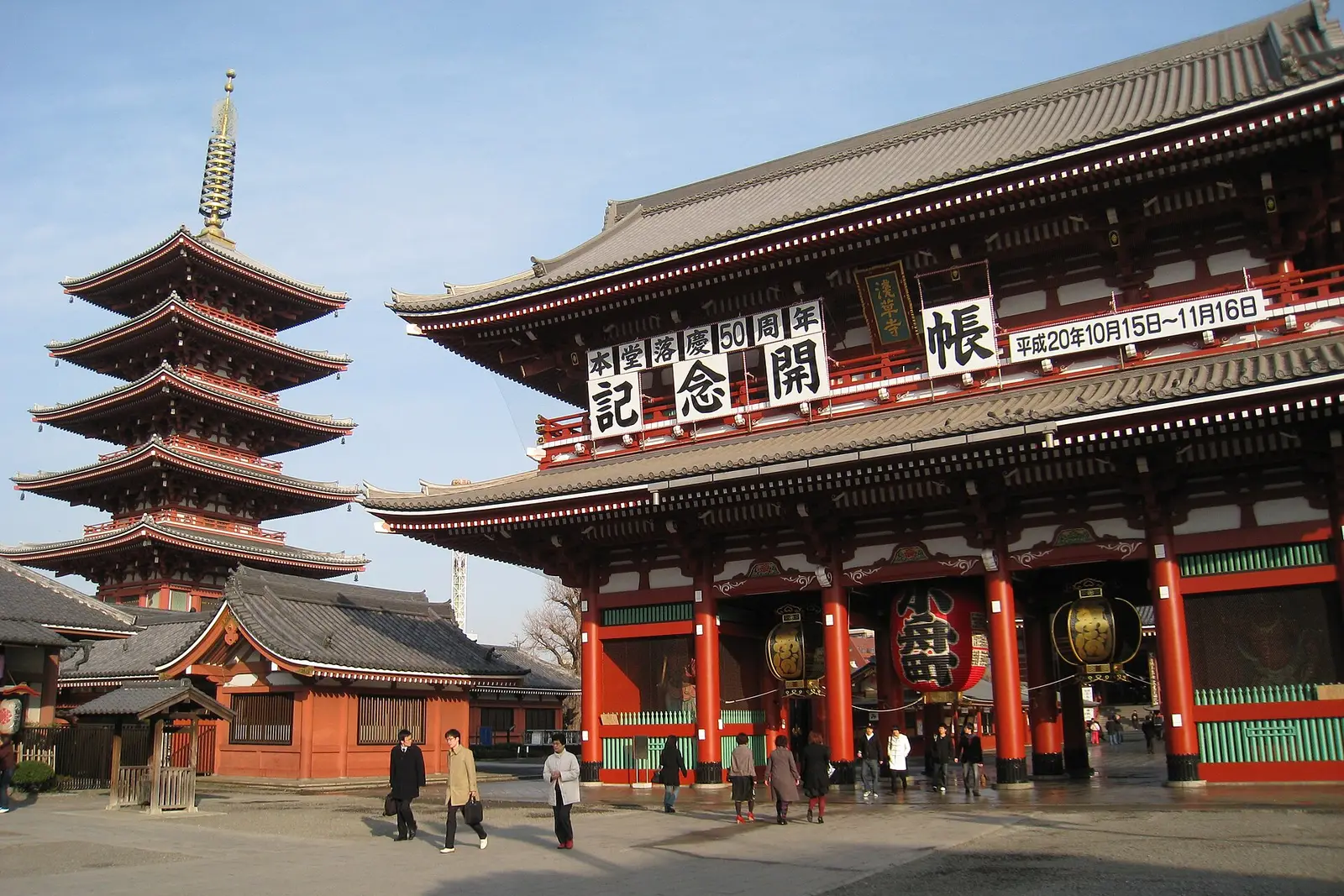
Senso-ji: The Temple at the Heart of Asakusa
The temple behind Asakusa, with a legend from the year 628, a rebuilt main hall and a gate with giant sandals.
 ASAKUSA3 min read
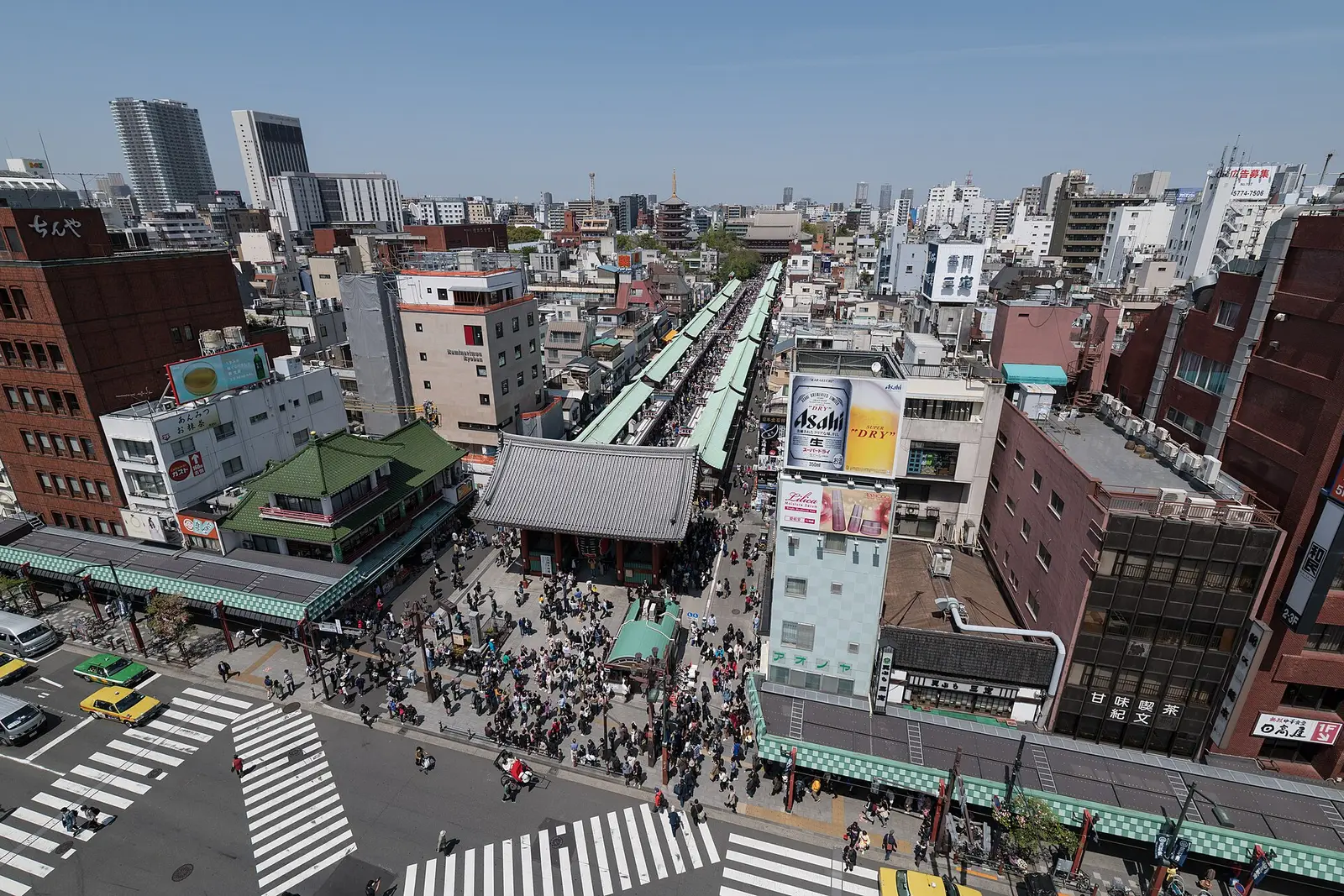
Nakamise-dori: The Shopping Street to Senso-ji
A 250-meter shopping street with a history that goes back to 1685, and painted shutters you only see after closing time.
 ASAKUSA3 min read
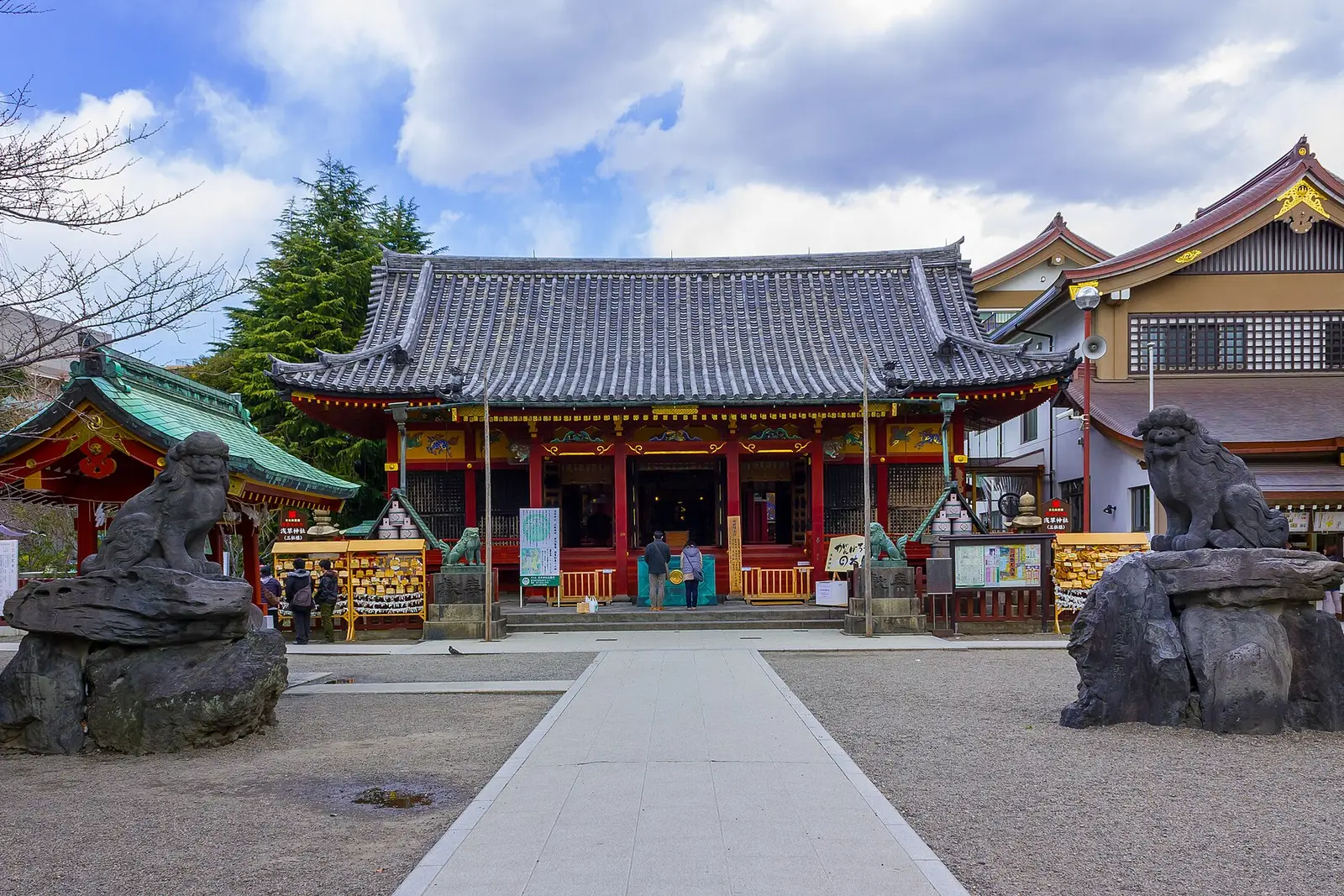
Asakusa Shrine and the Sanja Matsuri
The small shrine next to Senso-ji, with buildings from 1649 and one of Tokyo's biggest festivals each May.