Destinations › Tokyo › Asakusa
Senso-ji: The Temple at the Heart of Asakusa
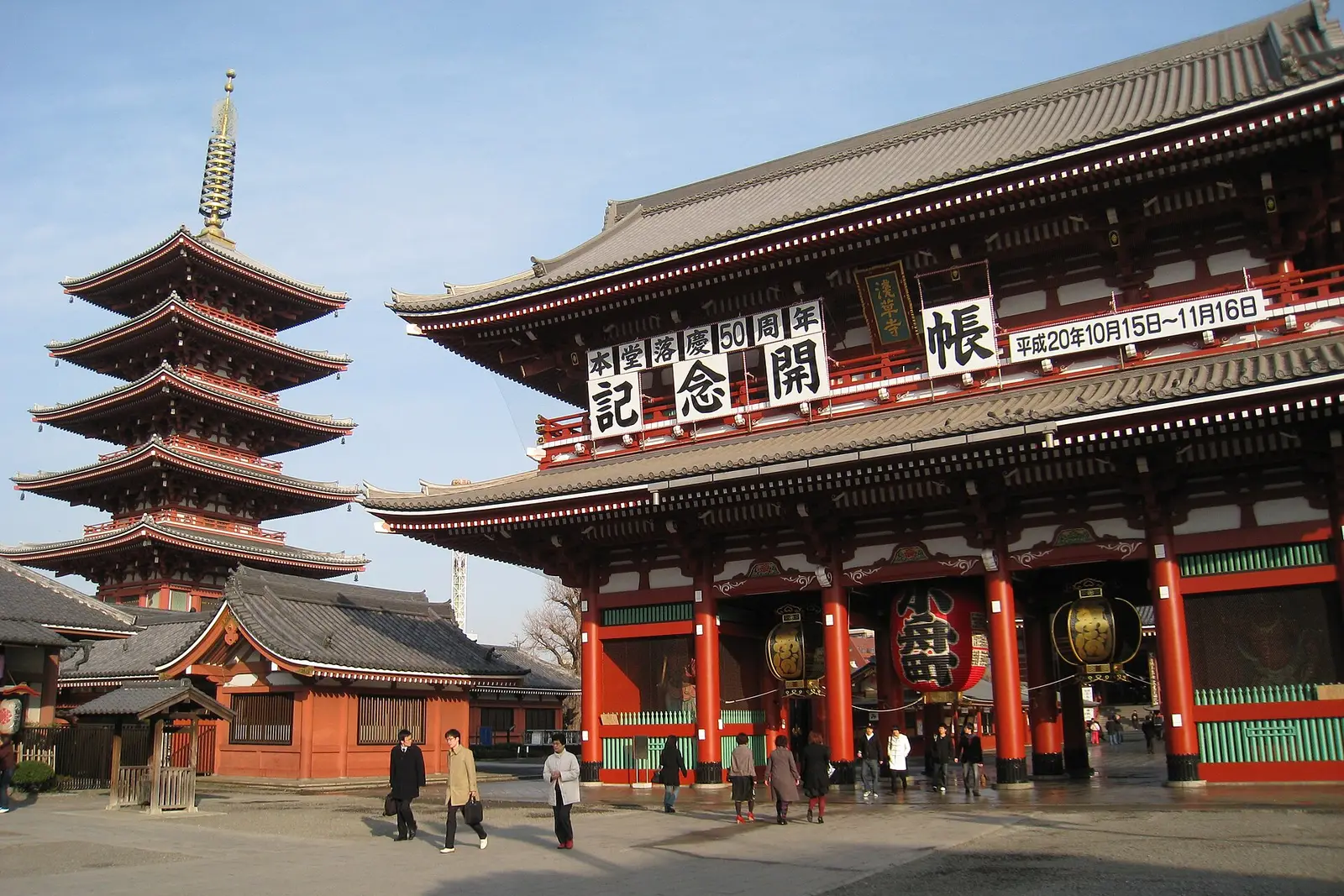
Senso-ji has been the center of Asakusa for nearly 1,400 years, according to the temple. The buildings you see today are much younger, but the story of how it began is still told at the main hall.
The fishermen and the statue
The temple dates its beginning to March 18 in the year 628. On that day, say the legend, two brothers named Hinokuma no Hamanari and Takenari were fishing in the Sumida River. Their net came up with a small statue instead of fish. The leader of their village, Hajino Nakachi, saw that it was Kannon, the Buddhist figure of compassion, and the statue was enshrined.
The temple adds that a pine grove appeared overnight and a golden dragon came down from the sky. That is where the temple's mountain name, Kinryuzan, "Golden Dragon Mountain," comes from.
Nobody can see the original statue. It is a hidden Buddha, kept inside the main hall. A second image placed in front of it is shown just once a year, on December 13.
Rebuilt, again and again
Senso-ji has burned and been rebuilt many times. The main hall you see now is the newest. The Edo-period hall, built in 1649 by the shogun Tokugawa Iemitsu, stood for about 300 years. It was destroyed in the Tokyo air raid of March 10, 1945.
Before that night, the temple had buried the statue in a bronze water basin about three meters underground, so it survived. Work on the new hall began in 1951, and it was finished in 1958. It is made of reinforced concrete. In 2010 the roof was covered with about 89,000 titanium tiles, which are lighter than the old ones.
The five-story pagoda has the same story. A pagoda first stood here in 942 as a three-story tower, and Iemitsu rebuilt it with five stories in 1648. The present pagoda dates from 1973. On the top floor is a relic of the Buddha that came from a temple in Sri Lanka in 1966.
Hozomon, the Treasure House Gate
Between Nakamise-dori and the main hall stands Hozomon, rebuilt in 1964. The upper floor stores scriptures, including a set of Buddhist texts that is an Important Cultural Property, which is how the gate got its name. Two Nio guardian statues stand on the ground floor, and each weighs about 1,000 kilograms.
Look for the giant straw sandals hung on the gate. They are about 4.5 meters tall. Volunteers from Murayama, a city in Yamagata Prefecture, gave the current ones in 2018.
At the main hall
Walk up and see the huge lantern hanging under the front eaves. It weighs about 600 kilograms. Inside the outer hall, look up. The ceiling has a large painting of a dragon by the artist Kawabata Ryushi, about 6.4 by 4.9 meters.
Many visitors draw an omikuji, a paper fortune. At Senso-ji these are called Kannon Hyakusen, and some people say they often give bad luck. The temple says a bad fortune can turn good with patience and sincerity. If you draw one, you can tie the slip at the marked place on the grounds.
Visiting
The temple counts about 30 million visits a year, so it is busy for most of the day. The main hall opens at 6:00 am, or 6:30 am from October to March. Come then, and you will share the grounds with far fewer people.
On July 9 and 10, about 100 stalls selling ground-cherry plants fill the grounds. A visit on July 10 is said to bring the merit of 46,000 days of prayer, which is around 126 years.
Nearby
The red Kaminarimon gate, where most people start, is at the other end of Nakamise-dori. Asakusa Shrine stands right next to the main hall, and Hoppy Street lies just beyond the west edge of the temple grounds.
See it with a local guide: Asakusa history and lunch
See the planMore on Asakusa
 ASAKUSA3 min read
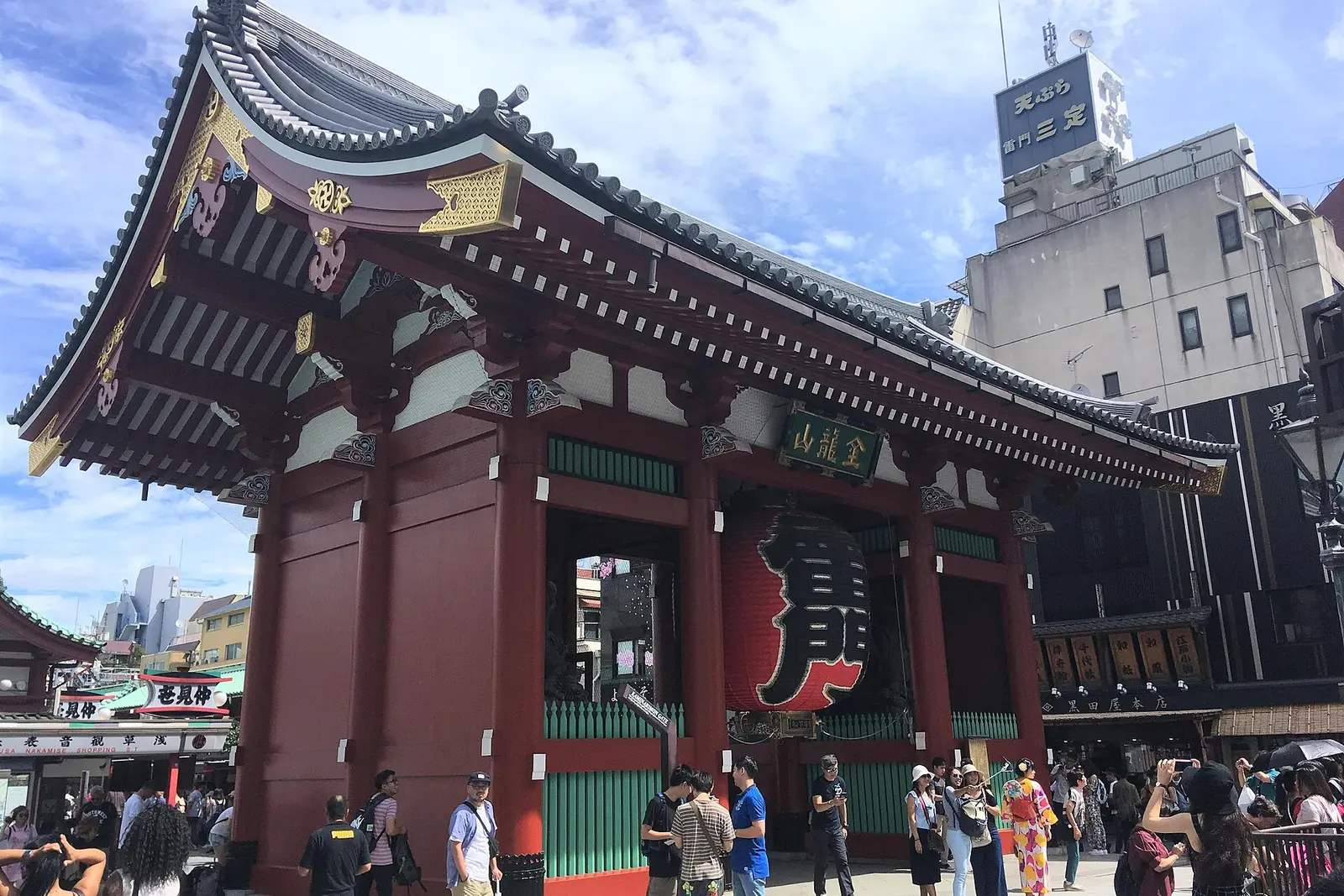
Kaminarimon: The Thunder Gate of Asakusa
The red gate and giant lantern at the start of the road to Senso-ji, and the 95 years it was gone.
 ASAKUSA3 min read
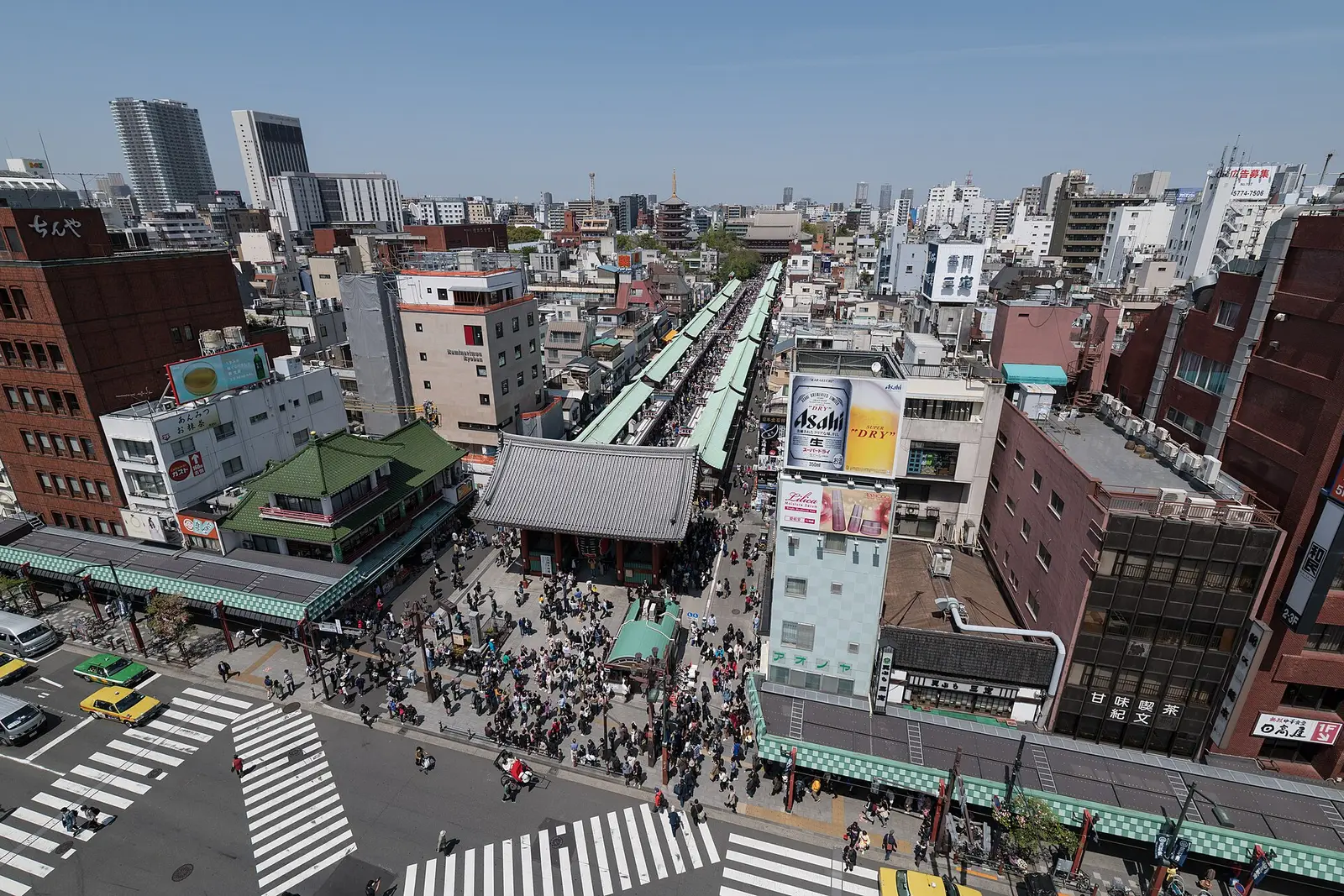
Nakamise-dori: The Shopping Street to Senso-ji
A 250-meter shopping street with a history that goes back to 1685, and painted shutters you only see after closing time.
 ASAKUSA3 min read
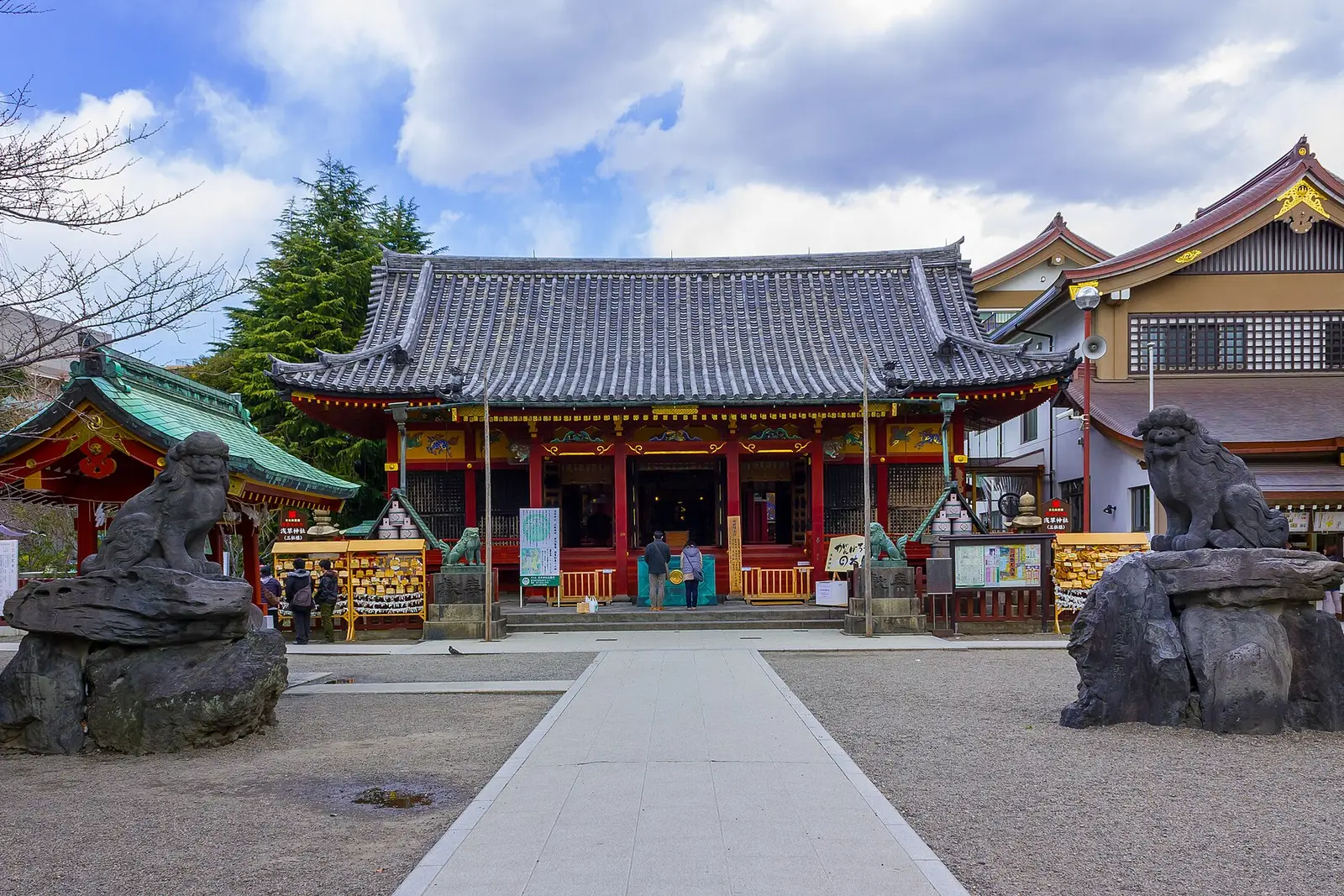
Asakusa Shrine and the Sanja Matsuri
The small shrine next to Senso-ji, with buildings from 1649 and one of Tokyo's biggest festivals each May.