Destinations › Tokyo › Asakusa
Nakamise-dori: The Shopping Street to Senso-ji
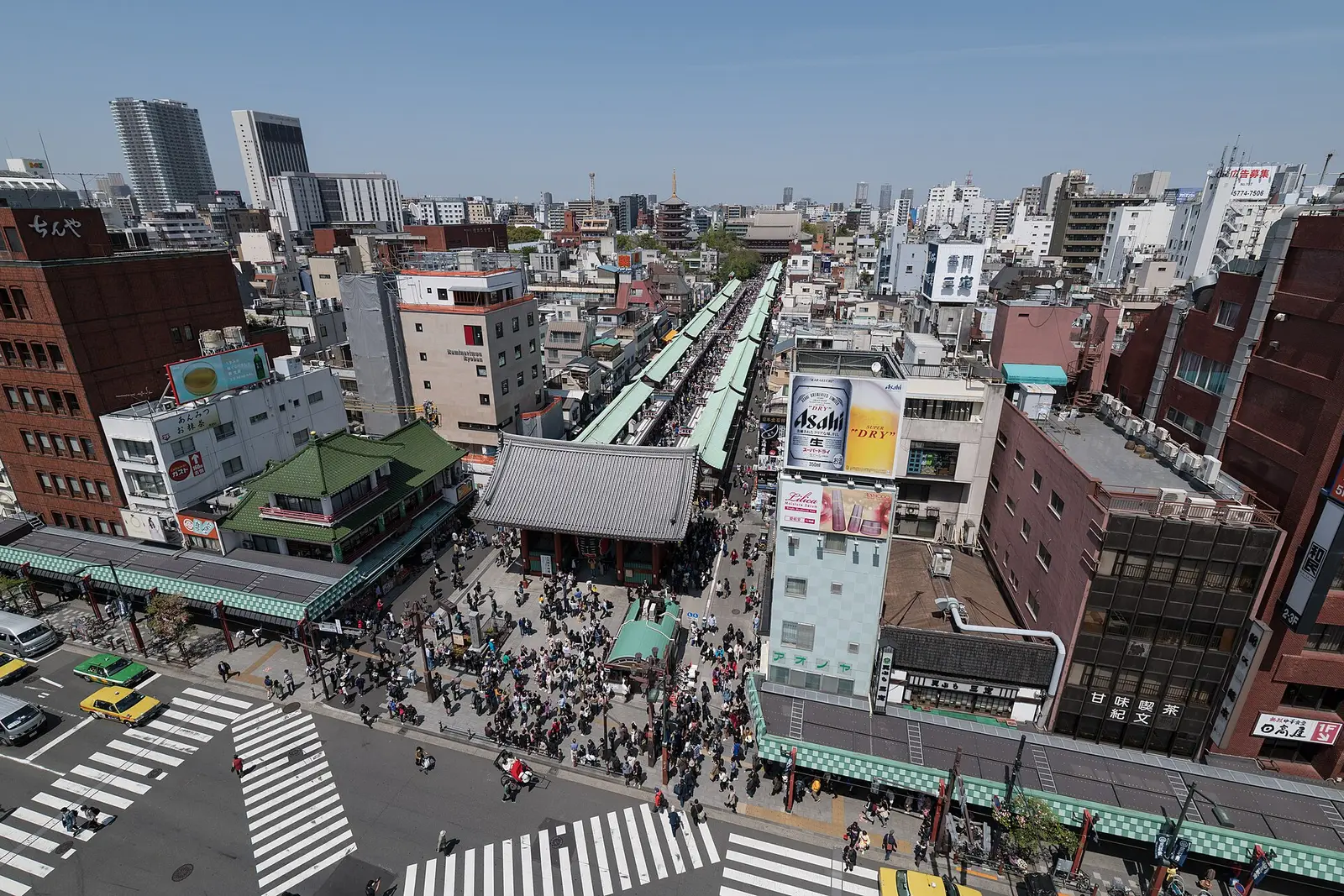
Between the Thunder Gate and the temple runs a straight, narrow street lined with small shops. It is called Nakamise-dori, and people have been shopping here on the way to pray for more than 300 years.
How it began
The temple says the street goes back to 1685. In that year, shops were first set up under the eaves of the temple's buildings. Later, near the Hozomon end of the street, there were 20 teahouses.
The street is about 250 meters long. It runs straight from Kaminarimon to Hozomon, and from there you reach the main hall of Senso-ji. In 1817, a group of local believers in Kannon paved the way to the main hall with stone.
The street has been rebuilt more than once. In 1885 it became a Western-style street of brick buildings. The Great Kanto Earthquake of 1923 destroyed it. In 1925 it was rebuilt in reinforced concrete, and the shops were painted red. The bombing of Tokyo in 1945 burned it again, and only the outer frames were left. It was repaired after the war.
In 1994, the utility poles were removed and the power lines were moved underground. This is why there are no wires above the street now.
What you can buy
The Nakamise shop association sorts its shops into groups: food, souvenirs, toys, traditional crafts, fashion accessories, Japanese clothing, dance props, umbrellas, cameras and even pet supplies. So you can find a snack, a gift or something a little unusual in the same walk.
A good plan is to look around on the way in and buy on the way out. The crowd moves slowly toward the temple, and it is easier to stop for a snack when you are coming back. Shops usually run from about 9 am to around 6 pm, and each one sets its own hours, so do not leave your shopping until the last minute.
The painted shutters
The best-kept secret of Nakamise is something most visitors never see. The shop shutters are painted. The mural is called Asakusa Emaki, the "Asakusa Picture Scroll," and it shows the history of the area and the traditional events held here through the year.
The painted shutters were finished in 1989. In 2006 the shutters were replaced on 89 shops, and a copy of the same mural was painted again. The artists were teachers from the Tokyo University of the Arts. You can see them only when the shops are closed and the shutters are down, so come early in the morning or after the shops close.
The far end of the street
At the far end, the street stops at Hozomon, the Treasure House Gate. Hanging in the gate is a large red lantern, about 3.75 meters tall and 450 kilograms. A neighborhood group from Nihonbashi gave it in 2014, the fourth lantern to hang there. A bronze lantern, about 2.75 meters tall, hangs inside the gate as well.
It makes a good place to turn around if you only want the shops. If you want the temple, pass through the gate and keep walking to the main hall.
Getting there
From Asakusa Station it is about a five-minute walk to the temple, and Nakamise-dori is the way in. Walk through Kaminarimon, and you are on the street. The crowds are heaviest on weekends and festival days, so a weekday morning is easier.
You can walk the whole street in about ten minutes if you do not stop. Most people take at least half an hour, because there is a lot to look at on both sides.
Nearby
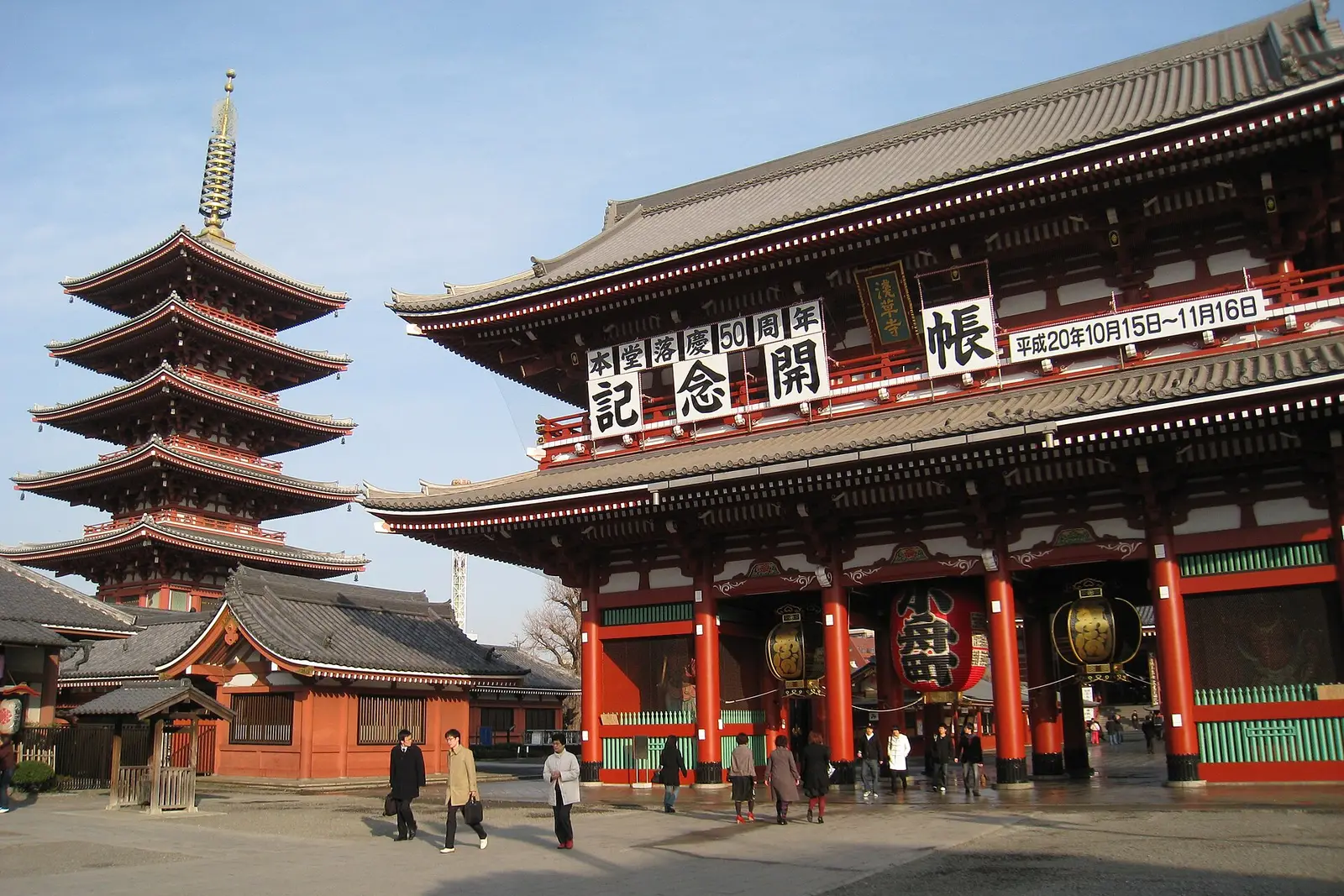
At the far end stands Hozomon, the gate with the giant straw sandals, and behind it the main hall and pagoda of Senso-ji. Asakusa Shrine is right next to the main hall.
See it with a local guide: Asakusa history and lunch
See the planMore on Asakusa
 ASAKUSA3 min read
Senso-ji: The Temple at the Heart of Asakusa
The temple behind Asakusa, with a legend from the year 628, a rebuilt main hall and a gate with giant sandals.
 ASAKUSA3 min read
Kaminarimon: The Thunder Gate of Asakusa
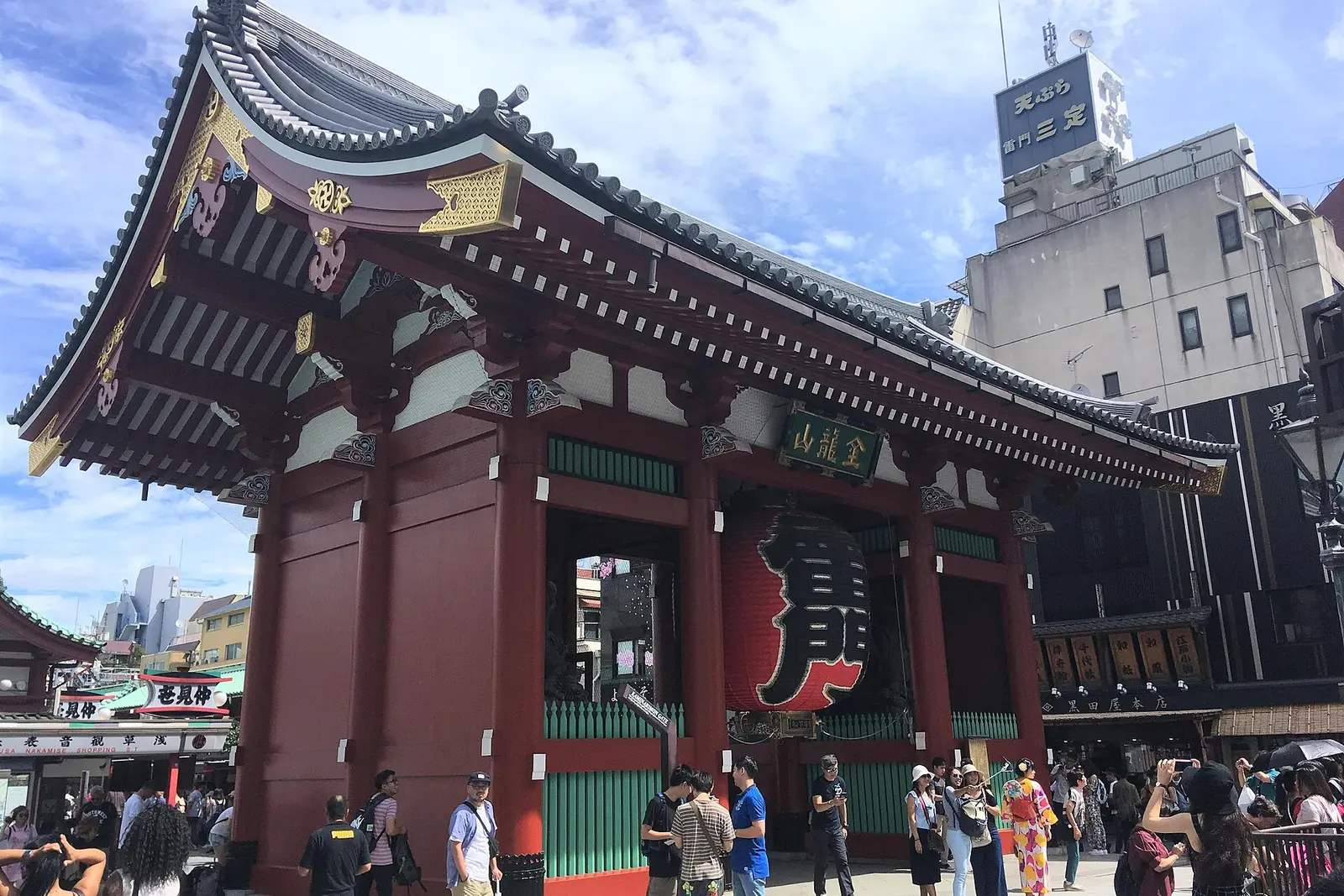
The red gate and giant lantern at the start of the road to Senso-ji, and the 95 years it was gone.
 ASAKUSA3 min read
Asakusa Shrine and the Sanja Matsuri
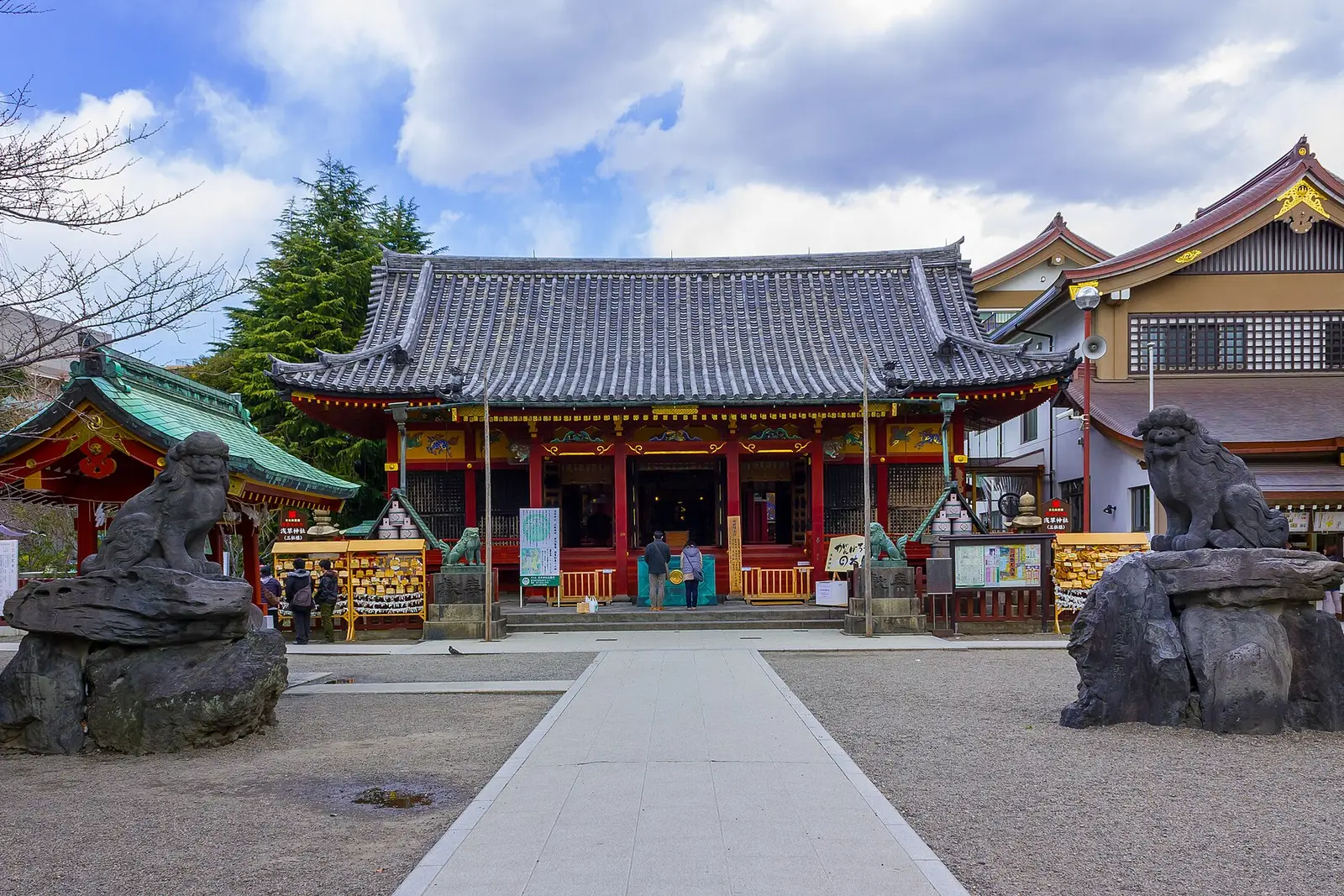
The small shrine next to Senso-ji, with buildings from 1649 and one of Tokyo's biggest festivals each May.