Destinations › Tokyo › Asakusa
Kappabashi Dogu Street: Tokyo's Kitchen Town
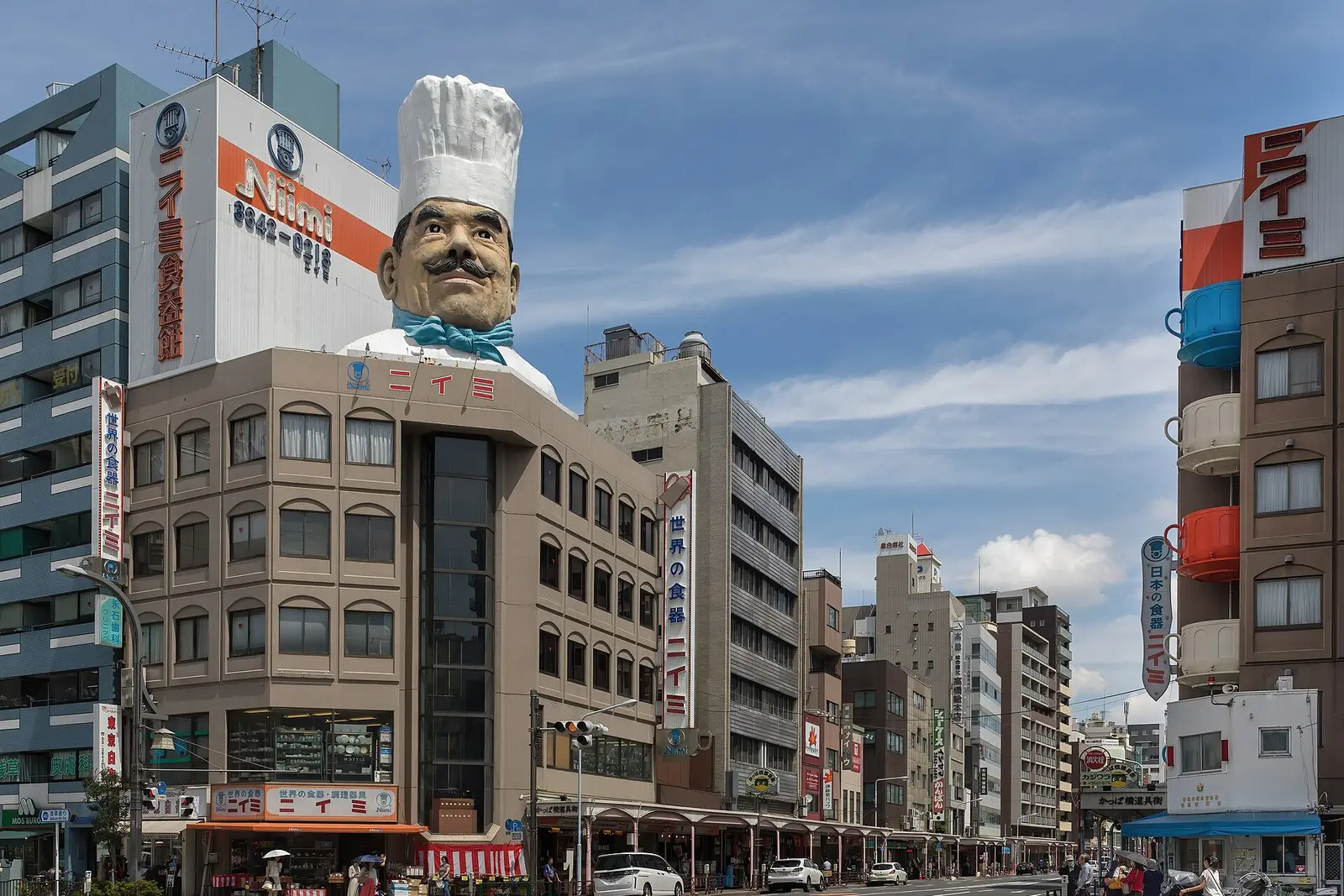
Just west of the temples of Asakusa, there is a street where chefs buy their kitchen tools and tableware. Visitors are welcome too. This is Kappabashi Dogu Street, and the name has a river goblin in it.
What it is
Dogu means tools, and Kappabashi Dogu Street is a specialty street for the food business. The Kappabashi shopping street association says it has about 170 shops along about 800 meters, running north to south between Asakusa and Ueno. The shops sell kitchen and restaurant supplies, including tools for making sweets. Over the years, new kinds of shops have joined whenever the restaurant trade needed something new.
Almost all of the shops sell to individual customers too, not only to restaurants. The association says general visitors are welcome.
How the street began
The story starts in the early Taisho period, in the 1910s. Dealers in second-hand tools opened shops along the Shinbori River, a waterway dug in the Edo period. The first dealers appeared in 1912, so the street counted 100 years in 2012.
After the Great Kanto Earthquake of 1923, the river was covered over, and a tram ran on top of it until 1969. Shops that made sweets and other food tools began to gather here. After the Second World War, the street grew into the district it is today. In 2013, the name "Kappabashi Dogugai" was registered as a trademark.
Why "Kappa"?
Kappabashi means "Kappa Bridge," and it has two possible origins. One story says that low-ranking samurai made rain capes here, called kappa in Japanese, and hung them to dry on the bridge.
The other story involves a kappa, which is a river goblin from Japanese folklore. According to the story, a man known as Kappa Kawataro, whose real name was Kappaya Kihachi, dug a canal here to stop floods, around the early 1800s. Kappa from the Sumida River are said to have helped him in secret at night. A golden statue of Kappa Kawataro now stands in the middle of the street. His grave is at a temple called Sogenji, which is nicknamed the "Kappa Temple." The street also has a kappa mascot, Kappa no Kawataro-kun, who first appeared in 2002 for the street's 90th anniversary. Keep an eye out for kappa figures as you walk.
What to look for, and when to go
Walk the street and you will see shop after shop of kitchen and restaurant supplies. Look up too. One tableware shop has giant coffee cups built into its balconies, and a huge chef figure stands on its roof. You can see both from the street.
Each year the street holds the Kappabashi Dougu Festival, its biggest thank-you event for customers, around October 9, which is known as Dougu no Hi, "Tools Day."
Opening hours are different from shop to shop, and many shops close on Sundays and public holidays. About 70 percent of them are closed on those days, so go on a weekday if you can. Most shops are typically open from about 9 am to 5 pm.
Some shops now sell online, and the association says it is planning an online store. You can also pick up a free map at the shops and the association's office. The map is useful, because the street is long.
Getting there
Tawaramachi Station on the Ginza Line is the closest, about 5 minutes on foot. Iriya Station on the Hibiya Line is about 6 minutes away. The Tsukuba Express station in Asakusa is also about 5 minutes, and Asakusa Station on the Toei Asakusa and Tobu lines is about 13 minutes away. Ueno and Uguisudani on the JR lines are about 15 minutes on foot.
Nearby
The street is a short walk west of Senso-ji. Combine it with a morning at the temple and Nakamise-dori, and finish with a drink on Hoppy Street.
See it with a local guide: Asakusa history and lunch
See the planMore on Asakusa
 ASAKUSA3 min read
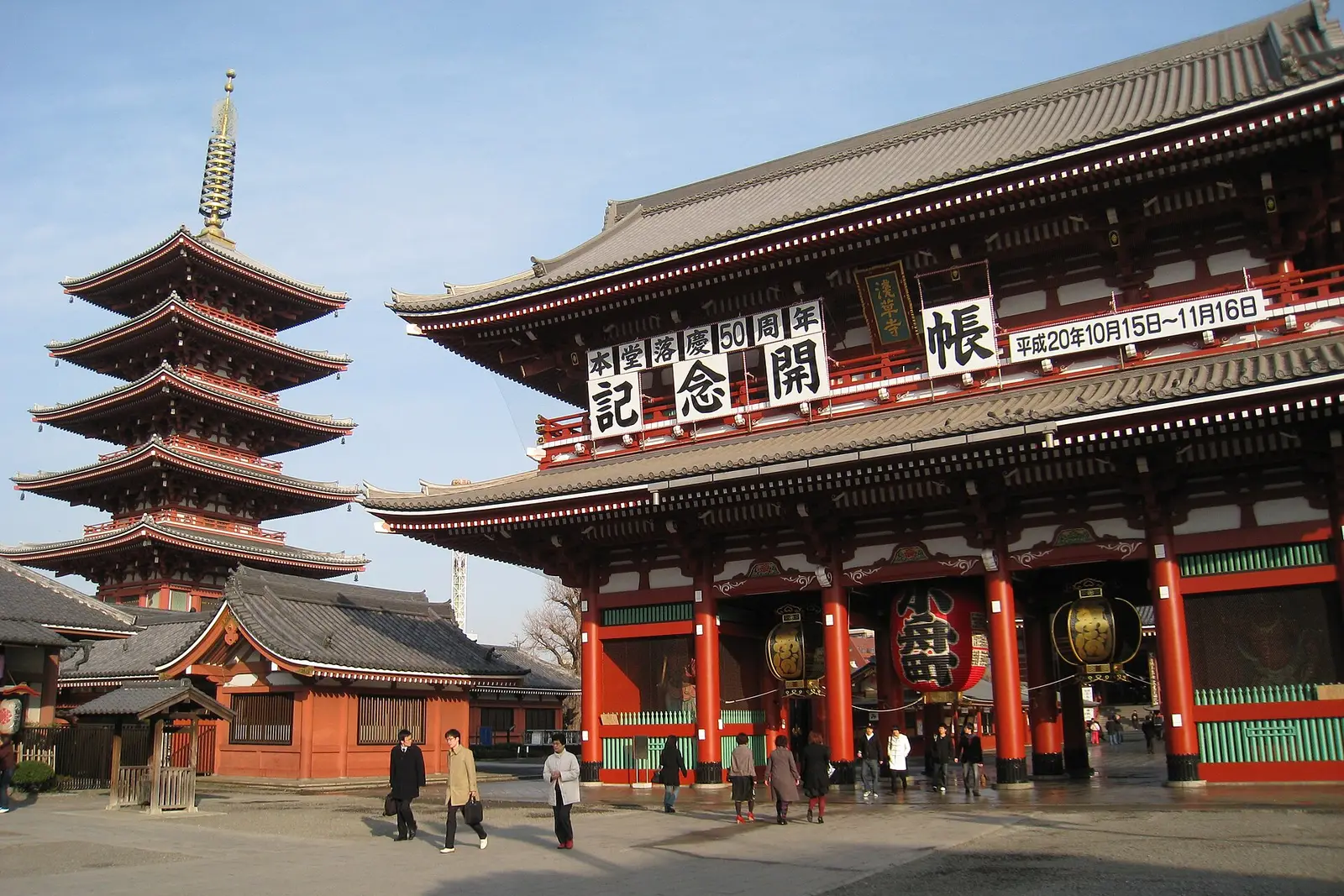
Senso-ji: The Temple at the Heart of Asakusa
The temple behind Asakusa, with a legend from the year 628, a rebuilt main hall and a gate with giant sandals.
 ASAKUSA3 min read
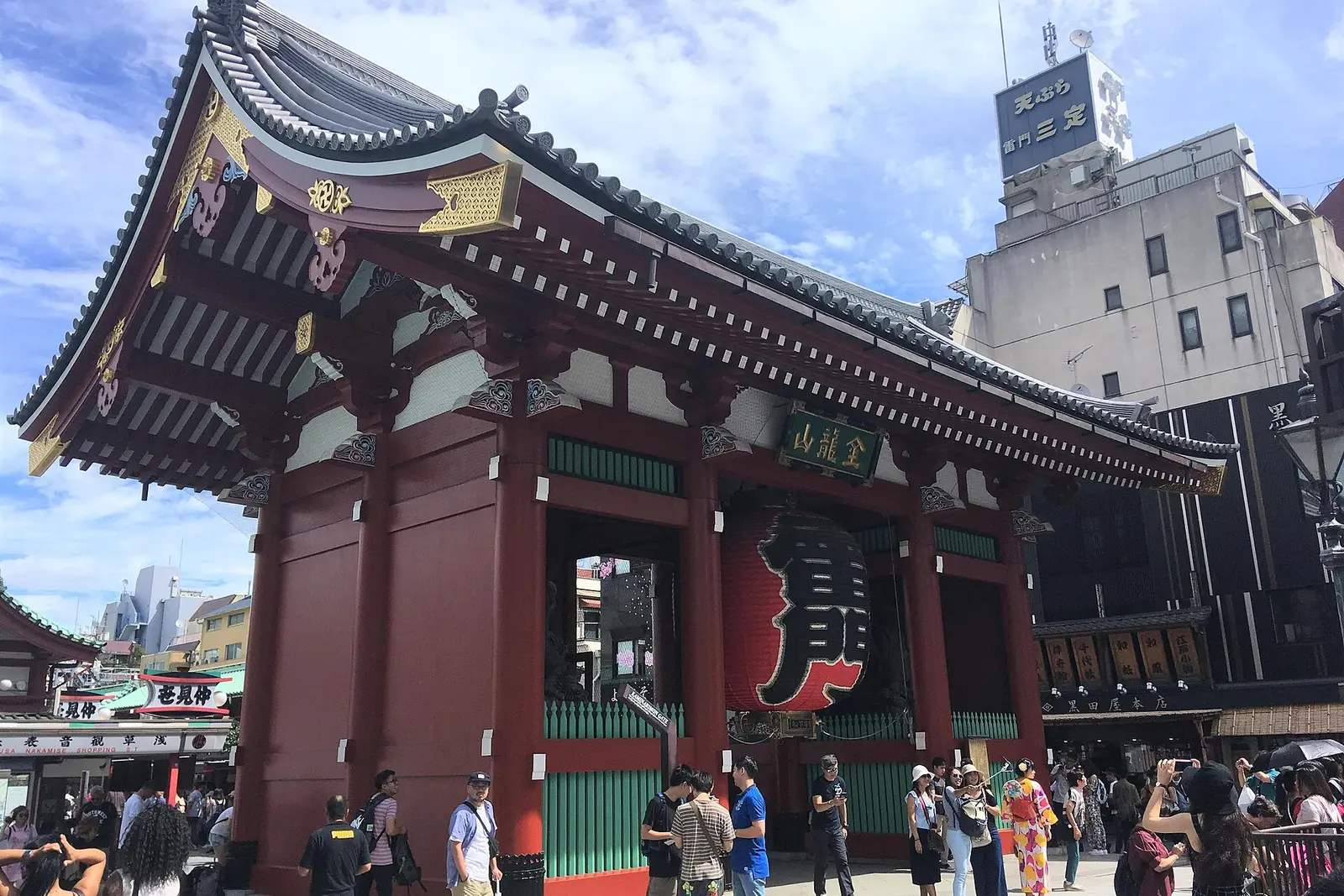
Kaminarimon: The Thunder Gate of Asakusa
The red gate and giant lantern at the start of the road to Senso-ji, and the 95 years it was gone.
 ASAKUSA3 min read
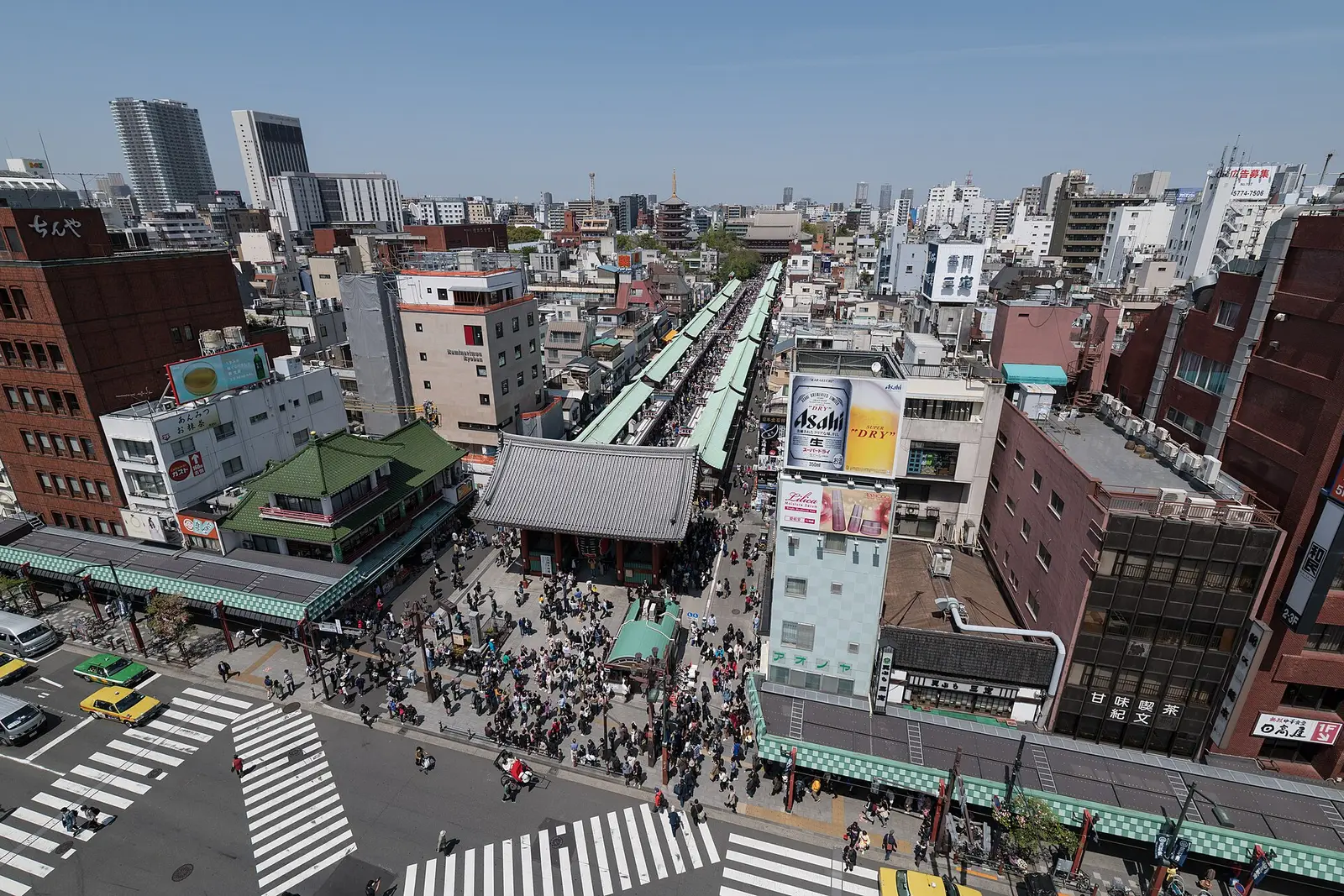
Nakamise-dori: The Shopping Street to Senso-ji
A 250-meter shopping street with a history that goes back to 1685, and painted shutters you only see after closing time.