Destinations › Tokyo › Ginza
Hama-rikyu Gardens: A Shogun's Garden by the Bay
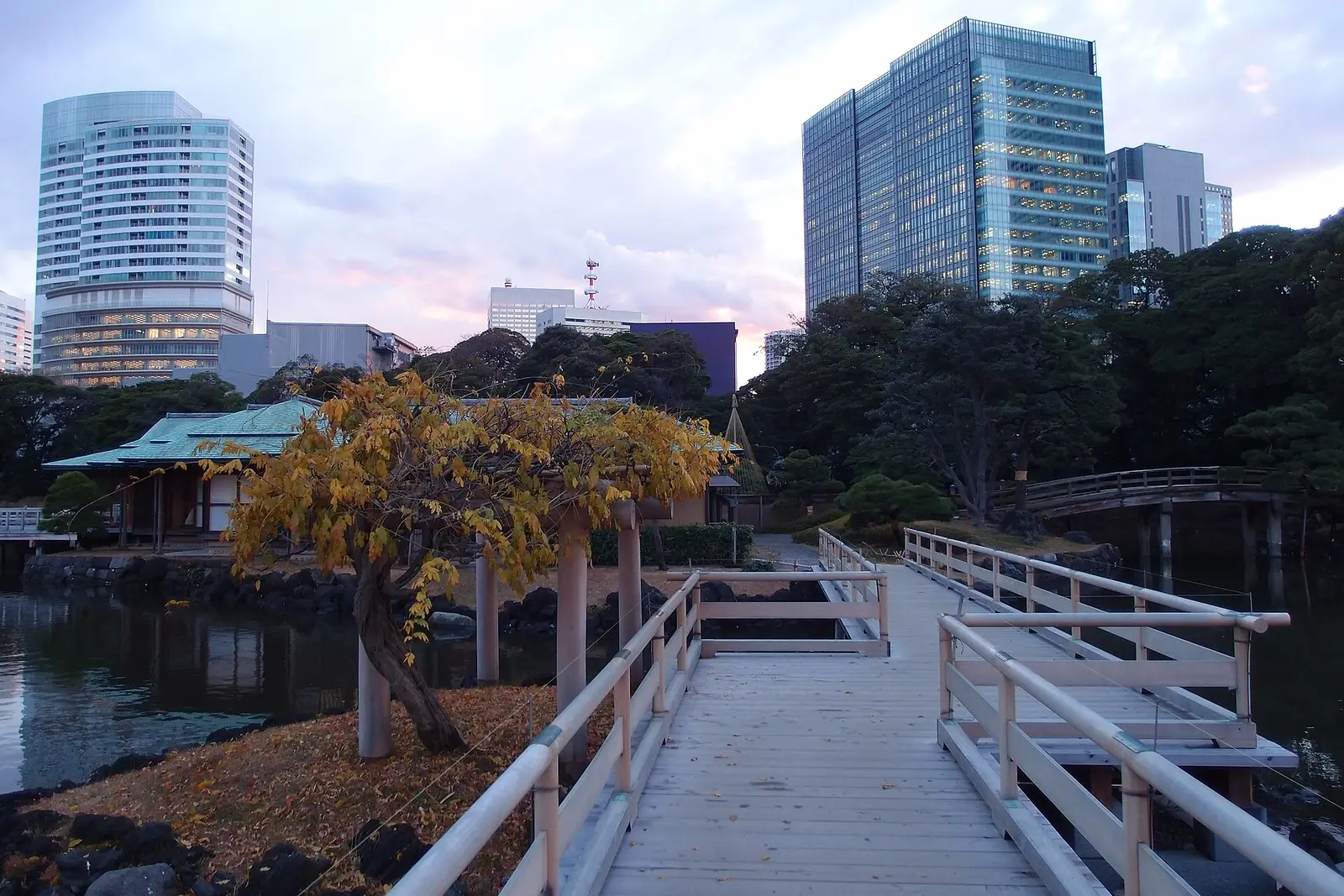
Not far from the shops of Ginza, a gate opens onto a pond, pine trees and a wooden teahouse, with the glass towers of the city rising behind them. Hama-rikyu is a green space that has been here since the shoguns.
A garden that began as a shogun's villa
In 1654, Matsudaira Tsunashige, a younger brother of the fourth Tokugawa shogun, Ietsuna, had part of the shallow water here filled in and built a house. The land later passed to the Tokugawa family, and the house became known as Hama Goden, the "Beach Palace." The garden was completed under the 11th shogun, Ienari, and it has stayed much the same since.
In the Meiji era, the garden became a detached palace for the imperial family. It was badly damaged in the Great Kanto Earthquake of 1923 and again by bombing in World War II. On November 3, 1945, the imperial family gave it to the city of Tokyo, and it opened to the public in April 1946.
The pond and the teahouse
The garden's heart is a tidal pond fed with sea water from Tokyo Bay. It is the only remaining seawater pond in Tokyo. A sluice gate opens and shuts with the tide to control the water level, and black mullet, sea bass, gobies and eels live in it. The garden once held two duck-hunting sites. It covers about 25 hectares, which is a lot of space in the middle of this city.
Nakajima-no-ochaya sits on an island in the pond and is reached by wooden bridges. It was first built in 1704, and shoguns and other powerful people used it. It was renovated in 1983. Visitors can rest here and look over the pond, and the teahouse serves matcha with a sweet.
Trees, flowers and seasons
Look for the 300-year-old pine, planted when the 6th shogun, Ienobu, renovated the garden. It has survived to this day. The garden has more than 6,000 tall trees, and the main plants include black pine, Japanese apricot, camellia, iris, azalea, cherry and Japanese red maple. It also has a peony garden with 1,000 plants of about 60 types. In the flower field, rape blossoms bloom in spring, and cosmos later in the year.
It is a pleasant garden in every season. It holds a cherry blossom festival in spring and a colored-leaves festival in autumn. Plum blossoms come in late February, cherry blossoms in late March to early April, and the maple and ginkgo leaves in late November to early December. Winter has its own event: ropes are tied over the pines for the snow.
Practical tips
The garden opens at 9 am and closes at 5 pm, and you cannot enter after 4:30 pm. Plan on one to two hours. Entry is free for primary school children and younger, and for junior high school students who live or study in Tokyo. Groups of 20 or more get a 20 percent discount. Wear comfortable shoes, because you will want to walk all the way around the pond. Bring a camera too: the old teahouse with the glass towers behind it makes an unusual picture.
Getting there
Shiodome Station (on the Toei Oedo Line and the Yurikamome line) is about 7 minutes on foot. From JR or subway Shimbashi Station, it takes about 10 minutes.
You can also arrive by water. The Suijo Bus water bus from Asakusa takes about 35 minutes and costs ¥1,180 one way, and the fare includes the garden entrance fee. Only a few boats make the trip, and you may not be able to board at the garden for the return, so check the timetable before you go.
Nearby
Ginza is a short walk or ride away. Chuo-dori and the Wako clock tower are the center of the district, the Kabukiza theater stands near Higashi-Ginza Station, and the Tsukiji Outer Market is also in the area.
More on Ginza
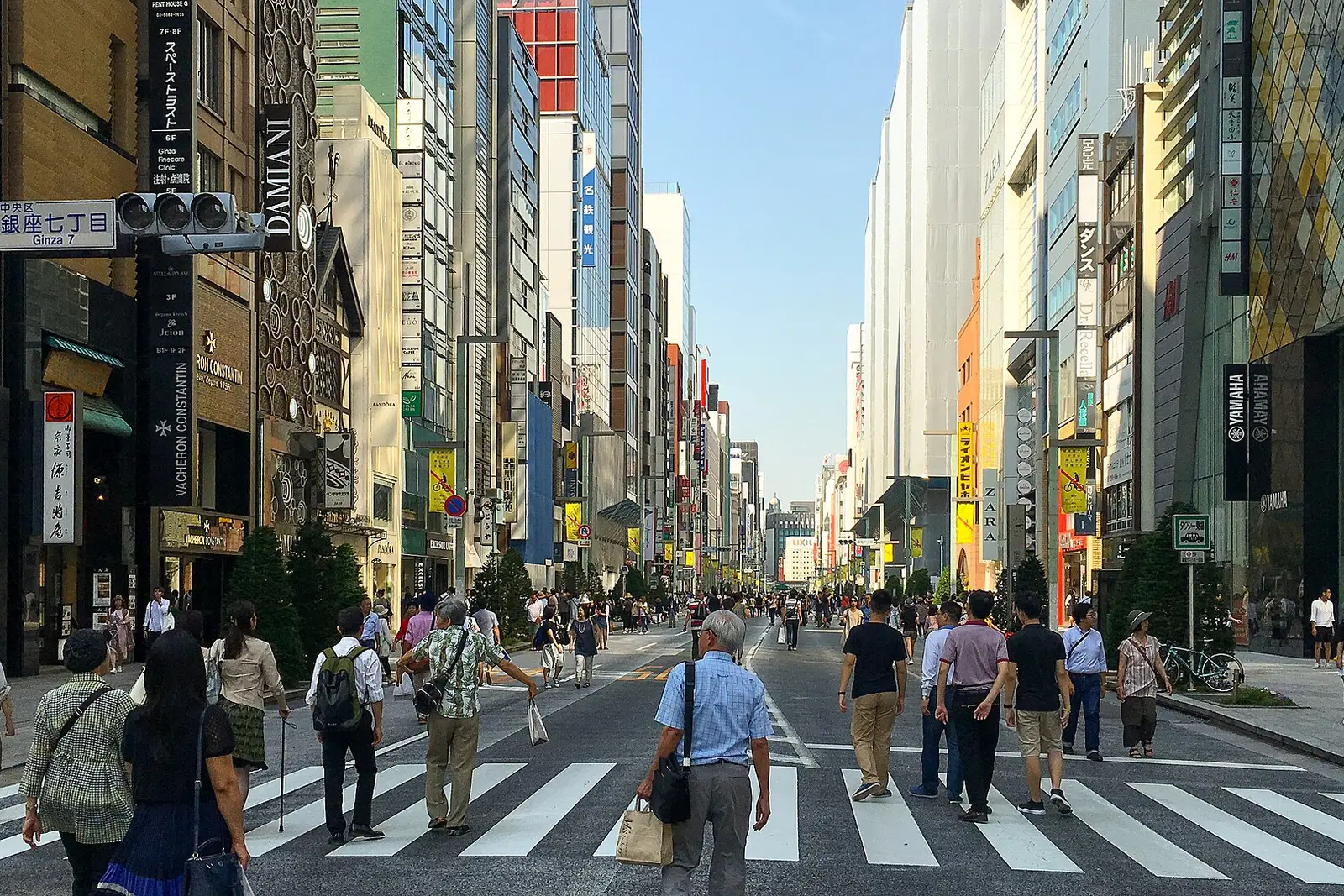 GINZA3 min read
Chuo-dori: Ginza's Weekend Pedestrian Street
Ginza's main street turns into a street for walking on weekends. Hours, rules and what to see.
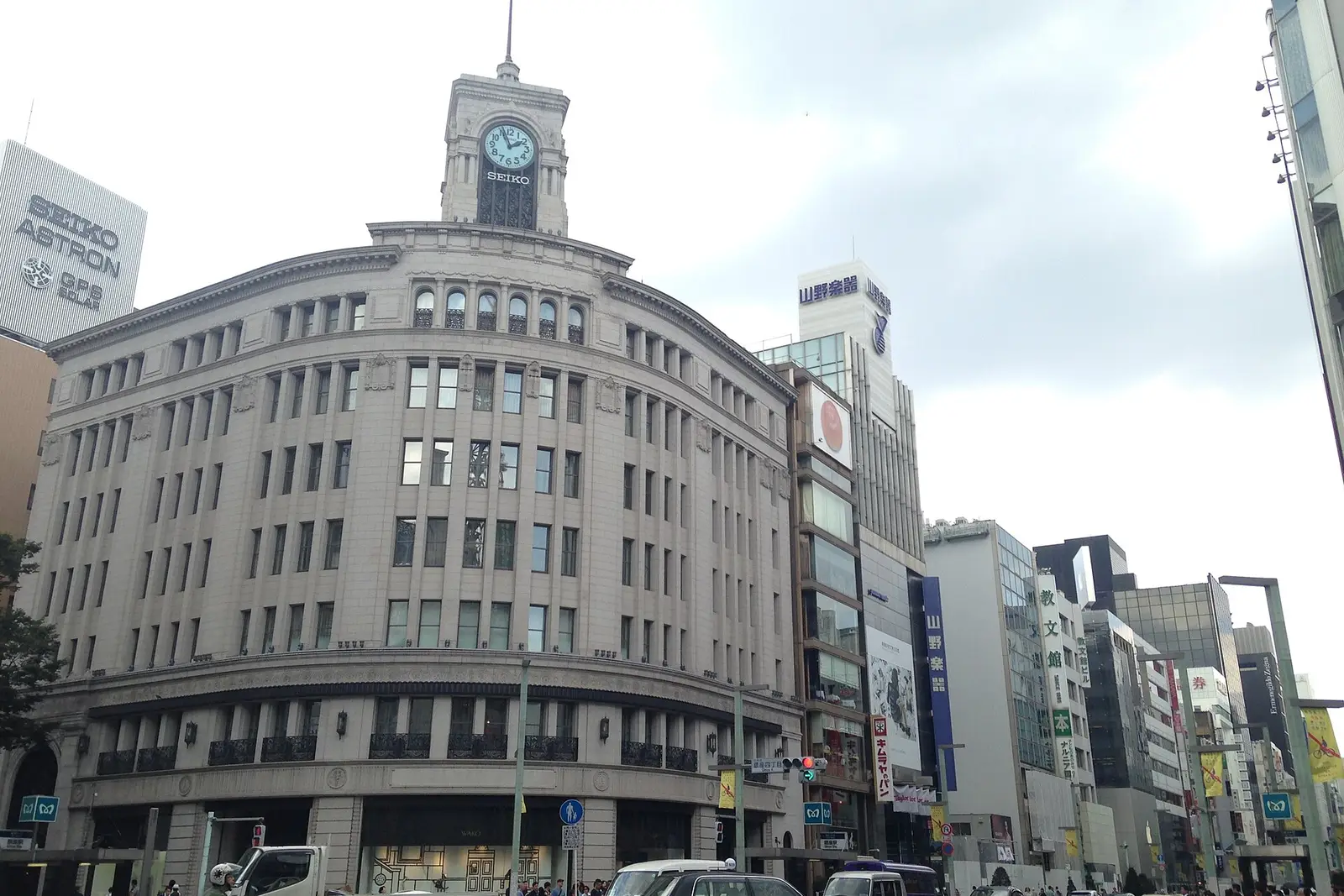 GINZA3 min read
Ginza 4-chome and the Wako Clock Tower
The crossing at the center of Ginza and the 1932 clock tower above it. History, chimes and hours.
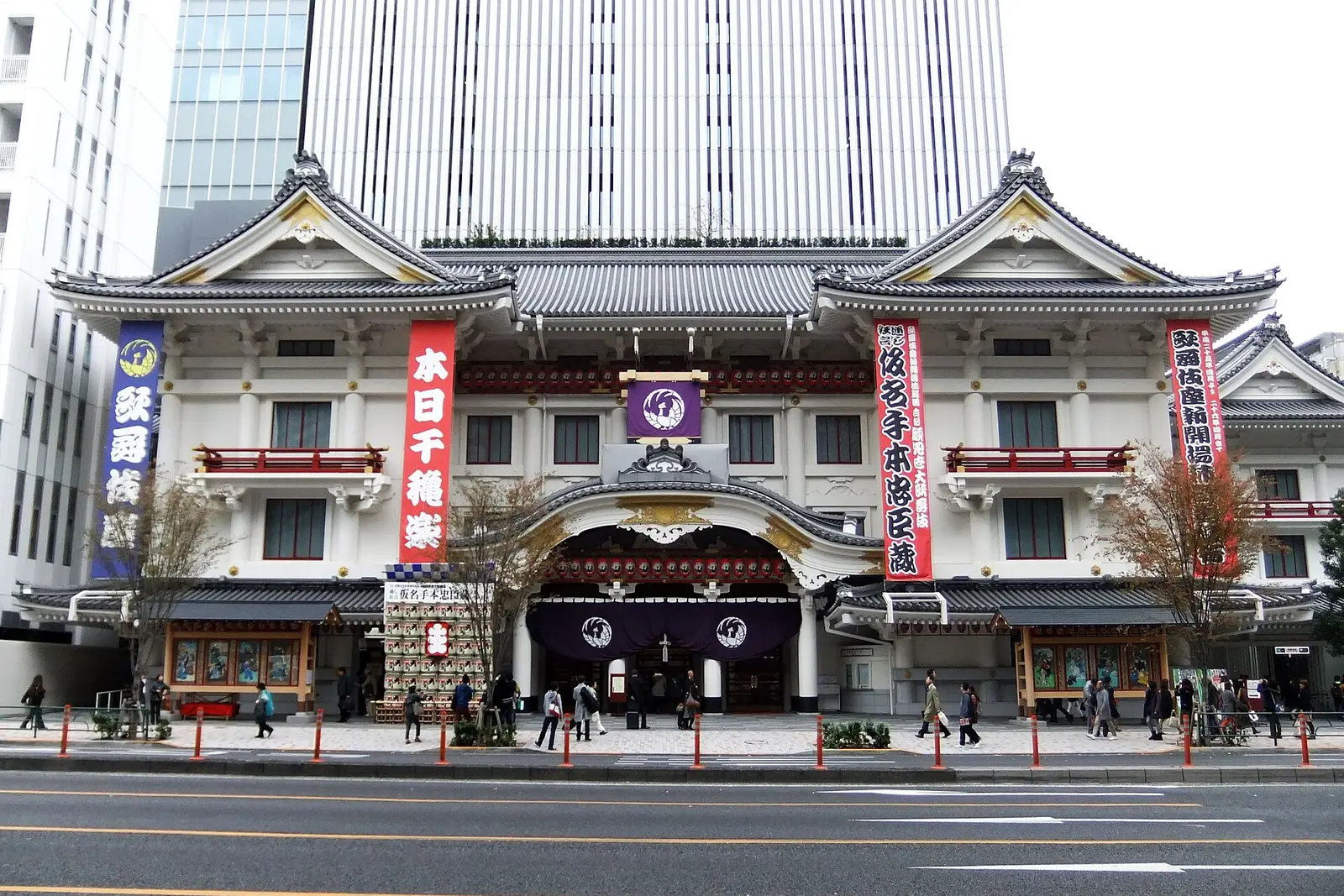 GINZA3 min read
Kabukiza: Tokyo's Home of Kabuki
The theater where kabuki is performed almost daily. How single-act tickets let you see just one scene.