Destinations › Tokyo › Ginza
Ginza 4-chome and the Wako Clock Tower
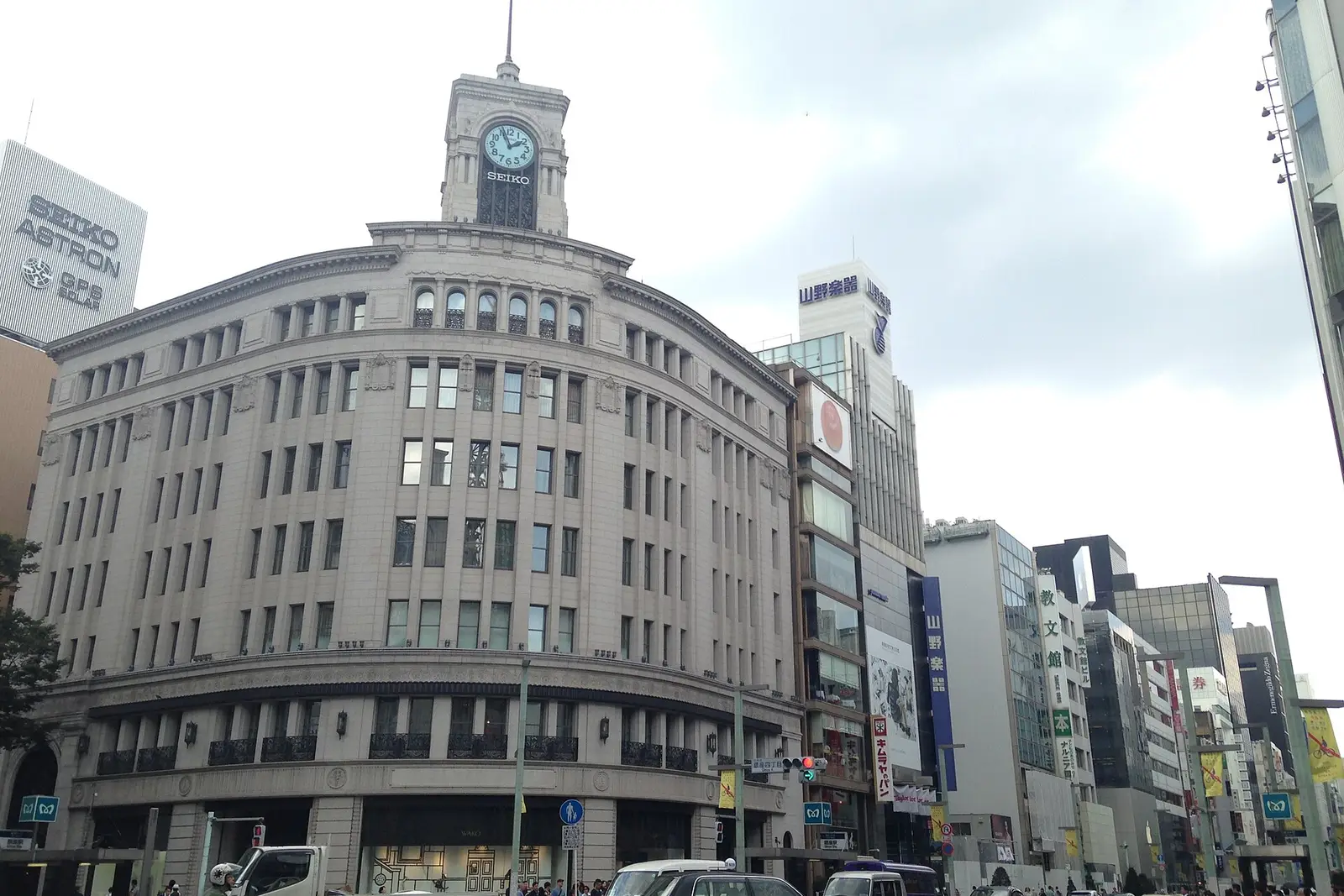
If Ginza has a center, it is the crossing where Chuo-dori meets Harumi-dori. And if Ginza has a symbol, it is the clock tower on the corner. Stand under it just before the hour, and you will hear why.
The center of Ginza
Streets in Ginza are counted in blocks called chome, from 1-chome at one end of Chuo-dori to 8-chome at the other. The 4-chome crossing sits in the middle, where Chuo-dori meets Harumi-dori. Land here is worth more than ten million yen per square meter, which makes it some of the most expensive in Japan.
Big shops stand on the corners, and the one everyone photographs is Wako: a rounded stone building from the 1930s with a clock tower on top. On weekend afternoons, Chuo-dori is closed to cars, and the crossing fills with people walking and taking photos.
A short history of the clock tower
The story begins in 1881, when the Hattori Clock Shop opened. Its first clock tower was finished in 1894. The building you see today is the second tower, completed in June 1932 and designed by the office of the architect Jin Watanabe. Work had stopped after the Great Kanto Earthquake of 1923 and started again in 1929.
The clock face is 2.4 meters across, and the minute hand is 1.17 meters long. The word SEIKO on the tower is the watch brand, and the sixth floor of the building holds Seiko House Hall.
In 1945, after World War II, the building was taken over and used as a PX, a store for soldiers. The company Wako was founded in 1947 to take over the retail business of the Hattori Clock Shop, and it opened in a temporary shop in Ginza 5-chome. On December 8, 1952, it moved into this building. The shop was closed for about 300 days in 2008 for renovation, and in 2009 the Ministry of Economy, Trade and Industry named the building a "modern industrial heritage" site.
The chimes
Since June 10, 1954, the tower has played the Westminster chime, the tune also used by Big Ben in London. It starts 45 seconds before each hour. After the tune fades, the bell rings the hour. You do not need to plan much: be at the crossing a minute early, look up, and listen.
Inside and outside Wako
Wako is a high-end store, and it is fine to walk in and look around. The ground floor has watches, and the second floor has the Grand Seiko flagship boutique, jewelry and clocks. Bags are on the third floor, and clothes and shoes on the fourth. The basement is a space for art and exhibitions. It is open from 11 am to 7 pm every day, except at New Year.
The window displays on the street side are worth a look, too. Wako has been decorating them since 1952, and the shop describes them as a welcome to everyone who visits Ginza. You can enjoy them from the sidewalk without going in.
Tips and getting there
To fit the whole building and the tower in one photo, cross to the far side of the intersection and shoot from the corner. The sidewalks are narrow when the crowds arrive, so step aside before you stop. If you want to shop, Ginza's big department stores are close, and Mitsukoshi, which opened its Ginza store in 1930, is one of them. Most of them open at 10 or 11 am.
Ginza Station is right next to the building. Exits A9 and A10 are a short walk away, and exit B1 connects directly to the store.
Nearby
Chuo-dori runs straight through the crossing, so a walk along the street in either direction is the easiest next step. The Kabukiza theater stands beside Higashi-Ginza Station, and the Tsukiji Outer Market is a short walk beyond it. The Seiko Museum Ginza, which is free but needs a reservation, is also in Ginza.
More on Ginza
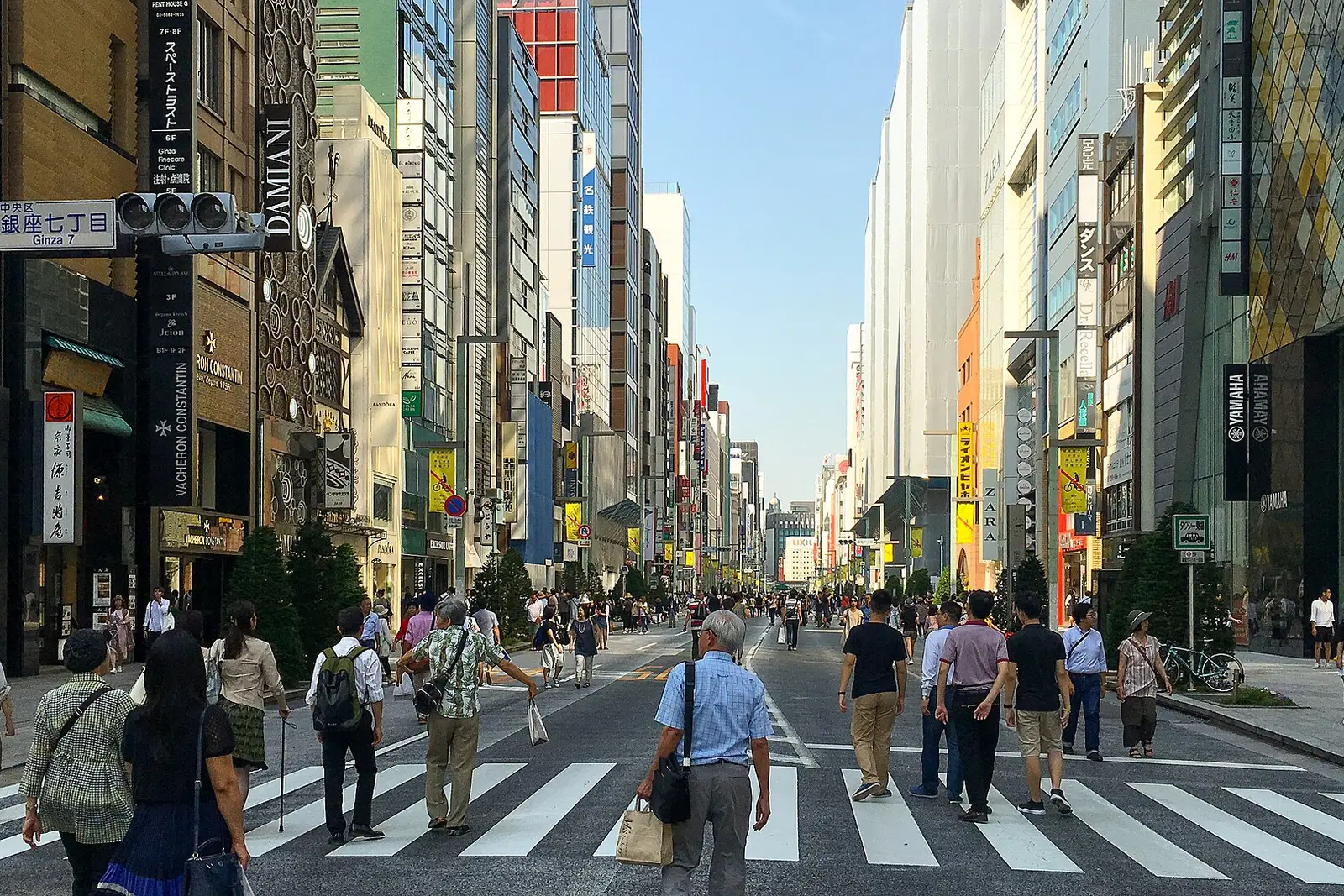 GINZA3 min read
Chuo-dori: Ginza's Weekend Pedestrian Street
Ginza's main street turns into a street for walking on weekends. Hours, rules and what to see.
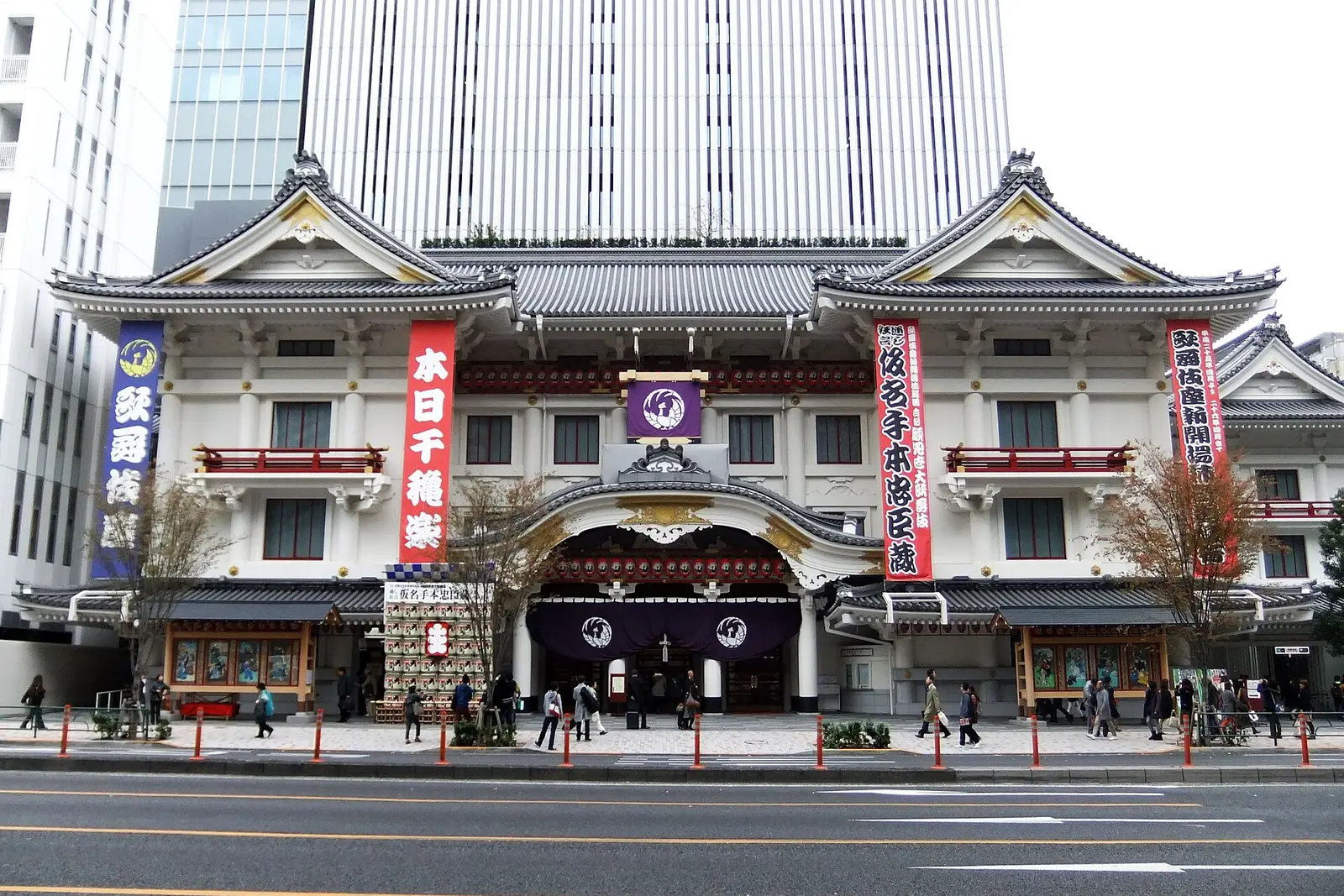 GINZA3 min read
Kabukiza: Tokyo's Home of Kabuki
The theater where kabuki is performed almost daily. How single-act tickets let you see just one scene.
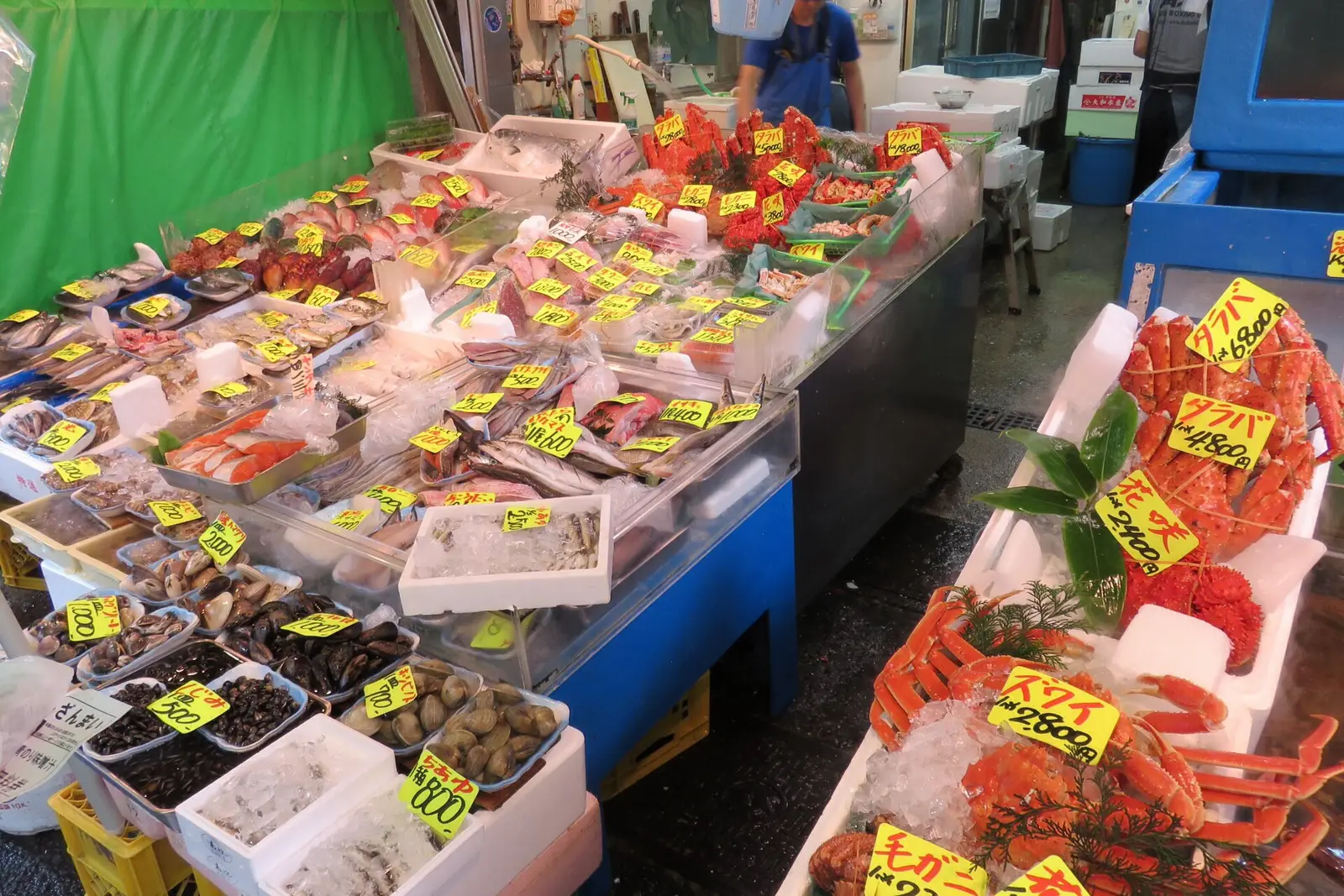 GINZA3 min read
Tsukiji Outer Market: Tokyo's Food Street by the Old Fish Market
Seafood stalls, sushi counters and kitchen shops where the old fish market used to be. Hours and manners.