Destinations › Tokyo › Ginza
Tsukiji Outer Market: Tokyo's Food Street by the Old Fish Market
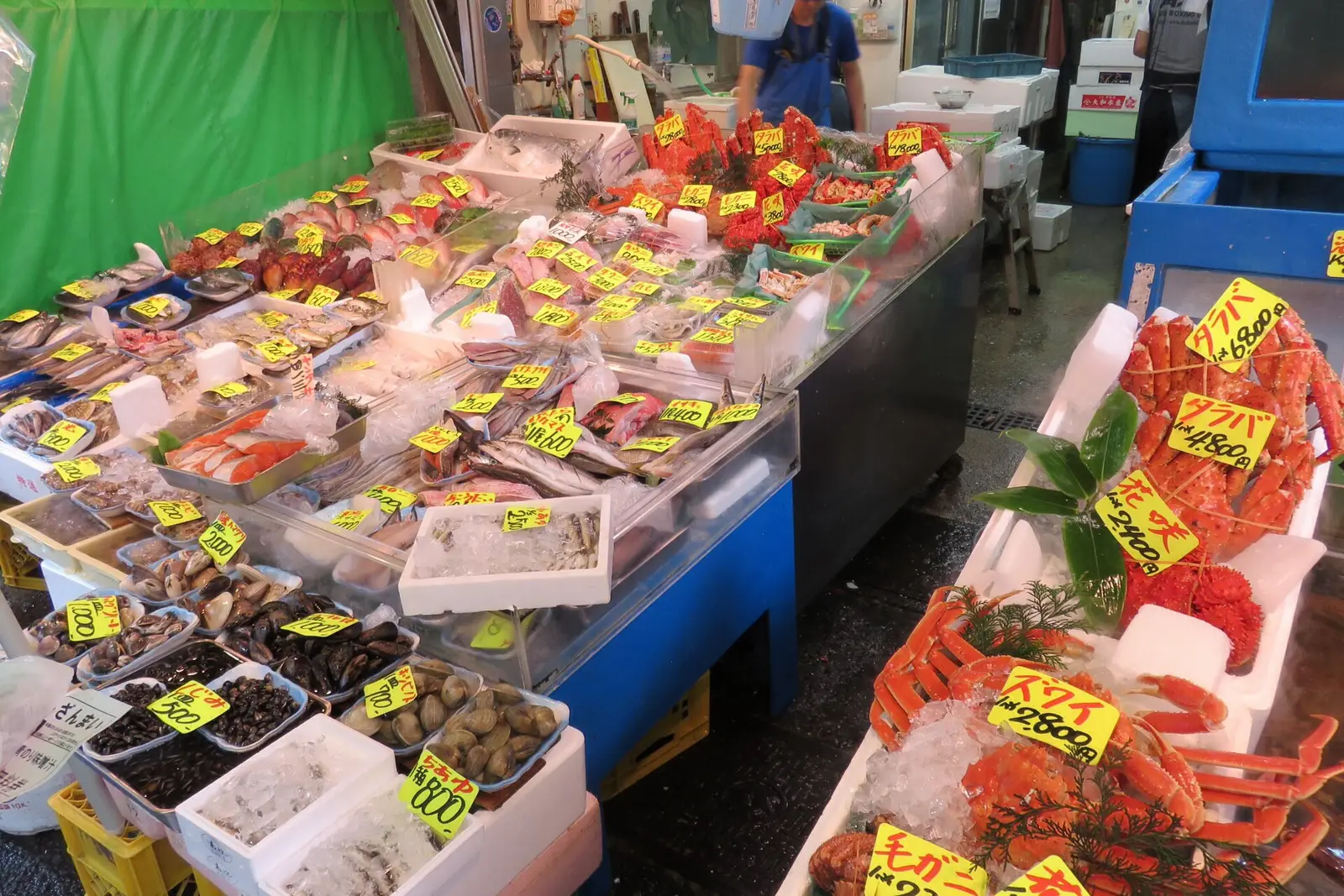
The famous tuna auctions have moved away, but the streets around the old fish market are still full of food. This is the Tsukiji Outer Market, a maze of small shops where Tokyo's cooks still come to buy.
What this place is
The name Tsukiji means "built land." After the Great Fire of Meireki in 1657 destroyed much of Edo, the old name for Tokyo, the shogunate filled in part of Tokyo Bay and built on it. In 1923, the Great Kanto Earthquake destroyed the Nihonbashi fish market, and the market moved here. The fish market started operating in Tsukiji in 1935.
The big wholesale market, where the tuna auctions took place, closed on October 6, 2018, and moved to Toyosu. The shops and restaurants around it stayed. That is the Outer Market today: a mix of wholesale and retail shops, and many restaurants, in streets of buildings that are more than 80 years old. The owners often run the shop on the ground floor and live upstairs.
The market sorts its shops into 26 categories, from tuna and fresh seafood to dried bonito flakes, seaweed, tea, pickles, sweets and fresh vegetables. You can also buy kitchenware, Japanese knives and tableware. Many wholesalers now sell small portions that you can eat on the spot.
What to see and eat
The most popular choices are sushi and kaisendon, which is a bowl of rice topped with raw fish. You will also find ramen, tempura, rice balls and sweets. Tamagoyaki, a Japanese rolled omelet, has a category of its own, and some shops sell it in bite-sized pieces for a quick taste. Many restaurants have English menus. They are small and fill up fast, so it helps to have lunch a little early.
At the back corner of the market stands Namiyoke Inari Shrine. It is said to guard the market. A good plan for the morning is to stop here at about 9:15 and look at its big lion head.
Hours and money
The day is split into two. From 6 to 9 am it is for professional buyers, and from 9 am to 2 pm it is open to the public. The morning is the best time, so plan to arrive at about 9 am. Many shops are closed on Sundays and on some Wednesdays, and shops also keep their own calendars, so check the market's calendar before you go.
Most shops take only yen, and there is no currency exchange inside the market, so bring cash. Whether a shop takes cards depends on the shop.
How to behave
The market is a working place, not a theme park. Here are the house rules.
- Do not eat while walking. Eat inside a restaurant or right in front of the shop where you bought the food.
- Keep out of the way of professional buyers in the morning.
- Do not touch the food. Ask the shopkeeper.
- Ask permission before you photograph a shop. Some do not allow it.
- Do not bargain. The prices are wholesale prices.
- Do not bring suitcases or large bags. There are coin lockers near the information center, Plat Tsukiji, but they are limited. Strollers can be left there for ¥500 each.
- Keep your group small, because the lanes are narrow. Wear shoes that cover your toes, since the floors can be wet.
Getting there
Tsukijishijo Station on the Toei Oedo Line and Tsukiji Station on the Hibiya Line are each about a 1-minute walk. Higashi-Ginza Station is a 3-minute walk.
Nearby
Higashi-Ginza Station is also the station for the Kabukiza theater. The Ginza shopping streets and the Wako clock tower are close by, and the Hama-rikyu Gardens, a bayside garden, can be reached from Tsukijishijo or Shiodome stations on the Oedo Line.
More on Ginza
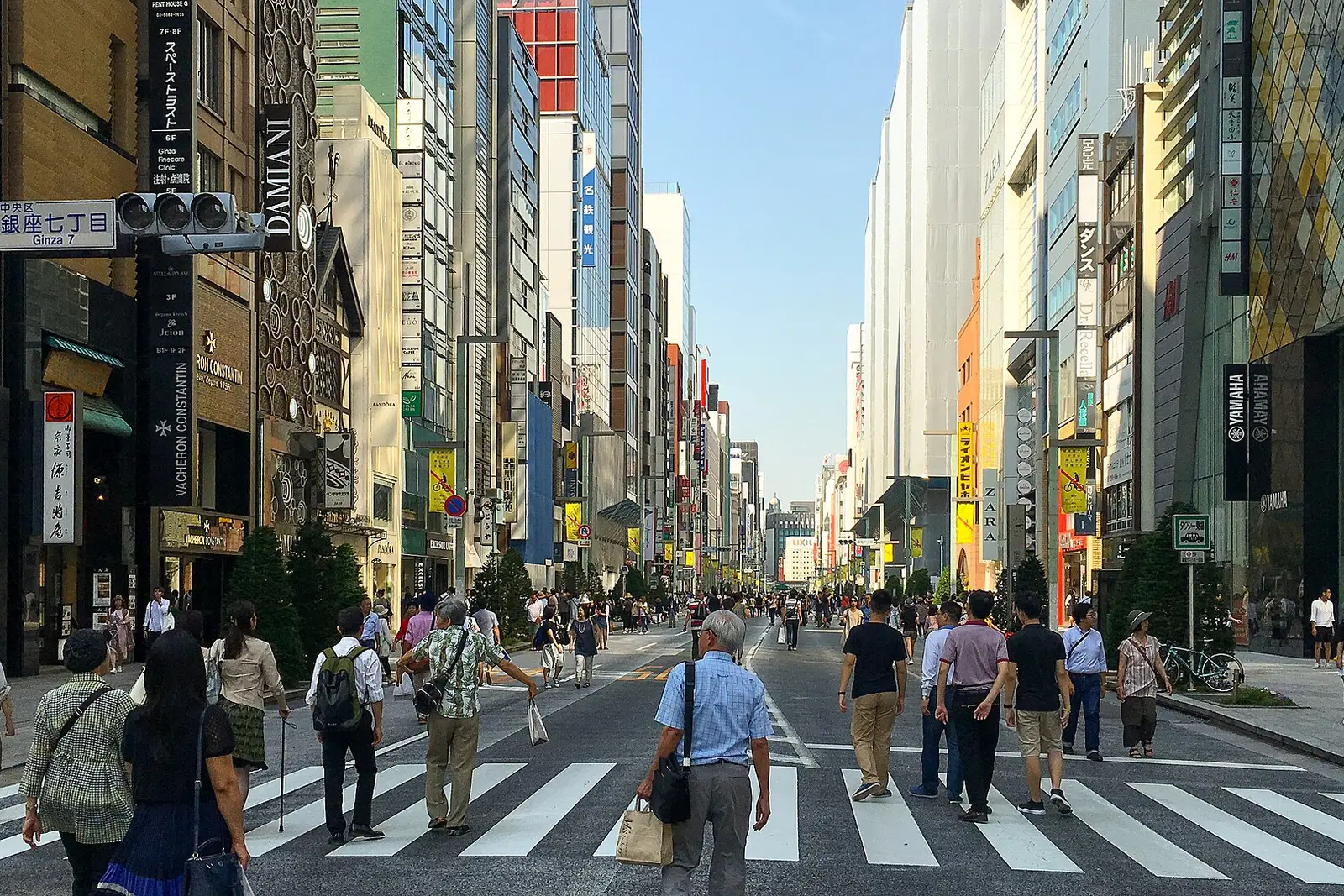 GINZA3 min read
Chuo-dori: Ginza's Weekend Pedestrian Street
Ginza's main street turns into a street for walking on weekends. Hours, rules and what to see.
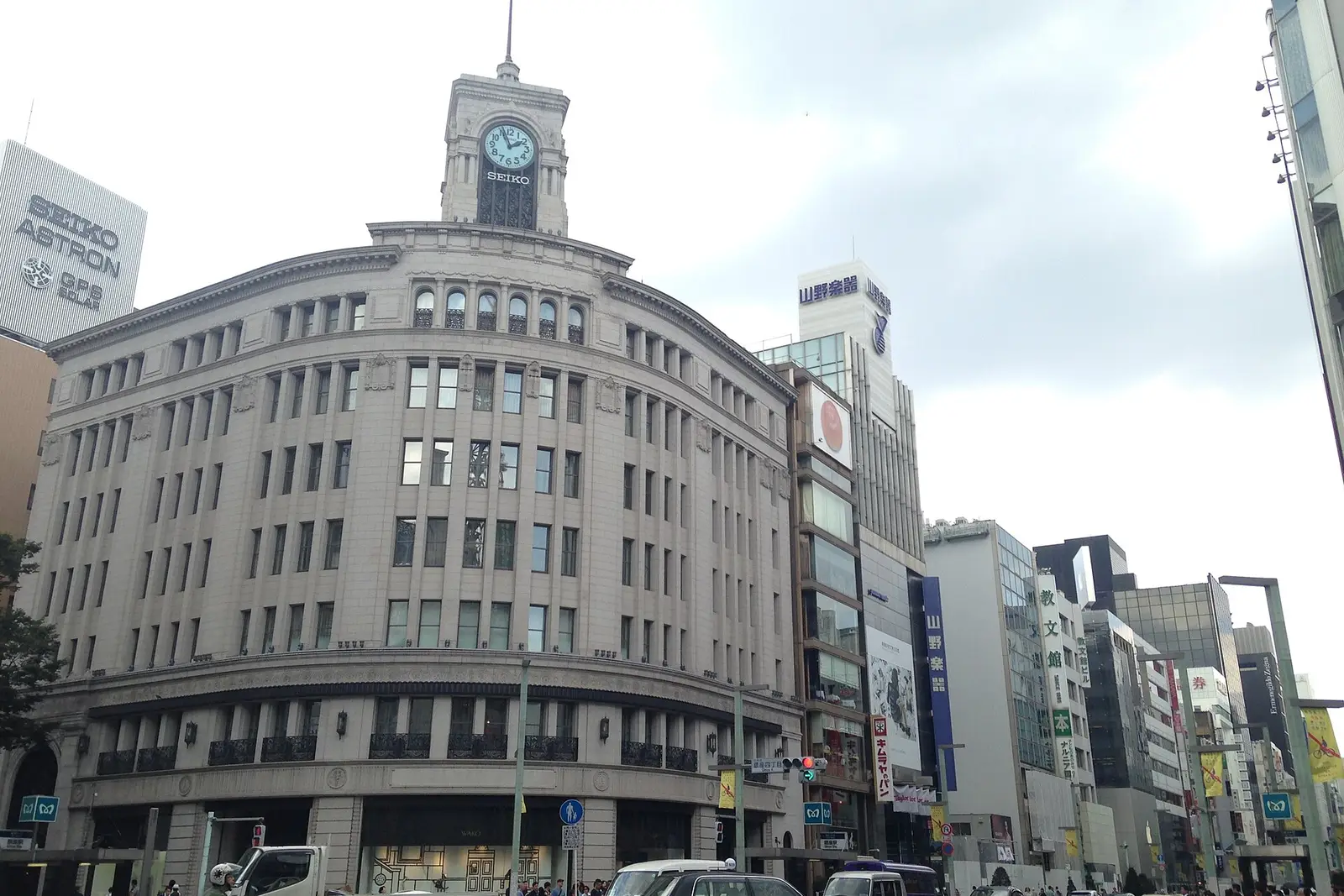 GINZA3 min read
Ginza 4-chome and the Wako Clock Tower
The crossing at the center of Ginza and the 1932 clock tower above it. History, chimes and hours.
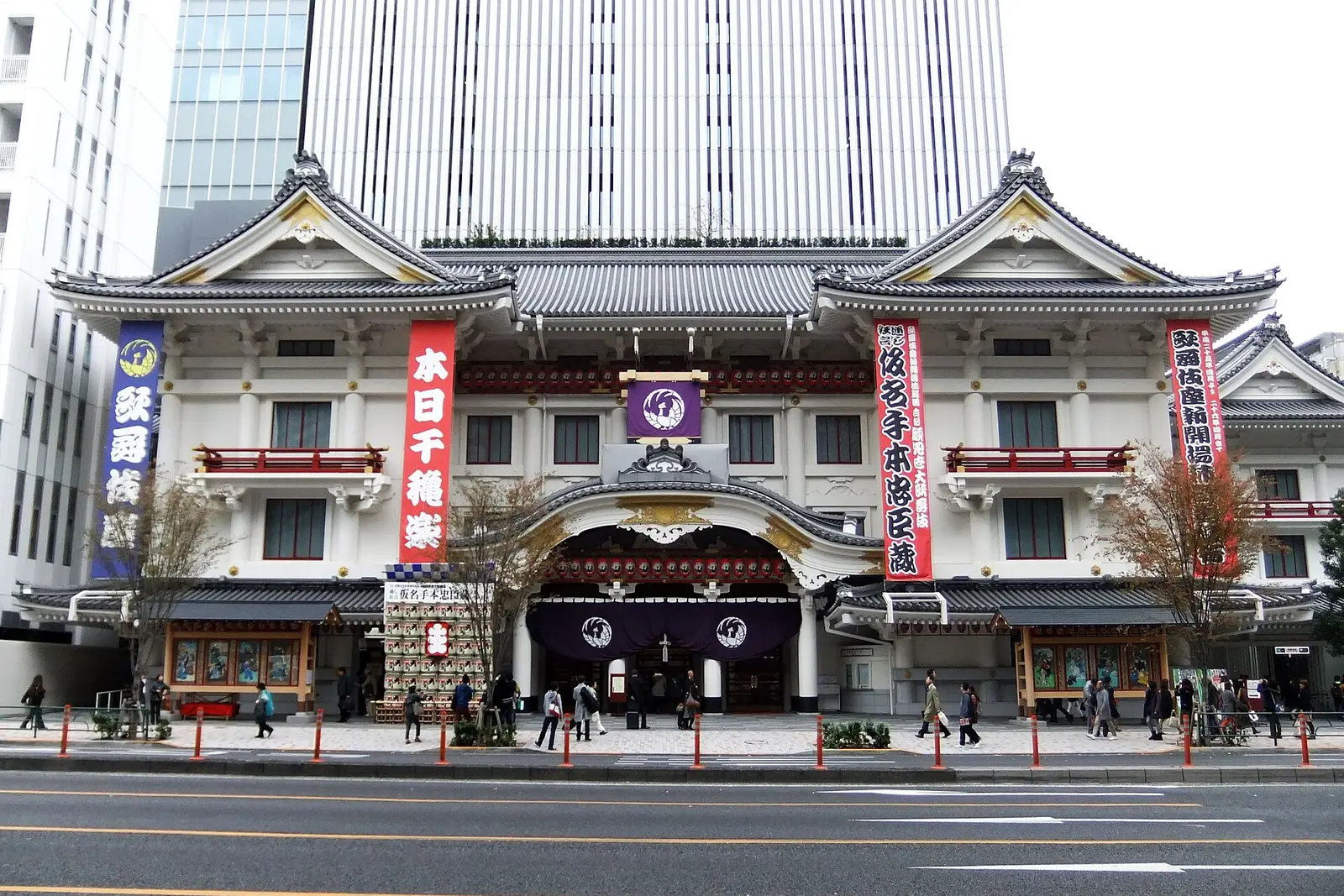 GINZA3 min read
Kabukiza: Tokyo's Home of Kabuki
The theater where kabuki is performed almost daily. How single-act tickets let you see just one scene.