Destinations › Akita › Kakunodate
Dakigaeri Gorge: Blue Water and a Red Bridge
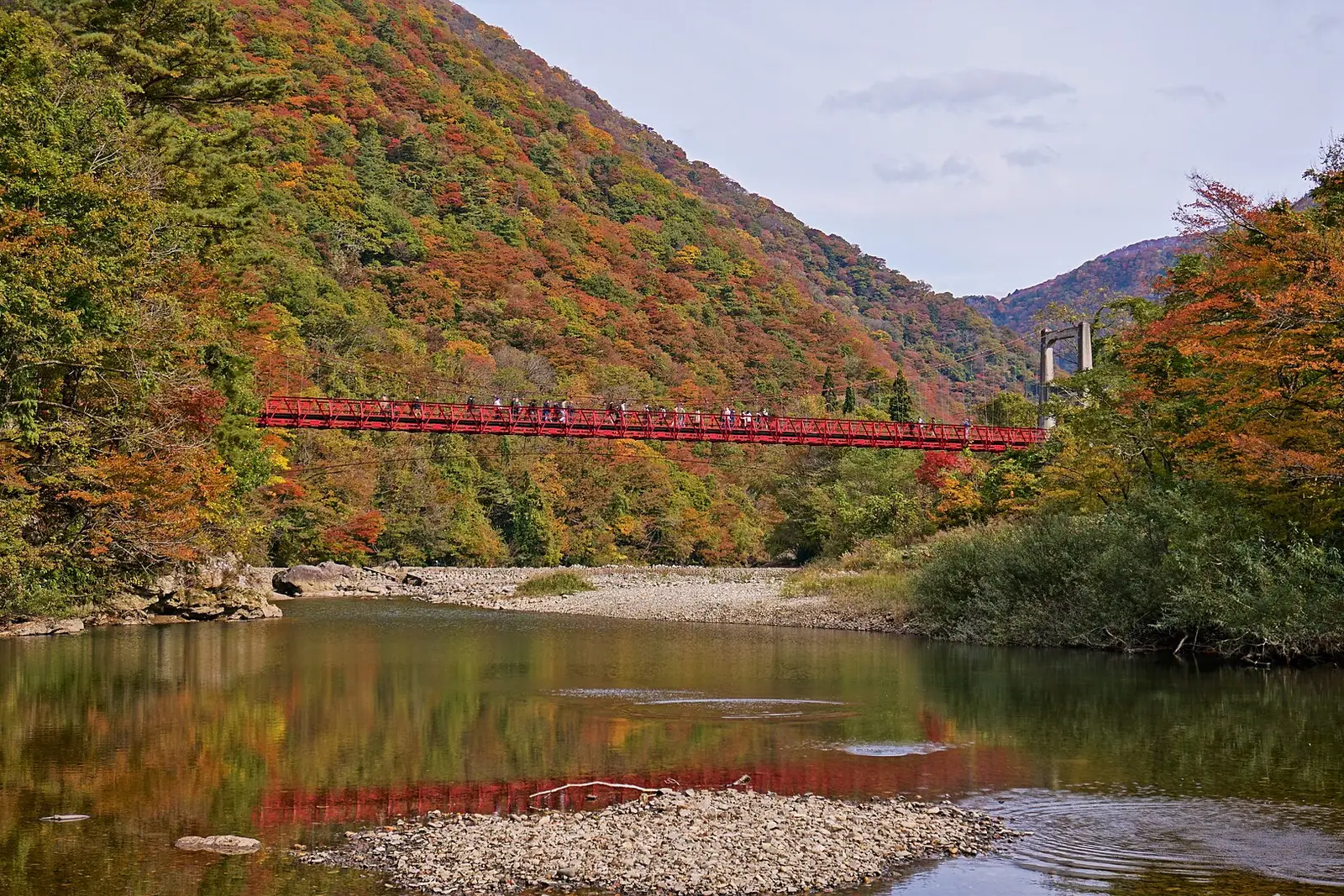
A short drive from Kakunodate, the Tamagawa River runs through a deep, narrow gorge lined with forest. The water is a strange, bright blue-green, a red suspension bridge crosses it at the entrance, and an easy riverside trail leads through old tunnels to a tall waterfall.
A gorge named for a narrow path
Dakigaeri Gorge follows the Tamagawa River for about 10 kilometers below the Jindai reservoir. Steep cliffs and old natural forest rise on both banks, and it is sometimes called the "Yabakei of Tohoku."
The name comes from the old mountain path. It was so narrow and steep that when two people met, they had to hold each other (daki) and turn around (kaeri) to pass.
The color of the water is the first thing most visitors notice. Acidic water from Tamagawa Onsen, a hot spring upstream, makes the river look emerald green and blue against the forest.
Kami-no-Iwahashi Bridge
The walk starts at Dakigaeri Shrine. Its approach leads to Kami-no-Iwahashi, the "Rock Bridge of the Gods," a suspension bridge with bright vermilion railings. It was finished in 1926, making it the oldest suspension bridge in Akita Prefecture, and it was once part of a forest railway.
The bridge is 80 meters long and is about two or three minutes' walk from the shrine. From the middle you look straight down into the V-shaped valley and along the blue river.
The walk to Mikaeri Falls
The trail follows the river for about 1.5 kilometers, with few ups and downs. Along the way are oddly shaped rocks with names, rapids, small waterfalls and three tunnels dug by hand through the rock.
Just past the tunnels is Mikaeri Falls, a 30-meter waterfall over the cliff. Its name means "turning to look back," because people walking away cannot help looking back at it one more time. Some say the white water looks like a woman in a kimono. The walk takes about 30 minutes each way.
When to go
The gorge is best known for fresh green leaves in spring and early summer, and for autumn colors, usually from early October to early November. In autumn, the leaves in the Semboku area turn first in the mountains and reach Dakigaeri and Kakunodate near the end of the season.
The trail is closed from late November until late April because of snow.
Getting there
There are no regular buses to the gorge. Take a taxi from JR Kakunodate Station (about 15 minutes) or JR Tazawako Station (about 20 minutes), or from JR Jindai Station (about 5 minutes). From Kakunodate, the town's on-demand ride service, Yobunoru Kakunodate, is another option. There is a parking lot at the entrance.
Tips
- Trail conditions can change. Ask at the tourist information center in front of Kakunodate Station or inside Tazawako Station before you go.
- The gorge is part of Tazawako Dakigaeri Prefectural Natural Park, so stay on the trail.
Nearby
The samurai district of Kakunodate is about 15 minutes away by car, so the gorge fits easily into a day in Kakunodate. Lake Tazawa is to the north, near Tazawako Station.
More on Kakunodate
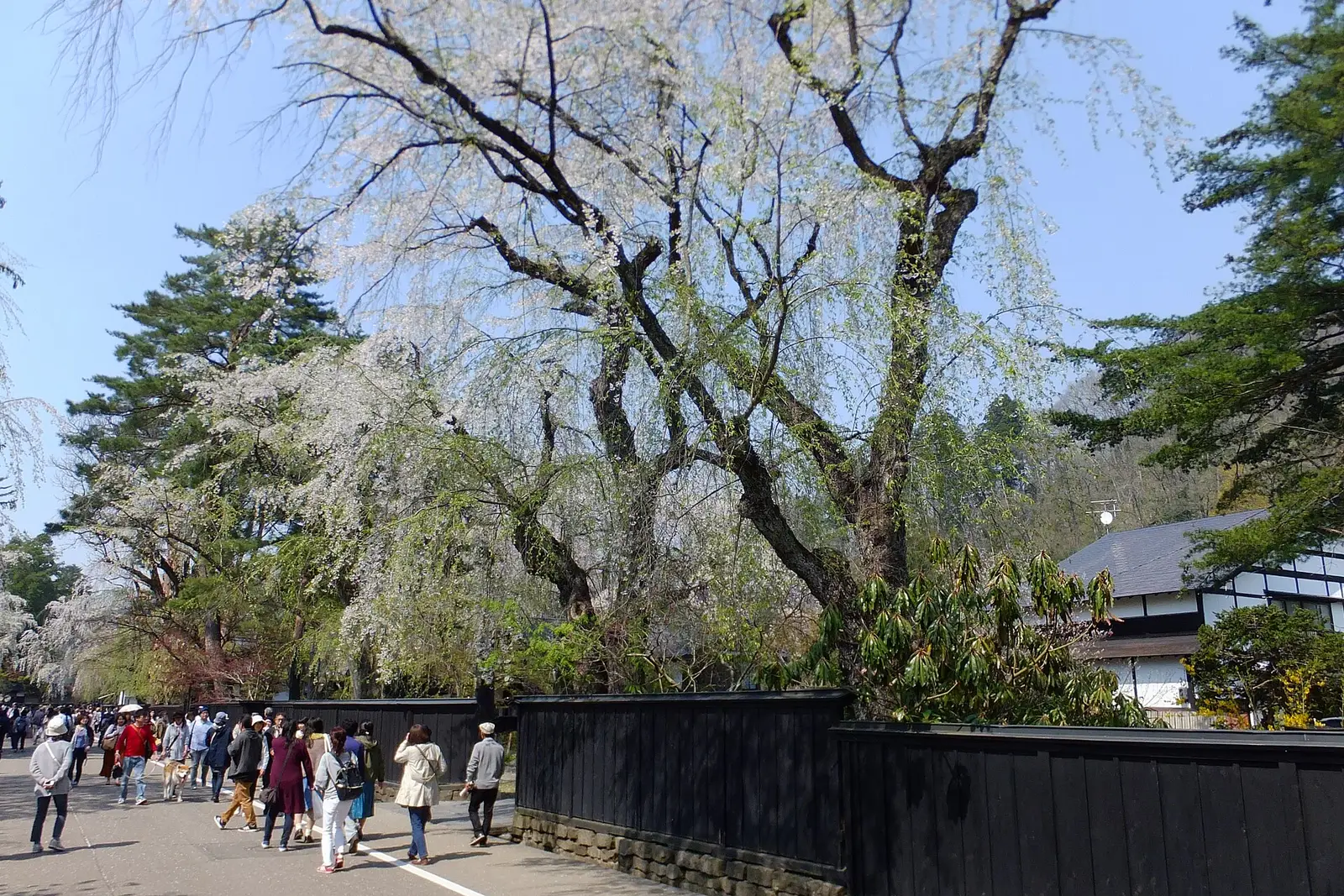 KAKUNODATE3 min read
Kakunodate Samurai District: Old Houses Under Weeping Cherries
A 400-year-old street of samurai houses and weeping cherry trees. The houses you can enter, prices, hours and seasons.
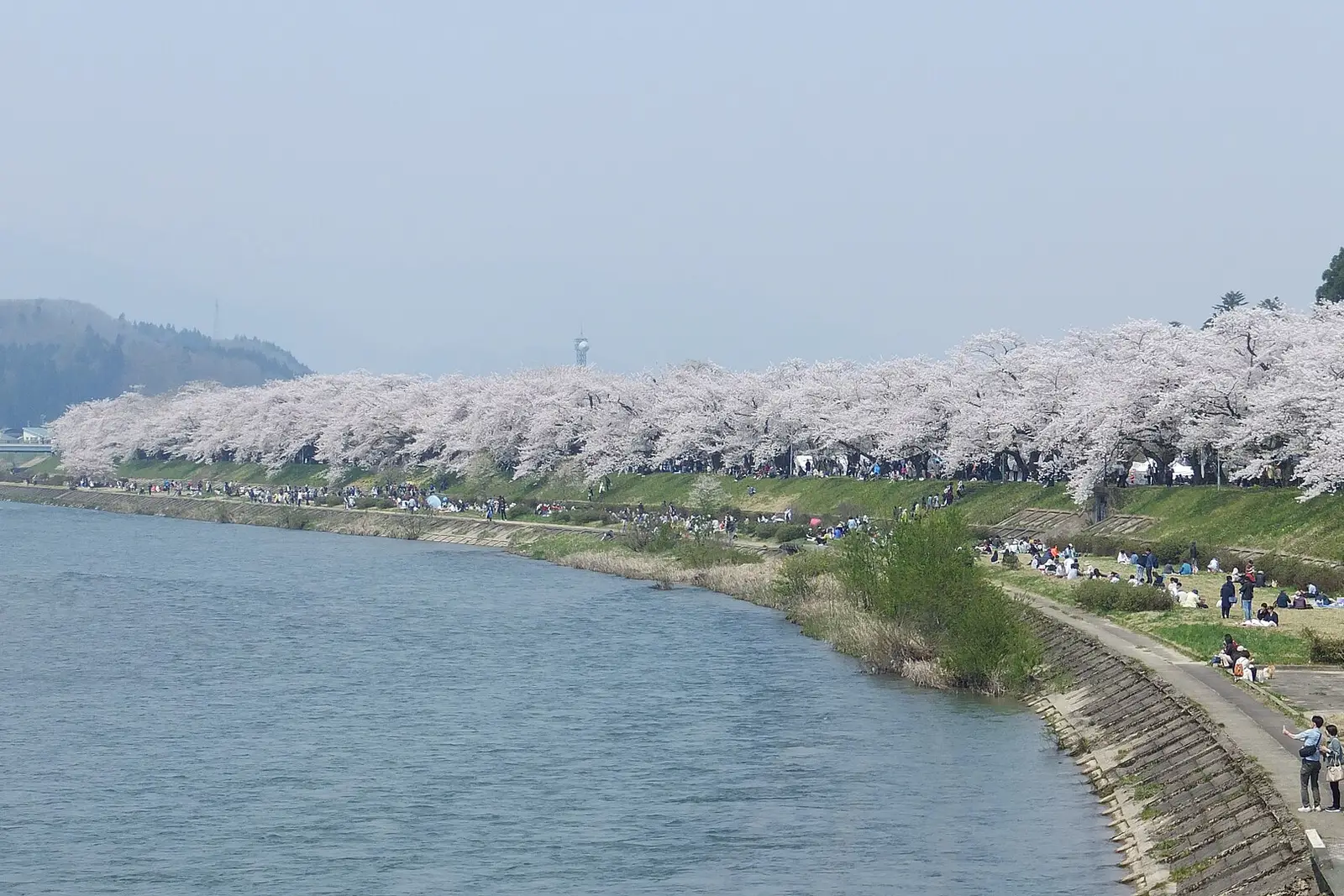 KAKUNODATE3 min read
Hinokinai River: Kakunodate's Two-Kilometer Cherry Tunnel
About two kilometers of cherry trees along a river in Kakunodate. Their story, when they bloom and how to get there.
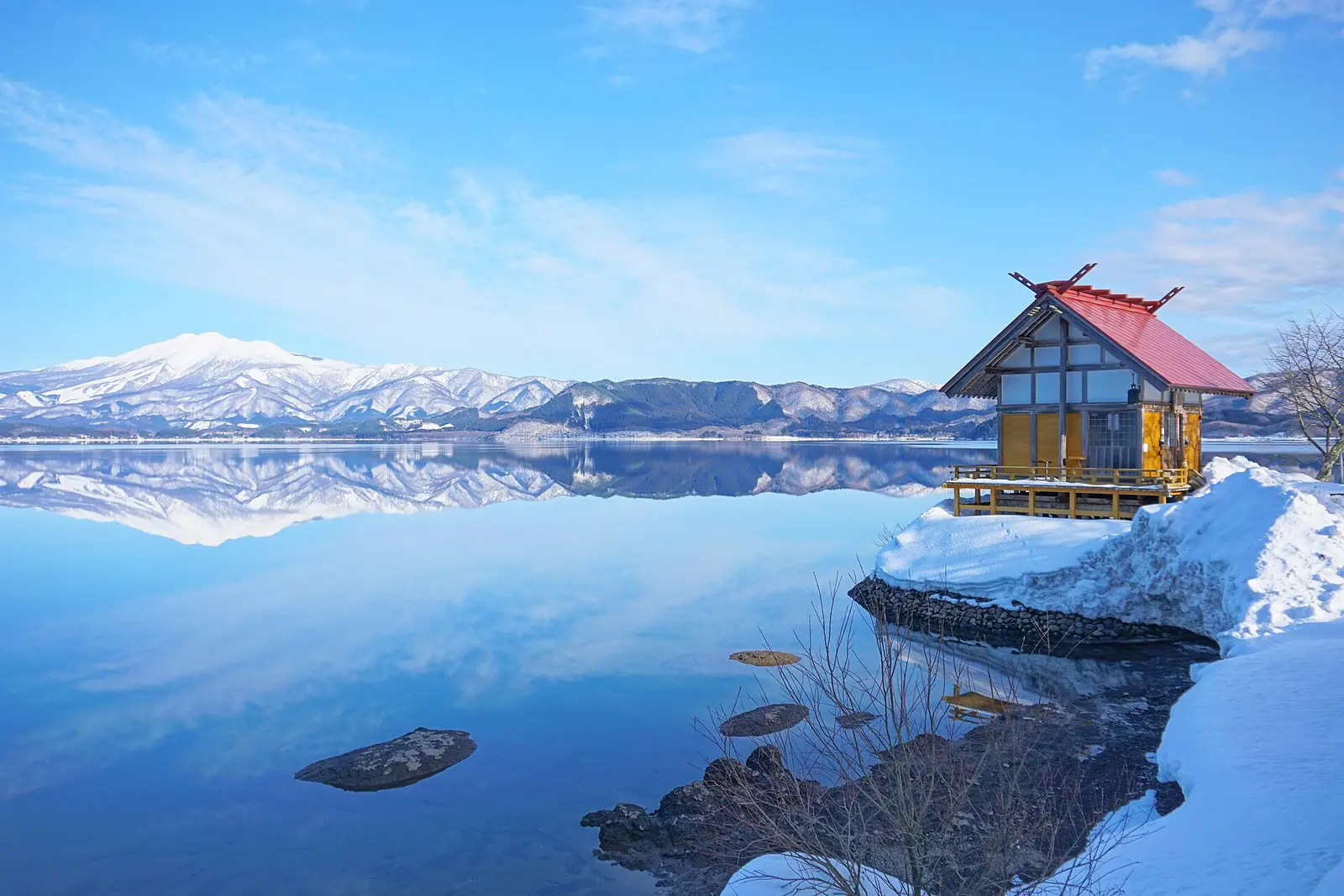 KAKUNODATE3 min read
Lake Tazawa: Japan's Deepest Lake
The deepest lake in Japan, with a golden statue, a lakeside shrine, boat rides and a 20-kilometer cycling loop.