Destinations › Akita › Kakunodate
Lake Tazawa: Japan's Deepest Lake
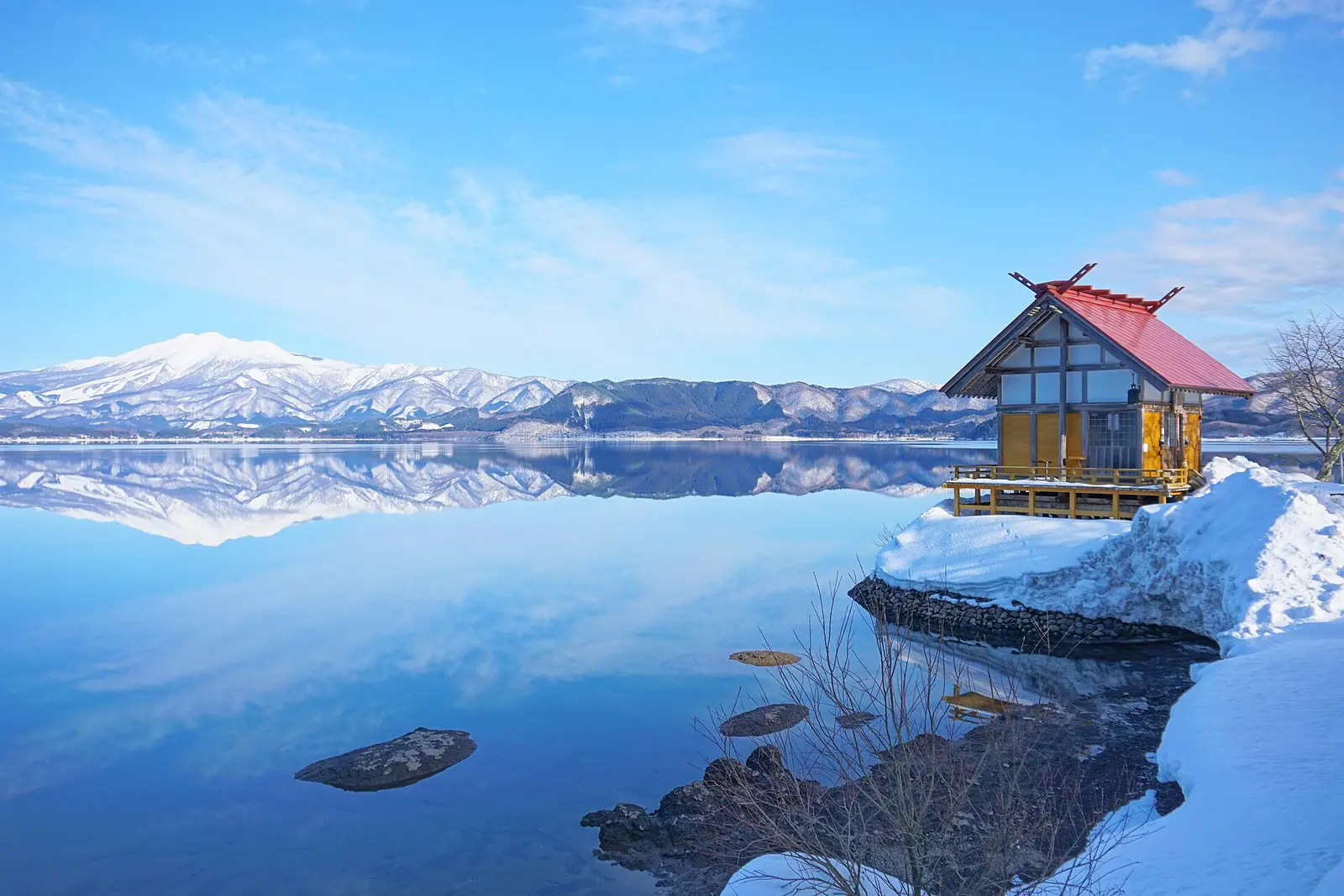
In the mountains north of Kakunodate lies an almost perfectly round lake of deep blue water. Lake Tazawa is the deepest lake in Japan, and local legend says a young woman who wished to stay beautiful forever still lives in its depths as a dragon.
The deepest lake in Japan
Lake Tazawa is 423.4 meters deep, the deepest lake in Japan. It is almost round, about 20 kilometers around, with an area of 25.5 square kilometers. The water is a deep sapphire blue, and on calm mornings it reflects the sky and mountains like a mirror.
The lake once had its own fish, the kunimasu, a kind of salmon said to live only here. In 1940, strongly acidic water from the Tamagawa River was led into the lake for power and farming, and the kunimasu and many other fish died. Thanks to later work to neutralize the acid, fish can be seen in the lake again.
The legend of Tatsuko
Long ago, a girl named Tatsuko wished to keep her beauty forever. She was told to drink from a spring to the north. The more she drank, the thirstier she became, until she had drunk the spring dry and turned into a dragon. She threw herself into the lake and became its guardian.
Her grieving mother threw her torch into the water, and it became the first kunimasu. Another part of the legend says that Hachirotaro, the dragon of Hachirogata Lagoon, comes every autumn to stay with Tatsuko through the winter. That, people say, is why Lake Tazawa never freezes.
Sights around the lake
The Statue of Tatsuko stands just off the western shore at Katajiri. The 2.3-meter bronze statue by the sculptor Funakoshi Yasutake was unveiled on May 12, 1968. It is covered in gold leaf to protect it from the acidic water.
Goza-no-ishi Shrine, on the northern shore, is easy to spot by its vermilion torii gate standing on a rock at the water's edge. Nearby is the spring where Tatsuko is said to have drunk, and the "Seven-Colored Tree," with seven kinds of trees growing from one trunk.
Kansagu, also at Katajiri, is a small shrine of plain wood dedicated to ukiki, large pieces of driftwood said to stand in the lake.
Shirahama is a white-sand beach on the eastern shore, open for swimming for a few weeks in summer. A one-kilometer path leads from the boat pier to Horai-no-matsu, a pine tree about 300 years old with a fine view of the lake.
The sightseeing boat
The boat leaves from Shirahama, in front of the Tazawako Rest House, and circles past Goza-no-ishi and the Tatsuko statue. The trip takes about 40 minutes. In 2026 it runs from April 11 to November 15, with departures at 9:10, 11:10, 13:10 and 15:10 (only 11:10 and 13:10 from November 9). For now, the boat does not stop at Katajiri.
A round trip costs ¥1,500 for adults and half that for children. You do not need to book; just arrive at least 10 minutes before departure.
Cycling around the lake
The road around the lake is about 20 kilometers. A rental shop in the Haruyama area, the main base for sightseeing on the lake, rents road bikes, cross bikes and e-bikes from ¥1,000 an hour. It is open from 8:00 to 17:00 and closes in winter.
Getting there
Take the Akita Shinkansen to JR Tazawako Station. From there, Ugo Kotsu buses on the Nyuto Line or the lake loop line reach the Tazawako-han (lakeside) stop in about 12 minutes, for ¥350. The loop line also runs around the lake to Katajiri and Goza-no-ishi.
Tips
- In autumn the leaves peak first on Mount Akita-Komagatake, east of the lake, usually in late September. The color then moves down through the hot spring areas to the lake.
- The Tazawako tourist information center, Folake, is inside JR Tazawako Station and opens from 8:30 to 17:15.
Nearby
The hot springs of Nyuto Onsen are in the mountains east of the lake, on the same Nyuto Line bus. Kakunodate and its samurai district are a short ride south on the Akita Shinkansen.
More on Kakunodate
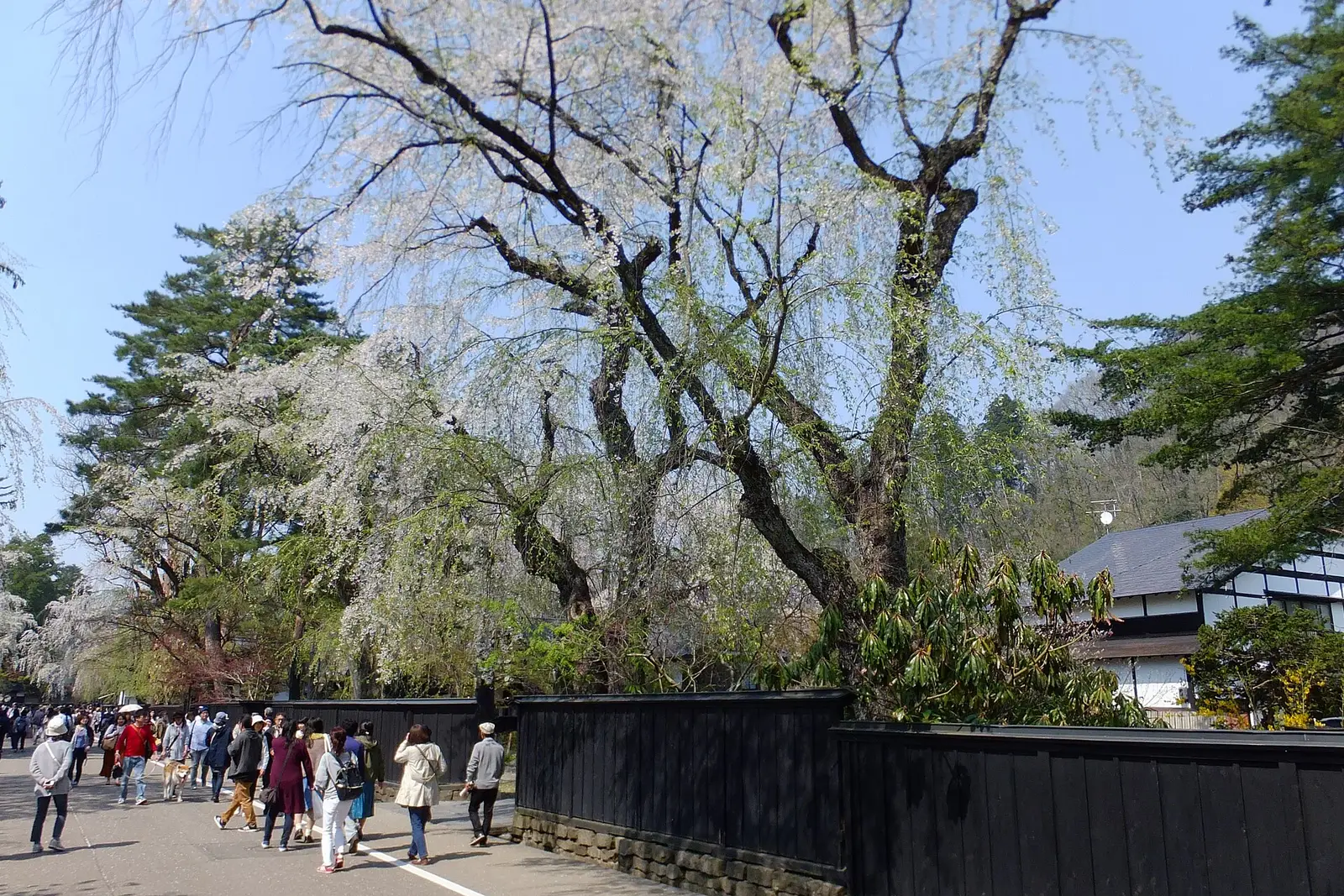 KAKUNODATE3 min read
Kakunodate Samurai District: Old Houses Under Weeping Cherries
A 400-year-old street of samurai houses and weeping cherry trees. The houses you can enter, prices, hours and seasons.
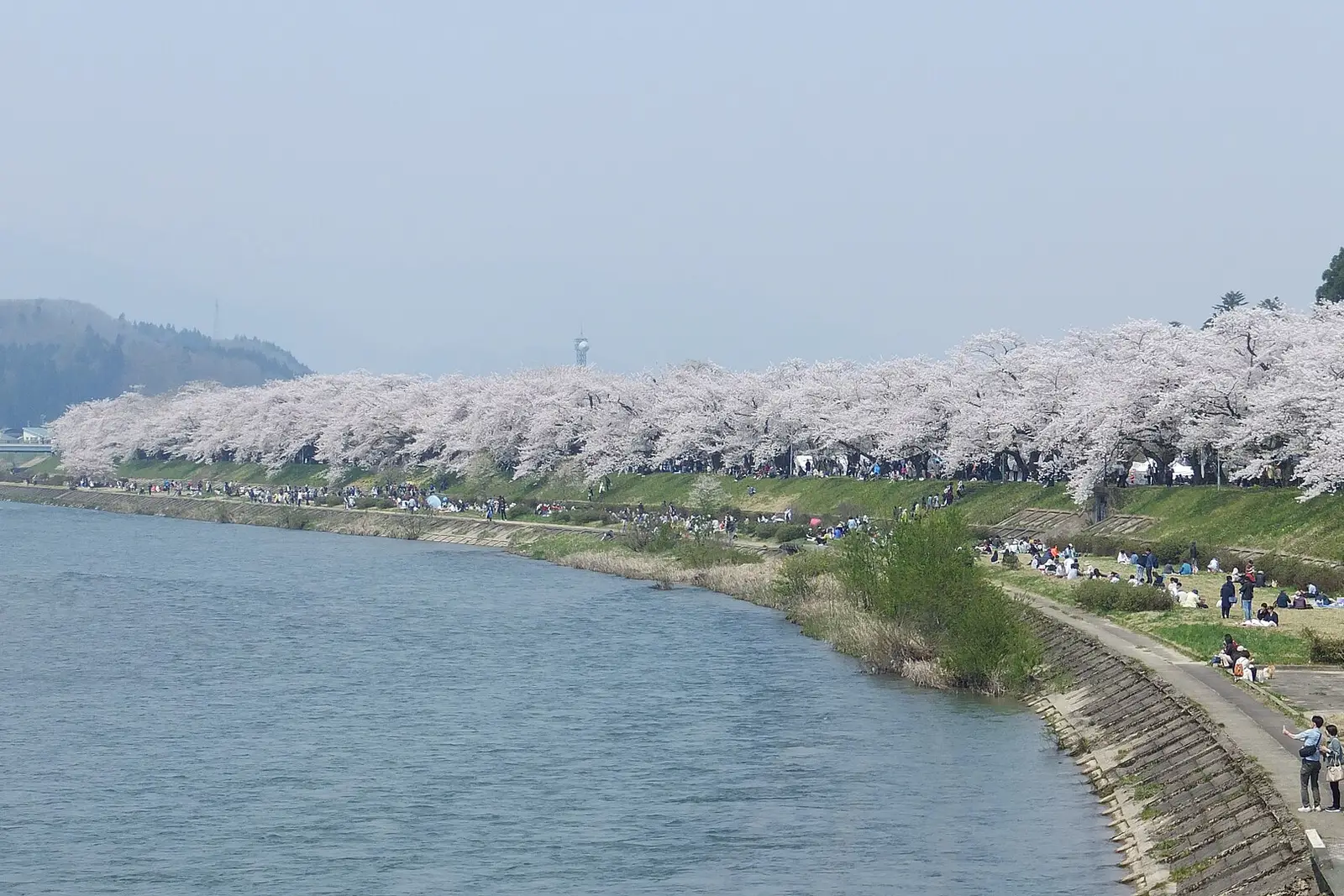 KAKUNODATE3 min read
Hinokinai River: Kakunodate's Two-Kilometer Cherry Tunnel
About two kilometers of cherry trees along a river in Kakunodate. Their story, when they bloom and how to get there.
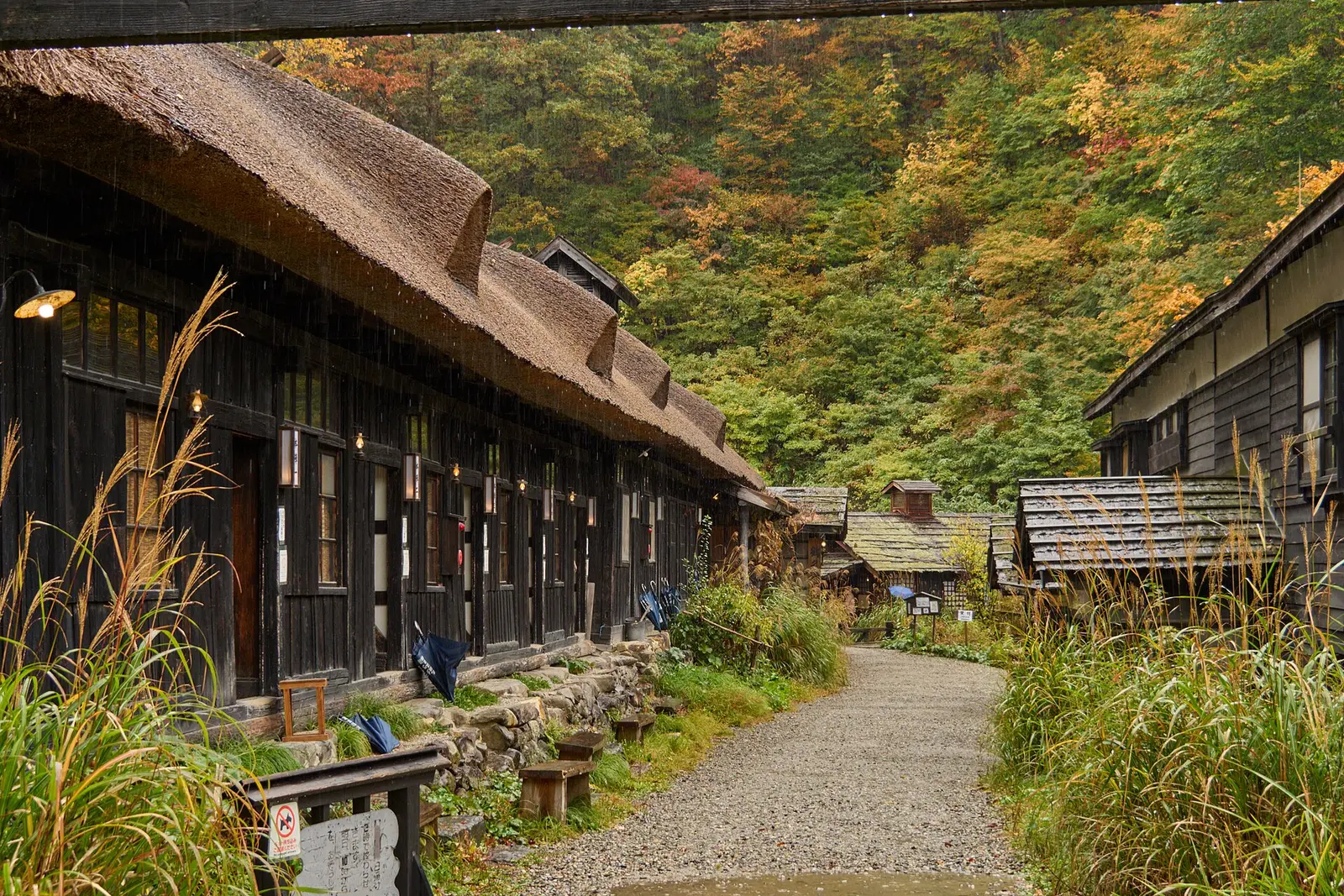 KAKUNODATE3 min read
Nyuto Onsen: Seven Hidden Hot Springs in the Beech Forest
Seven old hot spring inns in a beech forest near Lake Tazawa. Tsurunoyu, day bathing, the bath pass and the bus.