Destinations › Akita › Kakunodate
Kakunodate Samurai District: Old Houses Under Weeping Cherries
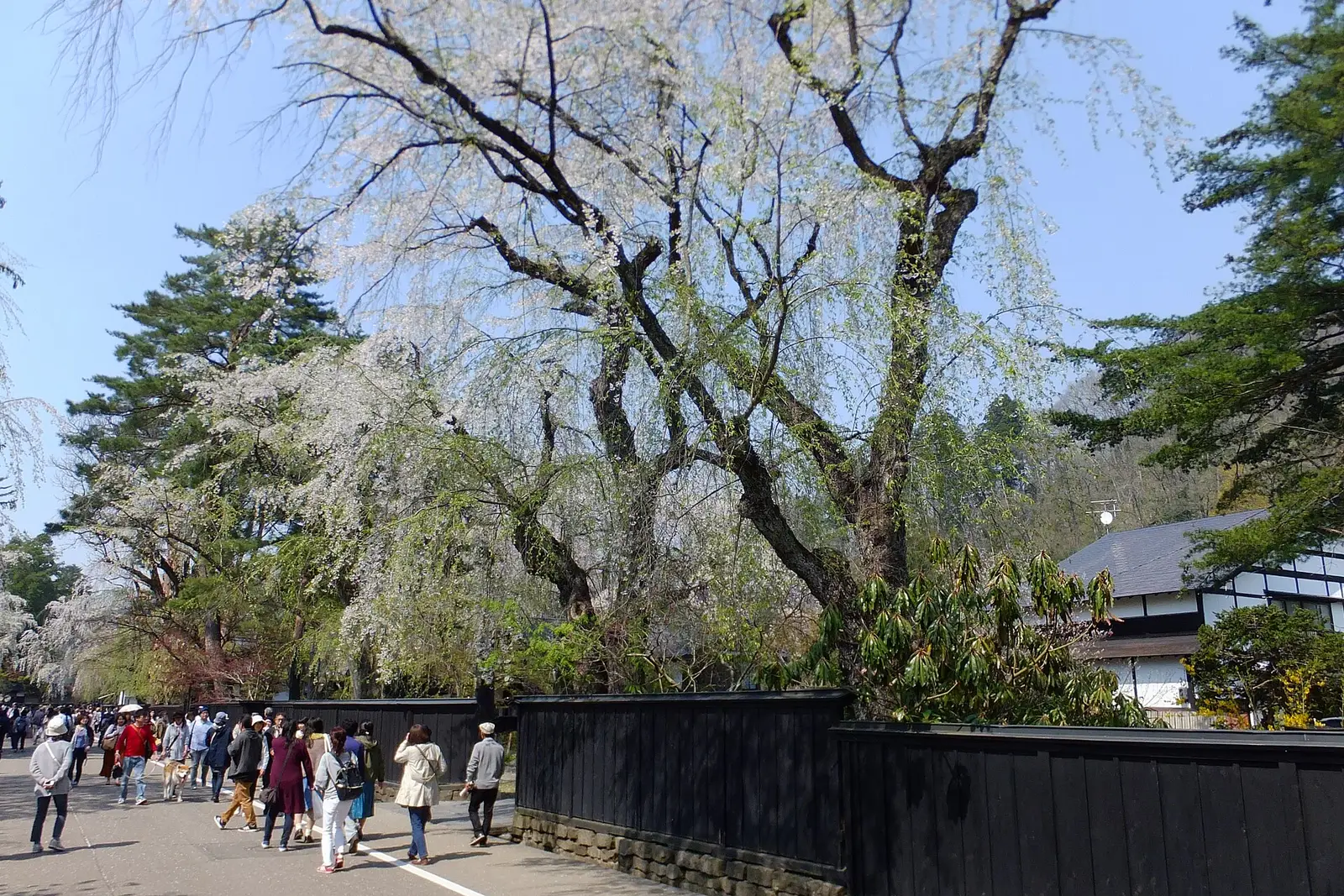
Behind black wooden fences and tall old trees, the samurai of Kakunodate once lived in quiet, roomy houses close to their lord's castle. The street still looks much as it did in the Edo period, and in spring weeping cherry trees pour pink and white blossoms over the fences.
A town split in two
Kakunodate was laid out in 1620 by Ashina Yoshikatsu, the younger brother of the lord of Akita. Even after the castle on the hill was pulled down that same year, under the shogun's rule of one castle per domain, the town stayed the center of the area.
The new town was divided by class. Samurai lived in the northern part, called Uchimachi, closer to the castle. Merchants and craftsmen lived in the southern part, Tomachi. Between them ran a firebreak with an earthen bank, built so that a fire in the merchant town would not spread to the samurai houses. A wooden gate in the bank was closed at night.
From 1656, the Satake-Kita family ruled Kakunodate for 11 generations, until the end of the samurai era. They brought much of Kyoto's culture to this northern town. You can still see the old split in the place names: samurai streets end in -cho, merchant streets in -machi.
Walking the street
Each samurai house has a front garden and a black wooden fence or hedge. In the Edo period the fences were taller than a person, but the road today is about 80 centimeters higher than it was then. The width of the street, about 11 meters, is the same as when the town was built.
Tall trees shade the street. About 40 percent are weeping cherries and Japanese maples, and some were planted 300 to 400 years ago. Fir trees, which resist fire, were planted in front gardens to protect the wooden houses.
In 1976 this was the first area in Japan named an Important Preservation District for Groups of Traditional Buildings.
The weeping cherries
According to local tradition, in 1664 the bride of Satake-Kita Yoshiaki brought three weeping cherry saplings from Kyoto as part of her dowry. The weeping cherries of Kakunodate are believed to come from them. Of about 400 such trees in the town, 162 are national Natural Monuments.
The Kakunodate Cherry Blossom Festival runs from April 15 to May 5 each year, and the dates can change with the blossoms. The trees are lit up in the evening, when the crowds are thinner.
Samurai houses you can enter
Six samurai estates are open to the public, though some can only be seen from outside.
Aoyagi House sits on grounds of about one hectare. Its grand gate was built in 1860 as a reward for the family's long service to the domain, whose border guards they led. Look for the "warrior windows" beside the gate, which let people inside look out without being seen, and the low ceiling in the entrance hall, which made it hard to swing a sword. The grounds hold an armory and several small museums. Tickets are ¥500 for adults, ¥300 for junior and senior high school students and ¥200 for elementary school students.
Iwahashi House and Odano House are free and open from mid-April to November, 9:00 to 16:30. Odano Naotake of this family drew the pictures for Kaitai shinsho in 1774, the first Japanese translation of a foreign medical book.
Ishiguro House, where descendants of the family still live, has announced that it will stop opening to the public after November 30, 2026.
Autumn leaves
In autumn the maples along the street turn red and orange. From early October to late November, the leaves are lit up in the evening from 16:30 to 22:00.
Getting there
From JR Kakunodate Station on the Akita Shinkansen, walk about 15 to 20 minutes north. The Kakunodate Ekimae-Gura tourist information center, a white storehouse-style building to the right as you leave the station, has maps and is open 9:00 to 18:00 (until 17:30 from October to March). Rickshaws, rental bicycles and taxis are also available.
Tips
- Aoyagi House accepts major credit cards, IC transport cards and PayPay.
- During the cherry festival, a parking lot near the samurai district costs ¥500 for a car.
Nearby
The Kabazaiku Densho-kan museum, on the samurai street, shows kabazaiku, a local craft made from cherry bark, and craftspeople at work. The Somei Yoshino cherry trees of the Hinokinai River are a short walk west.
More on Kakunodate
 KAKUNODATE3 min read
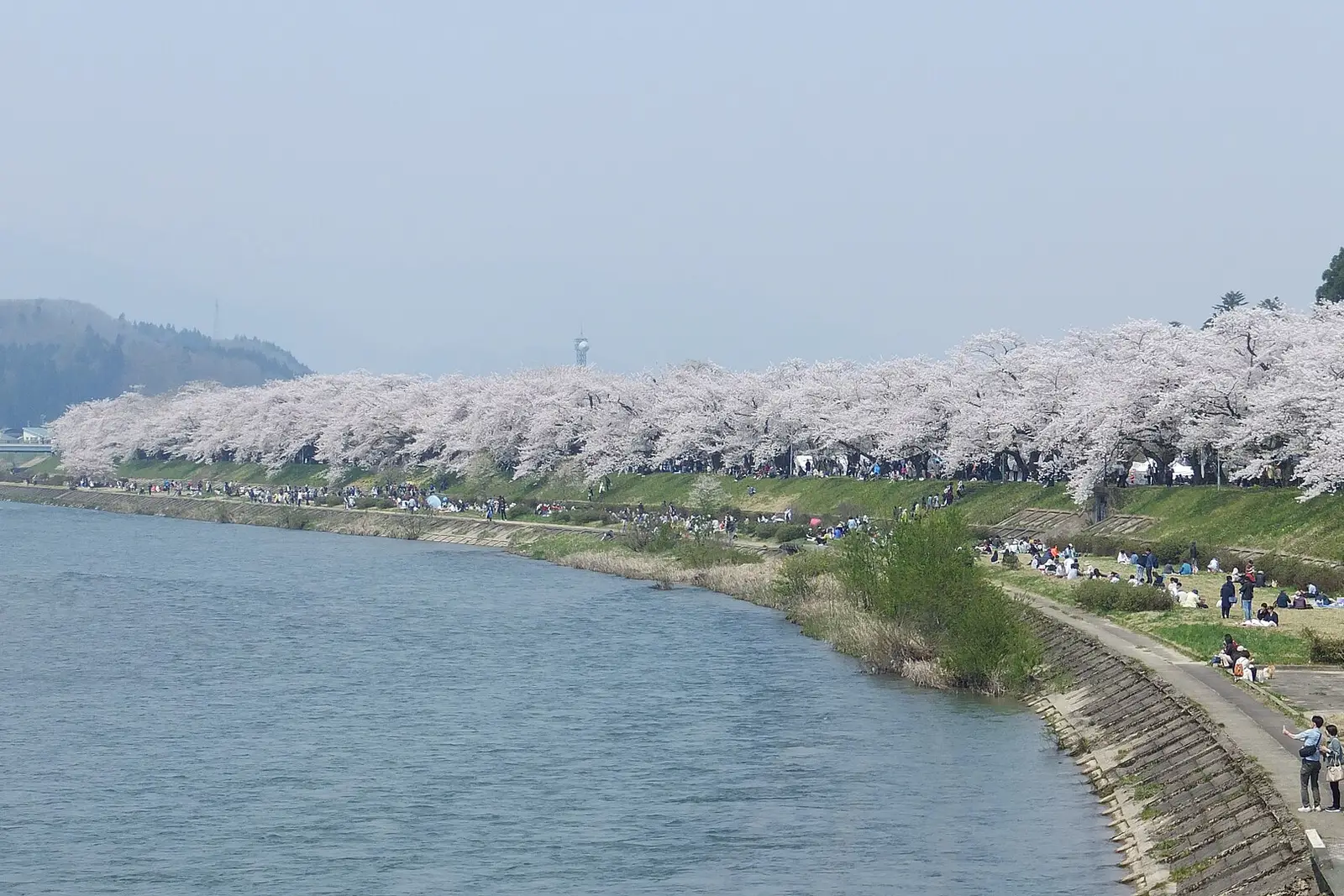
Hinokinai River: Kakunodate's Two-Kilometer Cherry Tunnel
About two kilometers of cherry trees along a river in Kakunodate. Their story, when they bloom and how to get there.
 KAKUNODATE3 min read
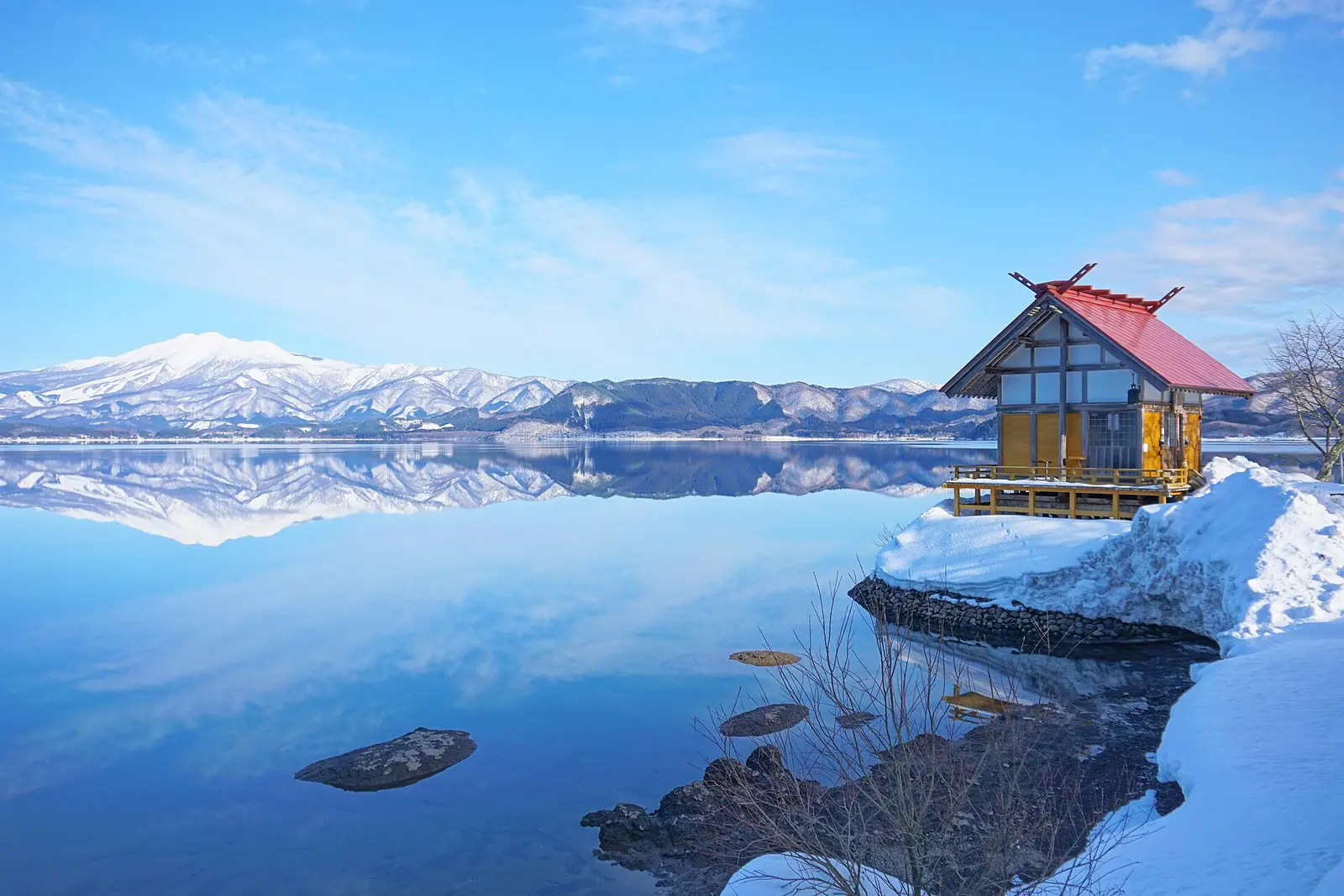
Lake Tazawa: Japan's Deepest Lake
The deepest lake in Japan, with a golden statue, a lakeside shrine, boat rides and a 20-kilometer cycling loop.
 KAKUNODATE3 min read
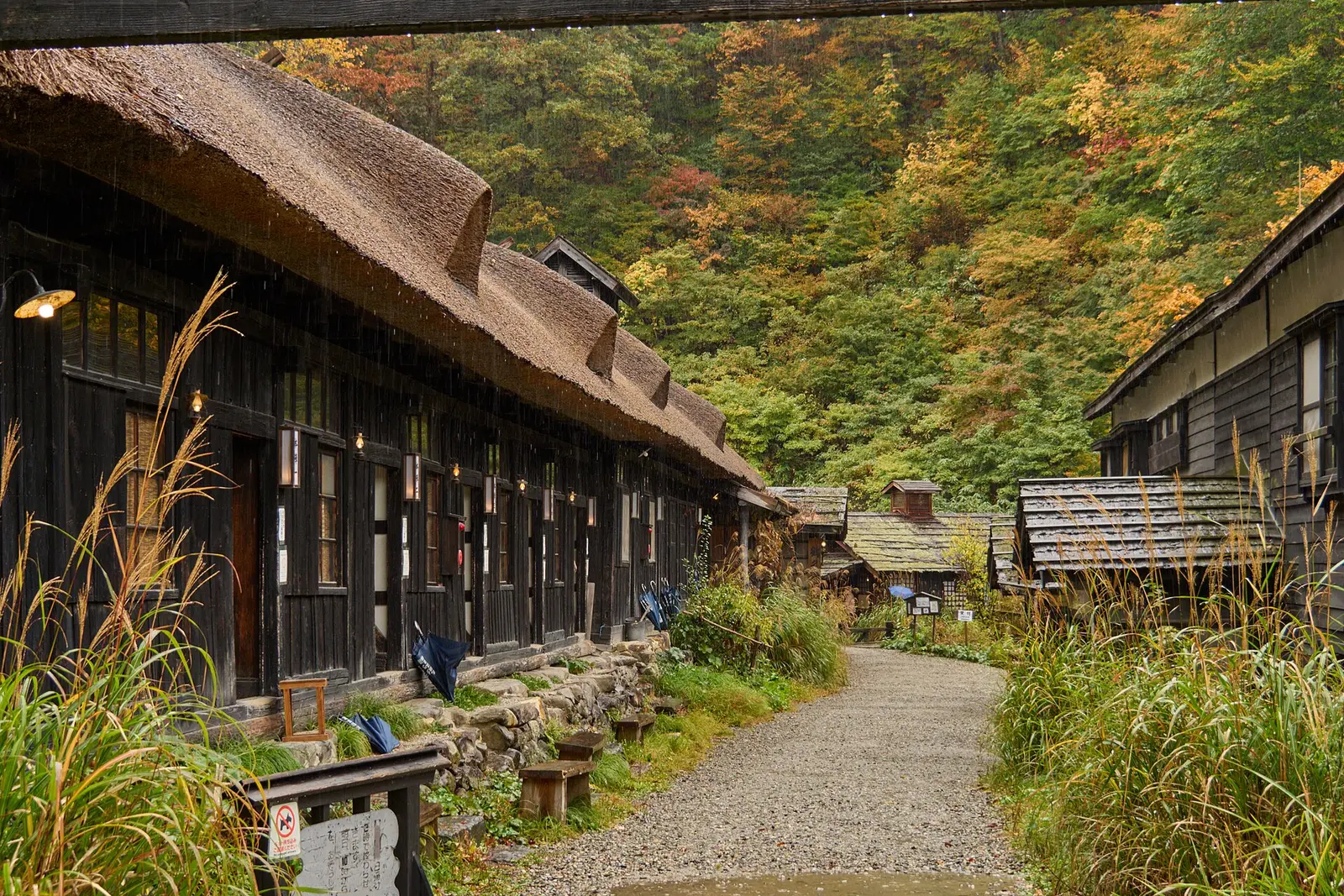
Nyuto Onsen: Seven Hidden Hot Springs in the Beech Forest
Seven old hot spring inns in a beech forest near Lake Tazawa. Tsurunoyu, day bathing, the bath pass and the bus.