Destinations › Akita › Kakunodate
Hinokinai River: Kakunodate's Two-Kilometer Cherry Tunnel
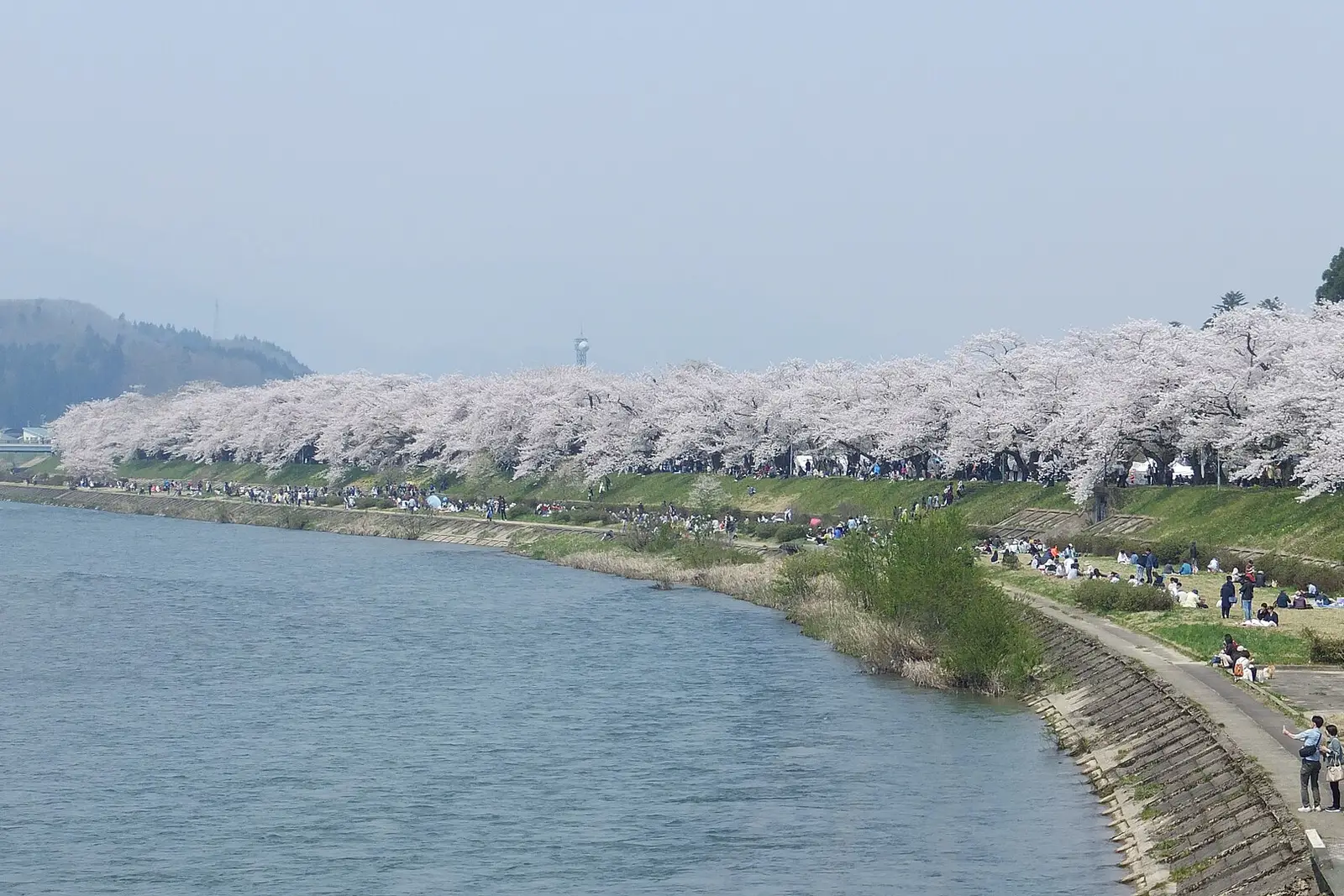
On the west side of Kakunodate, the Hinokinai River runs past a long grassy embankment. In late April its cherry trees bloom together, and the bank turns into a pale pink tunnel nearly two kilometers long, with picnickers spread out on the grass below.
Planted in 1934
In 1934, 600 Somei Yoshino cherry trees were planted on the Hinokinai River embankment. The planting celebrated two things at once: the birth of the crown prince who later became Emperor Heisei, and the completion of the embankment itself.
About two-thirds of the original trees are still alive. Together they form a tunnel of blossoms about 1,950 meters long on top of the bank.
Somei Yoshino cherries do not usually live very long, so why have these lasted? The city gives a few reasons. The trees were planted in a staggered pattern, so each one gets plenty of sun. The soil of the embankment, taken from the riverbank, drains well and is rich. And students and the city have looked after the trees for years.
The trees that were almost cut down
In the 1970s the trees nearly disappeared. Around 1972, there were concerns that tree roots could weaken river embankments, and a rule against planting trees on embankments was added to the law on rivers. A plan to strengthen the embankment put the cherry trees at risk.
The people of Kakunodate did not want to lose them. They asked for the trees to be protected as a cultural property, and in 1975 the national government named the Hinokinai River embankment and its Somei Yoshino trees a Place of Scenic Beauty.
When they bloom
Kakunodate has two kinds of famous cherry trees. The weeping cherries of the samurai district usually open first. According to the local tourism association, the Somei Yoshino trees on the river begin to bloom a day or two later, and reach full bloom about five days after that.
Somei Yoshino trees cover their branches with pale pinkish-white flowers before the leaves come out, so at their peak the whole bank looks white and pink.
The Kakunodate Cherry Blossom Festival is held from April 15 to May 5 every year, and the dates can change with the blossoms. The tourism association says the festival draws over 1.2 million visitors. Events are held around the town during this time.
A place for hanami
The river bank is one of the best places in Kakunodate for hanami, a picnic under the cherry blossoms. Many local people come with food and drinks to sit on the grass under the trees. Walk along the top of the bank for the tunnel of blossoms, or go down to the river side to see the whole line of trees at once.
Getting there
From JR Kakunodate Station on the Akita Shinkansen, the embankment is about 15 minutes on foot. During the festival, the Municipal Cherry Blossom Avenue Parking Lot has about 180 spaces at ¥500 for a car, and there are other free lots in town.
Tips
- The best days change every year with the weather. The local tourism association publishes past blooming records on its website, which help with planning.
- Combine the river walk with the samurai district, where the weeping cherries bloom at about the same time.
Nearby
The samurai district, with its weeping cherry trees, is a short walk east. To the north of town is Furushiroyama, the hill where Kakunodate's castle stood until 1620.
More on Kakunodate
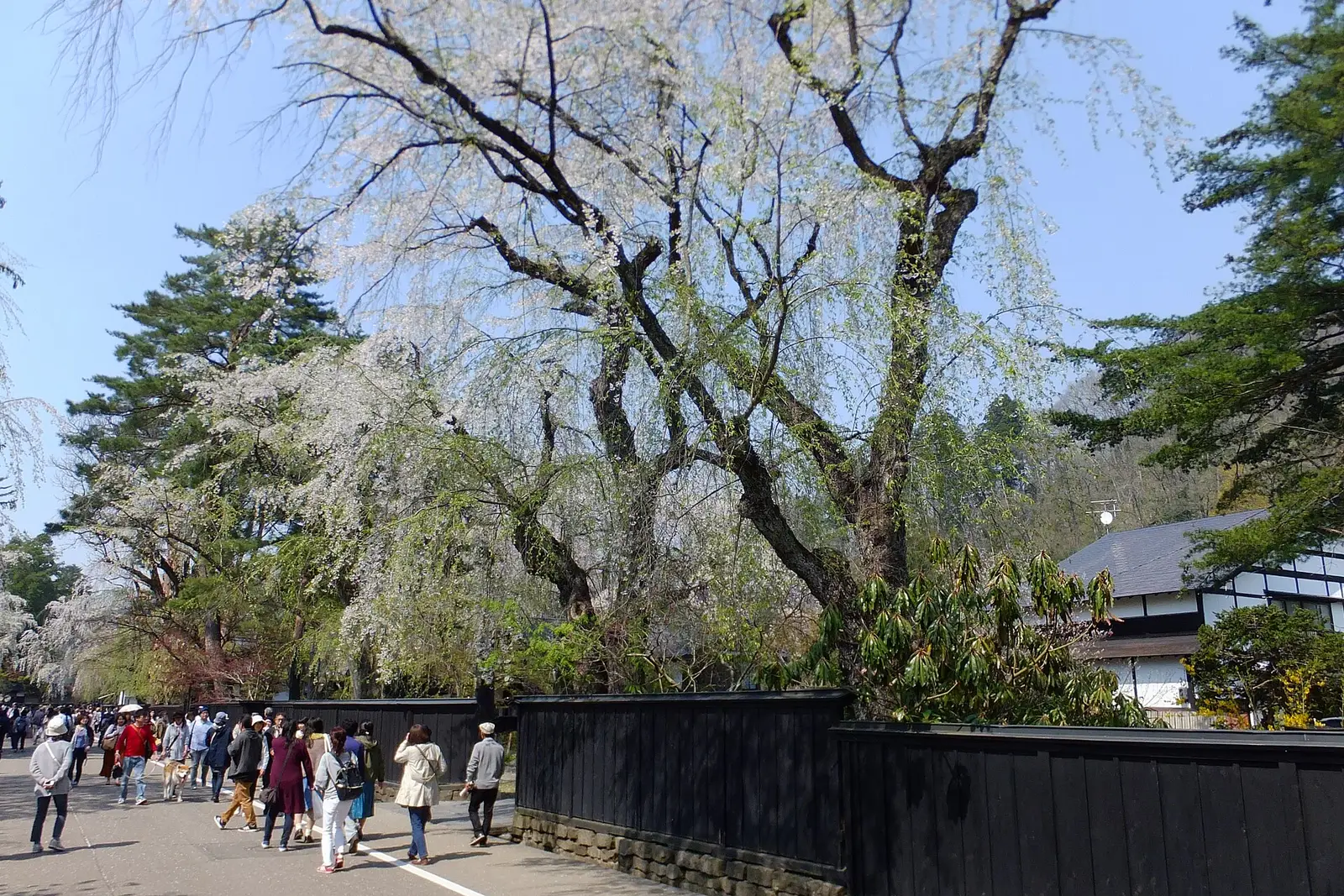 KAKUNODATE3 min read
Kakunodate Samurai District: Old Houses Under Weeping Cherries
A 400-year-old street of samurai houses and weeping cherry trees. The houses you can enter, prices, hours and seasons.
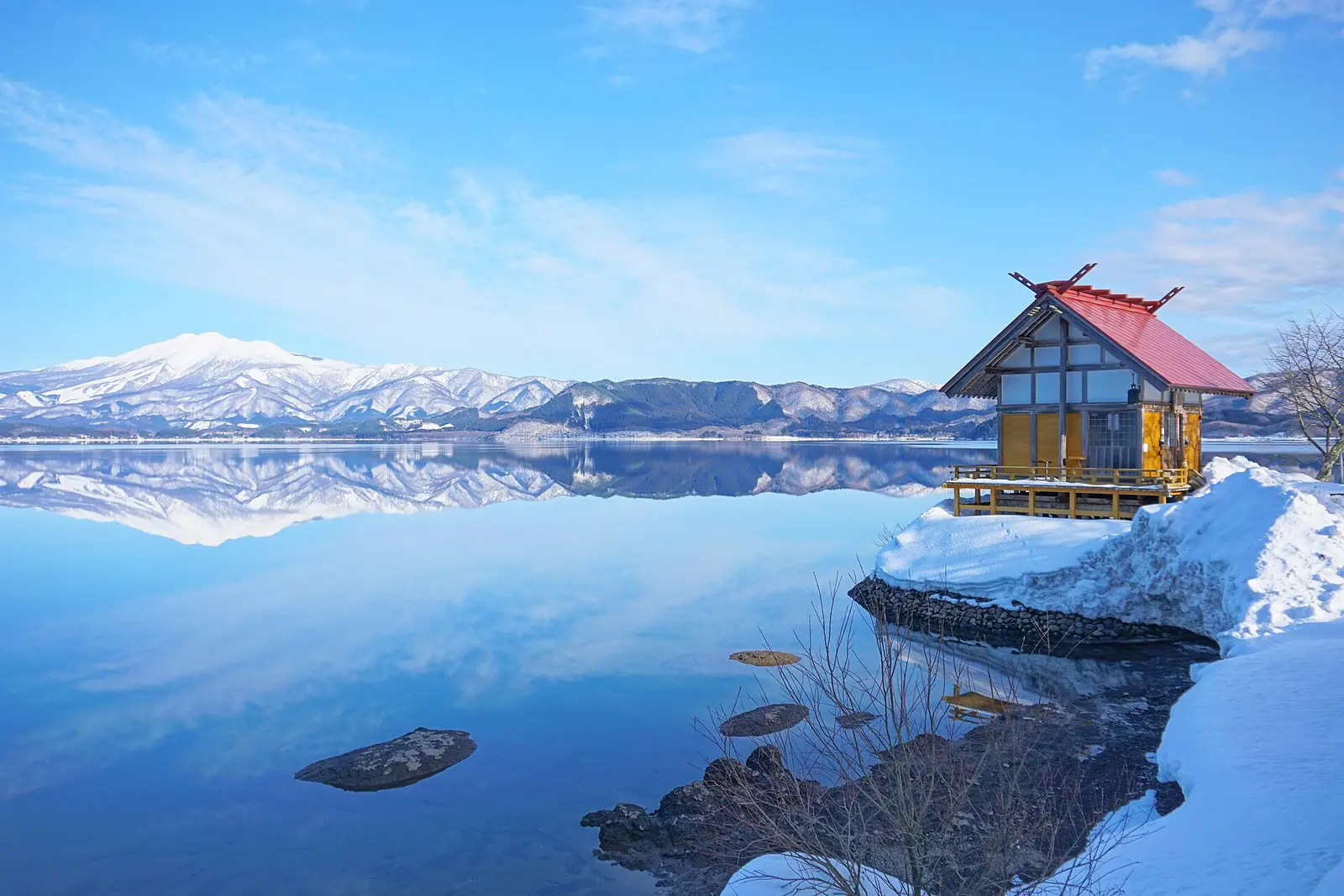 KAKUNODATE3 min read
Lake Tazawa: Japan's Deepest Lake
The deepest lake in Japan, with a golden statue, a lakeside shrine, boat rides and a 20-kilometer cycling loop.
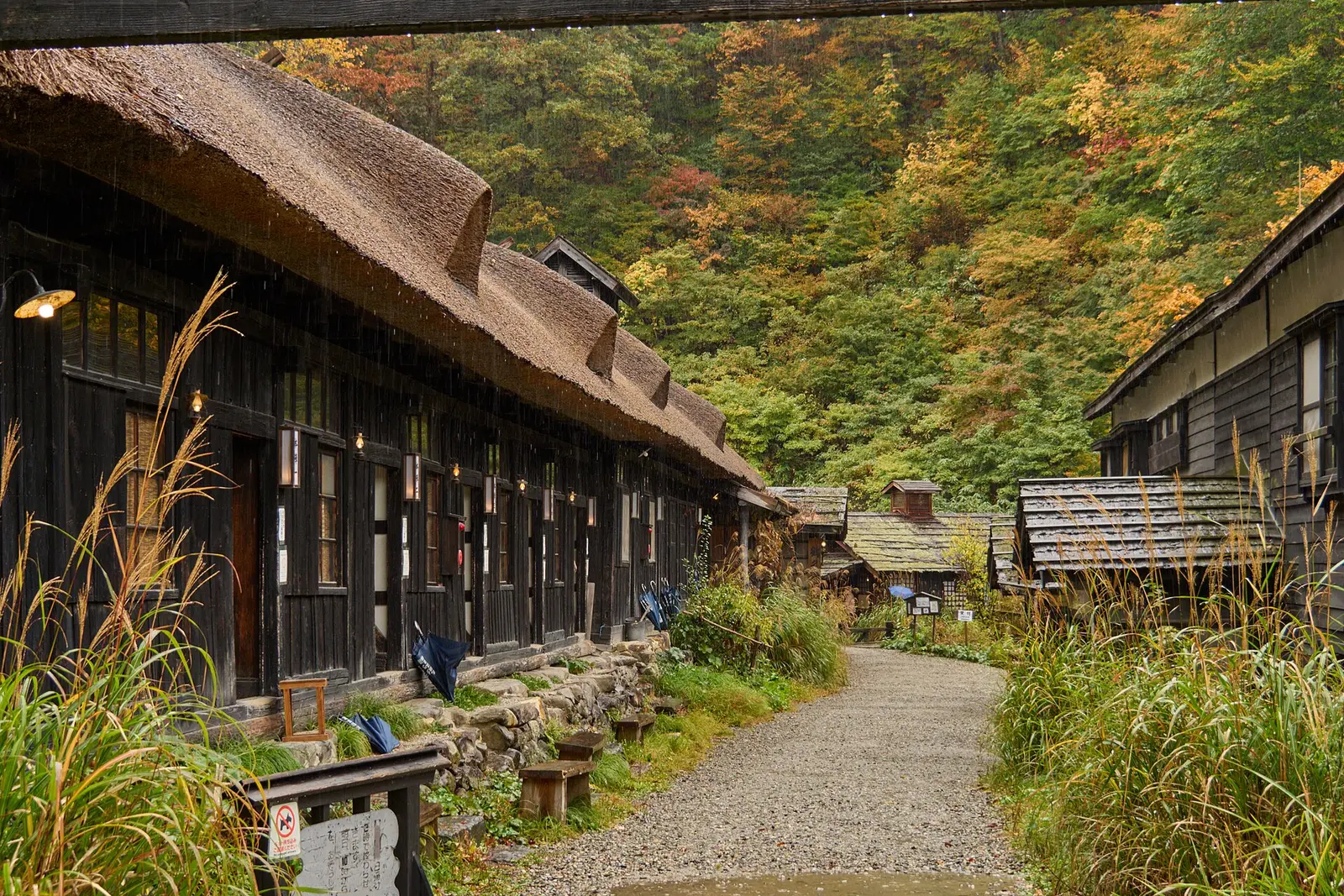 KAKUNODATE3 min read
Nyuto Onsen: Seven Hidden Hot Springs in the Beech Forest
Seven old hot spring inns in a beech forest near Lake Tazawa. Tsurunoyu, day bathing, the bath pass and the bus.