Destinations › Kanagawa › Kamakura
Great Buddha of Kamakura: A Giant Bronze Out in the Open
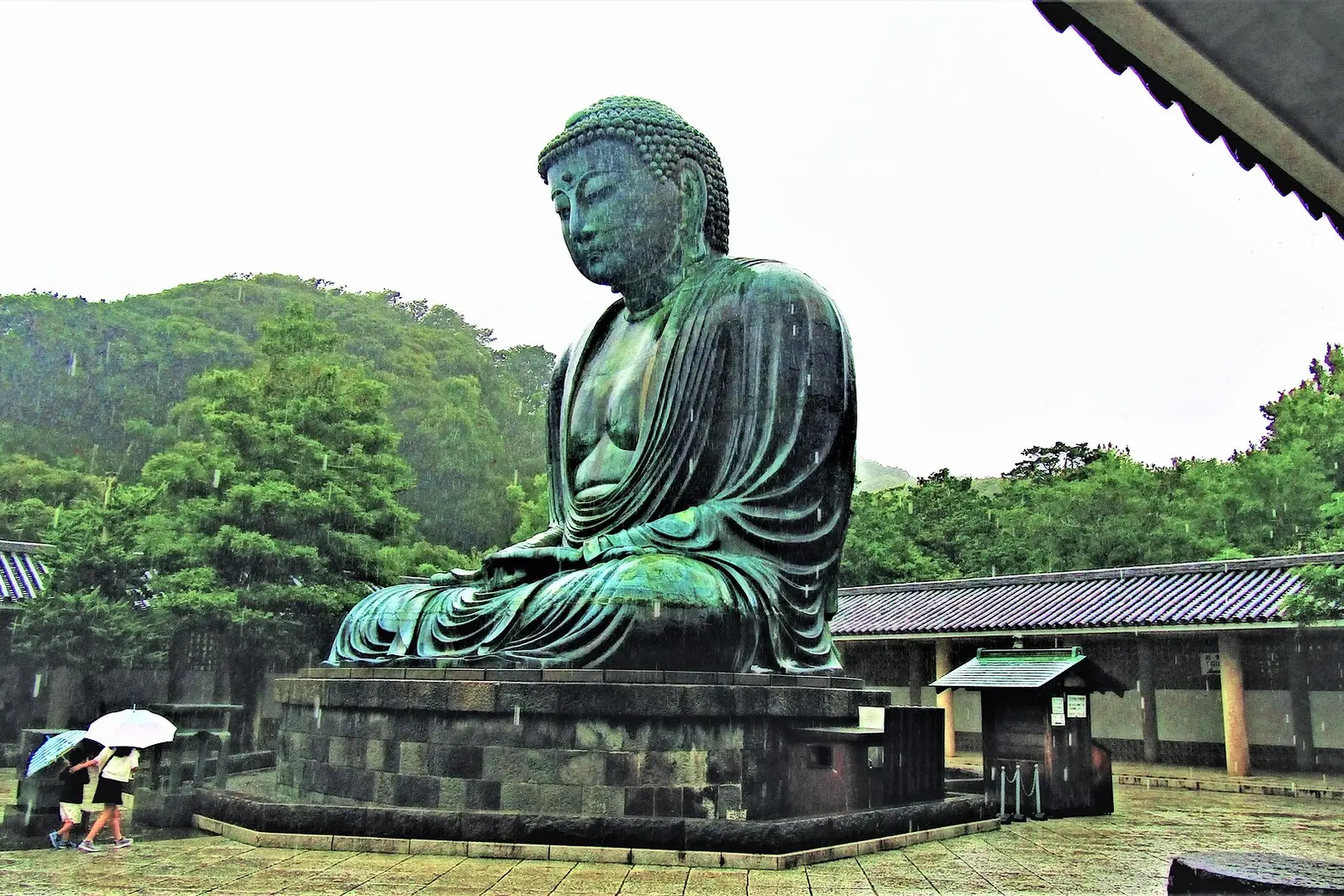
Walk through the gate of Kotoku-in and there he is, sitting calmly in the open air with the trees behind him. The Great Buddha of Kamakura is about 11 meters tall, and it is one of the best-known sights in all of Japan.
A giant Buddha, and a mystery
The Great Buddha is a statue of Amida, a Buddha who is very popular in Japan. It is made of copper, stands about 11.3 meters tall, and weighs around 121 tons. Japan has named it a National Treasure.
Nobody knows who made it. According to Azumakagami, a chronicle of the Kamakura government, work began in 1252. A priest named Joko is believed to have gathered the donations, but the sculptor was never recorded. Experts see the influence of the Kei school of sculptors, and also of China.
For comparison, the Great Buddha at Todai-ji temple in Nara is much bigger, at about 15 meters and 250 tons. But Kamakura's is the one you can walk right up to and see against the sky.
Why is he outside?
The Buddha was not always outdoors. At first he sat inside a large hall. Typhoons in 1334 and 1369 damaged that building, and a strong earthquake in 1498 finished the job. Since then, the statue has sat in the open air, in sun, rain and snow. The temple points out that this is unusual among big Buddha statues in Japan.
In the middle of the Edo period, two priests, Yuten and Yokoku, repaired the statue. The money came from Nojima Shinzaemon, a merchant from Asakusa in Tokyo.
Look closely
Step up close and look at the cheeks. The statue was once covered in gold, and a little still shows on both sides of the face. The head is covered in 656 small curls of hair.
The statue was not cast in one go. It was made in 40 separate pieces, which were joined together with a welding method. The style is typical of the Kamakura period, which lasted from 1192 to 1333.
Visiting Kotoku-in
Kotoku-in belongs to the Jodo sect of Buddhism. You pay at the gate, walk up the path, and the Buddha appears in front of you. Take your time and walk around him to see him from every side.
You can pay 50 yen extra to go inside the statue. Inside is a small hollow space, and you can see the metal walls from the inside. The inside closes a little earlier than the grounds, at 4:30 pm. Admission is 300 yen for adults and 150 yen for children aged 6 to 12. Children under six are free. No reservation is needed.
This is an active temple, so keep your voice down. Last entry is 15 minutes before closing, so do not arrive right at the end of the day. If you collect temple stamps (goshuin), the office takes printed ones from 8 am to 4:30 pm, and handwritten ones from 9 am to 3 pm. The temple shop is open from 8:30 am to 4:45 pm.
How to get there
From Kamakura Station, take the Enoden train, the small train that runs along the coast to Enoshima, to Hase Station. It is the third stop and takes about 7 minutes. From the station, the temple is a 7-minute walk. You can also take a bus from the east exit of Kamakura Station to the Daibutsu-mae stop, which takes about 10 minutes.
The temple has no parking lot, so do not plan to come by car.
The temple lists a barrier-free route on its map of the grounds.
Nearby
Hase-dera temple, with its tall golden Kannon statue and ocean view, is in the same Hase district, so many people see both on one trip. From there, you can ride the Enoden onward to Enoshima, or head back to Kamakura Station for Tsurugaoka Hachimangu shrine and Hokokuji's bamboo garden.
More on Kamakura
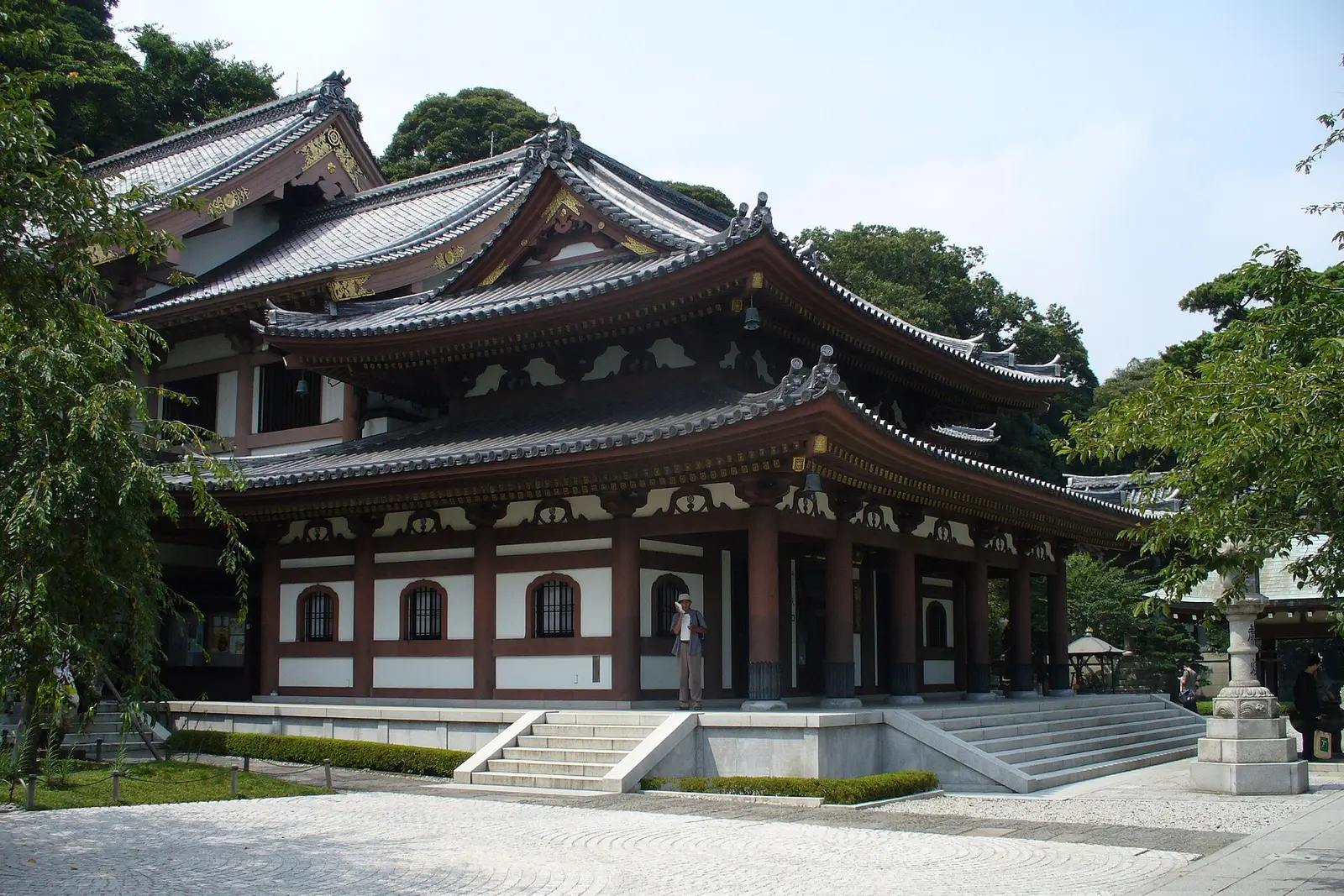 KAMAKURA3 min read
Hase-dera: Kannon, Jizo Statues and an Ocean View
A hillside temple with a tall Kannon, rows of small Jizo statues, a cave to explore and a view of the bay.
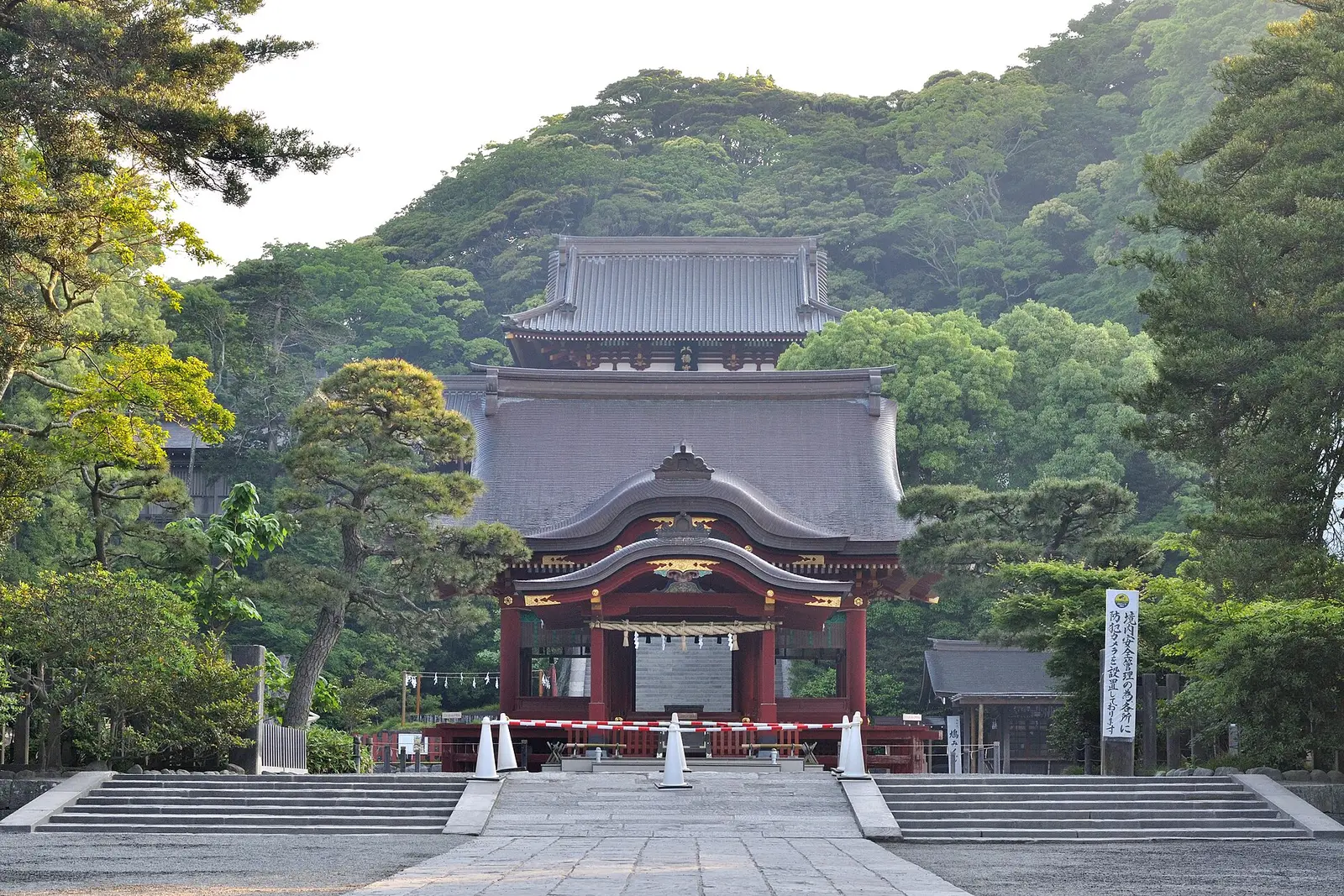 KAMAKURA3 min read
Tsurugaoka Hachimangu: Kamakura's Samurai Shrine
The shrine at the end of Kamakura's long, tree-lined approach, tied to the first shogun and the samurai.
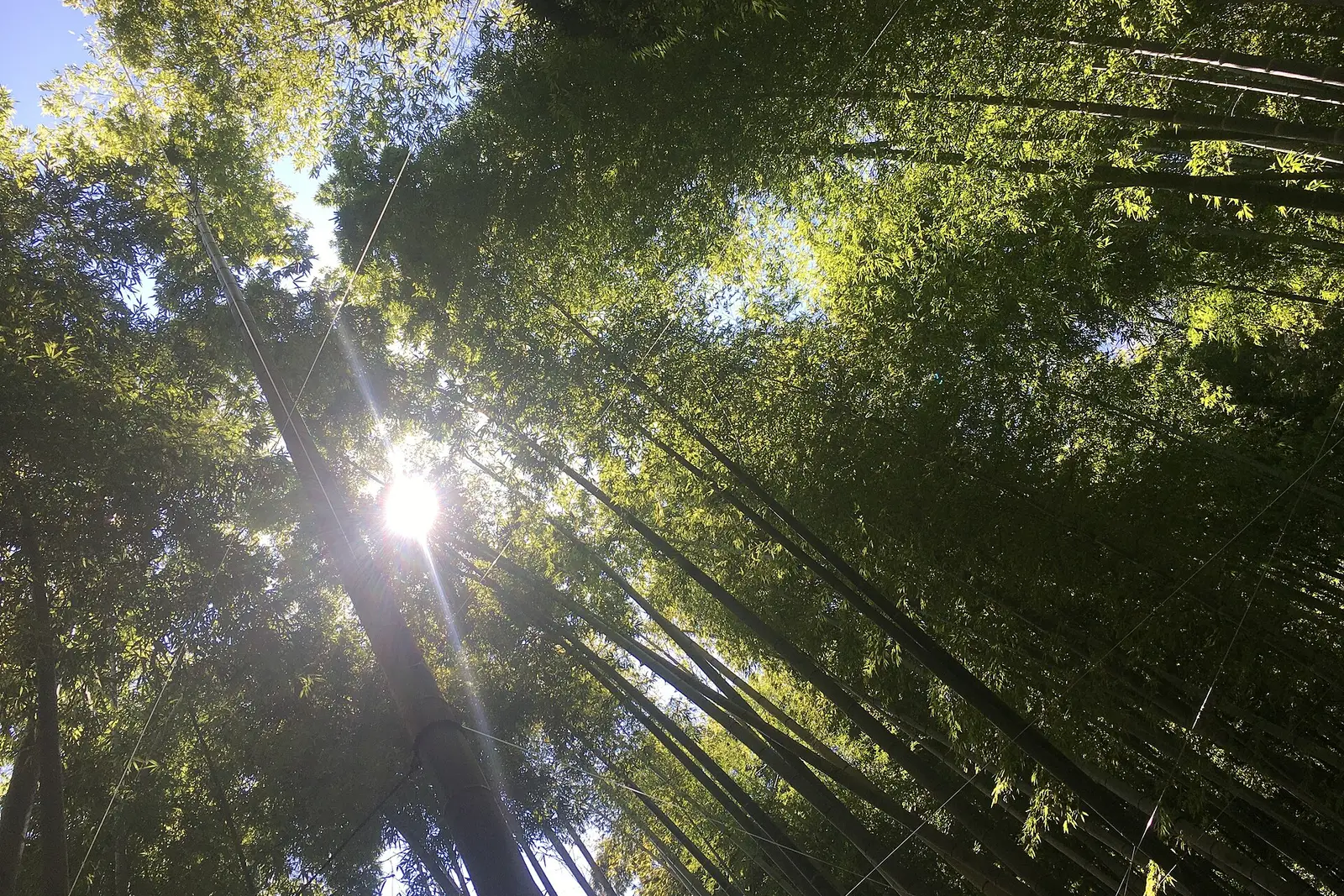 KAMAKURA3 min read
Hokokuji: Kamakura's Bamboo Temple
A small Zen temple with a quiet bamboo grove, where you can drink matcha among the stalks.