Destinations › Ishikawa › Kanazawa
Kenrokuen: Kanazawa's Garden of Six Qualities
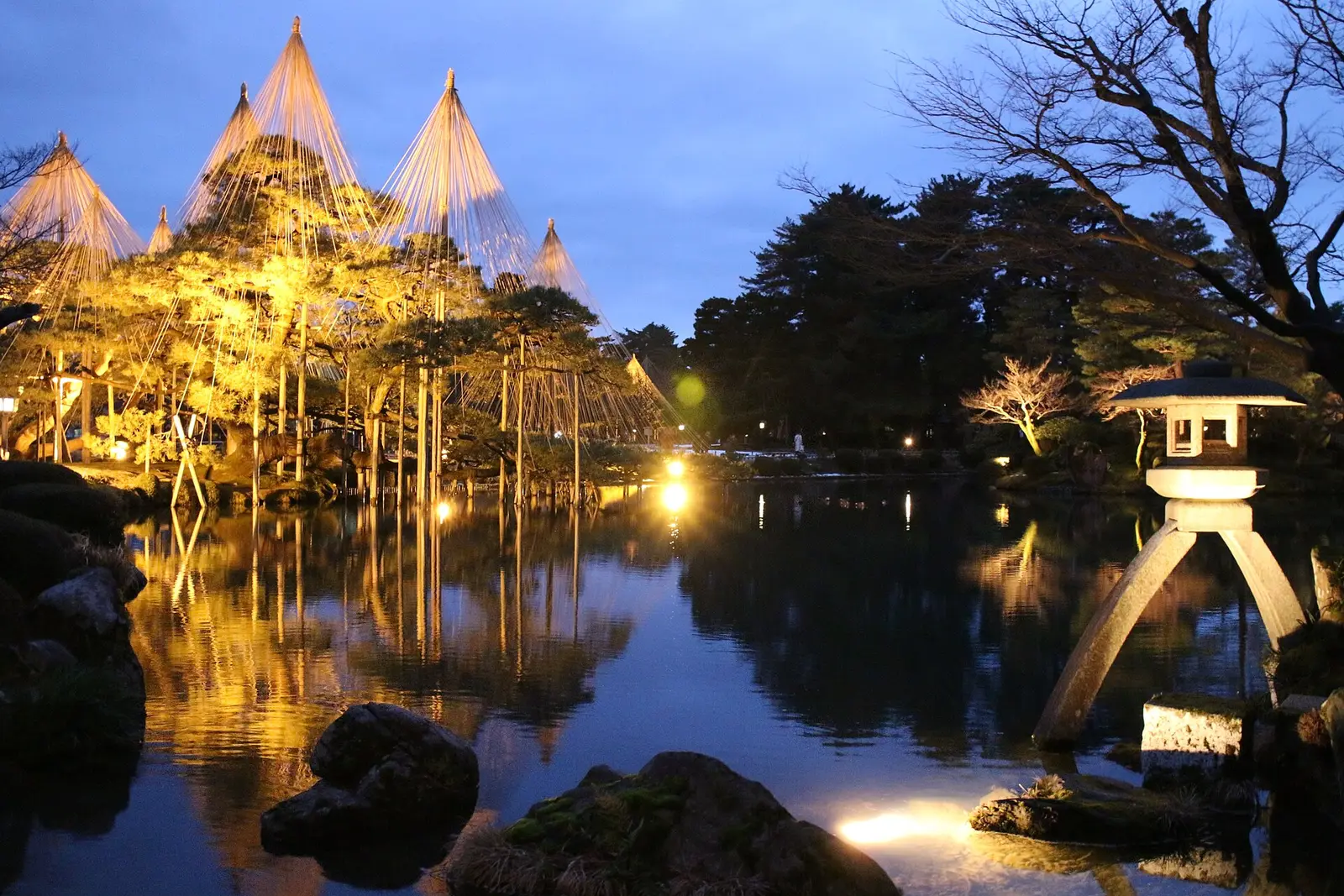
Kenrokuen sits on a hill in the middle of Kanazawa, right next to the castle. It was built by the city's feudal lords as a place to walk, rest and look at water. It has a name that is also a checklist of what makes a great garden.
A garden with six qualities
Kenrokuen is counted as one of the three great gardens of Japan, together with Kairakuen in Mito and Korakuen in Okayama. It covers about 11.4 hectares on high ground in the center of Kanazawa.
The name means roughly "garden of six factors." The six are spaciousness, tranquility, artifice, antiquity, water sources and fine views. They are hard to combine in one garden, and the name says Kenrokuen was meant to have all of them.
Who built it
The Maeda family ruled this region, called the Kaga domain. The garden began in 1676, when the fifth lord, Tsunanori, built a villa on the hillside beside the castle. Later lords kept adding to it. The garden was given the name Kenrokuen in 1822, and in 1874, after the feudal age ended, it was opened to the public. In 1985 it was named a Special Place of Scenic Beauty.
What to look for
Most visitors walk toward Kasumigaike, the large pond at the heart of the garden. A small island called Horai sits near the middle. The lords built islands like this as a wish for long life and lasting prosperity.
Two landmarks to look for are the Kotoji lantern and the Karasaki pine, both marked on the garden map. You will also find streams, small bridges, hills and teahouses as you go around.
The garden changes with every season. Plum and cherry blossoms come in spring, azaleas and irises in early summer, and red and yellow leaves in autumn.
Winter: the snow ropes
In winter, gardeners support the pine branches with ropes so the weight of the snow does not break them. The ropes make cone shapes over the trees, and the garden looks very different in the snow. This work is called yukitsuri.
Tickets, hours and early entry
Adults pay ¥320, and children aged 6 to 17 pay ¥100. People aged 65 and over enter free if they show proof of age. You can pay at the ticket counter in cash or by card. The garden is open every day of the year.
Opening hours are 7:00 to 18:00 from March 1 to October 15, and 8:00 to 17:00 from October 16 to the end of February. The last entry is 30 minutes before closing.
There is also a free early-morning entry. It runs from 4:00 in summer to 6:00 in winter, depending on the month, and you must use the Hasuike Gate or the Zuijinzaka Gate. You need to leave 15 minutes before the regular opening time. The garden is quiet at this hour, and it is a good way to see it without crowds.
Free days and night openings
The garden also has a few free-entry days each year. They include the cherry blossom season for about a week in late March or early April, the Hyakumangoku Festival in early June, Obon from August 14 to 16, Culture Day on November 3, and New Year from December 31 to January 3. Expect more people on those days.
In the cherry blossom and autumn leaf seasons, the garden opens at night with lights on the trees. The dates change every year, so check the announcements before you plan an evening visit.
Getting there
From Kanazawa Station, take the Kanazawa Loop Bus or a local bus to the stop called Kenrokuen/Kanazawa Castle Park. From there it is about a three-minute walk to the garden.
Tips
- The teahouse called Shigure-tei is open from 9:00 to 16:30 (last entry 16:00) and closed from December 29 to January 3.
- Wear comfortable shoes, because the garden has hills, steps and plenty of paths to follow.
- There is no parking at the garden, so come by bus or on foot.
Nearby
Kanazawa Castle Park is right beside Kenrokuen, and you can walk between the two. The 21st Century Museum of Contemporary Art is also close by. For old samurai streets, walk down to Nagamachi, and for a very different feel, take a bus to the teahouse lanes of Higashi Chaya.
More on Kanazawa
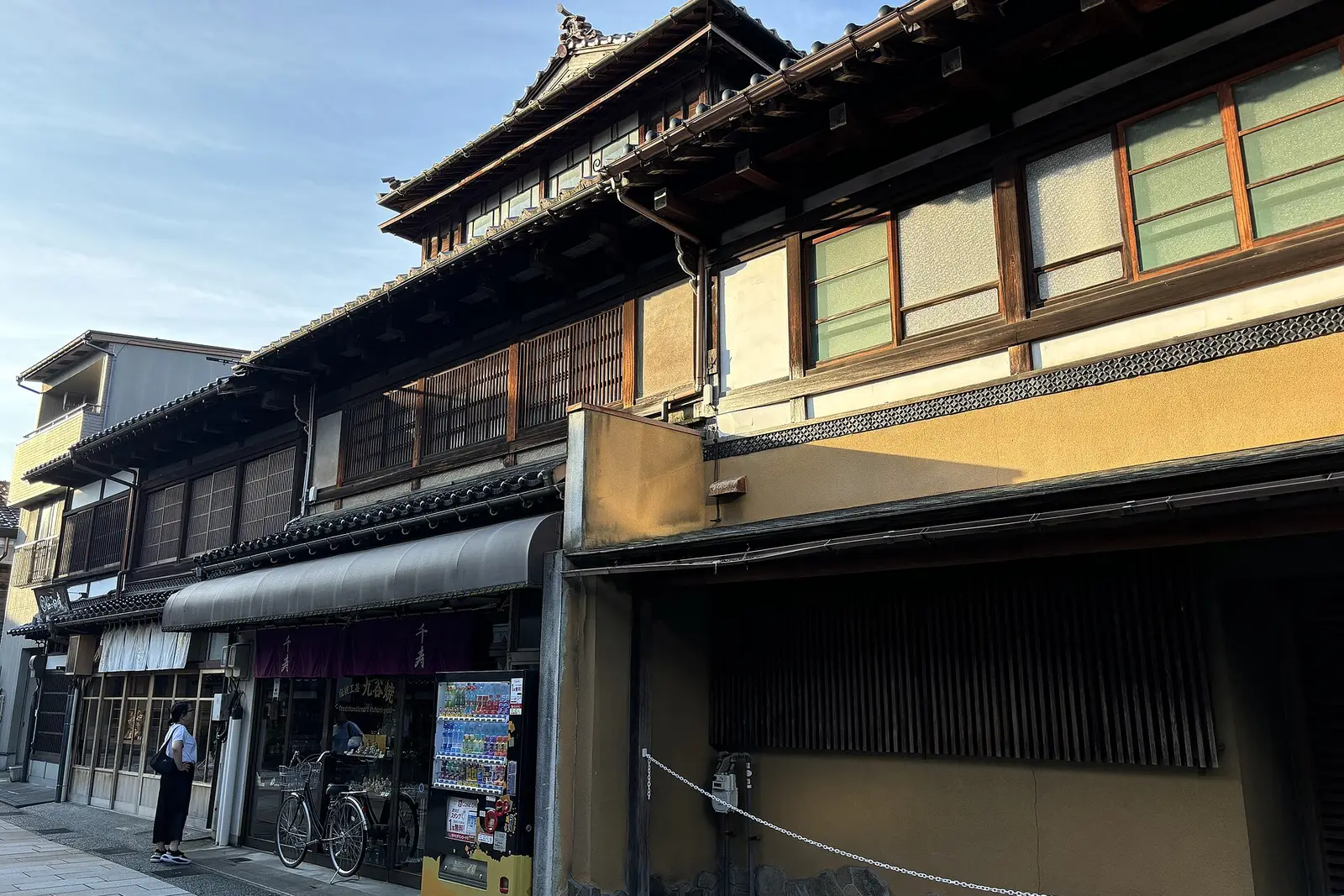 KANAZAWA3 min read
Higashi Chaya: Kanazawa's Old Geisha District
Wooden teahouses, gold leaf sweets and a former geisha house you can walk through. How to see it well.
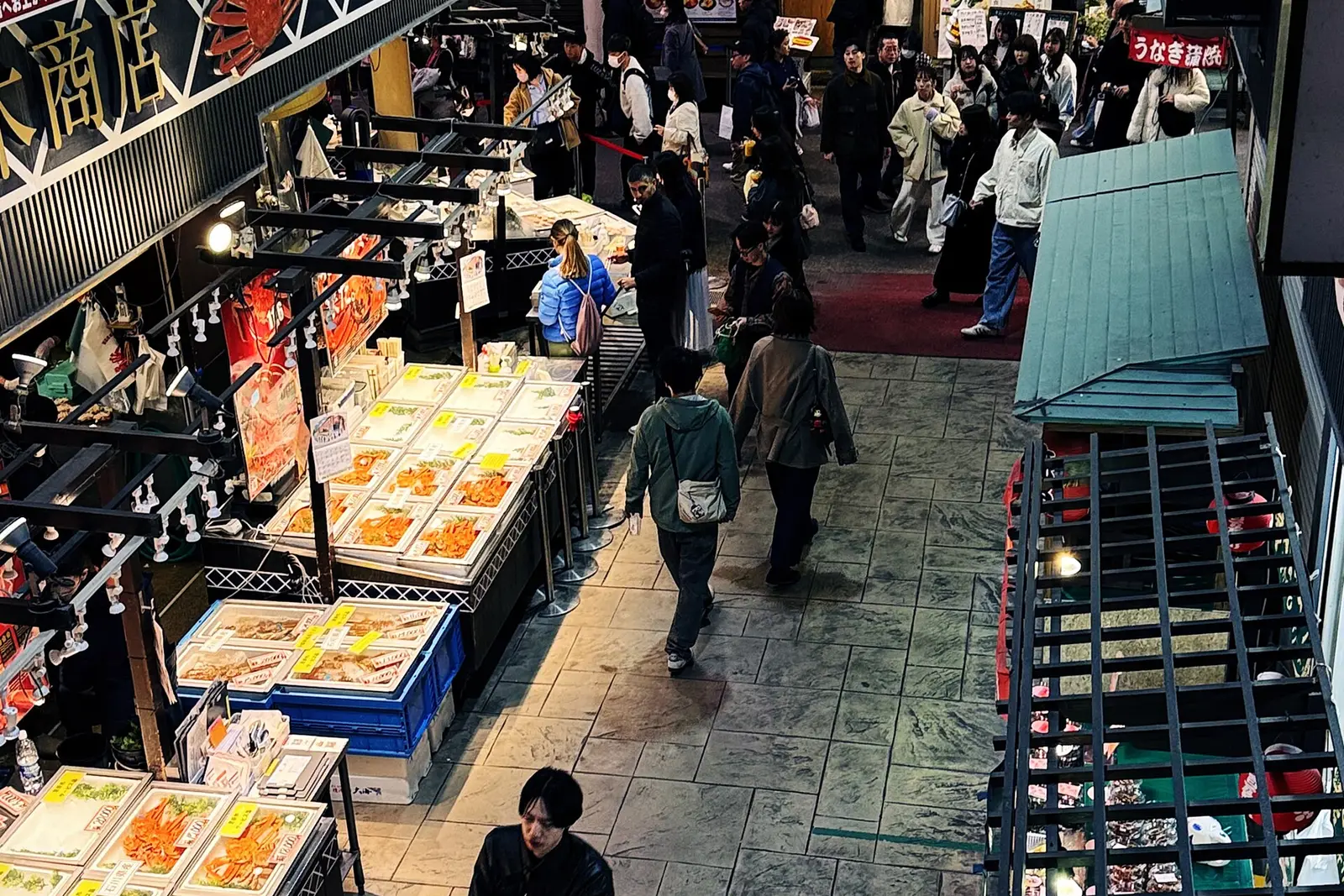 KANAZAWA3 min read
Omicho Market: Kanazawa's Seafood Kitchen
A covered market of about 170 shops with fresh Sea of Japan seafood. What to eat and when to go.
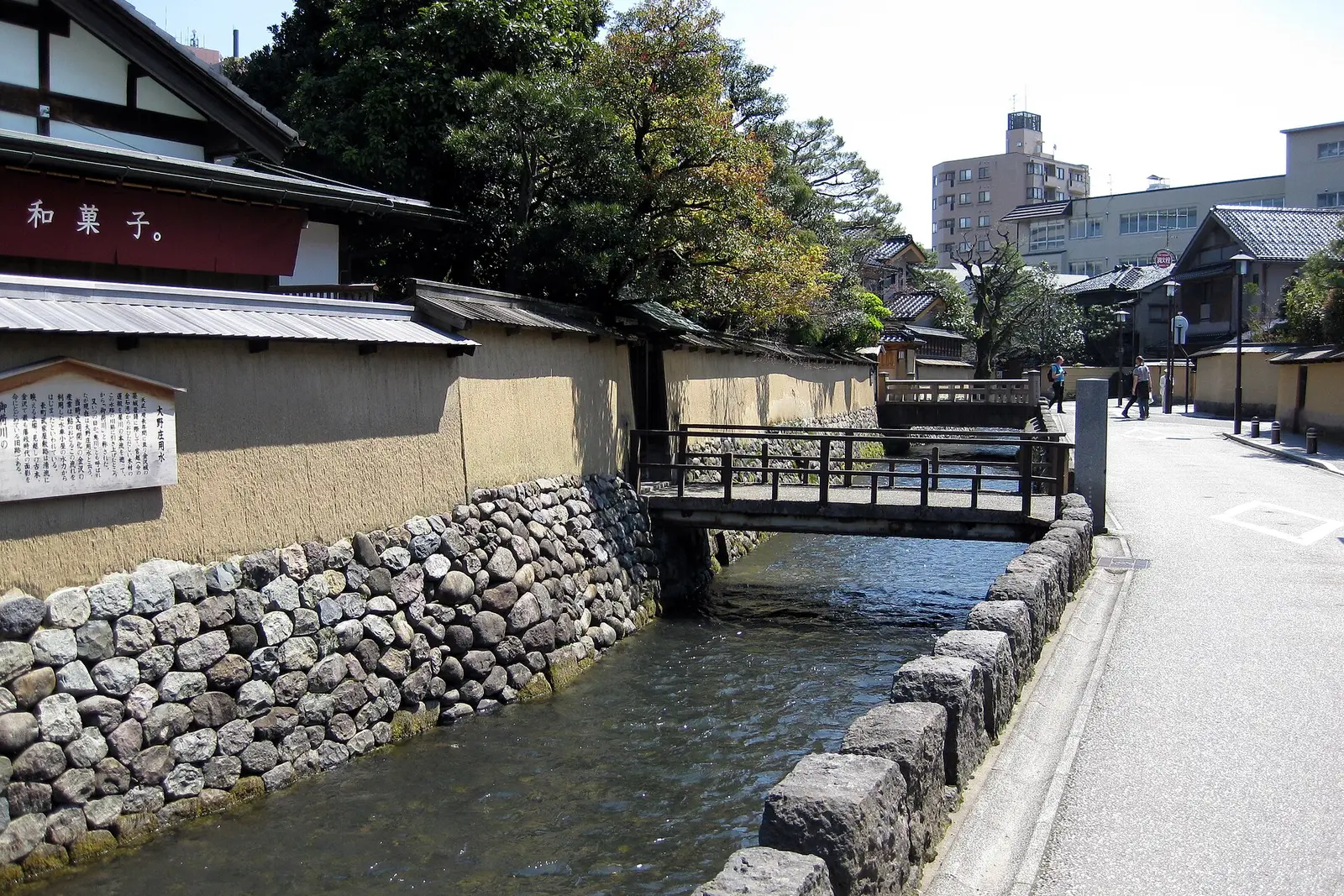 KANAZAWA3 min read
Nagamachi: Kanazawa's Samurai Quarter
Earthen walls, narrow lanes and a samurai house with a garden. A quiet walk back into the Edo period.