Kofuku-ji: Nara's Temple of the Fujiwara
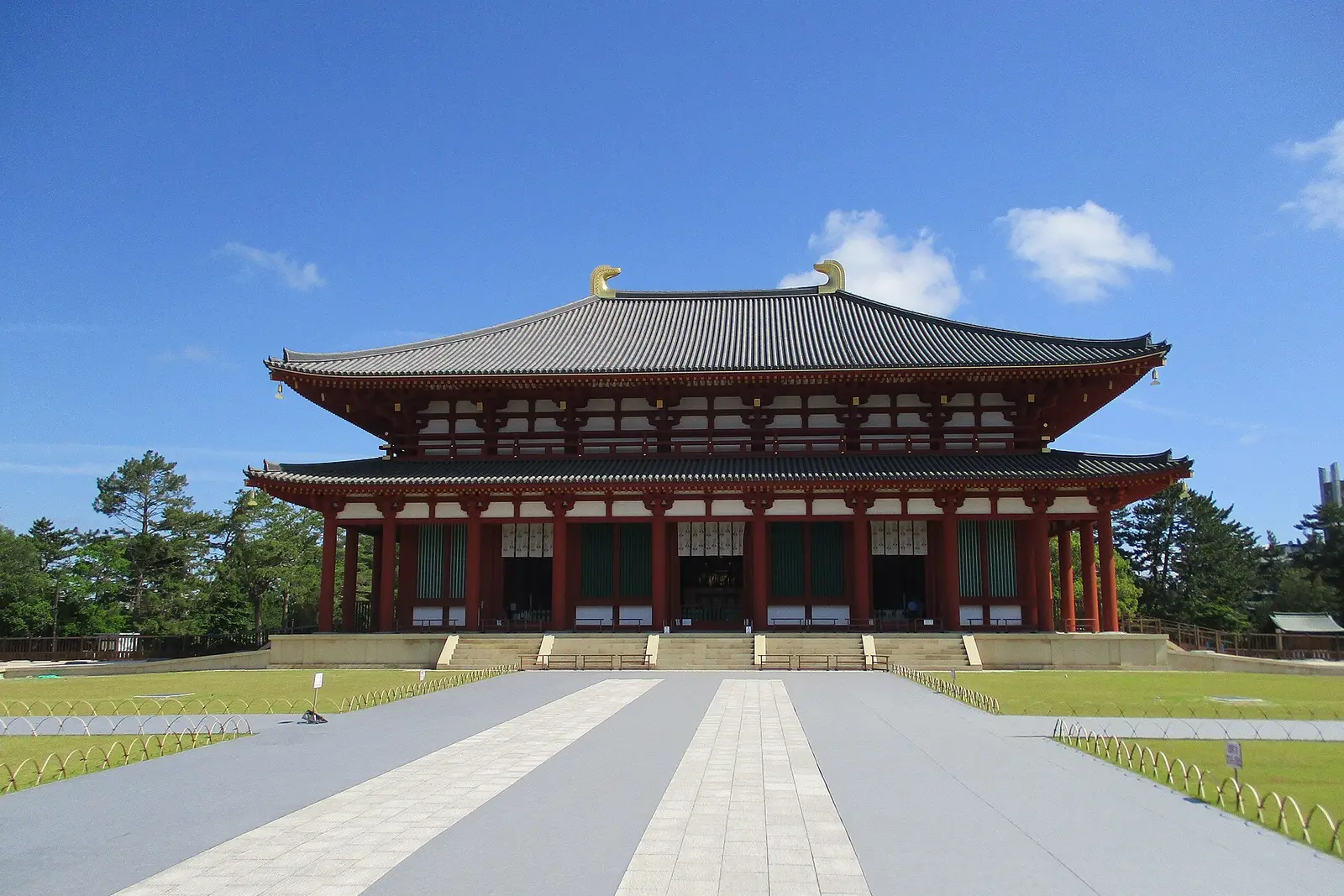
Kofuku-ji is only a few minutes from Nara's main station, and many visitors walk straight past it on the way to Todai-ji. That is a mistake. This was the family temple of the Fujiwara clan, and today it holds one of the country's best-loved Buddhist statues.
A temple for one family
Kofuku-ji began in 669 as a small chapel called Yamashinadera. Kagami no Okimi founded it to pray for her husband, Fujiwara no Kamatari, who was ill. It moved twice. In 710, when the capital was set up in Nara, it moved to its present site. Kamatari's son, Fujiwara no Fuhito, gave it the name Kofuku-ji, "the temple that generates blessings."
The temple was the guardian temple of the Fujiwara clan, and it grew with them. It became one of the seven most prominent temples of the Nara period. A war in 1180 burned down most of it, and for a long time after that it was powerful enough to act as the real ruler of the region, until the 16th century.
The Asura statue
The main reason to go inside is the National Treasure Hall. It holds many of the temple's treasures, and the star is the Asura. The statue has three faces and six arms, and is one of the most celebrated Buddhist statues in Japan. Most visitors stop here longer than they planned. Take a few quiet minutes to walk around it.
The hall is open from 9:00 to 17:00, with the last entry at 16:45, and admission is ¥900 for adults.
The golden halls
The Eastern Golden Hall holds a large statue of Yakushi, the Buddha of healing. The first hall here was built in 726 by order of Emperor Shomu, so 2026 is its 1,300th anniversary. For the anniversary, the temple is also showing the normally closed back hall behind the main statues, so check the temple's website for the dates. Admission is ¥500.
The Central Golden Hall is the newest sight. After burning down about 300 years ago, it was rebuilt to its original size and reopened in October 2018. Admission is ¥500. A combined ticket for the National Treasure Hall and both golden halls costs ¥1,600 for adults. It is sold until 4 pm. Payment is by cash only.
The pagoda
The five-story pagoda is the symbol of Nara. It is about 50 meters tall, the second tallest pagoda in Japan. It was first built in 730 and last rebuilt in 1426.
Right now you cannot see it as you would in old photos. The pagoda is covered for a long renovation, from July 2023 until March 2034. You can still walk around the site, and the grounds stay open all day and all night. You pay only to enter the halls and the museum, so a walk through the grounds costs nothing. While the pagoda is covered, the National Treasure Hall and the two golden halls are the main reasons to come inside.
Two octagonal halls stand nearby, the Northern Octagonal Hall, rebuilt in 1210, and the Southern, rebuilt in 1789. They are usually closed to the public, but you can see them from outside. Fires have destroyed buildings here more than once, so what you see is a mix of old halls and careful rebuilds.
Getting there
From Kintetsu Nara Station, it is about a five-minute walk. From JR Nara Station, take the city loop bus for five minutes to the Kencho-mae stop. The halls are open every day. If you drive, the temple has 46 parking spaces at ¥1,000, but the train is easier. The temple is also close enough to Nara Park that you can start your day here, then walk on to Todai-ji and Kasuga Taisha.
Nearby
Kofuku-ji is on the edge of Nara Park, so the deer are already at the temple. Todai-ji is east of here, and Naramachi, the old merchant quarter, is a short walk south of the station.
More on Nara
 NARA3 min read
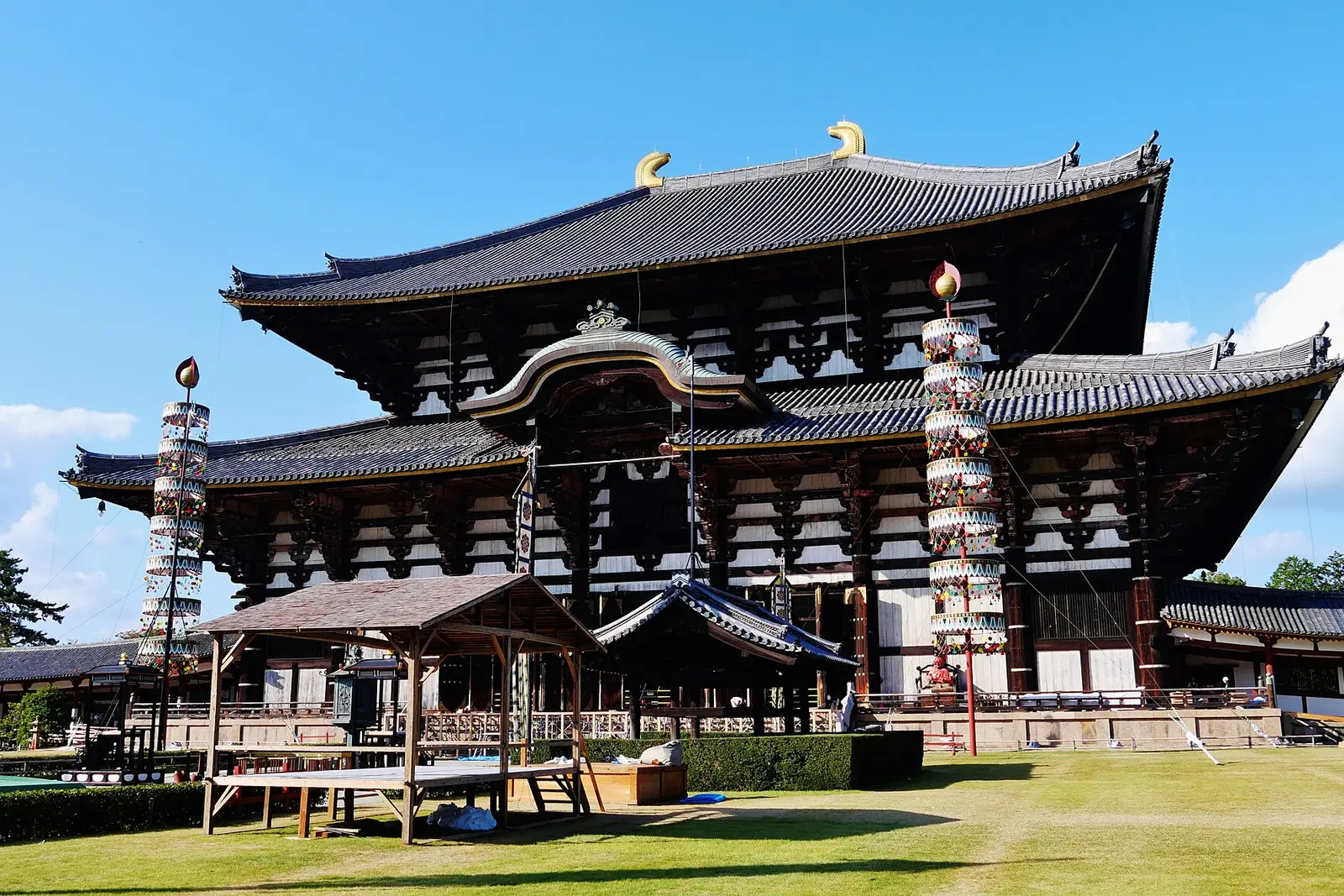
Todai-ji: Nara's Great Buddha
A huge bronze Buddha inside a huge wooden hall. The history, the ticket price and how to get there.
 NARA3 min read
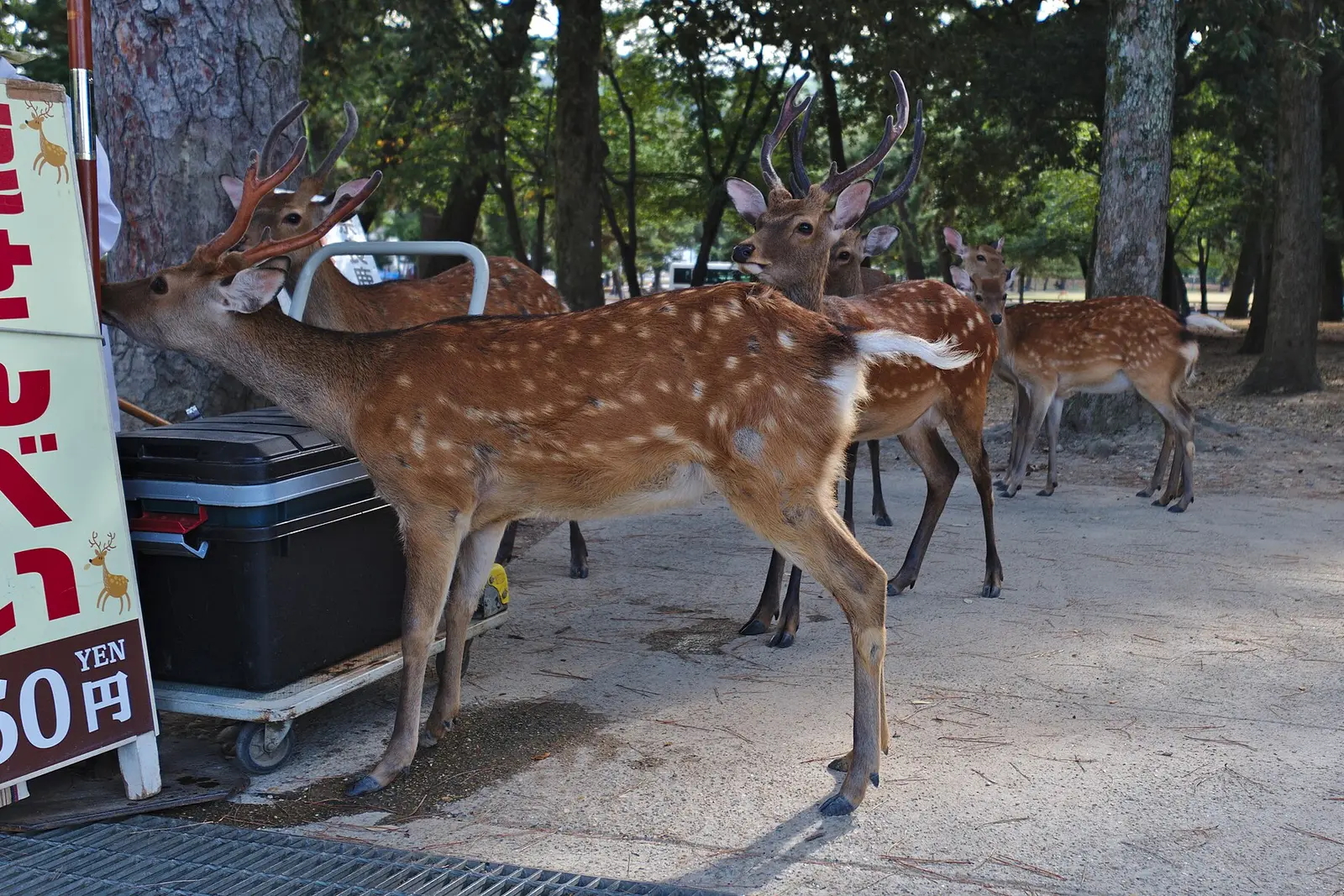
Nara Park Deer: Meeting Japan's Sacred Deer
About 1,300 wild deer roam the park and bow for crackers. How to feed them safely and what to expect.
 NARA3 min read
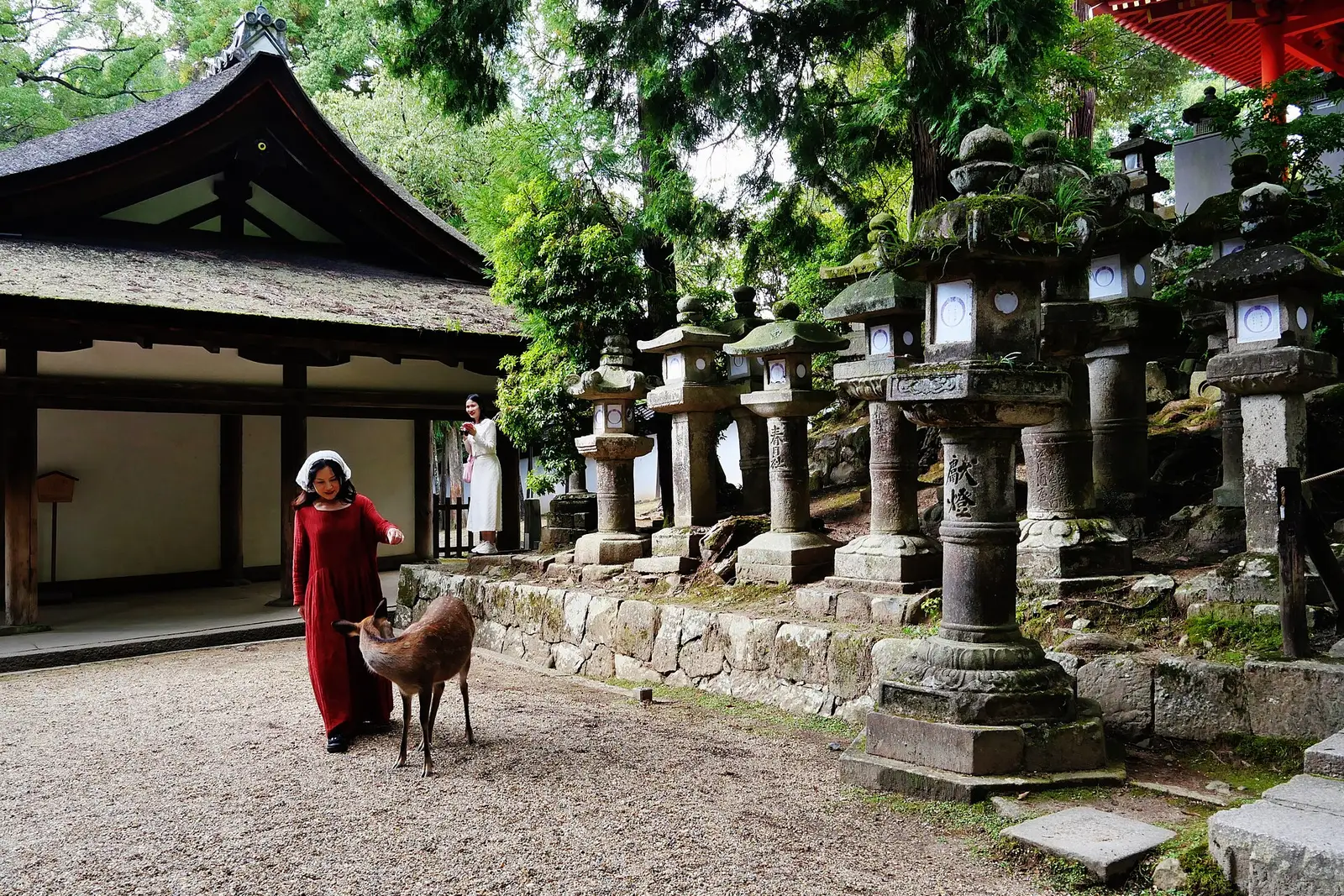
Kasuga Taisha: Nara's Shrine of 3,000 Lanterns
A red shrine in the forest with about 3,000 lanterns. Hours, fees and the two nights they are all lit.