Nara Park Deer: Meeting Japan's Sacred Deer
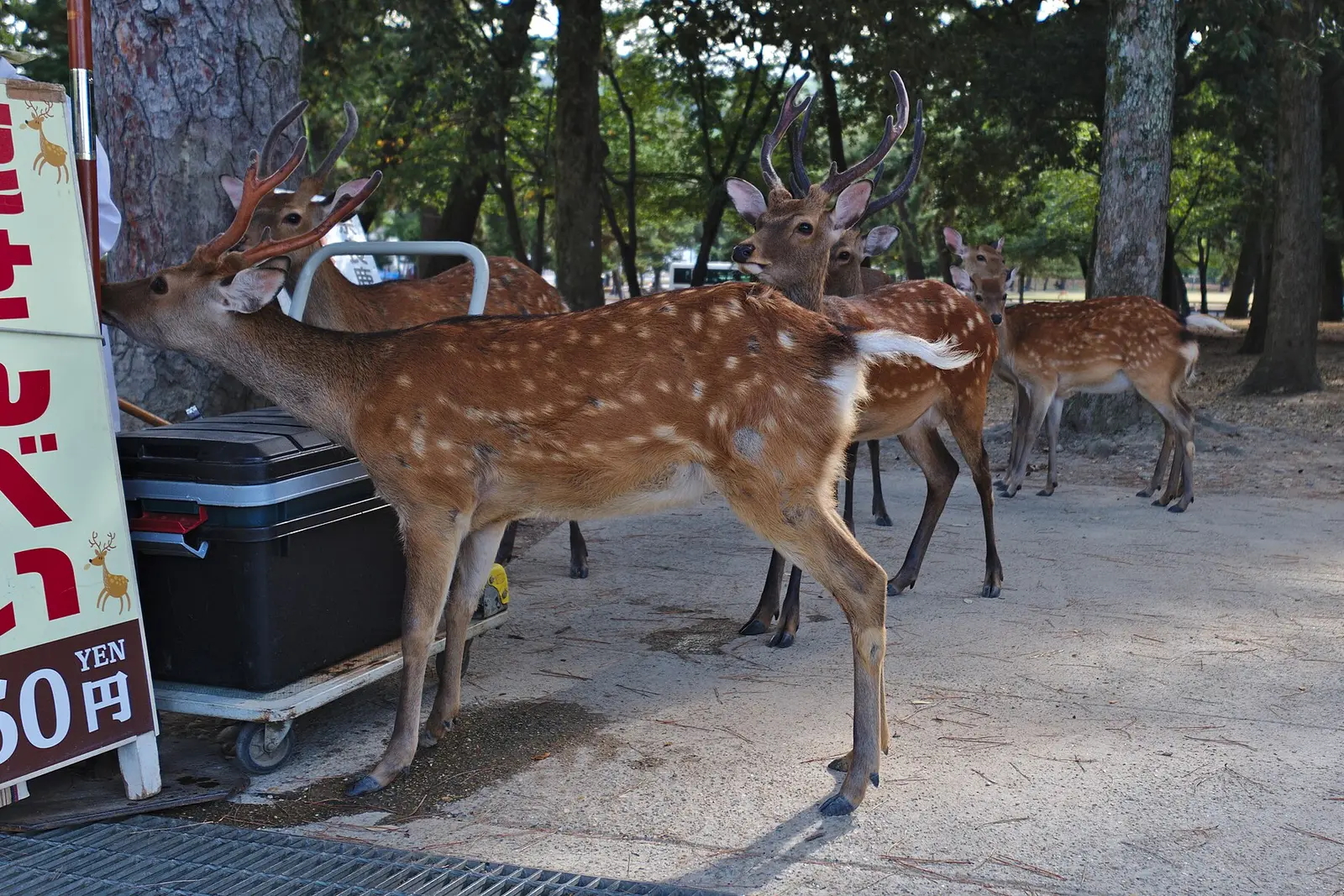
In most places, wild deer run away when you get close. In Nara, they walk straight up to you. About 1,300 of them live in and around the park, and many have learned that a bow can get them a snack.
Why the deer are sacred
Nara Park is about 660 hectares of lawns, old pine trees and temples, and the deer are the main reason many people come. They are wild animals. But for more than 1,300 years, the people of Nara have looked after them.
The reason goes back to a legend. According to Kasuga Taisha, the shrine at the edge of the park, the god Takemikazuchi arrived in Nara riding a white deer. Since then, the deer have been seen as messengers of the gods. Today they are protected as a national natural monument.
The bowing deer
Many visitors are surprised to see deer bow. A deer lowers its head, often with its ears down, when you hold out a cracker. It looks polite, but it is also a trade: bow, get a cracker.
A research team at Nara Women's University looked at this closely. They found that the deer bow to people who offer crackers, and that the behavior seems to be learned, not natural. During the COVID-19 pandemic, when few visitors came, the deer bowed less. The lead researcher said the habit appears only in Nara Park, and not in the deer on Miyajima. One idea is that the first deer bowed out of stress, then learned that it worked, and that mothers pass it on to their fawns.
Feeding the deer
The deer crackers, called shika senbei, are sold in the park. A pack of ten costs ¥200. They are made from wheat flour and rice bran, with no sugar, and part of the money goes to deer protection. Since 2022 there have also been vending machines in the evening, near Rokuen and at the Kasuga Taisha car park.
Here are the rules that matter:
- Feed only the crackers. Bread, sweets and vegetables make the deer sick.
- Hold each cracker out one at a time, and be quick.
- When you run out, show your empty hands. Spread your arms.
- Do not tease the deer by pretending to offer food.
- Keep paper maps and plastic bags out of reach. Deer will eat them.
A deer that can see food it cannot have yet may get excited and bite. That is why the one-at-a-time rule matters. Crackers are only a small part of what the deer eat, so they will not go hungry if you do not feed them.
Staying safe
These are wild animals, and they can bite or push. Be most careful around male deer with antlers, and watch young children closely. In autumn the males become more aggressive. Every year in mid-October, the antlers are cut off at Kasuga Taisha's deer grounds, Rokuen, in a ceremony that has been held for about 340 years. It was started to prevent injuries in the mating season. Watching it costs a fee, and the money helps look after the deer.
There are no trash bins in the park, so take your trash with you. Anything left behind can end up in a deer's stomach.
Where to go
The deer wander near Todai-ji, including in front of its Nandaimon gate, and along the path to Kasuga Taisha. The park is open all year and free to enter. From Kintetsu Nara Station it is about an 8-minute walk. From JR Nara Station it is about 20 minutes, or a 7-minute city loop bus ride to the Kencho-mae stop. If you have time, the Isui-en garden and Mount Wakakusa are also close by.
Rokuen, the deer garden, protects about 300 deer. Mothers and fawns stay there until around mid-July.
Nearby
Todai-ji and its Great Buddha are inside the park, a short walk from the lawns. Kasuga Taisha is at the foot of the forested hills. Kofuku-ji is also part of the park. Naramachi, the old merchant quarter, lies just south of Kintetsu Nara Station.
More on Nara
 NARA3 min read
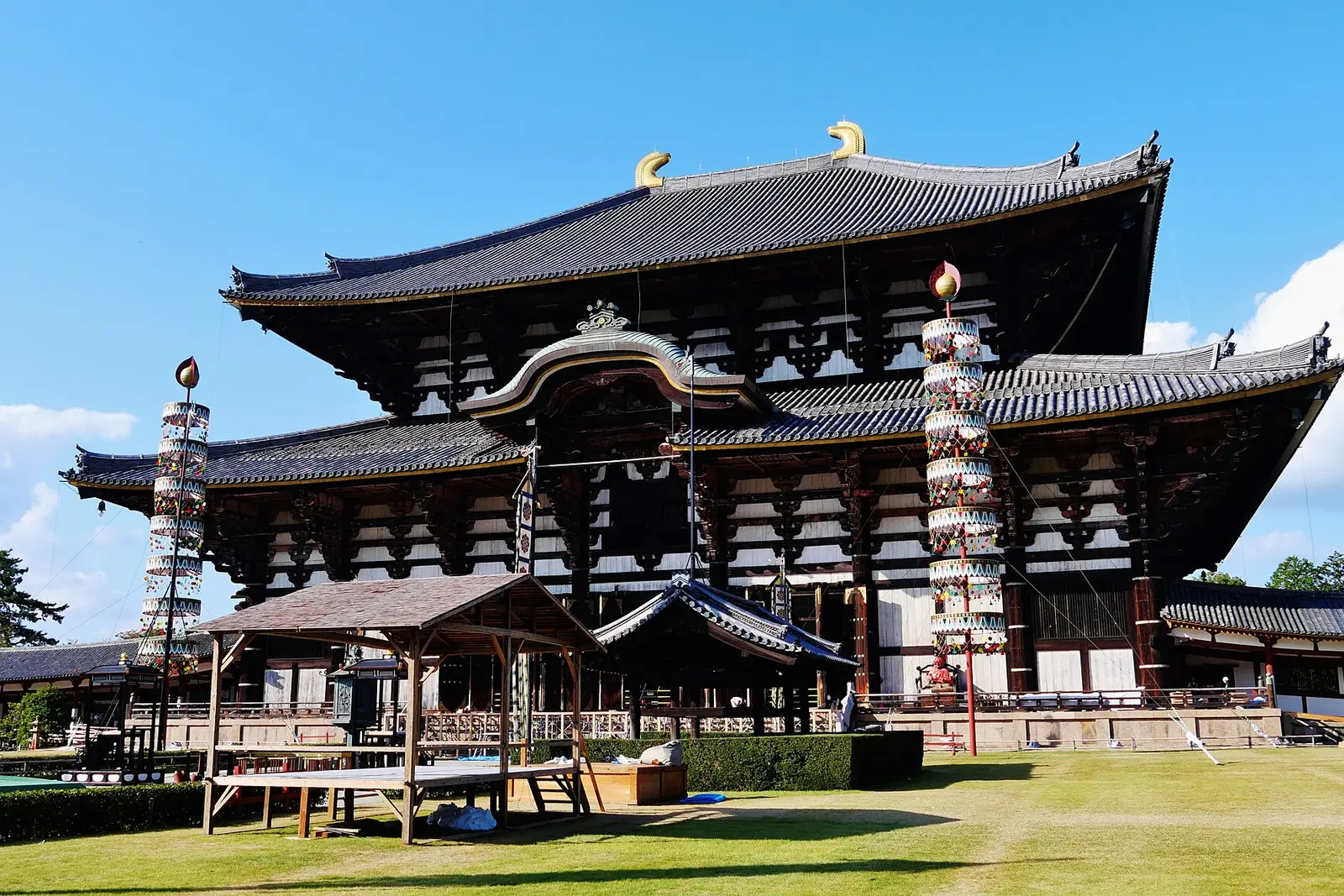
Todai-ji: Nara's Great Buddha
A huge bronze Buddha inside a huge wooden hall. The history, the ticket price and how to get there.
 NARA3 min read
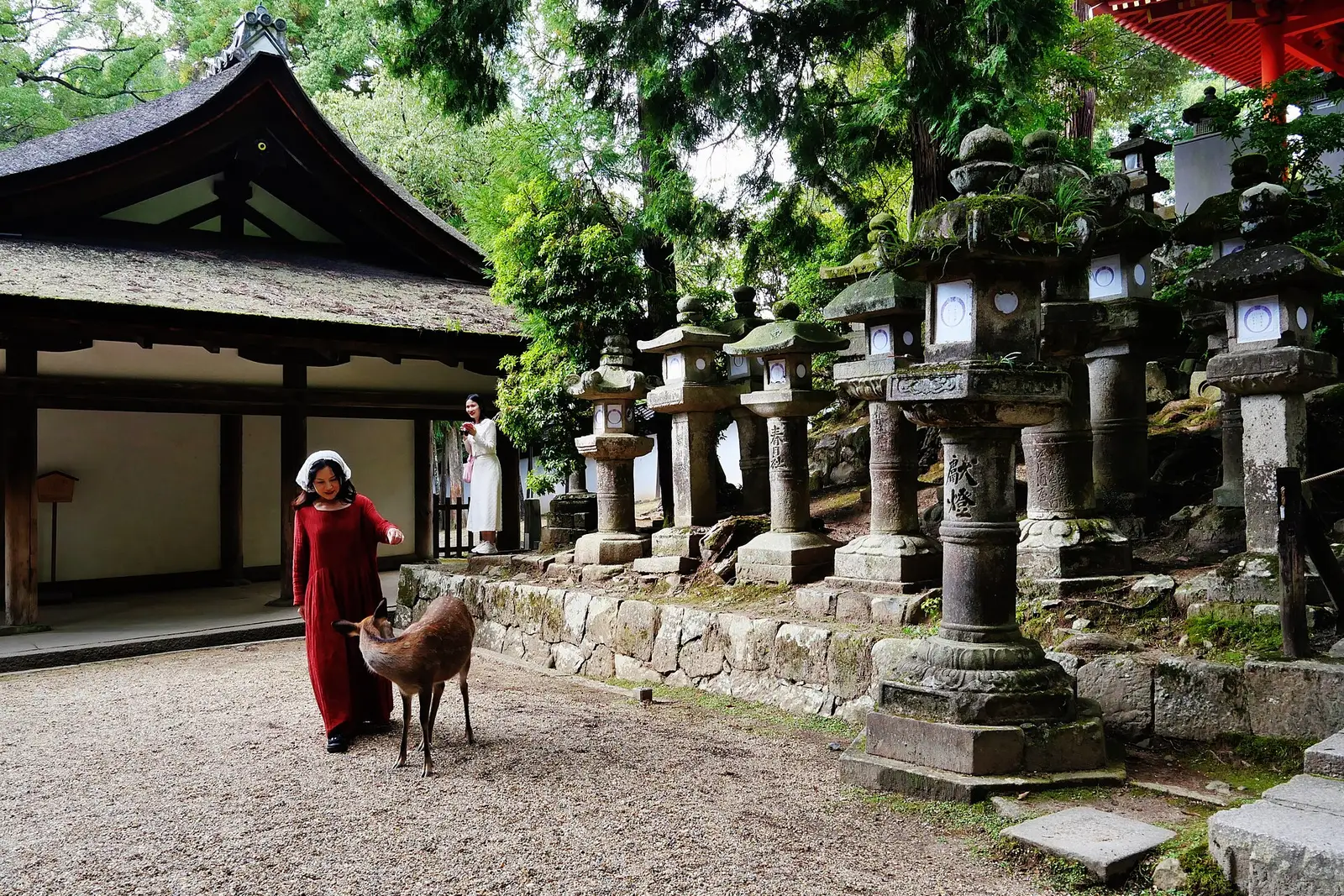
Kasuga Taisha: Nara's Shrine of 3,000 Lanterns
A red shrine in the forest with about 3,000 lanterns. Hours, fees and the two nights they are all lit.
 NARA3 min read
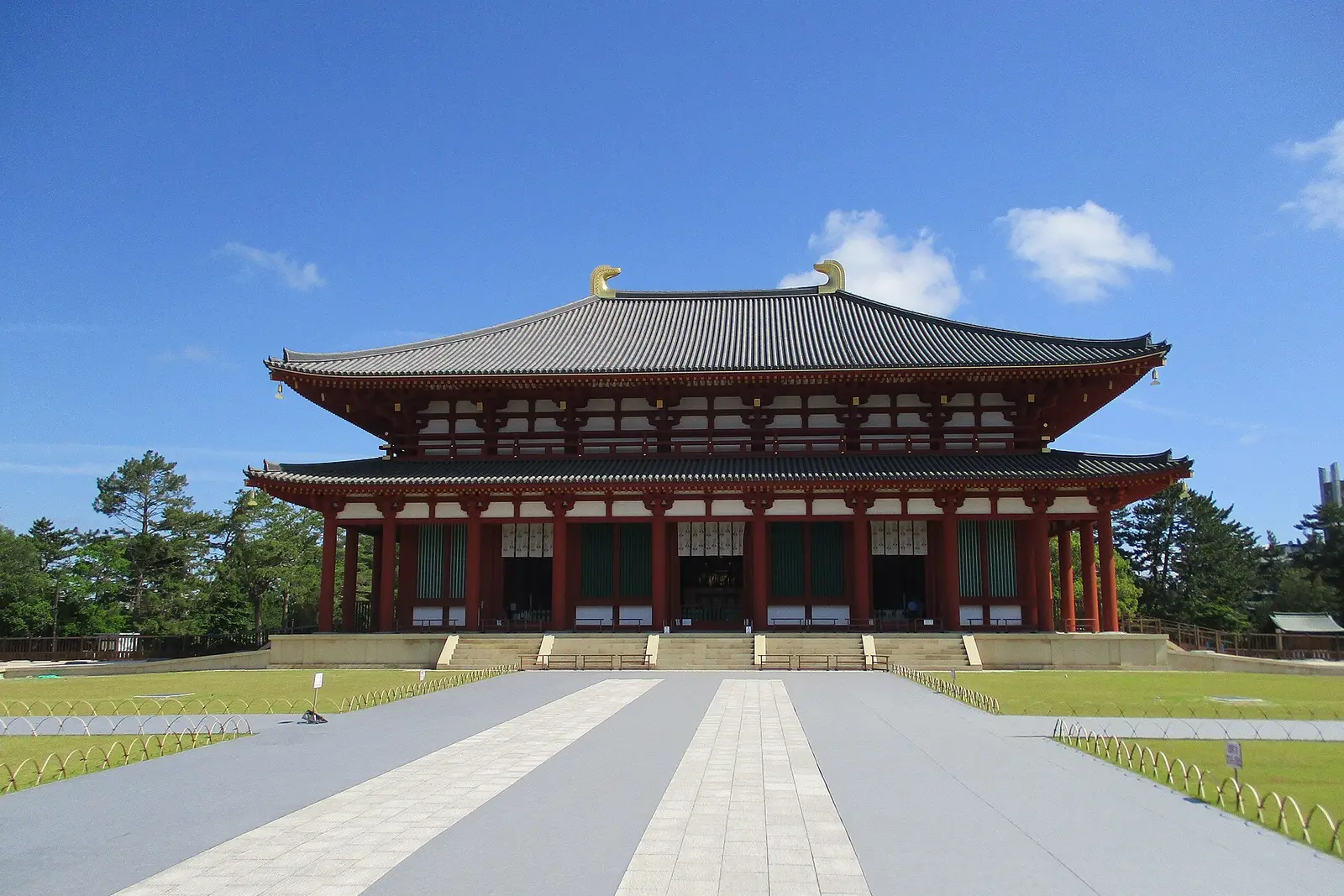
Kofuku-ji: Nara's Temple of the Fujiwara
The temple of Nara's most powerful family, with the famous Asura statue. Hours, tickets and the pagoda news.