Naramachi: Nara's Old Merchant Quarter
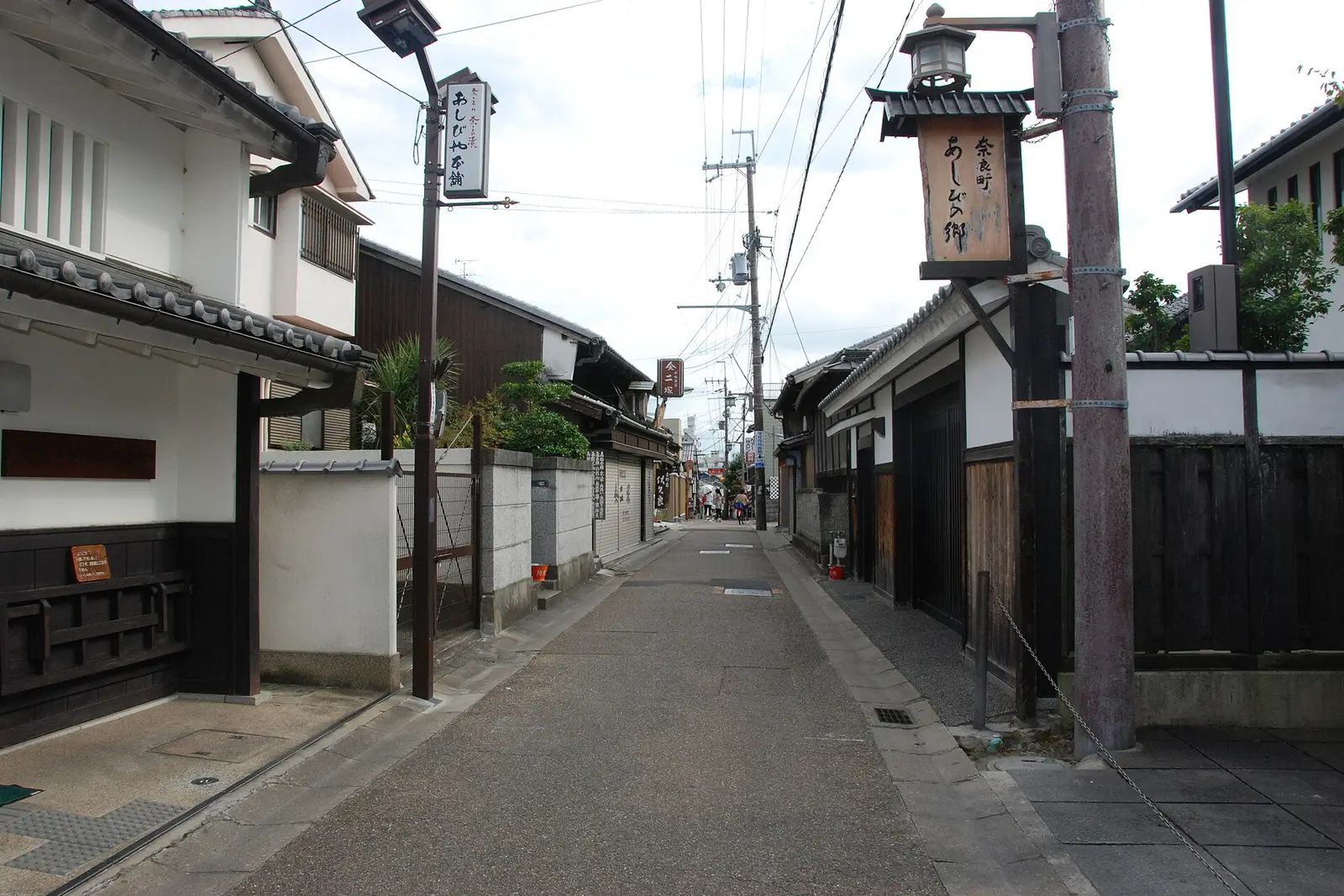
Most people come to Nara for the deer and the Great Buddha. Naramachi is the part of town where you can see how people lived. It is a quiet grid of narrow streets and wooden townhouses, just south of the station and the park.
From temple grounds to town
Before the 15th century or so, much of this area was the grounds of Gangoji Temple. Gangoji began as Asukadera in the old capital at Asuka and moved to Nara in 718. It was one of Nara's seven great temples. Today it is a UNESCO World Heritage Site, though only a couple of its buildings remain.
Around the 15th century, the area turned into a merchant district. Many of the houses from the Edo period were machiya, narrow townhouses that were shop and home at once. The front is narrow because taxes were once based on how much of the house faced the street.
Koshi-no-ie: a house to walk into
The best first stop is Koshi-no-ie, a reproduction of a traditional townhouse. Entry is free. You walk from the shop at the front to the living rooms at the back and get a feel for how a merchant family lived. It also works as a place to rest.
It is open from 9:00 to 17:00. It is closed on Mondays, on the day after a public holiday (unless that day falls on a weekend or holiday), and from December 26 to January 5.
Small museums and shops
Naramachi has a lot of small places, and many of them are free. The Naramachi Karakuri Omochakan is a toy museum where staff explain old toys that you can play with. Nigiwai-no-Ie is a townhouse more than 100 years old, decorated for the 24 seasons of the old calendar. The Nara Craft Museum shows local crafts such as brushes, ink and masks.
You will also see small red-and-white cloth monkeys hanging at doorways. They are migawari-zaru, charms that take bad luck in your place. The little Naramachi Shiryokan museum is about them, but its explanations are in Japanese only.
Imanishike Shoin is the former home of a senior Kofuku-ji official, with a garden and tea and sweets. Entry is ¥400. Next to it is Harushika, a sake brewery founded over 130 years ago. A ¥700 tasting fee covers five kinds of sake. The brewery is closed from April to September, so it is best visited in the cooler months.
Gangoji
Gangoji is the old temple behind the district's name and story. It is open from 9:00 to 17:00, with the last entry at 16:30, and it has no closing days. The entry fee is ¥500. It is small and calm, and it is worth a short stop if you like quiet temples. Seeing it first gives you the story of how the district began.
Planning your walk
Opening hours and closing days are different at almost every place. Koshi-no-ie and the Craft Museum close on Mondays, the toy museum and Nigiwai-no-Ie close on Wednesdays, and the Shiryokan is closed Tuesday to Thursday. Pick two or three places on one day and check the day of the week first.
From Kintetsu Nara Station it is a 10 to 15 minute walk south. From JR Nara Station it is about 20 minutes southeast. The Nara loop buses, numbers 1 and 2, run along the southern edge of the district and connect both stations. For Koshi-no-ie, which is at 44 Gangoji-cho, you can ride loop bus 1 (counterclockwise) to the Tanaka-cho stop and walk about two minutes. Some details may change, so confirm each place's hours on the day.
Nearby
Naramachi is right below Kofuku-ji and Nara Park. After a day of temples and deer, it is a calm place to end up. Todai-ji and Kasuga Taisha are farther east, a longer walk through the park.
More on Nara
 NARA3 min read
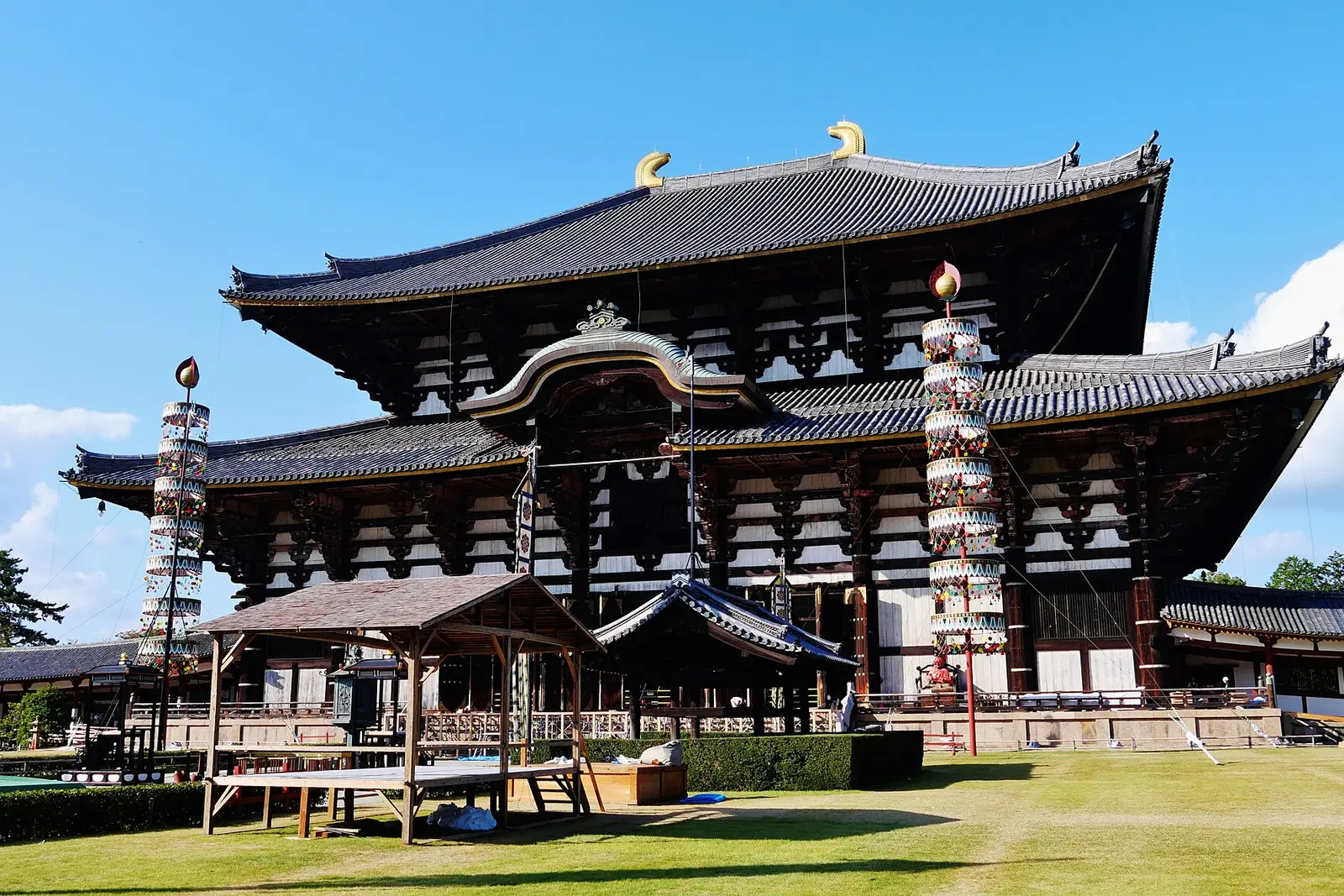
Todai-ji: Nara's Great Buddha
A huge bronze Buddha inside a huge wooden hall. The history, the ticket price and how to get there.
 NARA3 min read
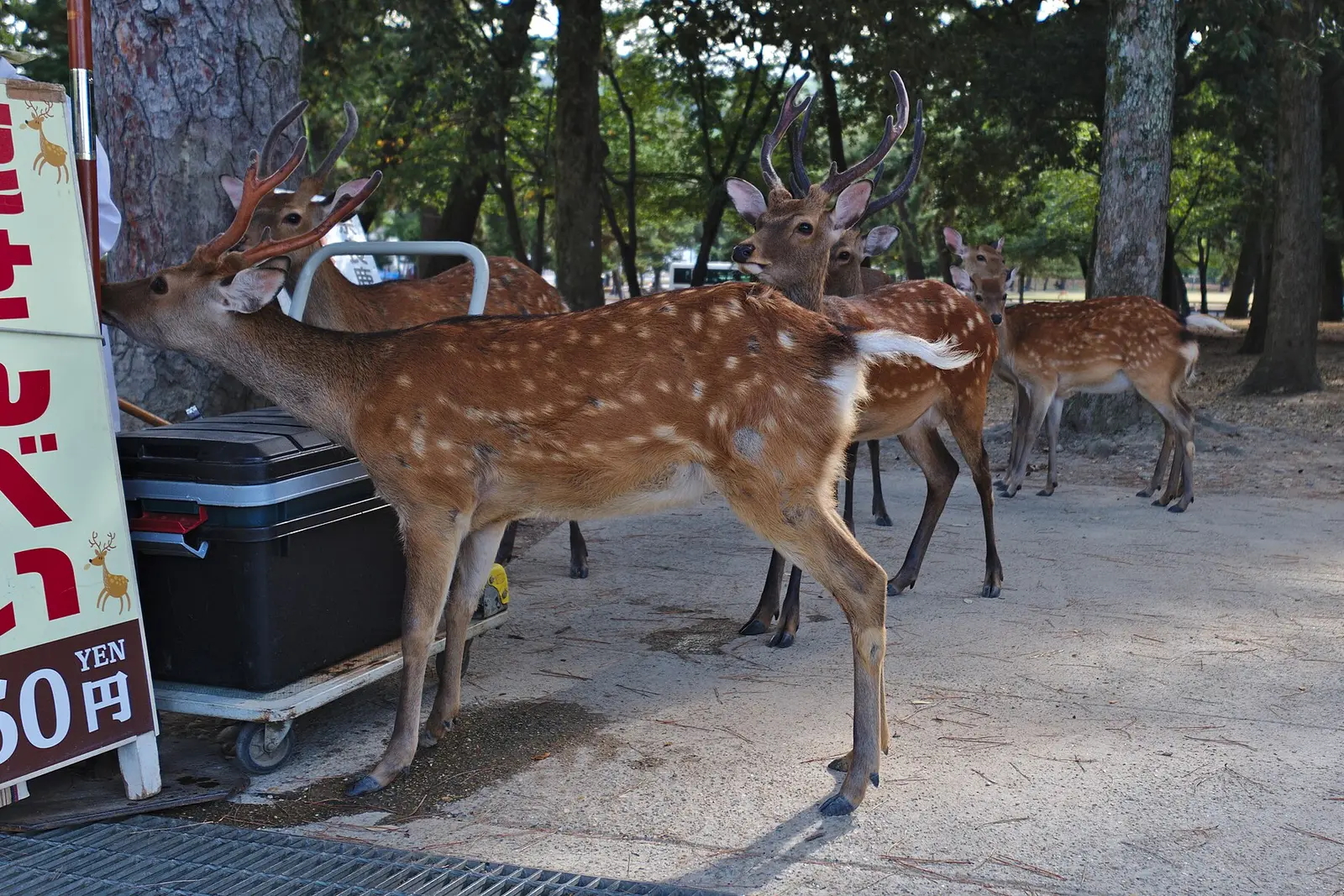
Nara Park Deer: Meeting Japan's Sacred Deer
About 1,300 wild deer roam the park and bow for crackers. How to feed them safely and what to expect.
 NARA3 min read
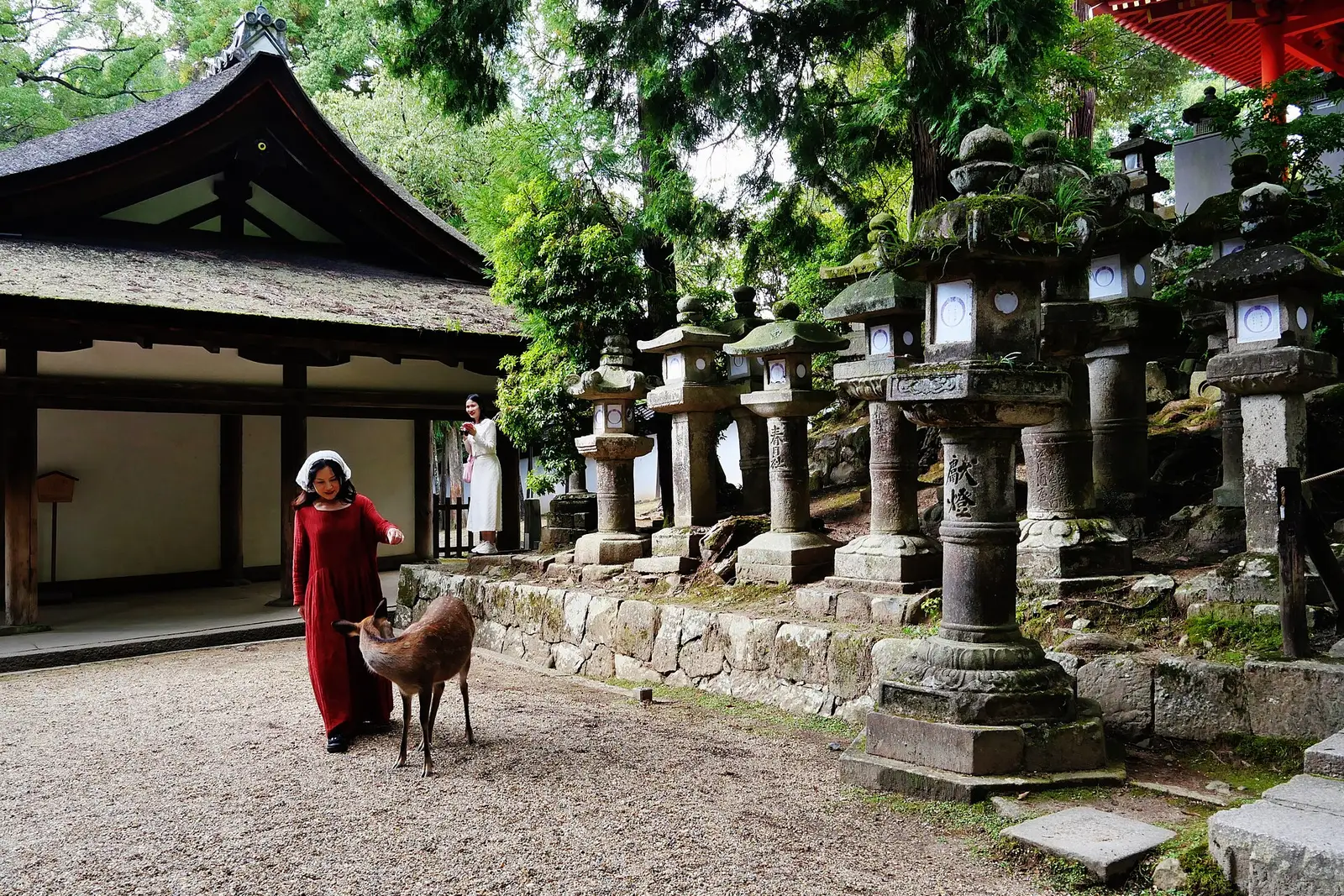
Kasuga Taisha: Nara's Shrine of 3,000 Lanterns
A red shrine in the forest with about 3,000 lanterns. Hours, fees and the two nights they are all lit.