Dotonbori: Osaka's Canal of Neon and Street Food
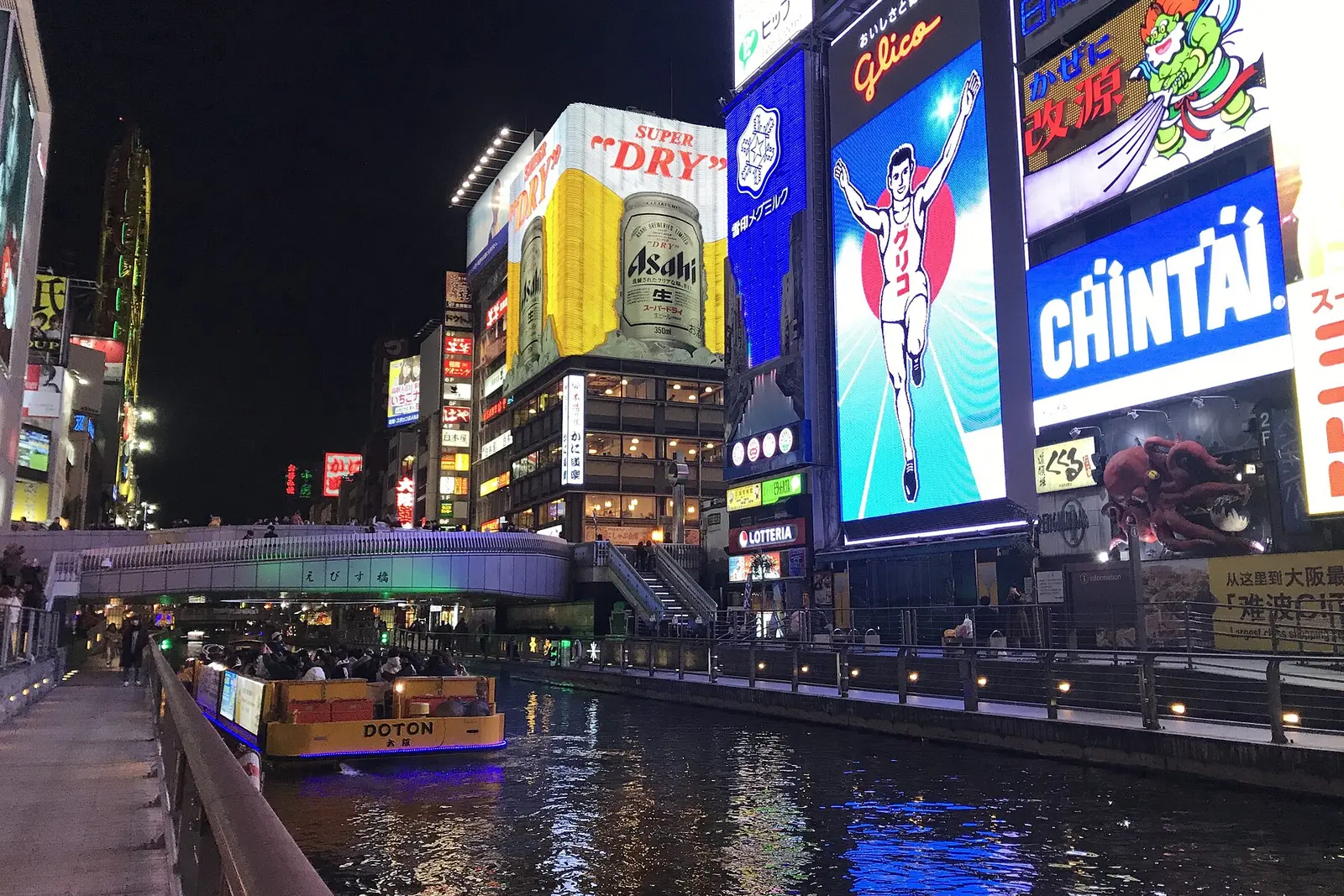
Giant crabs, a running man in a stadium of light, and a street where the restaurants never seem to be quiet. Dotonbori is Osaka's loudest and brightest corner, and it is where most visitors start their night.
Where the name comes from
Dotonbori is named after a man. In 1612, a merchant named Doton Yasui spent his own money to dig a canal here. The canal took his name, and the name has stayed ever since.
Over time, the banks of the canal became an entertainment district, with theaters, kabuki and teahouses. Today only one of those theaters is left, the Shochikuza, near Ebisubashi Bridge. The theaters are gone, but the entertainment district feel has stayed. The street is now famous for food.
The signs
Dotonbori is known for its giant three-dimensional signs, and each shop tries to outdo the next. There is a huge mechanical crab above the Kani Doraku crab restaurant, a giant takoyaki sign, and a sign for the Shochikuza theater. On the roof of the Kushikatsu Daruma building, a figure called the Daruma Minister turns slowly.
The most famous of all is the Glico Running Man, a runner with his arms in the air. The first Glico sign was put up here in 1935 by the candy maker Ezaki Glico. The sign has been rebuilt several times since then, but the runner has been running above the Ebisubashi Bridge ever since.
What to eat
Restaurants of many kinds line both sides of the street, and they are crowded all year round. The usual thing to try is takoyaki, a ball of batter with a piece of octopus inside, cooked on a hot plate and served in a paper tray. It is one of Osaka's best-known street foods. Kushikatsu, which is meat and vegetables on a stick, covered in breadcrumbs and deep-fried, is another local favorite.
The best way to eat here is slowly. Walk the whole street once, look at the menus in the windows, and then choose. If a place has a long line and you do not want to wait, try the next one. There are plenty along the street.
When to go and how to take a photo
Go after dark. The signs are brightest at night, and the canal is full of reflections. Some restaurants stay open all night, so you do not need to worry about going late.
The classic photo is of the Glico Running Man from the Ebisubashi Bridge, and it is very busy at night. People line up along the bridge for a picture, so be patient and take turns. The street is packed in the evening, so keep your group together and agree on a meeting point in case you get separated. For a quieter view, walk down to the Tombori Riverwalk, the path along the canal, and look back at the signs across the water.
Getting there
Dotonbori is right outside Namba Station. Namba is served by the Nankai and Kintetsu railways and by three Osaka Metro lines, the Midosuji, Sennichimae and Yotsubashi lines. From Umeda, the Midosuji Line takes about 8 minutes and costs ¥240.
Nearby
Near Dotonbori is Hozenji Yokocho, a pair of atmospheric alleys, each about 80 meters long. Entry to the temple there is free, and visitors pour water over the moss-covered statues for good luck. Kuromon Market, in the same Minami area, is about a 10-minute walk from Namba Station and is a good place to eat in the morning, before Dotonbori wakes up.
If you want to shop before you eat, the Shinsaibashi Shopping Arcade is about 600 meters long, and most of its stores open between 10 and 11 in the morning and close between 8 and 10 at night. Amerikamura, a small district of cafes, clothing shops and thrift stores, is often called Osaka's answer to Harajuku.
More on Osaka
 OSAKA3 min read
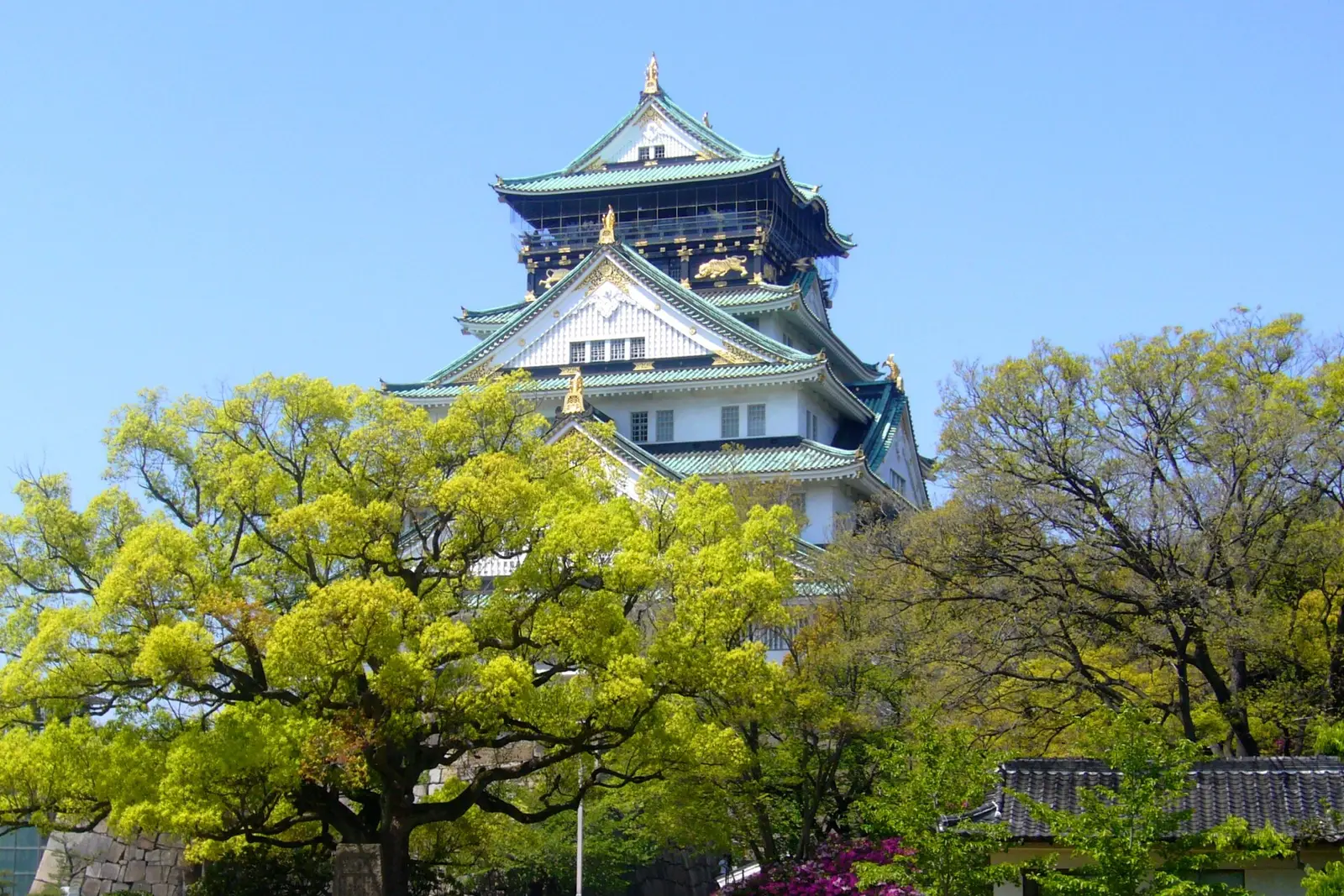
Osaka Castle: Three Towers and a Lot of Stone
A castle built to rule all of Japan, lost twice, and rebuilt. Hours, tickets and where to look.
 OSAKA3 min read
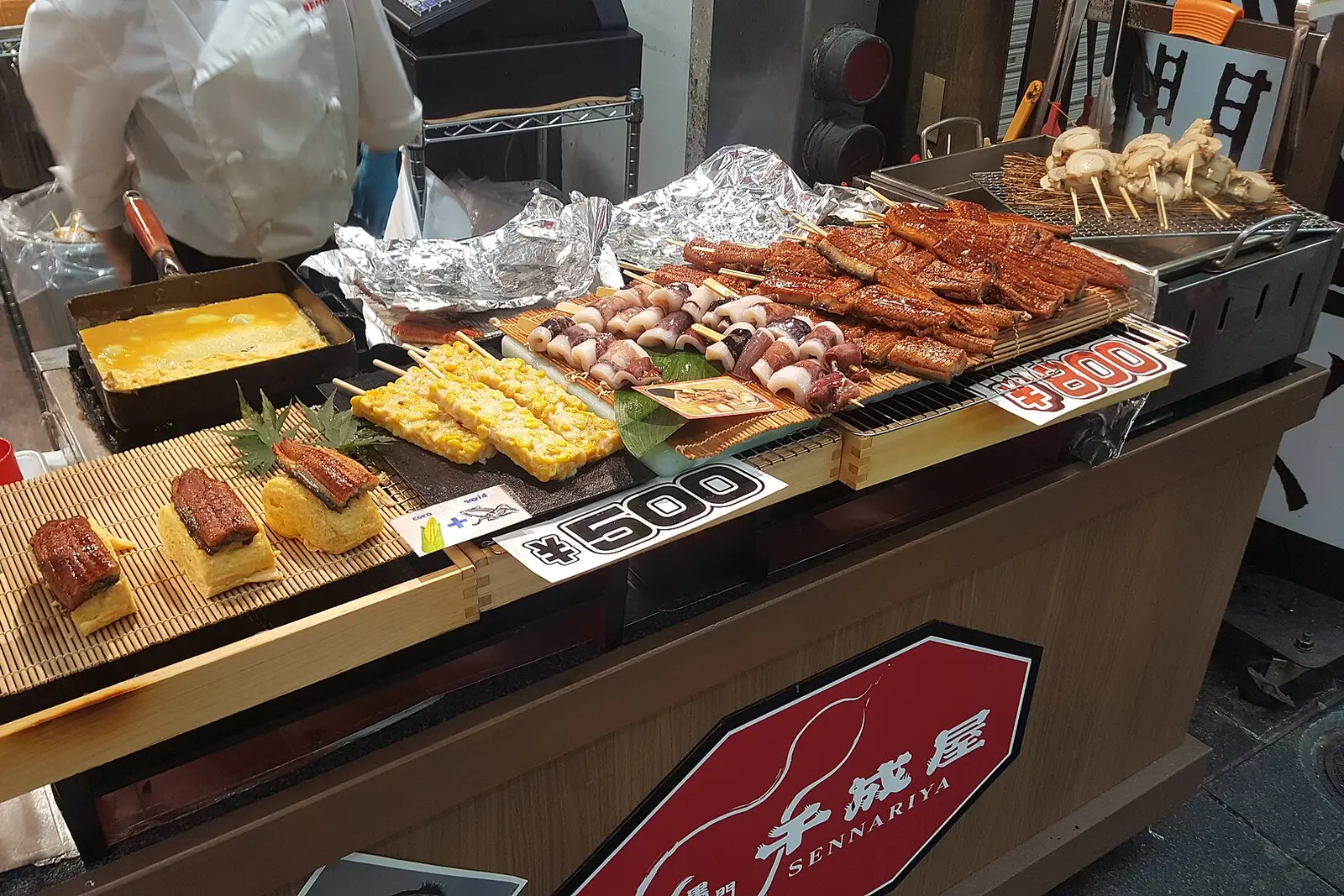
Kuromon Market: Osaka's Kitchen
A covered market of about 150 shops where Osaka buys its fish, and where visitors eat it on the spot.
 OSAKA3 min read
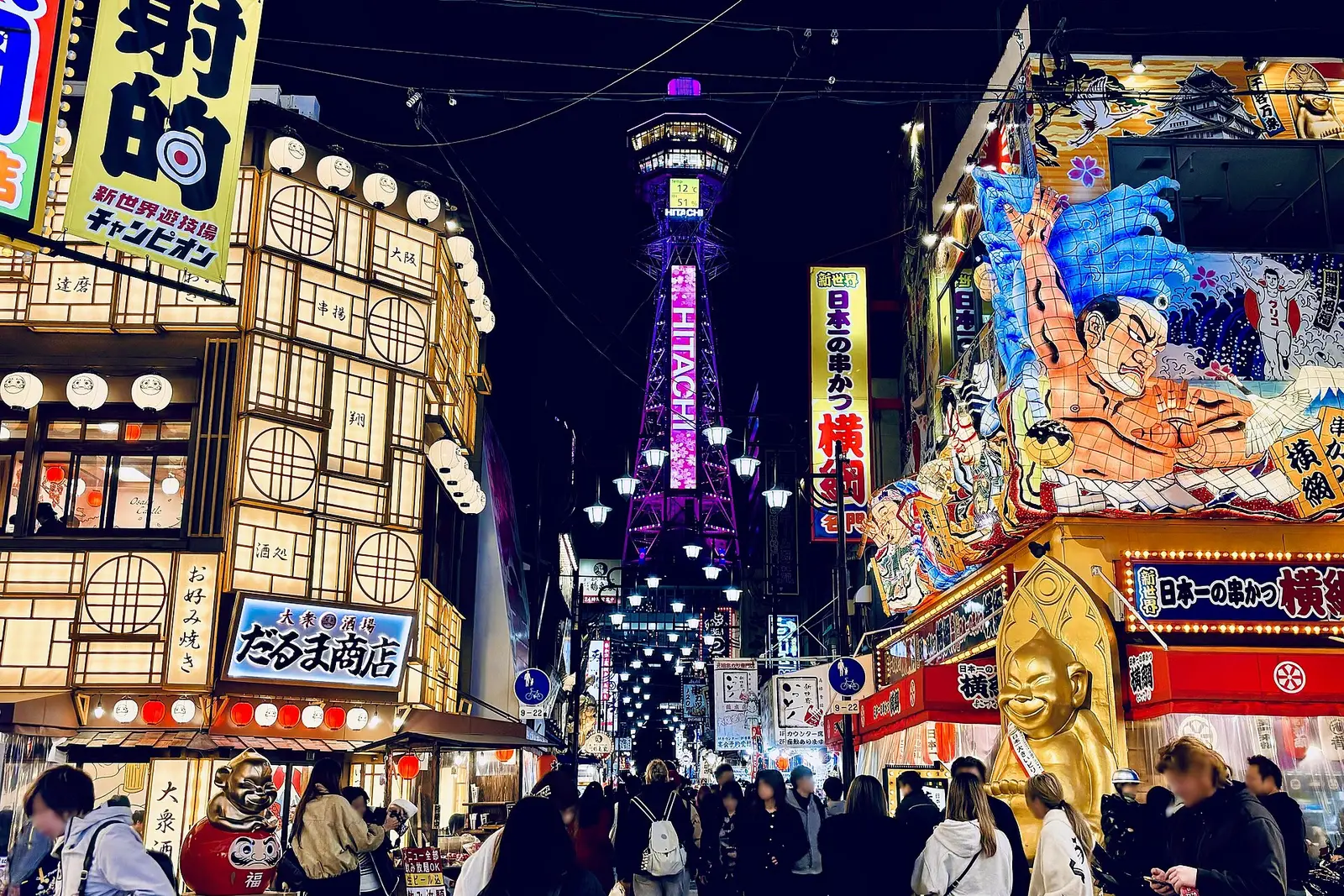
Shinsekai and Tsutenkaku: Osaka's Retro "New World"
A retro district in the shadow of a tower modeled on the Eiffel Tower, and the home of fried skewers.