Shinsekai and Tsutenkaku: Osaka's Retro "New World"
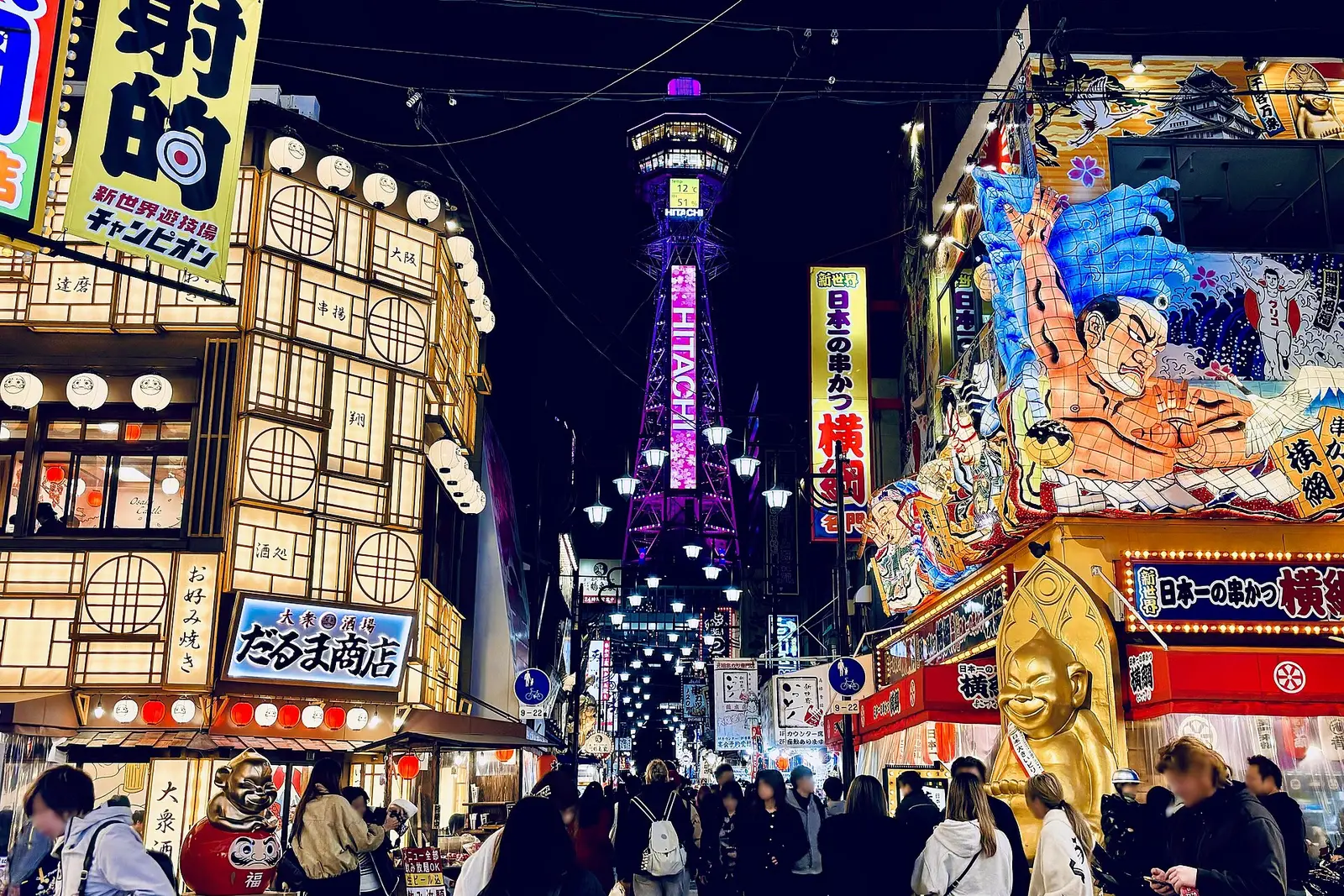
At the end of a street of lanterns and painted signs stands a tower that looks a bit like a smaller Eiffel Tower. This is Shinsekai, whose name means "New World," and it is one of the few parts of Osaka that still feels like the old city.
A district built as a world's fair
Shinsekai was built after the 1903 National Industrial Exposition, a big fair that drew more than five million people to the area. Soon after the fair closed, work began to develop the area. The northern half was designed after Paris, and the southern half after Coney Island in New York. The name Shinsekai, "New World," fits that idea.
The district was developed before the war, but then it was neglected for decades. That is a big part of why it feels so different from the rest of the city, with its older buildings and crowded little streets.
Tsutenkaku Tower
The tower is the symbol of the district. The first Tsutenkaku was built in 1912 and was modeled on the Eiffel Tower in Paris. It was taken down during World War II, and the tower you see today was opened in 1956. It is 103 meters high, and the main observatory is at 91 meters.
Inside, the observation floors have different themes. The rooftop level is called Tenbo Paradise, the 5th floor is the Golden Observatory, and the 4th floor is the Light Observatory. On the 1st floor, you can see a reproduction of the grand ceiling of the first tower. Look for Billiken, the god of luck. The tower invites visitors to stroke the soles of his feet for good luck.
Tickets and hours
The tower is open from 9 am to 9:45 pm, and the last entry is at 9:15 pm. Admission is ¥1,500 for adults aged 15 and over and ¥800 for children aged 5 to 14. From December 30 to January 3, the prices go up to ¥1,800 and ¥900.
Entry is by reserved time. You choose your time when you buy your ticket, and on the day you may have to wait. Tickets for the evening can sell out, so if you want to go up at night, book ahead on the online ticket site. Extras are sold separately, including a slide and an activity called Dive & Walk, where you walk and jump around the outside of the tower.
Kushikatsu
Shinsekai is the place to try kushikatsu, one of Osaka's best-known foods. Pieces of meat, seafood and vegetables are put on a skewer, covered in batter and deep-fried. The choices go from chicken, beef and pumpkin to asparagus, and there are even dessert skewers with banana or ice cream.
Many kushikatsu restaurants here are open 24 hours, but the area is liveliest at night, when the lights come on. Walk down the main street first, look at the menus, and pick a place that looks busy. You will pass a lot of them.
A hot spring in the city
Near the tower is Spa World, a large bath complex with hot spring baths on two floors, one themed on Europe and one on Asia. The two floors swap between men and women every month, so check which floor is open to you. Bathing is done without clothes, as in most Japanese baths, and there is a separate pool area where swimwear is worn. It is a relaxing way to end a long day of walking, especially in winter.
Getting there
Tsutenkaku is a short walk from several stations:
- Ebisucho Station, Exit 3, on the Sakaisuji subway line: about 3 minutes
- Dobutsuen-mae Station, Exit 1, on the Midosuji line: about 6 minutes
- Shin-Imamiya Station, Tsutenkaku exit, on the JR Loop Line: about 6 minutes
Nearby
Shinsekai is in the south of Osaka, on the same Sakaisuji Line as Kuromon Market. A good plan is to eat at Kuromon in the morning, see Dotonbori in the early evening, and finish in Shinsekai for dinner.
More on Osaka
 OSAKA3 min read
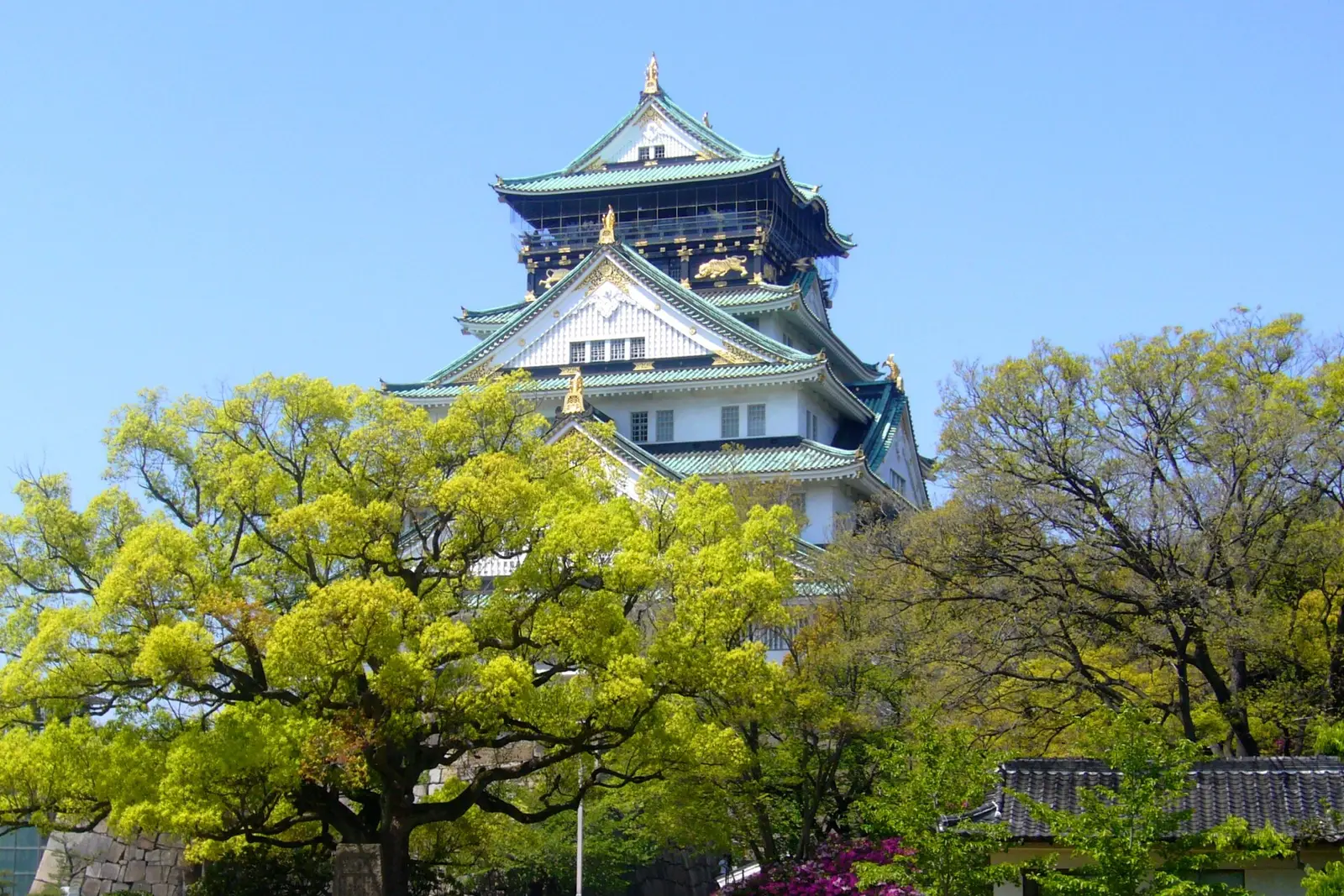
Osaka Castle: Three Towers and a Lot of Stone
A castle built to rule all of Japan, lost twice, and rebuilt. Hours, tickets and where to look.
 OSAKA3 min read
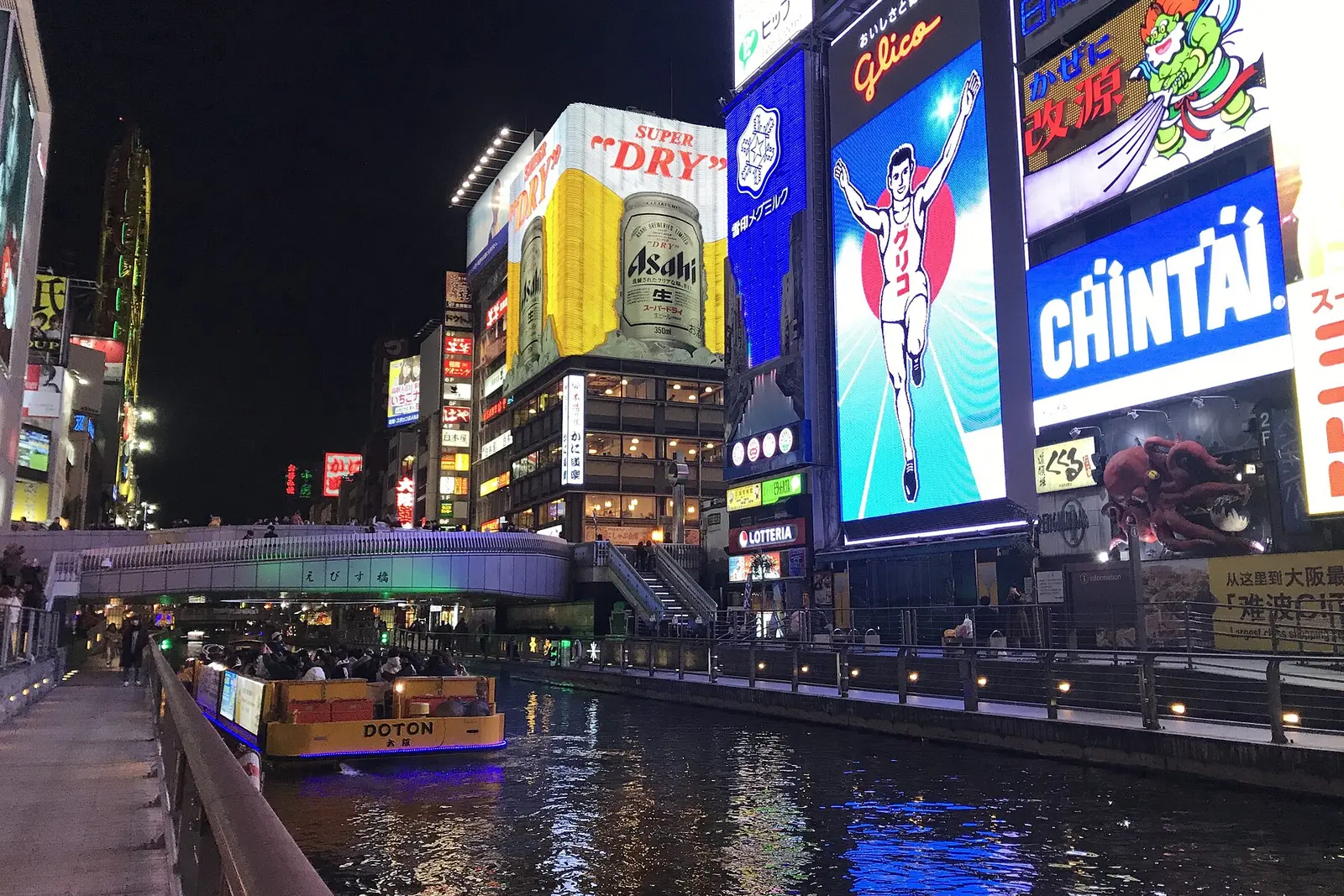
Dotonbori: Osaka's Canal of Neon and Street Food
A canal lined with giant signs and food stalls. Where the name comes from and when to go.
 OSAKA3 min read
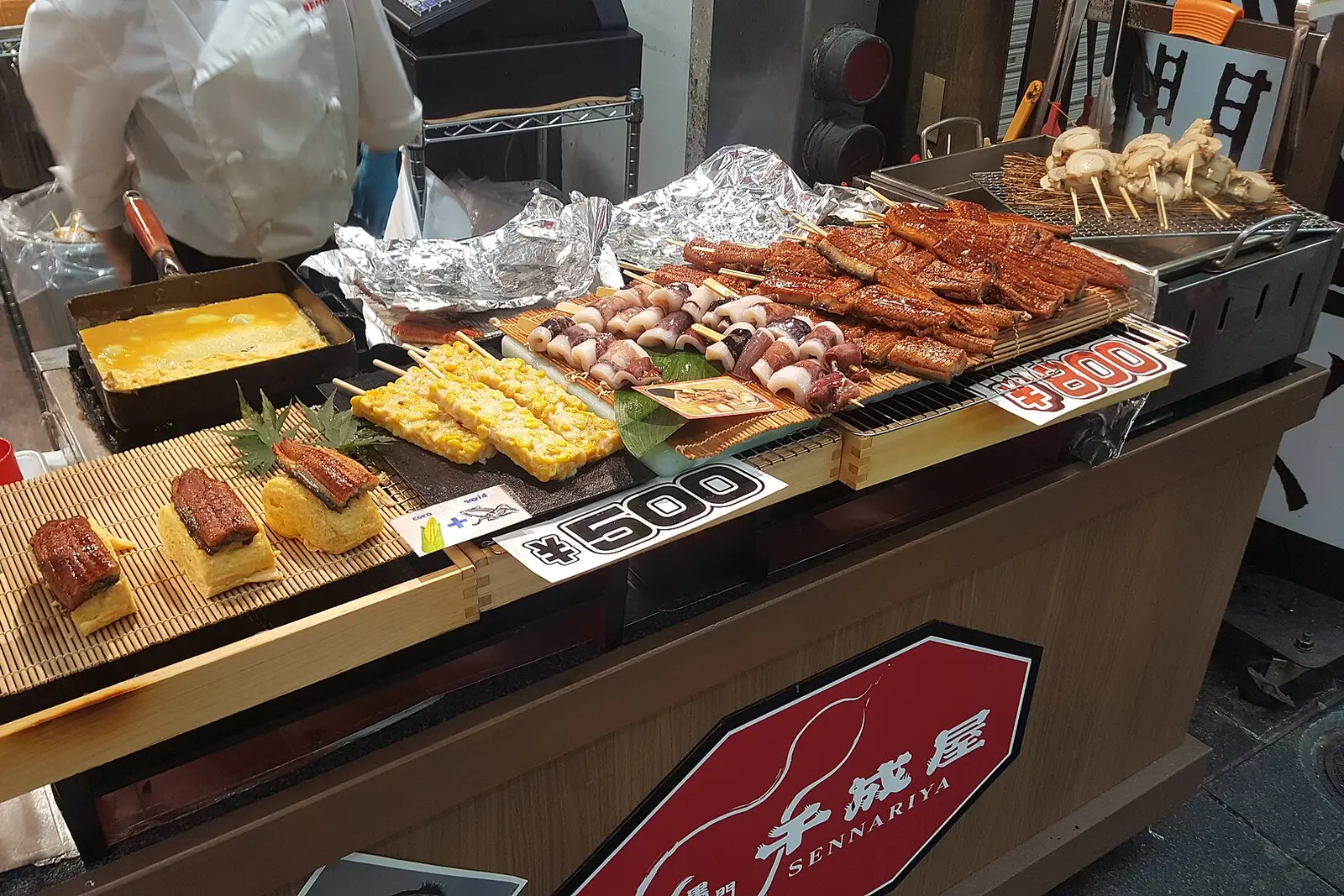
Kuromon Market: Osaka's Kitchen
A covered market of about 150 shops where Osaka buys its fish, and where visitors eat it on the spot.