Osaka Castle: Three Towers and a Lot of Stone
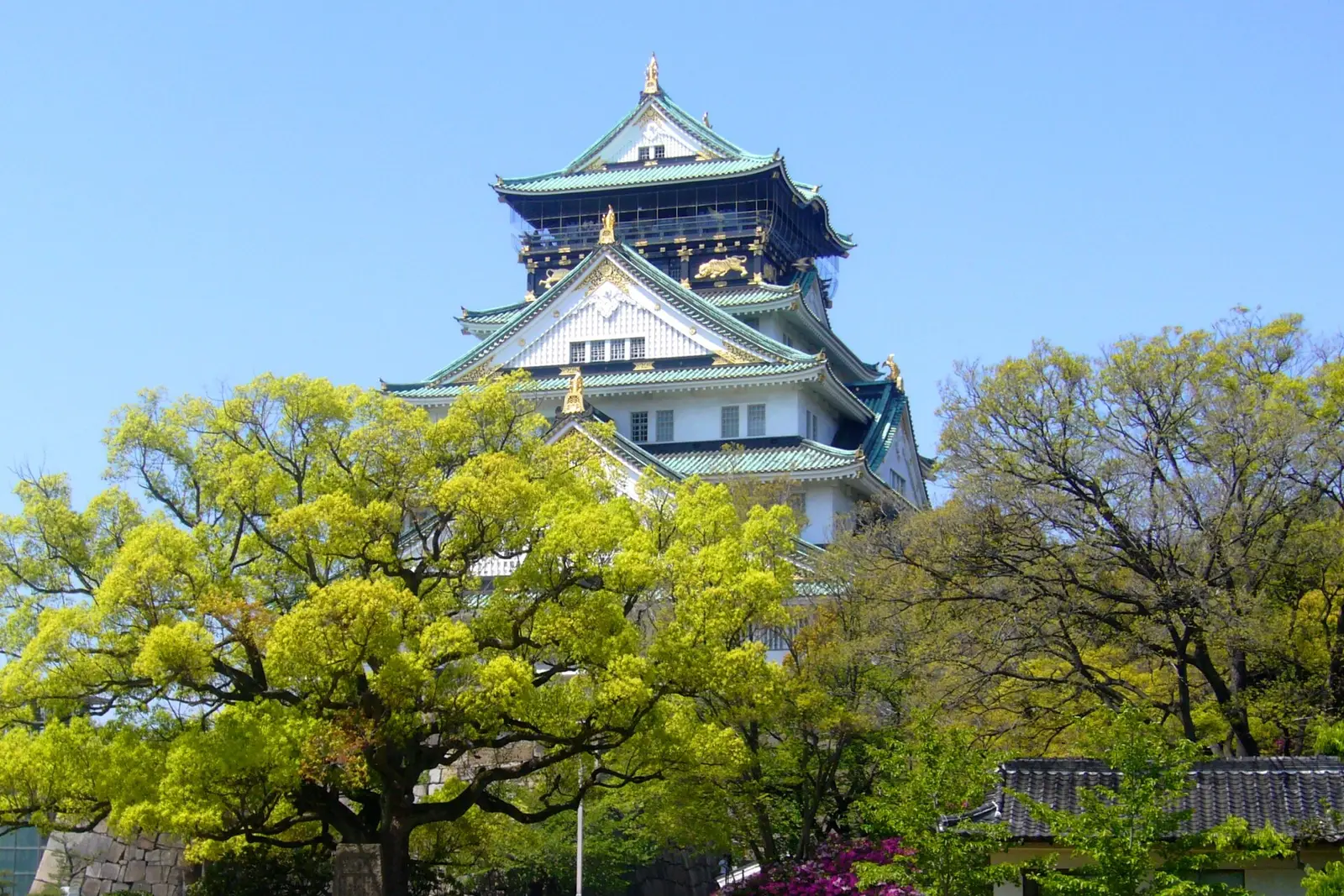
Osaka Castle looks like it has stood here forever. It has not. The tower you see today is the third one, and the stone walls and moats around it tell an older story than the tower does.
A castle built to unite a country
The castle stands where a large Buddhist temple, Ishiyama Honganji, once stood. The warlord Oda Nobunaga destroyed the temple, and in 1583 Toyotomi Hideyoshi began building a castle on the spot. Hideyoshi wanted a castle that would be the center of a united Japan, and it was the largest castle of its time.
That did not last. In 1615, forces of the Tokugawa family attacked and destroyed it, ending Hideyoshi's family line. The Tokugawa then rebuilt the castle in the 1620s, with a new tower. In 1665, lightning struck that tower and it burned down. Fire destroyed more of the castle during the upheaval at the end of the samurai age.
The tower you can climb
The tower you see now was finished in 1931. It was paid for with donations from the people of Osaka, and it is a modern building of reinforced concrete, made to look like the original. It is the third tower on this site, and it has been a museum since it was built.
Inside, the exhibits cover the castle's history and the life of Hideyoshi. There is an elevator that goes straight up to the 5th floor, which is useful on a hot day. From there, you walk up a staircase to the 8th floor, and the way back down is by stairs too. On the 1st floor you can rent an audio guide, and on the 2nd floor you can try on a helmet and a battle jacket for ¥500.
Walls, moats and gates
Do not rush to the tower and leave. The stone walls, the moats, the Otemon Gate and two turrets all date from the Tokugawa rebuilding, which makes them far older than the tower. The whole site is a Special Historic Site, and most of the old buildings on it are Important Cultural Properties.
Walk along the moat and look at the huge stone blocks of the walls. A newer museum next to the tower, the Toyotomi Stone Wall Museum, shows stone walls from Hideyoshi's own castle that were later buried under the Tokugawa rebuilding.
Park and cherry blossoms
Around the castle is a big park of lawns, paths and trees. In spring, usually around late March or early April, the park is one of Osaka's best places to see cherry blossoms. Nishinomaru Garden, on the old western citadel, has around 600 cherry trees and a view of the tower. It has its own ticket and its own opening hours, so check them before you go.
Tickets and getting there
You can buy tower tickets at the castle, but on busy days the line can take more than 30 minutes. Online tickets let you skip the ticket line. The tower is closed only from December 28 to January 1, so it is open nearly every day of the year. Children in middle school or younger are free, and the castle asks for proof of age. Students in high school and university pay half price and need to show a student ID.
The easiest way in is by subway to Tanimachi Yonchome Station, on the Tanimachi and Chuo lines, and then walk to the Otemon Gate. You can also take the JR Loop Line to Osakajokoen Station. From JR Osaka Station it takes about 10 minutes and costs ¥180.
Nearby
The castle is a good start to a day in Osaka. Dotonbori and Kuromon Market are in the southern part of the city, a short subway ride away, so save them for the afternoon and evening. Umeda Sky Building is on the northern side, close to JR Osaka Station, and is a good choice for sunset.
More on Osaka
 OSAKA3 min read
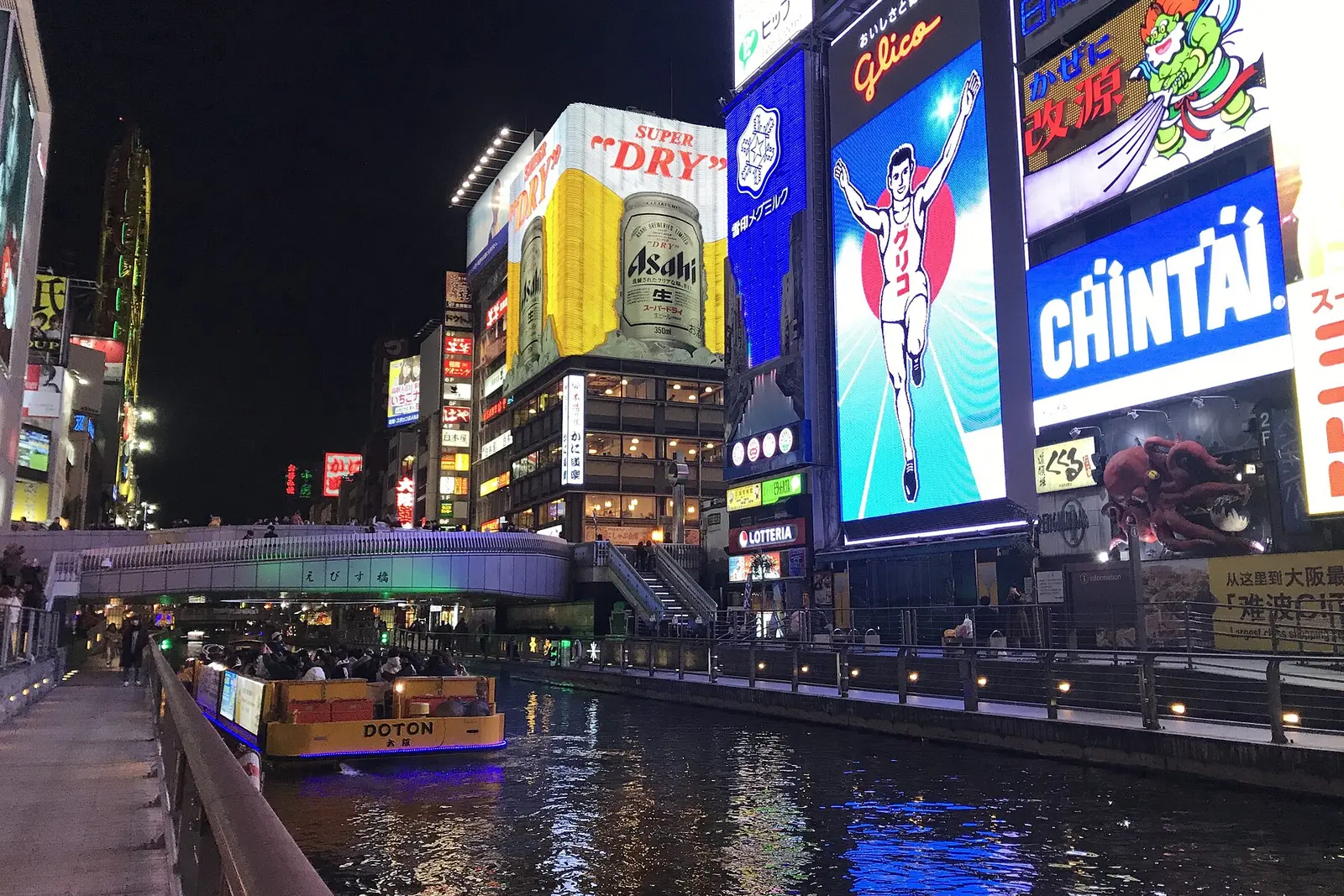
Dotonbori: Osaka's Canal of Neon and Street Food
A canal lined with giant signs and food stalls. Where the name comes from and when to go.
 OSAKA3 min read
Kuromon Market: Osaka's Kitchen
A covered market of about 150 shops where Osaka buys its fish, and where visitors eat it on the spot.
 OSAKA3 min read
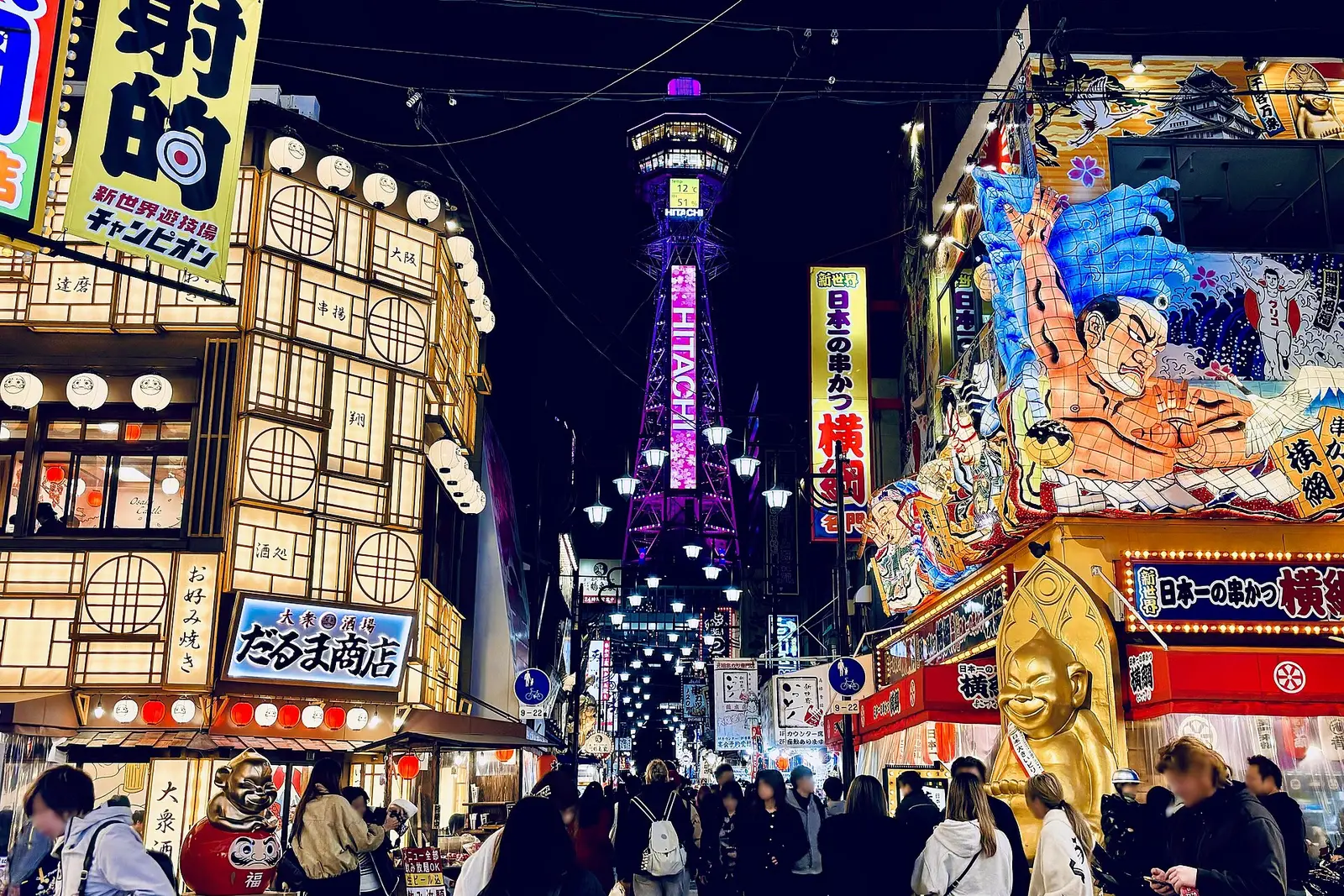
Shinsekai and Tsutenkaku: Osaka's Retro "New World"
A retro district in the shadow of a tower modeled on the Eiffel Tower, and the home of fried skewers.