Iya Kazurabashi: The Vine Bridge of the Iya Valley
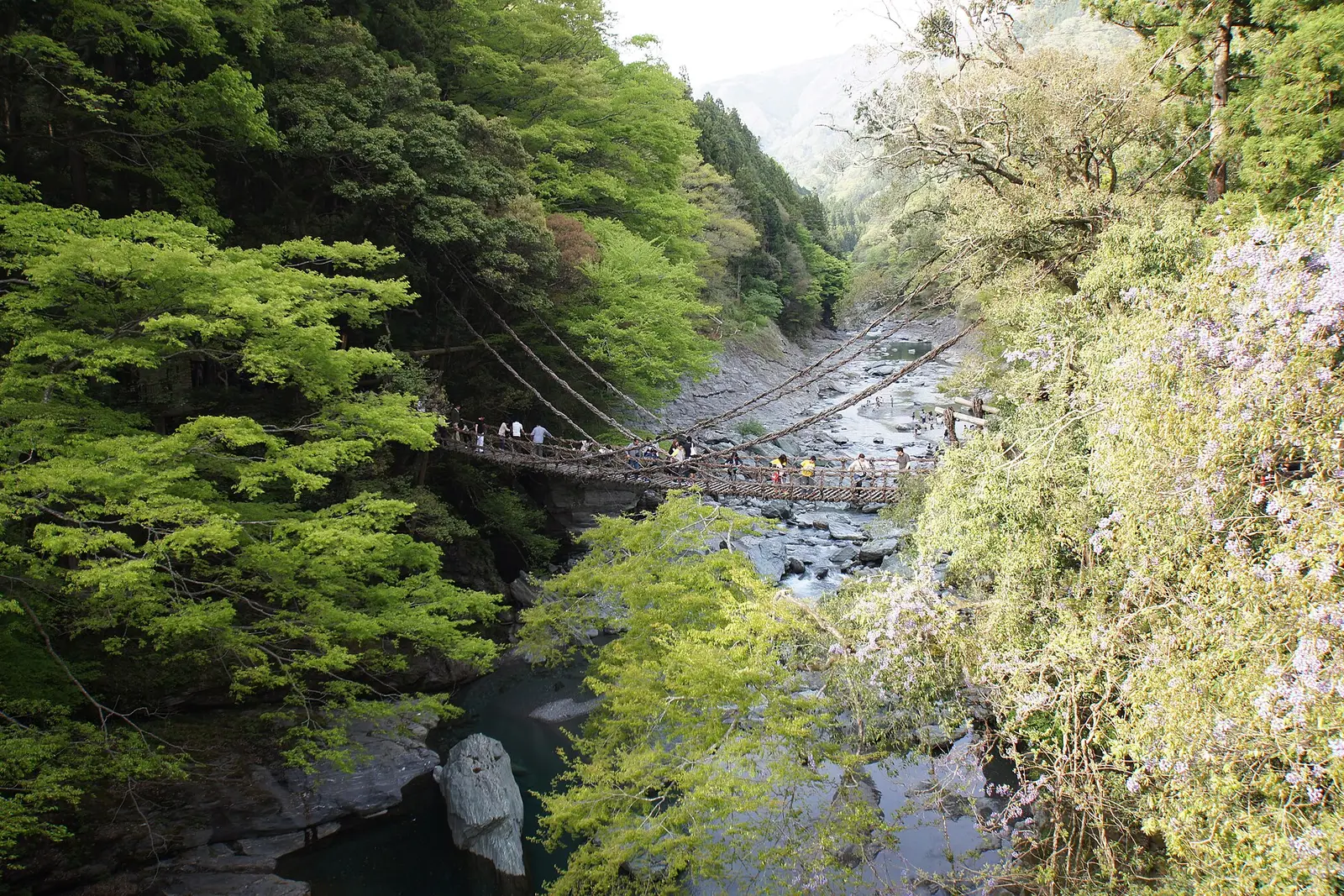
Deep in the steep, green mountains of western Tokushima, a bridge made of twisted vines hangs over a clear river. It sways as you walk, and through the gaps between its wooden slats you can see the water far below. The Iya Valley has long been a hidden world, and its vine bridge is its most famous sight.
A bridge woven from mountain vines
Iya Kazurabashi is made from shirakuchi kazura, a tough mountain vine, and about six tons of it go into the bridge. It is 45 meters long and 2 meters wide, and it hangs 14 meters above the Iya River. The vines are gathered in the mountains in the depth of winter and woven together, and the whole bridge is rebuilt every three years.
In the past, bridges like this were the only way across the deep gorges of the area. Iya Kazurabashi is now a nationally designated Important Tangible Folk Cultural Property, and it is counted as one of the "Three Unusual Bridges" of Japan.
The legends of the bridge
The Iya Valley lies in the steep mountains of Shikoku. According to local tradition, members of the Heike clan fled here after their defeat at the Battle of Yashima in 1185, hoping one day to restore their family. Because the area was so hard to reach until modern times, an old way of life and local customs survived here much as they were.
Nobody knows for sure who first built the bridge. One story says the Heike made it from vines so that they could cut it down quickly if their enemies came after them. Another says that Kobo Daishi, the monk linked with the Shikoku pilgrimage, built it to help villagers who had no way to cross the river.
Crossing the bridge
The bridge is held up by old trees on both banks. As you step onto it, it begins to sway, and the gaps between the slats show the river below, so take your time and hold the vine railings. The bridge stays open in the rain, but it may close when a heavy rain warning is issued.
After you cross, turn left and walk about 50 meters to Biwa Falls, a waterfall about 40 meters high that is also tied to the Heike legends. About 100 meters further on, steps lead down to the riverbank, but stay away from the water when the river is high.
Every evening from 19:00 to 21:30 the bridge is lit up. You cannot cross it during the illumination, but the glowing bridge in the dark valley is a beautiful sight.
More of the Iya Valley
If you have a car or a full day, there is more to see in the valley:
- Hi-no-ji Gorge, a 20-kilometer stretch of the Iya River, where a small statue of a peeing boy stands on a cliff edge. Local children are said to have once stood here to prove their courage.
- Ochiai village, a mountain hamlet at 390 meters, with houses built from the mid-Edo period to the early Showa period on stone terraces. It was named a national preservation district in 2005.
- Oku-Iya Double Vine Bridges, a "male" and a "female" bridge further up the valley. They close in winter.
- Oboke Gorge, where the Yoshino River has carved the rock into strange shapes. A sightseeing boat makes a trip of about 30 minutes through the gorge.
Getting there
By train, take the limited express Tsurugisan from Tokushima to Awa-Ikeda in about 1 hour 10 minutes, or the limited express Nanpu from Okayama in about 1 hour 30 minutes, and change for Oboke Station. From Oboke Station, take the Shikoku Kotsu bus bound for Kazurabashi Yumebutai or Hotel Iya Onsen and get off at Kazurabashi Yumebutai. The bridge is a 5-minute walk from the stop.
By car, it takes about an hour from the Ikawa-Ikeda interchange. Kazurabashi Yumebutai has a large public parking lot, ¥500 for a car.
Tips
- Check the bus timetable for your return trip before you set out.
- Wear shoes with a good grip. There are wide gaps between the slats of the bridge.
Nearby
Back in Tokushima city, the Awa Odori Kaikan and the ropeway up Mt. Bizan make a good evening after a day in the mountains.
More on Tokushima
 TOKUSHIMA3 min read
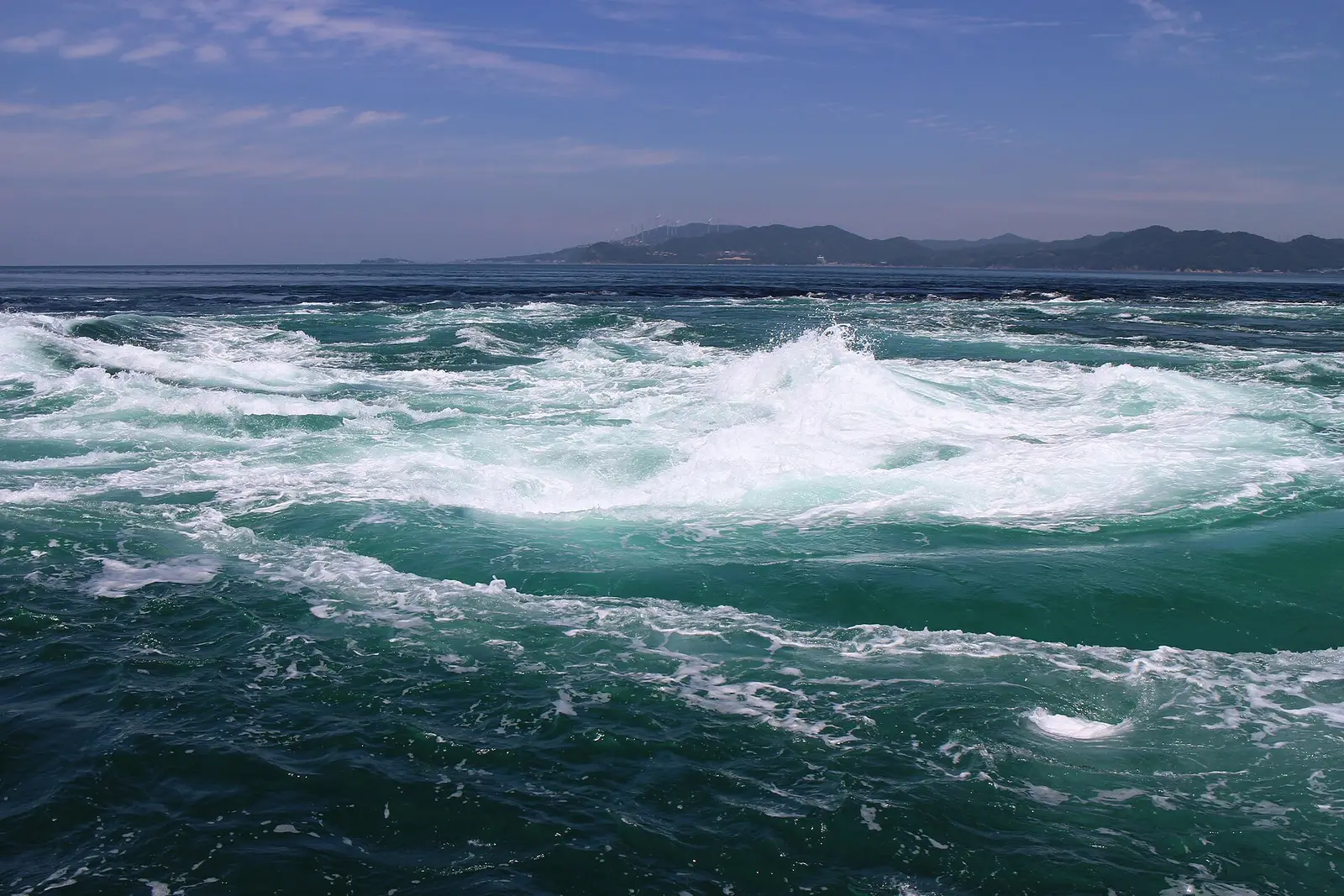
The Naruto Whirlpools: Tidal Eddies Under a Bridge
Huge tidal whirlpools in the Naruto Strait. When to go, the glass-floored walkway and the boats that take you close.
 TOKUSHIMA3 min read
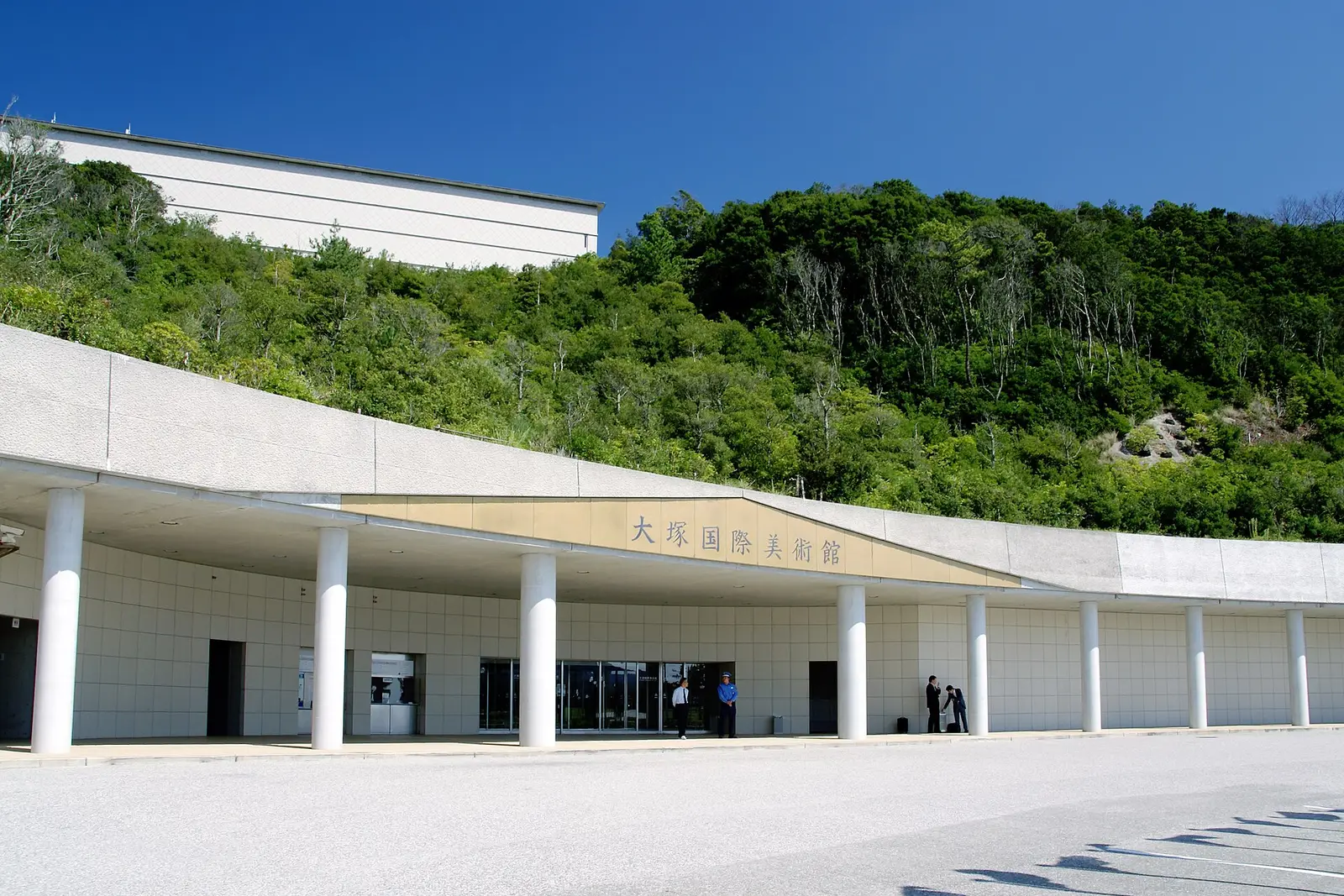
Otsuka Museum of Art: 1,000 Masterpieces in Ceramic
More than 1,000 Western masterpieces reproduced at full size on ceramic. Highlights, tickets and how to get there.
 TOKUSHIMA3 min read
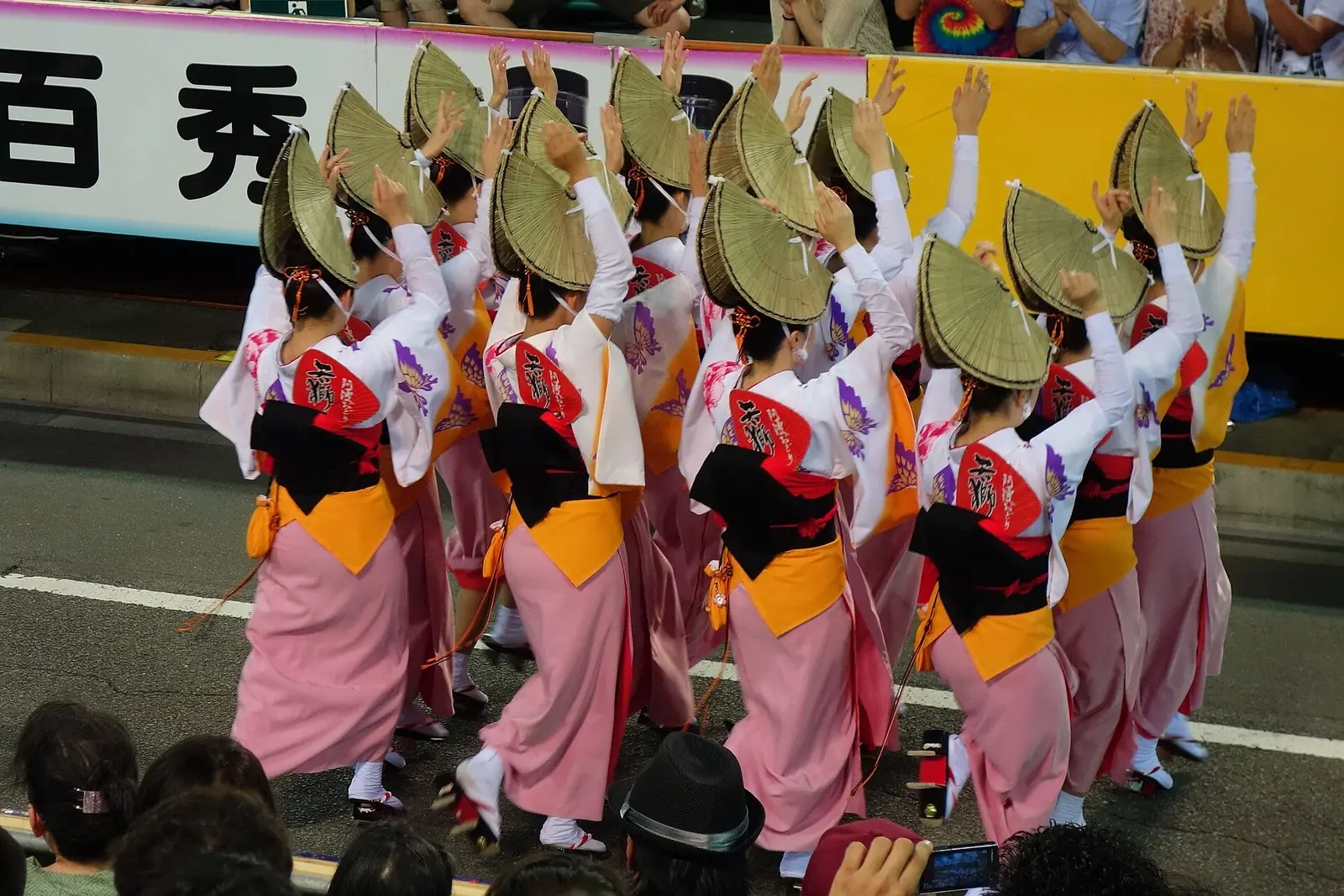
Awa Odori: Tokushima's 400-Year-Old Dance Festival
Tokushima's August dance festival, with over a million visitors. How to watch it, and where to see it any day.