Why Do Japanese Front Doors Open Outwards? The Shoes
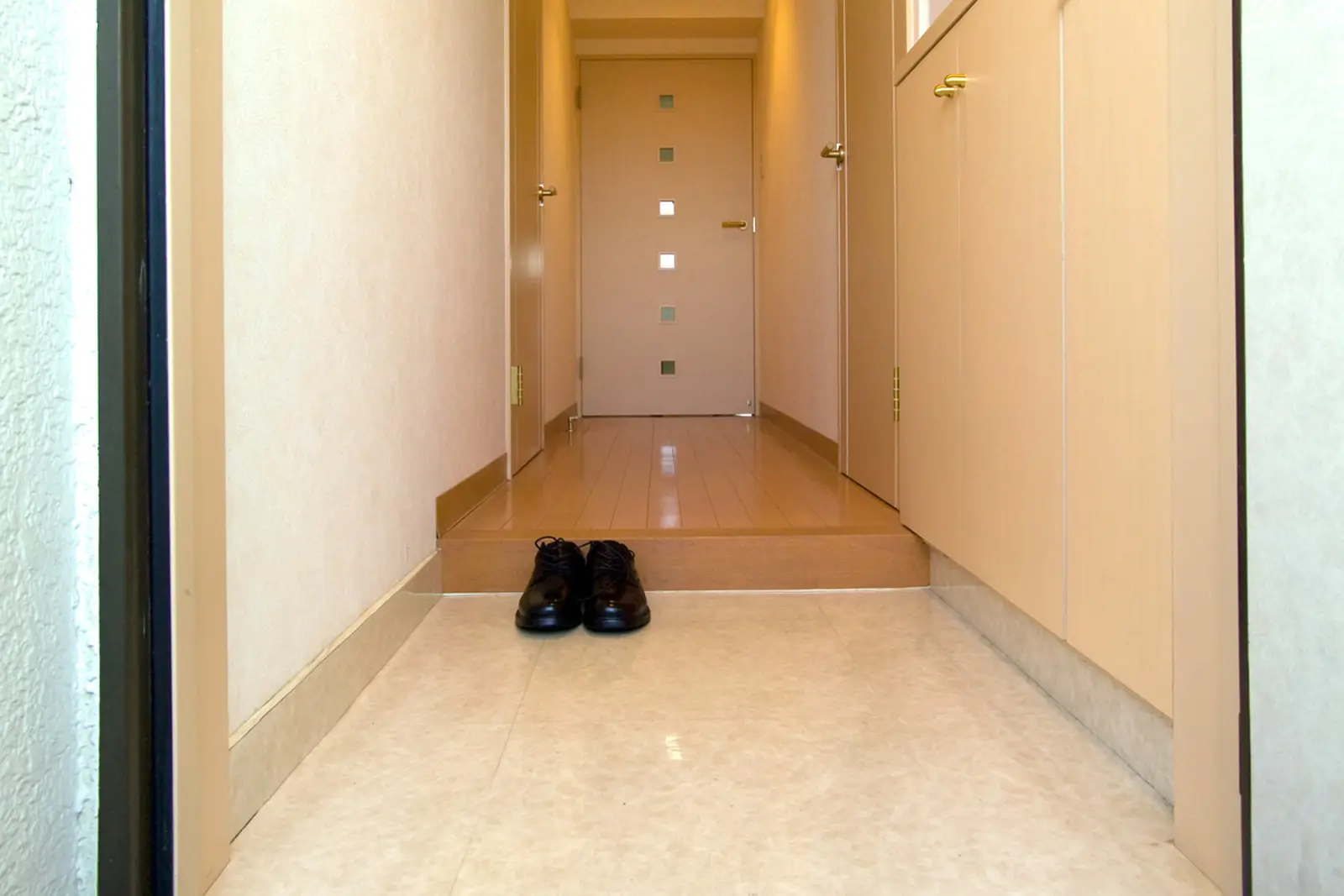
You ring the bell at a Japanese home or rental apartment, and the door swings out toward you, so you step back to let it open. Why do Japanese front doors open outwards? Because the floor just inside is where everyone leaves their shoes, and a door swinging in would hit them. This guide explains the entryway behind the door, what the building rules actually say, the numbers, and what to do when you stay in a Japanese home.
What you are seeing
A front door that opens toward you. You knock or ring, and the person inside pushes the door out into the corridor or porch. In an apartment block, the doors along the open-air corridor all swing out the same way. If you are standing too close, you have to step aside.
Behind the door is a small tiled area, a little lower than the rest of the home. There are shoes on it, and a step up to a wooden floor.
The short answer
The door opens outwards because of that tiled floor. Japanese homes have a genkan, an entryway, where you take off your shoes before stepping up into the house. The shoes stay on the genkan floor, right behind the door.
A door that swung inwards would sweep across that floor and push into the shoes. Opening it outwards keeps the genkan clear. Many guides to Japan give the same reason, and the layout makes it plain when you look at it.
What the building rules say
You might expect a law behind something this consistent. There is not one for homes.
Japan's building rules are in the Building Standards Act and the cabinet order under it. The order has a section on escape routes in case of fire. That section applies only to certain buildings: theaters and halls, hospitals, hotels, apartment buildings and similar uses, buildings with three or more floors, and buildings over 1,000 square meters. A normal two-story family house falls outside it.
Even where the section does apply, it says nothing about the front door of a home. So the outward door is a custom of builders and door makers, not a legal rule.
The law does fix the direction in places where crowds have to get out fast:
- Theaters, cinemas and halls. Doors from the seating must not open inwards. The same goes for the outside exits that guests use.
- Indoor escape stairs. Fire doors into the stairway that you open by hand and that close by themselves must open in the direction of escape.
The numbers
- One rule for house doors: none, at national level.
- Two places where inward doors are banned: exits from the seating and guest exits to the outside, in theaters, cinemas, performance halls, spectator venues, public halls and assembly halls.
- Three floors, or more than 1,000 square meters: a building with either comes under the escape-route section, whatever it is used for.
- One step: the genkan floor sits a step below the hallway. Shoes stay below the step, slippers wait above it.
What it means for you
Outward doors have a small cost. When someone opens one, it can hit whoever is standing outside. In apartment corridors, an opening door can block part of the walkway. Inside the home, the gain is that the genkan stays usable as a place for shoes.
When you stay in a Japanese home
Ring the bell, then take a step back and to the side. The door is coming toward you.
Once inside, take your shoes off on the tiled floor before you step up. Leave them on the tiles, not on the step, and point the toes toward the door. That keeps them out of the way of a door that never comes inwards.
When you leave, open the door slowly. Someone may be passing in the corridor outside.
More on Japan Explained
 JAPAN EXPLAINED3 min read
Japan's Election Vans: Why They Only Shout the Candidate's Name
White vans, loudspeakers and one name on repeat. The election law that makes them sound like that.
 JAPAN EXPLAINED3 min read
Why Do Japanese Taxis Have Lace Seat Covers? The Clean Rule
White lace on the back seat. The national rule on clean taxis, and how the covers got there.
 JAPAN EXPLAINED3 min read
Why Japanese Train Stations Play Bird Sounds: The Stair Rule
That chirping on the platform is not a bird. The ministry guideline behind it, and what each station sound means.