Why Are Japanese Streets So Narrow? The 4-Meter Rule
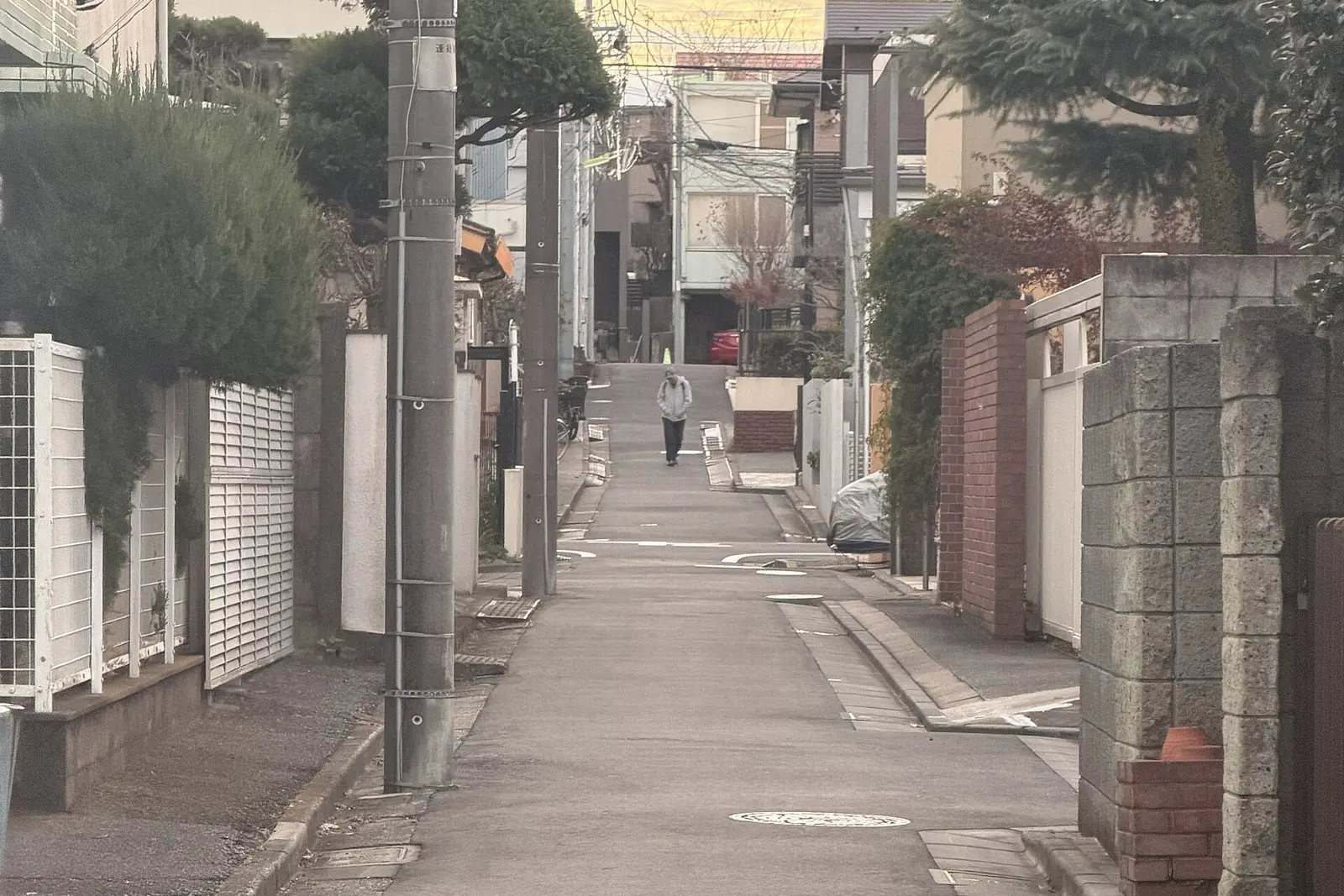
You turn off a main road in Tokyo and the street shrinks to one lane, with walls on both sides and a car squeezing past you. Why are Japanese streets so narrow? Because many of these lanes were already lined with houses when Japan's building law made 4 meters the minimum, and the law widens them only when each house is rebuilt. This guide explains what you are seeing, the 4-meter rule, the setback, the rules in numbers, and what to do when you walk these streets.
What you are seeing
A quiet street between houses, often with no sidewalk. Walls and gates come right to the edge. Look closely and the edge is not straight: one house has its wall flush with the lane, the next has a strip of fresh asphalt in front of it, and the wall stands half a step back.
That uneven edge is the clue. The street is being widened, slowly, by law.
The short answer
Japanese streets are narrow because many residential lanes already had houses on both sides when Japan's Building Standards Act of 1950 set 4 meters as the minimum width of a road. The law did not tear those houses down. It let the old lanes count as roads and moves each wall back only when the house behind it is rebuilt.
The 4-meter rule and the setback
Under the law, a "road" for building purposes must be at least 4 meters wide. In some areas the local government raises that to 6 meters.
But a lane narrower than 4 meters can still count as a road if buildings were already standing along it when the rules came to apply, and the local government designates it. They are commonly called nikou douro, "Article 42-2 roads," after the clause that creates them.
For these lanes, the law draws an imaginary edge 2 meters from the center line. Nothing moves today. But when an owner rebuilds, the new building, and its wall and gate, must stay behind that line. This is the setback, a step back from the road. If enough houses rebuild, the lane becomes 4 meters wide.
A street like this changes only as fast as its houses are rebuilt, each on its own schedule. That is why you see the zigzag edge.
The rules in numbers
- 4 m: the minimum road width (6 m in designated areas)
- 2 m: the edge of an older narrow lane, measured from its center line
- 1.35 m: the shortest distance from the center the local government may allow where the land leaves no choice
- 2 m: how much of every building plot must touch a road
- Zero: no building or retaining wall may stand in the road or stick out into it
- About 307 km: the length of these narrow lanes in Suginami, a residential ward in Tokyo, about 30% of its roads
Why it matters for safety
Suginami Ward gives the reason in plain terms. Things left in the setback strip block emergency vehicles. Block walls that fall in an earthquake can close an escape route. Since January 1, 2017, the ward has banned placing hard-to-move objects in the setback strip, and it pays to remove gates and walls when owners agree to widen the lane.
The ward also exempts the setback strip from property tax, as long as it works as part of the road.
Will these streets ever get wider?
Yes, slowly. Every rebuild moves one more wall back, and Suginami Ward paves the strip so it becomes part of the street.
Can you build a house on a street narrower than 4 meters?
Yes, if the lane is a designated older road. But the new house must stand behind the line 2 meters from the center, and the plot must touch the road for at least 2 meters.
Why are the buildings on narrow streets so low?
The road limits the building. On a street narrower than 12 meters, the law caps total floor space by the street's width. In residential zones, a 4-meter lane usually allows floor space of up to 1.6 times the plot. That is why the towers stay on the wide roads. The same building code also shapes small details, like why Japanese front doors open outward.
When you walk these streets
Walk near the edge and step into a setback strip when a car comes. If you rent a car, stay on the main roads and avoid residential lanes.
And look at the walls. Where one stands back from its neighbors, that house was rebuilt under the 4-meter rule.
More on Japan Explained
 JAPAN EXPLAINED3 min read
Japan's Election Vans: Why They Only Shout the Candidate's Name
White vans, loudspeakers and one name on repeat. The election law that makes them sound like that.
 JAPAN EXPLAINED3 min read
Why Do Japanese Front Doors Open Outwards? The Shoes
Doors that swing out toward you. The shoes behind them, and what Japan's building rules actually say.
 JAPAN EXPLAINED3 min read
Why Do Japanese Taxis Have Lace Seat Covers? The Clean Rule
White lace on the back seat. The national rule on clean taxis, and how the covers got there.