Why Do Japanese Taxis Have Automatic Doors? History and Law
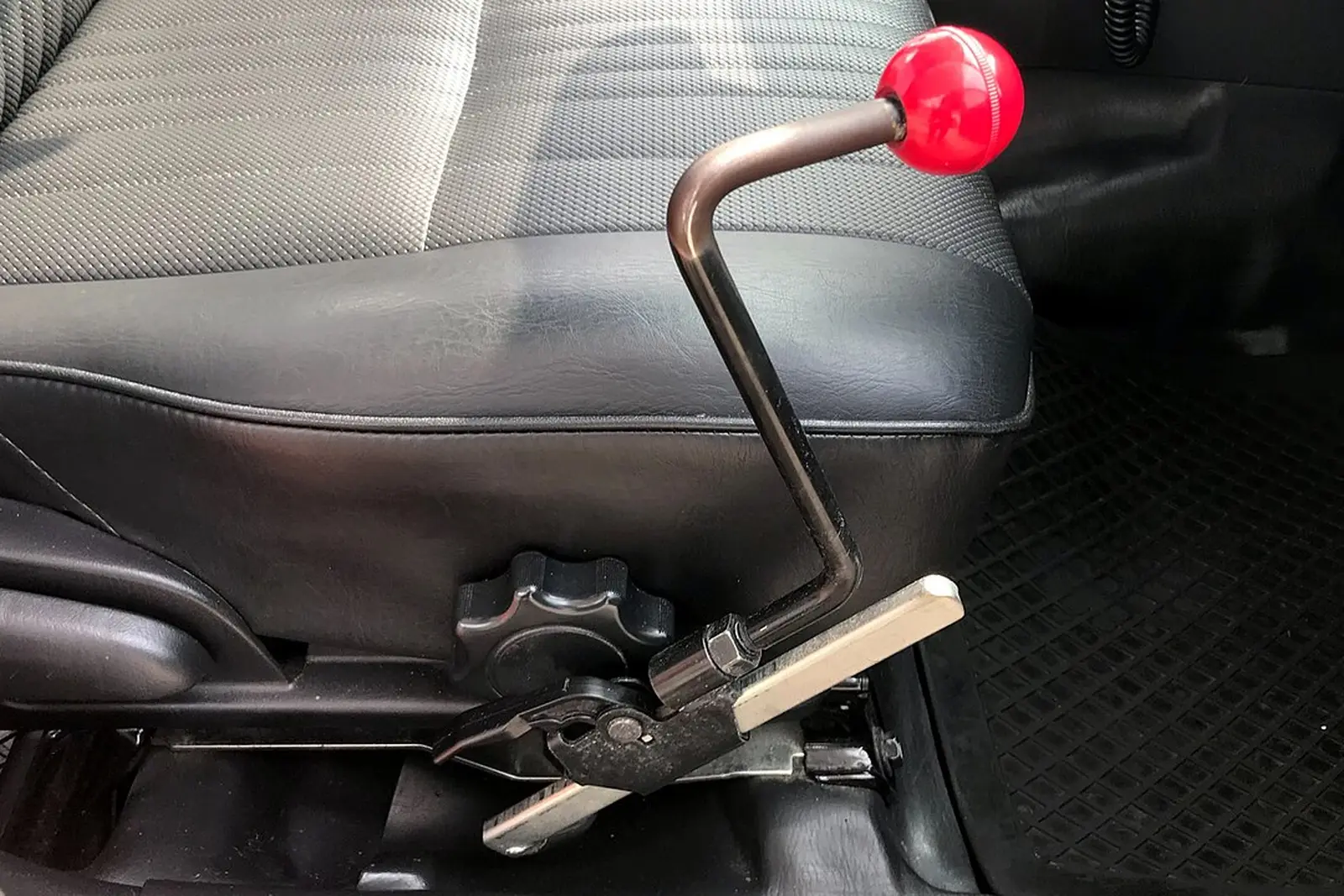
You raise your hand on a street in Japan, a taxi stops, and the rear door swings open before you touch it. Why do Japanese taxis have automatic doors? Because the door once had its own crew member, and the law still makes the driver responsible for every door that opens. This guide explains what you are seeing, the history, the law, the passenger's side of the rule, and what to do when you ride.
What you are seeing
A taxi pulls up beside you. Before you reach for the handle, the rear door on the left opens by itself. When you sit down, it swings shut behind you.
Nobody pressed a button outside. The driver opened it from the front seat. In the taxi in the photo above, the driver pulls a metal lever that is linked to the left rear door.
The short answer
Japanese taxis have automatic doors because the job of opening the door once belonged to a second crew member. When demand for taxis grew fast, drivers asked for a door they could work themselves. Japan's traffic law also makes the driver responsible for checking safety before any door opens.
The crew member the door replaced
The Tokyo Hire-Taxi Association tells the story in its 2026 yearbook. Before automatic doors, a second crew member rode in the front passenger seat. That person opened and closed the door and helped passengers.
During Japan's fast economic growth, demand for taxis rose. Drivers then strongly asked for an automatic door. A parts maker in Aichi Prefecture developed one and brought it to market.
The association says the 1964 Tokyo Olympics made higher taxi demand certain. Many companies chose the door to show Japanese hospitality, and it spread quickly. Taxi firms then competed on service, and the automatic door became normal across Japan.
What the law says about taxi doors
Japan's Road Traffic Act gives every driver these duties:
- Article 71, item 4-3: a driver must not open a door without checking that it is safe. The driver must also take steps so that passengers do not cause danger by opening a door or getting out.
- Article 71, item 4: a driver must close the doors so that nobody falls out.
- Article 17: vehicles keep to the left side of the road, so the left rear door faces the sidewalk.
A door the driver controls lets the driver meet these duties. The driver checks for bicycles and cars, then opens the door on the safe side.
The rules in numbers
- 1964: the Tokyo Olympics, when the automatic door spread fast.
- October 2017: the tall taxi model goes on sale with a powered sliding rear door, on the left side only.
- 720 mm and 1,300 mm: the width and height of that door's opening.
- 320 mm: the step-in height of the tall taxi's floor.
What is the passenger's part of the rule?
A national rule for passengers on buses and taxis says you must not open or close a door while the car is moving. It also says you must not jump on or off a moving car.
Should you close the taxi door yourself?
No. The driver closes it from the front, and the law puts the safety check on the driver. Just sit down and let it close.
Is the service the same at the airport?
Yes, and there it is part of the entry rule. At the quality taxi stand of Haneda Airport's international terminal, only taxis whose drivers finished a hospitality course may enter. The course covers the door and trunk service, and drivers also take an English customer-service course.
When you take a taxi in Japan
Stand back a little when the taxi stops, so the door does not hit you as it opens. Get in through the left rear door, not the right one on the traffic side.
At the end of the ride, pay and wait. The driver will check the road and open the door for you. Inside, you may also notice the white covers explained in why Japanese taxis have lace seat covers, or the boxy car itself, explained in why Japanese taxis look old.
More on Japan Explained
 JAPAN EXPLAINED3 min read
Japan's Election Vans: Why They Only Shout the Candidate's Name
White vans, loudspeakers and one name on repeat. The election law that makes them sound like that.
 JAPAN EXPLAINED3 min read
Why Do Japanese Front Doors Open Outwards? The Shoes
Doors that swing out toward you. The shoes behind them, and what Japan's building rules actually say.
 JAPAN EXPLAINED3 min read
Why Do Japanese Taxis Have Lace Seat Covers? The Clean Rule
White lace on the back seat. The national rule on clean taxis, and how the covers got there.