Why Do Japanese Apartments Have Air Vents? The 2003 Rule
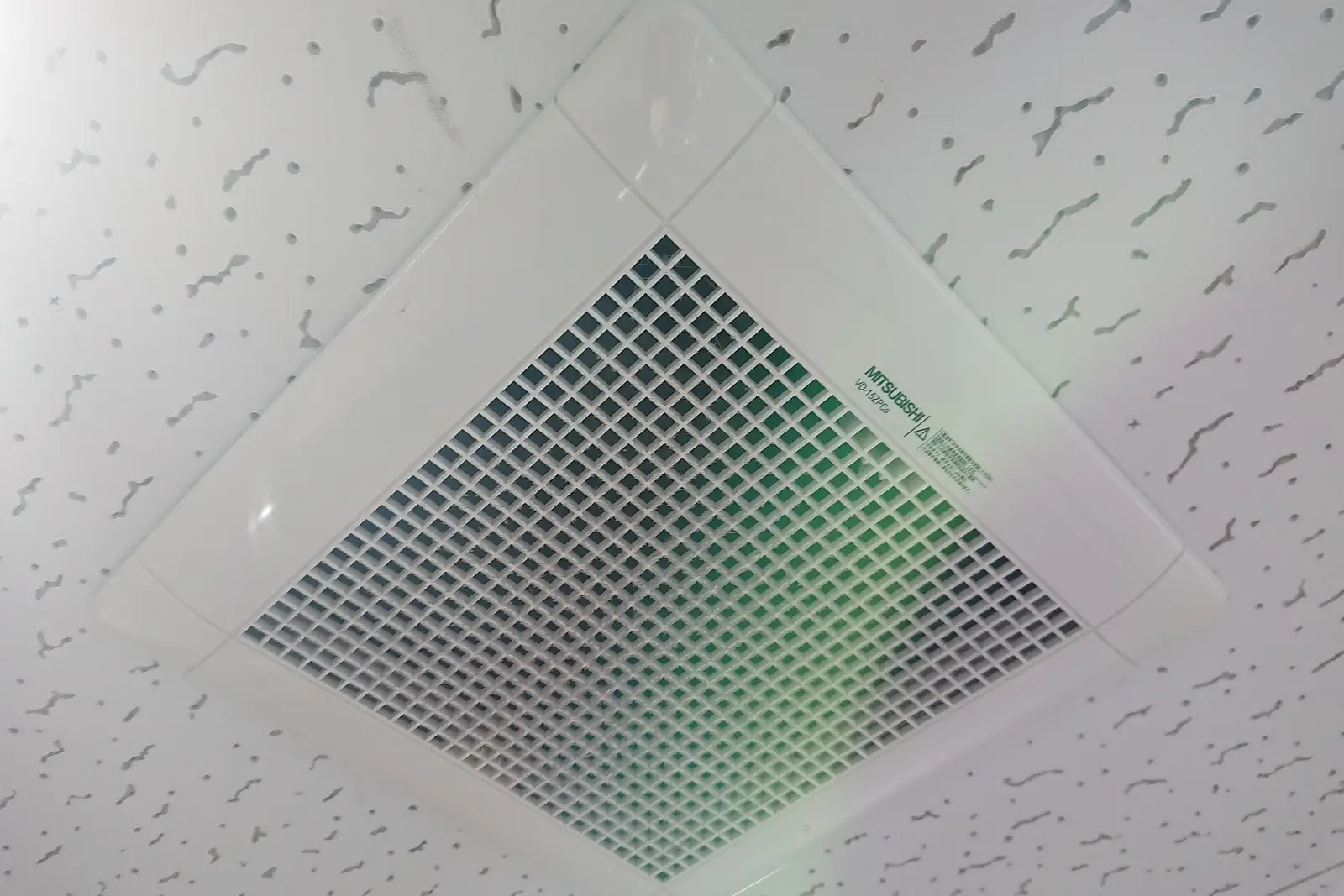
You check into an apartment rental in Japan and find a small round vent high on the bedroom wall, and a fan grille in the ceiling. Why do Japanese apartments have air vents in every room? Because since July 2003, Japan's building law has required new homes to have mechanical ventilation that keeps replacing the indoor air. This guide explains what you are seeing, the problem the law was written for, the numbers in the rule, which buildings it covers, and what to do with the vents during your stay.
What you are seeing
A small round or square vent sits near the top of a wall, often with a dial or slider to close it. In the ceiling of the bathroom, toilet or hallway there is a fan grille, like the one in the photo above. Above the stove there is a hood. Together they move air in through the wall vents and out through the fans.
The short answer
Japanese apartments have air vents because Japan's Building Standards Act has required mechanical ventilation in new homes since 1 July 2003. The rule was written against shikku hausu, "sick house" illness, caused by chemicals released from building materials and furniture. The vents let in fresh air while fans push the old air out.
The problem the law was written for
Rules that took effect in July 2003 added an article to the building law about chemicals inside rooms. A government order names two chemicals for it:
- Formaldehyde, a gas released by some glues, boards and finishes.
- Chlorpyrifos, an insecticide. Building materials with it added are banned in any building with living rooms.
The rule attacks formaldehyde in two ways. First, it limits the materials. The worst-graded materials cannot be used on the inside surfaces of rooms at all, and the middle grades are limited by area. Second, it requires ventilation equipment. The transport ministry, which runs the building law, explains why the second part applies even in a room built with clean materials. Furniture and other things brought into the room also release formaldehyde.
The rules in numbers
- 1 July 2003: the date the rules took effect.
- 0.5 per hour: the fan in a home must be able to move half the room's volume of air every hour.
- 0.3 per hour: the same figure for rooms that are not homes, such as offices.
- 0.12 mg: a material releasing more than this much formaldehyde per square meter per hour, in summer, cannot be used on room surfaces.
- 0.1 mg per cubic meter: the indoor formaldehyde level a room must keep all year to win an exemption by special approval.
- 1/20: separately, every living room needs openings for air of at least one-twentieth of its floor area, or approved ventilation equipment instead.
Are apartments supposed to have vents?
Yes. The ministry says mechanical ventilation is, in principle, required in every building with living rooms. The rule even reaches the space above the ceiling, which must use low-formaldehyde materials or be ventilated too.
Do older buildings have them?
Not necessarily. The 2003 rules apply to buildings started on or after 1 July 2003. Buildings started before that date were not required to add the equipment.
Why does the kitchen have a separate fan?
A different part of the same law covers rooms with a flame. Kitchens, bathrooms and other rooms with a stove, a bath boiler or another burner must have their own ventilation equipment. Small exceptions exist, such as burners sealed off from the room's air. That is why there is a hood above the stove.
What it means for your stay
Leave the wall vents open and the ventilation fan running, even in winter when the air feels cold. The system was sized to replace half the air in your room every hour. It only works while air can come in and go out.
If you are staying in a newer apartment, the same rule shaped the building around you. Japanese homes have other details that surprise visitors, such as front doors that open outward. If your trip includes a hotel instead, the reasons behind Japan's small hotel rooms are explained too.
More on Japan Explained
 JAPAN EXPLAINED3 min read
Japan's Election Vans: Why They Only Shout the Candidate's Name
White vans, loudspeakers and one name on repeat. The election law that makes them sound like that.
 JAPAN EXPLAINED3 min read
Why Do Japanese Front Doors Open Outwards? The Shoes
Doors that swing out toward you. The shoes behind them, and what Japan's building rules actually say.
 JAPAN EXPLAINED3 min read
Why Do Japanese Taxis Have Lace Seat Covers? The Clean Rule
White lace on the back seat. The national rule on clean taxis, and how the covers got there.