Why Do Japanese Crosswalks Chirp? The Cuckoo and Chick Rule
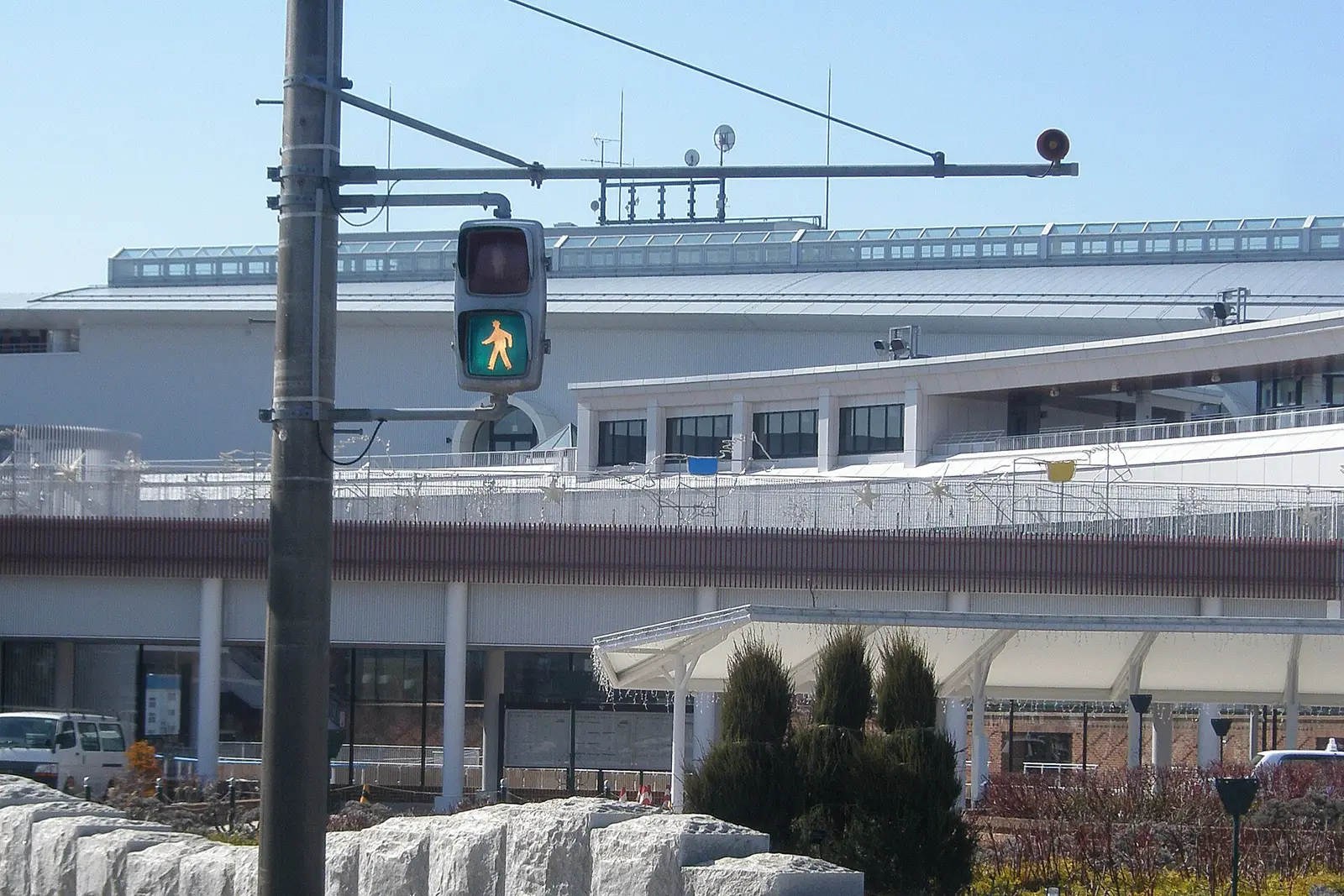
You are waiting at a crossing in Japan, the walk light turns green, and a bird starts to sing from a pole above your head. Why do Japanese crosswalks chirp? Because a national police guideline uses bird-like calls to tell blind pedestrians that the light is green and to guide them straight to the other side. This guide explains what you are hearing, where the sounds come from, the rules in numbers, why some crossings go quiet, and what to do when you hear one.
What you are seeing
The pedestrian light turns green. A short piyo, a chick's cheep, comes from a speaker on one side of the road. A moment later a "piyo-piyo" answers from the other side. At the next crossing you may hear kakko, a cuckoo call, and then "ka-kakko". When the light turns red, the birds go quiet.
These are not real birds. They are sound devices fixed to the signal poles.
The short answer
Japanese crosswalks chirp to help blind and low-vision people cross the road. The bird-like sounds play only while the walk light is green, and they come from speakers at both ends of the crossing. A blind pedestrian can hear that it is time to go, then walk toward the sound from the far side to keep a straight line.
Where the sounds come from
No law names these sounds. They come from a guideline that Japan's National Police Agency sends to every prefectural police force. The current version is dated 26 March 2024.
The choice is older. In 1975, after users asked for one national system, a committee of experts, groups of blind people, the police and the health ministry ran surveys. They picked two tunes and two bird-like sounds: the chick call "piyo-piyo" and the cuckoo call "kakko".
How the call and answer works
The guideline says new devices must make the two ends of the crossing "call to each other" with different sounds. One speaker plays "piyo" and the other answers "piyo-piyo", or "kakko" and "ka-kakko". The sounds alternate, so a blind pedestrian can tell the near side from the far side. Older devices are to be changed over to this method over time.
The national guideline does not say which direction gets which bird. Some prefectures decide this themselves. In Kagawa, for example, every chick sound now runs north to south and every cuckoo east to west. The police finished that change in February 2025.
The rules in numbers
- 3.3 m: the standard height of each speaker.
- About 1 m back from the kerb, in the middle of the crossing's width.
- 2 ends: a speaker at each end of every crossing it guides.
- 21,644 crossings with sound devices nationwide at the end of March 2026: 21,378 bird-like and 266 with a tune.
- 1975: the year the national sounds were chosen.
Why do some crossings go quiet at night?
The guideline asks police to limit noise for neighbours, using timers, volume settings and push buttons. It also notes that blind people say the sound matters most at night, when there is less traffic to listen to. So the hours differ by crossing. In one prefecture's published list, most crossings sound from 7:00 until 19:00 or 22:00.
Why do some crossings play a tune instead?
They are the older type. The 1975 committee chose two folk melodies as well as the bird calls, but tunes now make up only about 1% of devices. The guideline's call-and-answer method uses only the bird sounds.
Does a change in sound mean the light is about to turn red?
It can. The guideline allows a different sound during the flashing green, to warn that red is coming. Some crossings start the sound with a push button. Then the box should beep to show where it is, and again when the button works.
When you hear birds at a Japanese crossing
At a big scramble crossing, such as the one in Shibuya's station area, the guideline uses all four sounds in turn. It gives no sound guidance for the diagonal crossing. Japanese stations use bird calls in a similar way: why train stations play bird sounds.
Cross as you would anyway, and keep the space around the speakers and the yellow tactile paving clear. If you are driving, Japan's Road Traffic Act says to stop or slow down for a blind person with a white cane or guide dog.
More on Japan Explained
 JAPAN EXPLAINED3 min read
Japan's Election Vans: Why They Only Shout the Candidate's Name
White vans, loudspeakers and one name on repeat. The election law that makes them sound like that.
 JAPAN EXPLAINED3 min read
Why Do Japanese Front Doors Open Outwards? The Shoes
Doors that swing out toward you. The shoes behind them, and what Japan's building rules actually say.
 JAPAN EXPLAINED3 min read
Why Do Japanese Taxis Have Lace Seat Covers? The Clean Rule
White lace on the back seat. The national rule on clean taxis, and how the covers got there.