Why Do Japanese Hotel Rooms Have Torches? The Fire Rule
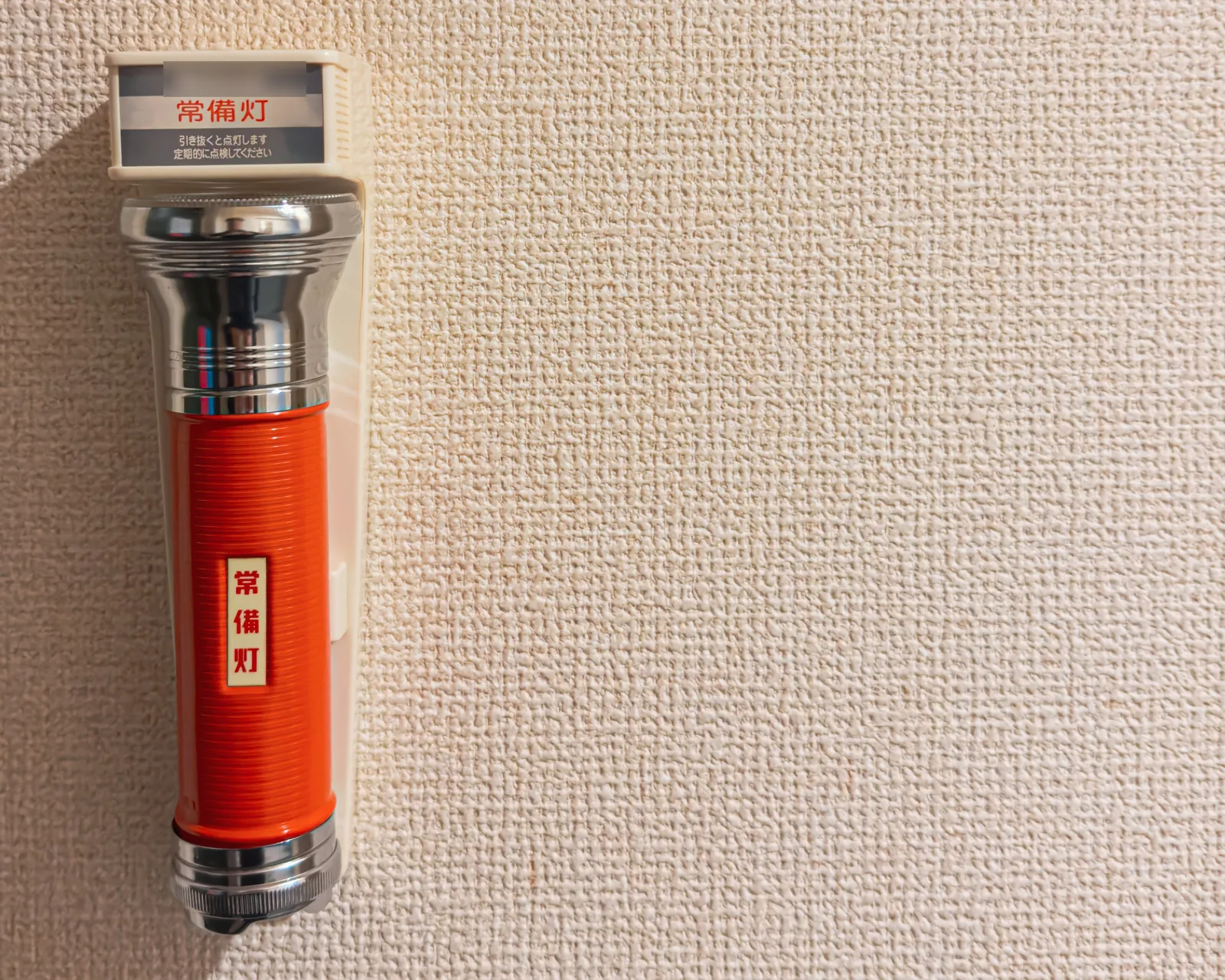
You check into a hotel in Japan and find a small torch, a flashlight, clipped to the wall by the bed. Why do Japanese hotel rooms have torches? Because local fire codes tell hotels to keep a portable light where guests sleep, so you can find the exit in the dark. This guide explains what you are seeing, the rule behind it, the numbers, what else your room must have, and what to do on your first night.
What you are seeing
The torch is usually in a plastic holder on the wall, near the bed or the door. The one in the photo has a label with the word jōbitō, a light that is always kept ready. The label says it lights up when you pull it out, and asks staff to check it regularly.
It is not a gift or a reading light. It belongs to the room.
The short answer
Japanese hotel rooms have torches because city fire codes require them. The rules tell hotels, ryokan inns and other lodgings to keep portable lights where guests sleep, as a step for escaping a fire. If the power fails at night, you still have a light to find the door and the stairs.
What the fire codes say
In Japan, each city writes its own fire prevention code. We read two: Nagoya's and Fukuyama's, a city in Hiroshima Prefecture. Both use almost the same words.
They list places where many people gather, such as theaters, large stores, hotels, hospitals and underground malls. These places must take steps needed for escape. For hotels, the codes say three things:
- Post an escape route map where many people will see it.
- Keep portable megaphones and lights where staff work.
- Keep portable lights where guests sleep.
Fukuyama's code also asks for a map of the escape route from each guest room, kept with the light. A map posted on the room's door counts.
The numbers
From the two cities' rules and their guidance notes:
- 1 light per guest room, at least.
- 1 per 5 people in a large shared room. Nagoya lets a room stop at 10 lights.
- 1 light per night-shift worker in the staff room, in Nagoya.
- Red and green: Nagoya's escape maps mark "you are here" in red and two escape routes in green.
- About B5 size or larger for the map inside each room, in Nagoya.
The light in the ceiling, too
Japan's national building code adds a second layer. Hotels are on its list of buildings that need emergency lights in rooms and in the corridors to the exits, with some exceptions. These lights must keep working when the power fails. They must light the floor to at least 1 lux, enough to see where you walk.
So the ceiling light shows you the way out. The torch is the light you can carry.
Is the torch only for earthquakes?
No. English articles often say it is for earthquakes. The city codes we read put it under fire safety and escape. A light that works without power helps in any blackout, whatever the cause.
What else must a Japanese hotel room have for emergencies?
Hotels and ryokan registered under Japan's international tourist hotel law must post a map of the escape route and the fire equipment in each room. They must also keep a safety guide in Japanese and a foreign language in the room.
On your first night
- Find the torch before you sleep, and pull it out once to see that it lights.
- Read the map on the door. Count the doors between your room and the stairs.
- Put it back in its holder, so you and the next guest can find it.
- Call 119 in an emergency.
In a small Japanese hotel room, the bed is often a step from the door, so the route is short. For why many Japanese exit doors swing out, see why Japanese front doors open outward.
More on Japan Explained
 JAPAN EXPLAINED3 min read
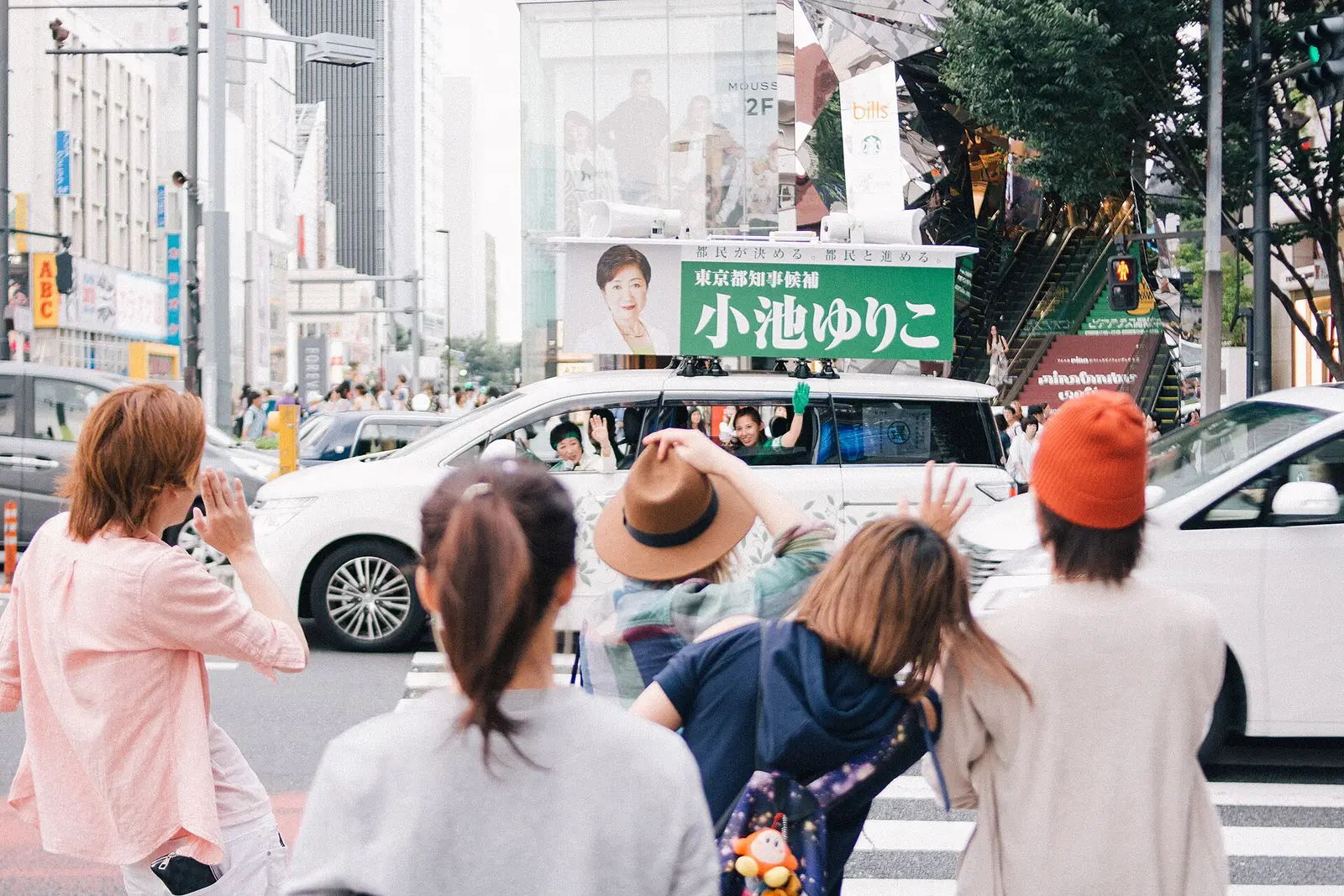
Japan's Election Vans: Why They Only Shout the Candidate's Name
White vans, loudspeakers and one name on repeat. The election law that makes them sound like that.
 JAPAN EXPLAINED3 min read
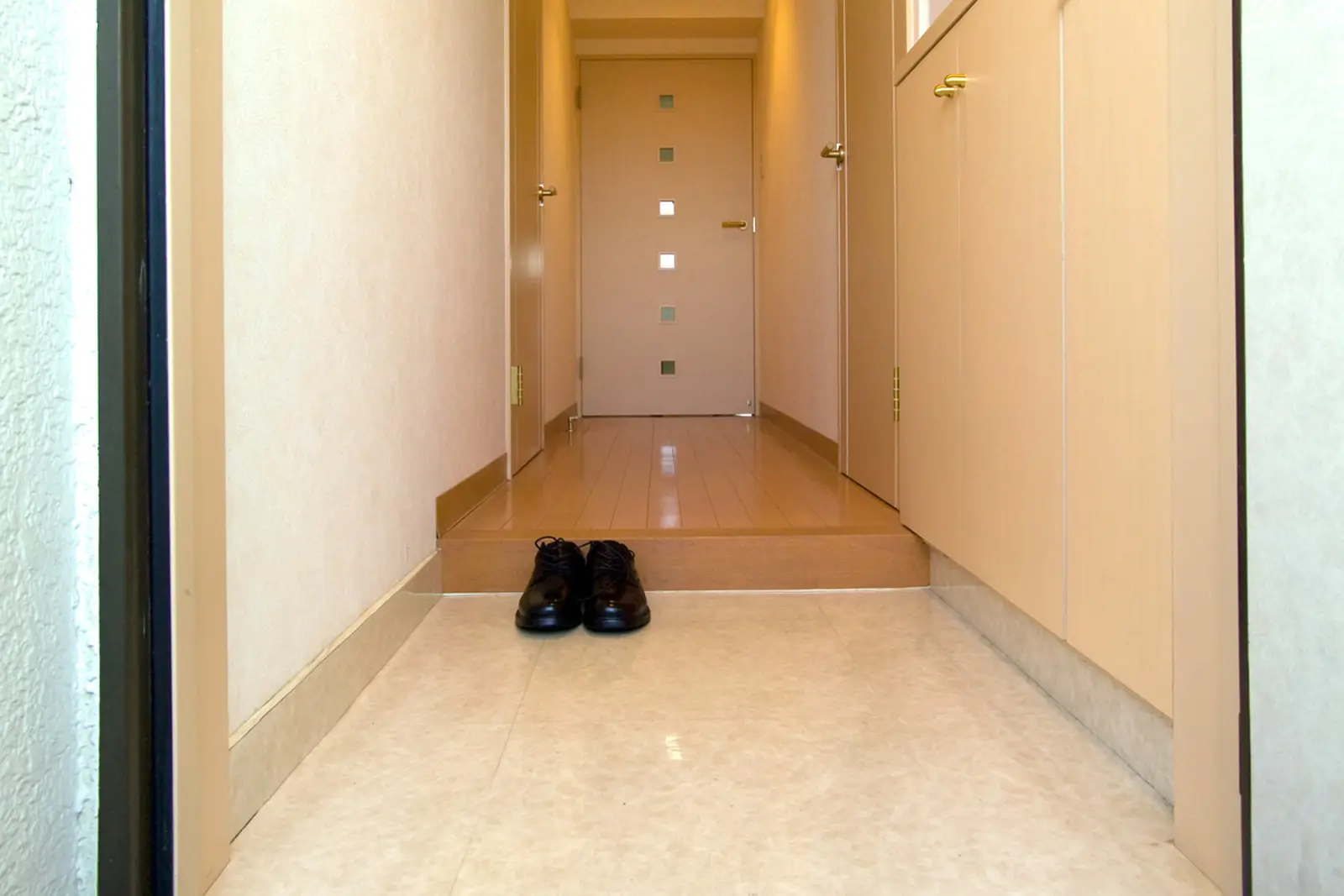
Why Do Japanese Front Doors Open Outwards? The Shoes
Doors that swing out toward you. The shoes behind them, and what Japan's building rules actually say.
 JAPAN EXPLAINED3 min read
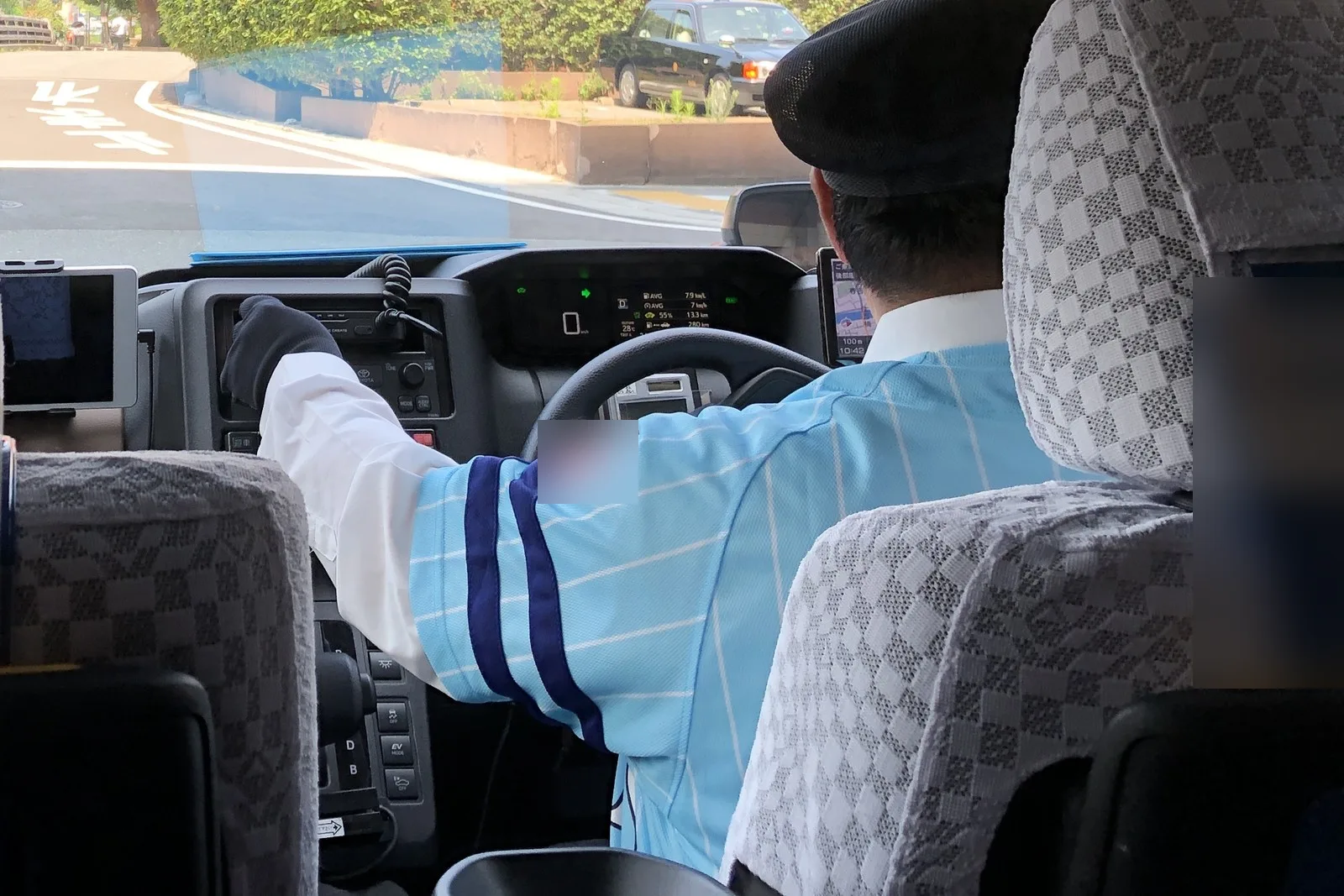
Why Do Japanese Taxis Have Lace Seat Covers? The Clean Rule
White lace on the back seat. The national rule on clean taxis, and how the covers got there.