Why Do Japanese School Kids Wear Yellow Hats? The Safety Reason
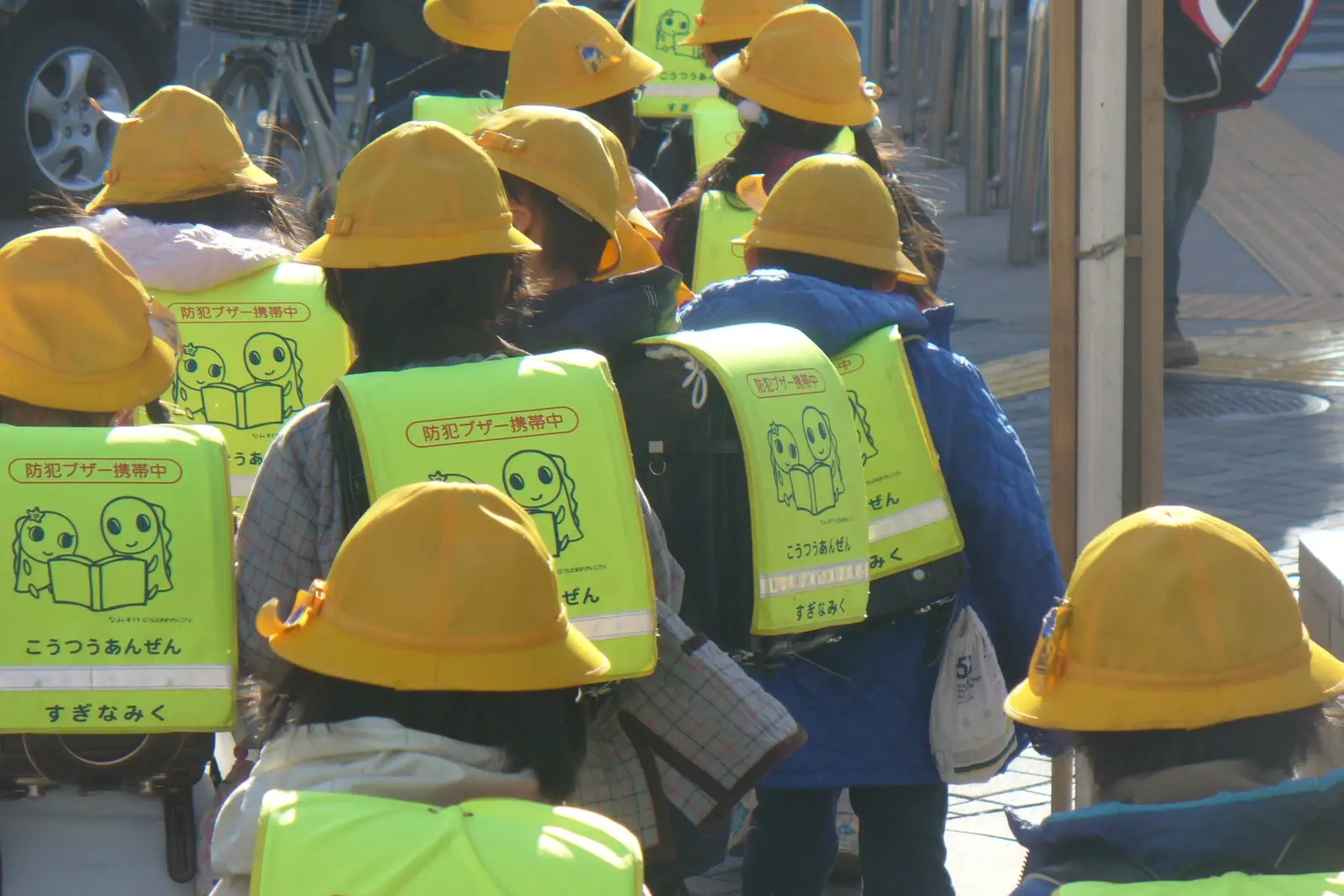
You are on a quiet street in Japan in the afternoon, and a line of small children walks past in matching bright yellow hats. Why do Japanese school kids wear yellow hats? So drivers can see them, because the youngest pupils are the children most often hurt while walking. This guide explains the accident numbers, what the law asks of drivers, the yellow badge every new pupil gets, and what to do when you drive or walk near them.
What you are seeing
Small children walk in a loose line along a narrow street. Each one wears a round yellow hat with a brim. Many also have a yellow or yellow-green cover on their randoseru, the stiff school backpack. Some covers say kotsu anzen, traffic safety, in big letters.
The short answer
Japanese school kids wear yellow hats so drivers can spot them from far away. Among primary pupils, first and second graders are the ones most often killed or seriously hurt while walking. Japanese traffic law also tells drivers to stop or slow down for a child walking alone, so a child must be easy to see.
Why the youngest children are at risk
Japan's Cabinet Office publishes a yearly traffic safety white paper. Its 2025 edition looked at five years of accidents, from 2020 to 2024. Primary pupils were mostly hurt on foot, not in cars.
The youngest were hit hardest. Pedestrian deaths and serious injuries were highest in the first and second grades, then fell each year after that. By the fifth grade, most injured pupils were on bicycles instead.
The trips home are worse than the trips to school. More than twice as many pupils were hurt on the way home as on the way to school.
The numbers
- 446: first graders killed or seriously injured on foot, 2020 to 2024
- 453: second graders in the same five years
- 55.6%: share of all injured primary pupils who were walking
- 484 vs 232: pupils hurt walking home vs walking to school
- 27 to 61: first graders hurt on foot in April vs October
- 16,765: road deaths in 1970, Japan's worst year, when people called it a "traffic war"
What the law asks of drivers
Japan's Road Traffic Act defines a jido, a child, as anyone from 6 to 12. Parents must not let a child under six walk on a busy road without an adult. The law sets no such rule for school-age children, so they can walk to school on their own.
The duty then falls on drivers. When a child is walking without an adult, a driver must stop or slow down and let the child pass. The law does not mention hats. But a driver can only slow down for a child they have seen, and a yellow hat makes a small walker easy to notice.
What is the yellow badge on new pupils?
Every spring, a group of four banks and insurers gives a yellow traffic safety badge to new first graders across Japan. Each badge comes with accident insurance for the walk to and from school. The program reached its 60th year in 2024.
When are pupils most at risk on foot?
In the afternoon. Pupils hurt while walking were most often hit between 2 pm and 4 pm. For adults the peak comes later, in the evening.
Has it worked?
The numbers have fallen. Primary pupils killed or seriously injured on the road dropped from 1,185 in 2015 to 686 in 2024. That is a fall of about 42%.
If you see them
If you rent a car, drive slowly on narrow streets around 2 pm to 4 pm, and stop when a yellow hat comes near the road edge. In recent years, more than 3 in 10 children killed or badly hurt on foot had run out into the road. On foot, give them room on the walking strip, and do not take photos of children. To see how these routes are marked on the road, read our guide to the green lines painted on Japanese school routes.
More on Japan Explained
 JAPAN EXPLAINED3 min read
Japan's Election Vans: Why They Only Shout the Candidate's Name
White vans, loudspeakers and one name on repeat. The election law that makes them sound like that.
 JAPAN EXPLAINED3 min read
Why Do Japanese Front Doors Open Outwards? The Shoes
Doors that swing out toward you. The shoes behind them, and what Japan's building rules actually say.
 JAPAN EXPLAINED3 min read
Why Do Japanese Taxis Have Lace Seat Covers? The Clean Rule
White lace on the back seat. The national rule on clean taxis, and how the covers got there.