Why Do Japanese Toilets Make Noise When You Sit? 4 Sounds
You sit down in a Japanese restroom and, before you touch a button, the toilet hisses, hums or starts playing the sound of running water. Why do Japanese toilets make noise when you sit on them? Because the seat senses you, and sitting starts small machines that clean the bowl, clear the smell and cover your sounds. This guide explains what you are hearing, the four sounds one by one, the numbers, who decides the settings, and what to do when it happens.
What you are seeing
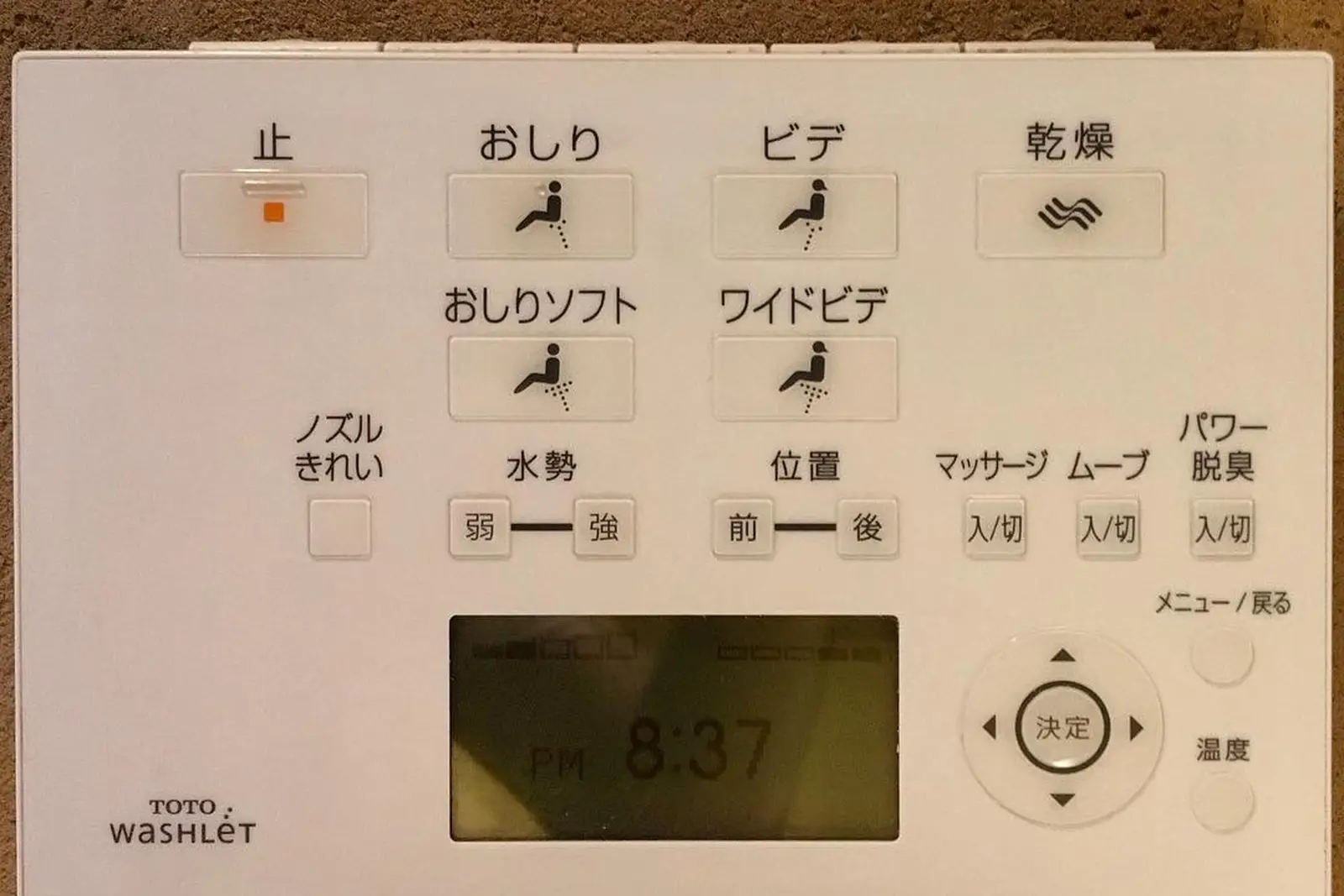
The toilet has an electronic seat with a control panel, either on the side or on the wall. In the photo above, the buttons are labeled only in Japanese. The panel runs the spray and the dryer.
The seat also has a sensor. It knows when someone sits down and when they stand up. That is when the noises start.
The short answer
Japanese toilets make noise when you sit on them because the seat sensor switches on small machines. A short hiss is a mist that wets the bowl. A hum is a deodorizing fan. A running-water sound is a privacy device. None of them means you pressed something wrong.
The four sounds, one by one
1. A short hiss: the mist. The maker TOTO calls this Premist. When you sit, the toilet sprays a fine mist of tap water onto the bowl before you use it. The wet surface makes dirt less likely to stick and easier to remove.
2. A low hum: the fan. Many seats have a deodorizer. A TOTO owner's manual lists two settings: deodorizing automatically after you sit, and a stronger power deodorizer after you stand up. The photo shows the power deodorizer button, labeled pawā dasshū, power deodorizer.
3. Running water that is not real: the sound princess. TOTO's Otohime, meaning "sound princess," is a gion sōchi, a sound-imitating device. TOTO describes it as privacy for people who do not want others to hear their toilet sounds. On some TOTO public models, its button sits on the same wall panel as the flush button.
4. A flush you did not press: auto flush. Some toilets flush on their own after you stand up. In the TOTO manual, the owner can set the wait to about 5, 10 or 15 seconds.
The numbers
- 13 liters: water per flush on an older TOTO toilet sold from 1987 to 2001.
- 4.8 liters: a full flush on TOTO's GG toilet, released in 2018. A small flush is 3.6 liters.
- 5, 10 or 15 seconds: the auto flush delays in the TOTO manual.
- 2018: TOTO made the Otohime sound device standard on a seat model for public restrooms.
- 8: main functions with standard symbols agreed by Japan's restroom industry group, such as flush and rear spray.
Who decides what your toilet does
The building owner sets most of this, not you. In the TOTO manual, the automatic deodorizer, the auto flush and the delay are each switched on or off in a settings mode.
Makers also design for public use. TOTO's 2016 hotel seat came with a remote in Japanese and English and a usage label in four languages. In 2023, TOTO offered a version with the sound device for the wider stalls inside men's and women's restrooms that wheelchair users can also use.
Is the water sound a real flush?
No. The Otohime is a sound-imitating device, so it plays a recording of water. No water goes down the toilet.
Why does the toilet flush by itself?
Because the seat sensor knows you stood up. If auto flush is switched on, the toilet flushes after a short wait set by the owner.
If you hear it
- Stay seated and relax. A hiss or hum right after you sit is normal.
- Want privacy? Look on the wall panel for a second button near the flush. On some public toilets, that is the sound device.
- Something spraying that you did not want? Press 止 (tome, stop). In the photo, it is the button with the orange mark.
- Leaving? Wait a few seconds before pressing flush. The toilet may do it for you.
If the stall has no seat at all, you have found the older kind, explained in why some Japanese toilets are on the floor.
More on Japan Explained
 JAPAN EXPLAINED3 min read
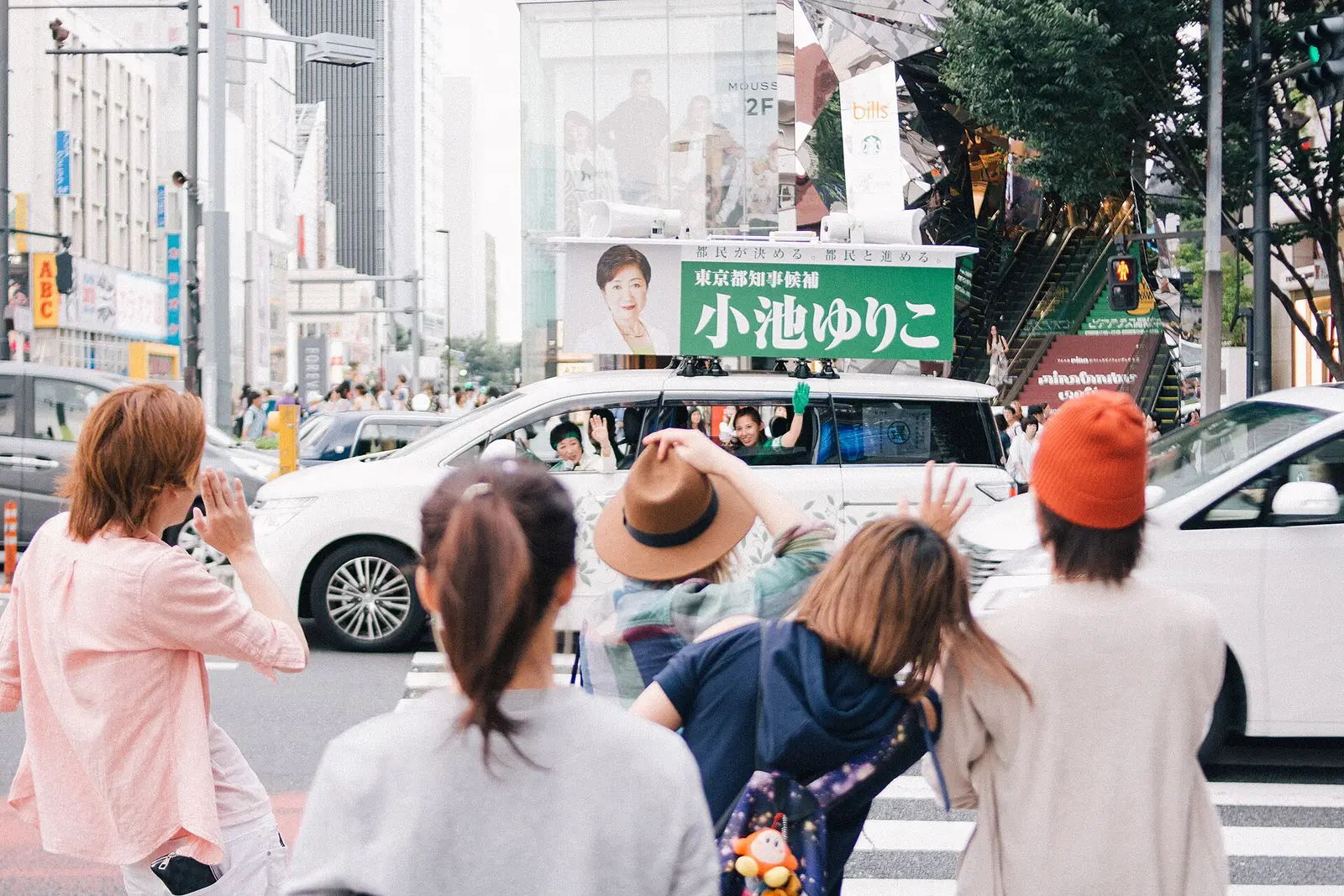
Japan's Election Vans: Why They Only Shout the Candidate's Name
White vans, loudspeakers and one name on repeat. The election law that makes them sound like that.
 JAPAN EXPLAINED3 min read
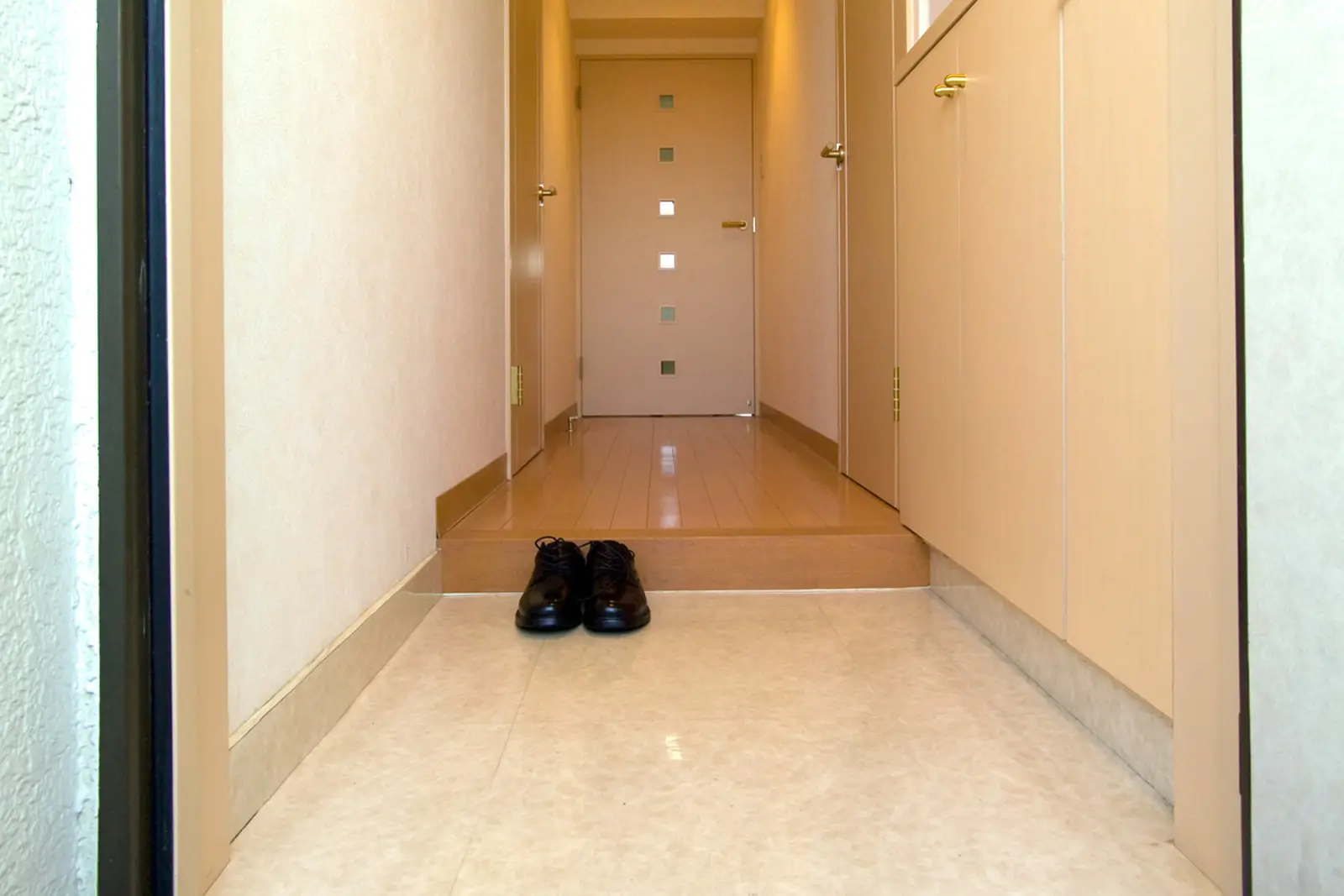
Why Do Japanese Front Doors Open Outwards? The Shoes
Doors that swing out toward you. The shoes behind them, and what Japan's building rules actually say.
 JAPAN EXPLAINED3 min read
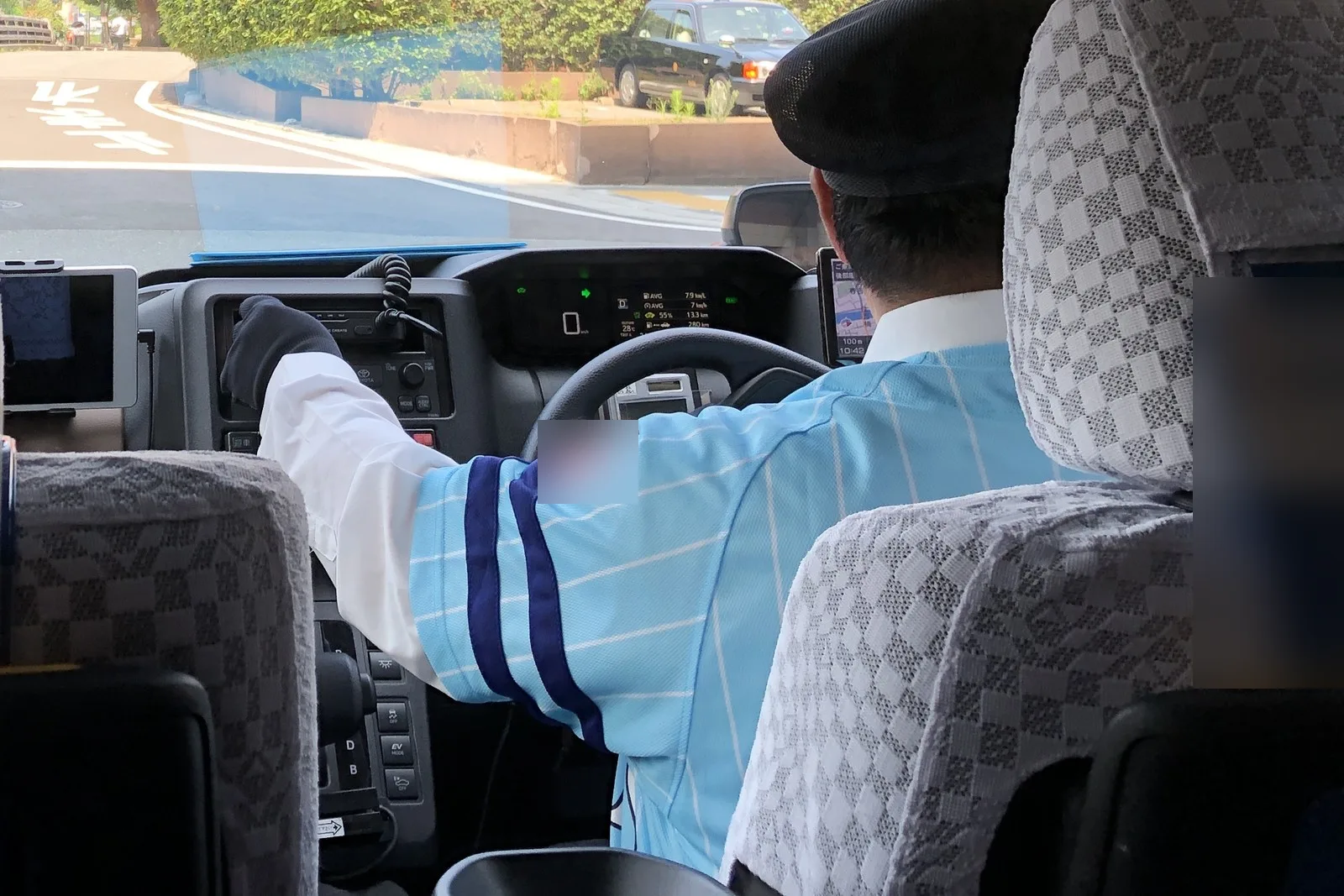
Why Do Japanese Taxis Have Lace Seat Covers? The Clean Rule
White lace on the back seat. The national rule on clean taxis, and how the covers got there.