Why Do Japanese Toilets Have a Sink on Top? How It Works
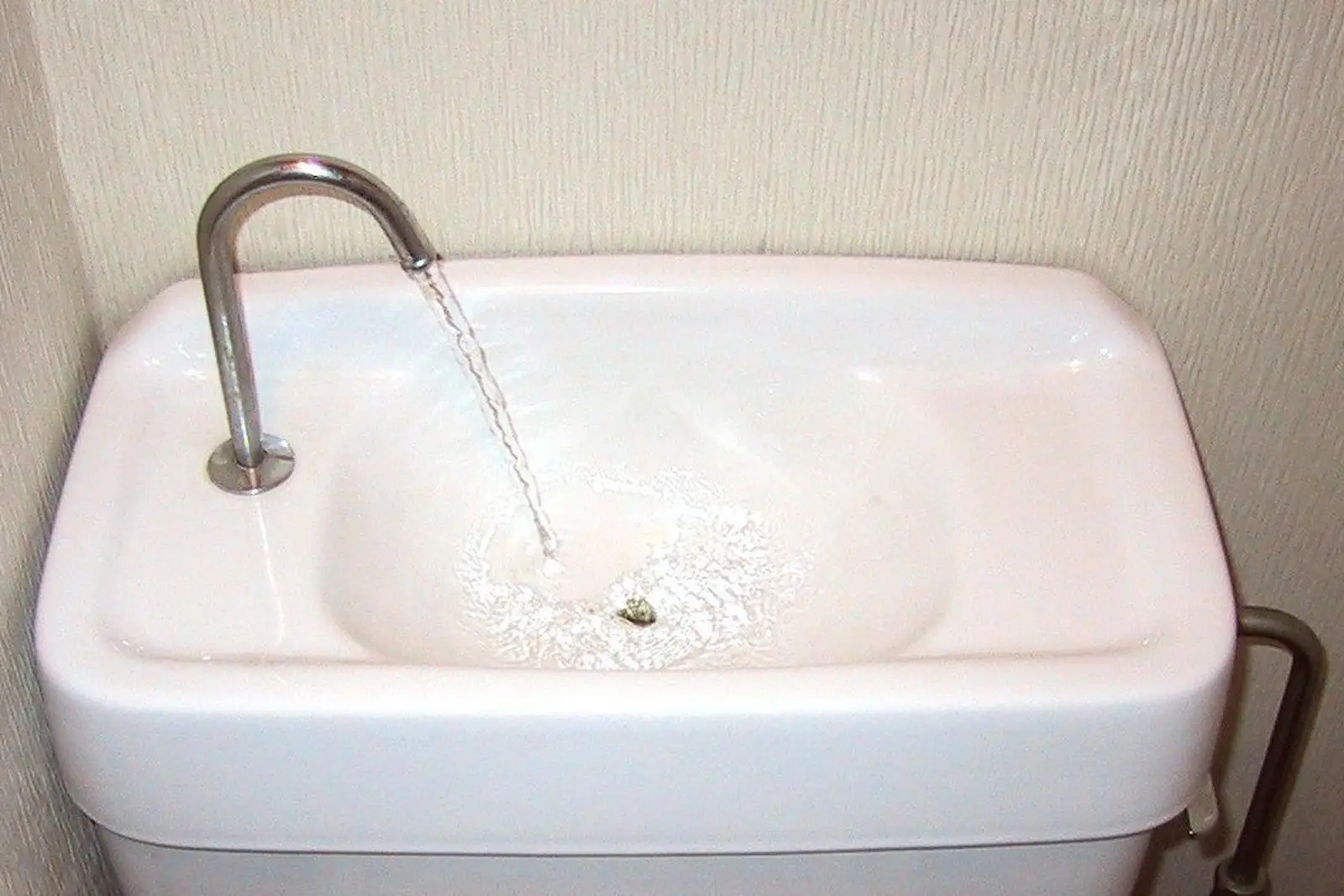
You flush a toilet in a Japanese home or small guesthouse, and a curved tap on top of the tank starts running by itself. Why do Japanese toilets have a sink on top? Because the tap is the tank's refill line, so the water washes your hands on its way into the tank and flushes the toilet next time. This guide explains what you are seeing, how the water moves, the numbers, why public restrooms skip it, and what to do when the tap runs.
What you are seeing
The toilet has a tank behind the seat, and the lid of the tank is shaped like a small basin. A metal spout curves over it. There is no handle to turn.
You flush, and water starts pouring from the spout. It drains through a hole in the basin. After a while, it stops on its own.
The short answer
Japanese toilets have a sink on top because the tap is part of the tank's refill system. After a flush, clean water from the supply pipe flows out of the spout, over your hands, and down into the tank. The same water then flushes the toilet next time. You get a hand wash without using extra water.
How the water moves
Inside every tank is a refill valve, called a bōru tappu (ball tap). It opens when the water level drops and closes when the tank is full.
On a tank with a sink, a short hose joins this valve to the spout. A Japanese maker's repair guide tells owners to unclip that hose before lifting the lid. So the water you wash with is the tank's own fresh supply, on its way in.
That is why the tap has no handle. It runs only while the tank is refilling.
The numbers
- About 60 seconds: how long a 4.8-liter tank takes to refill, according to the toilet maker TOTO.
- 6 to 8 liters a minute: the usual flow into a tank, in the same TOTO document.
- 4.8 liters: a full flush on TOTO's standard toilet from 2018. A small flush is 3.6 liters.
- 13 liters: a flush on an older TOTO toilet sold from 1987 to 2001. Less water per flush means a shorter wash.
- ¥8,000: the extra list price for the version with a hand sink, on TOTO's 2018 standard toilet set.
Why makers keep it
When TOTO updated its standard toilet in 2018, it sold two tanks. The hand-wash version got a deeper basin, so hands are easier to wash and water splashes less. The version without a sink got a tank 61 mm lower, for a roomier toilet space.
So the sink is a choice, not a rule. Buyers pay a little more to get it. The seat on top is a separate part, which is where the sounds Japanese toilets make when you sit come from.
Is the water from the toilet sink clean?
Yes, in the sense that it comes straight from the supply pipe through the refill valve. It has not been in the tank or the bowl yet.
Why do some Japanese toilets not have a sink?
Many public restrooms use a flush valve, a valve that flushes straight from the pipe, instead of a tank. TOTO explains that it needs a thick water pipe and can flush again right away. With no tank to refill, there is no water to borrow. Buyers can also choose the lower tank without a sink.
When the tap runs
- Flush first, then wash. The water only comes after a flush.
- Do not look for a handle. There is none. Hold your hands under the spout while it runs.
- Wait for it to stop. It ends when the tank is full, after about a minute.
- Do not block the drain. The water has to reach the tank for the next flush.
If the toilet in front of you has no tank at all and sits on the floor, it is the older kind, explained in why some Japanese toilets are on the floor.
More on Japan Explained
 JAPAN EXPLAINED3 min read
Japan's Election Vans: Why They Only Shout the Candidate's Name
White vans, loudspeakers and one name on repeat. The election law that makes them sound like that.
 JAPAN EXPLAINED3 min read
Why Do Japanese Front Doors Open Outwards? The Shoes
Doors that swing out toward you. The shoes behind them, and what Japan's building rules actually say.
 JAPAN EXPLAINED3 min read
Why Do Japanese Taxis Have Lace Seat Covers? The Clean Rule
White lace on the back seat. The national rule on clean taxis, and how the covers got there.