Why Do Japanese Houses Have Water Bottles Outside?
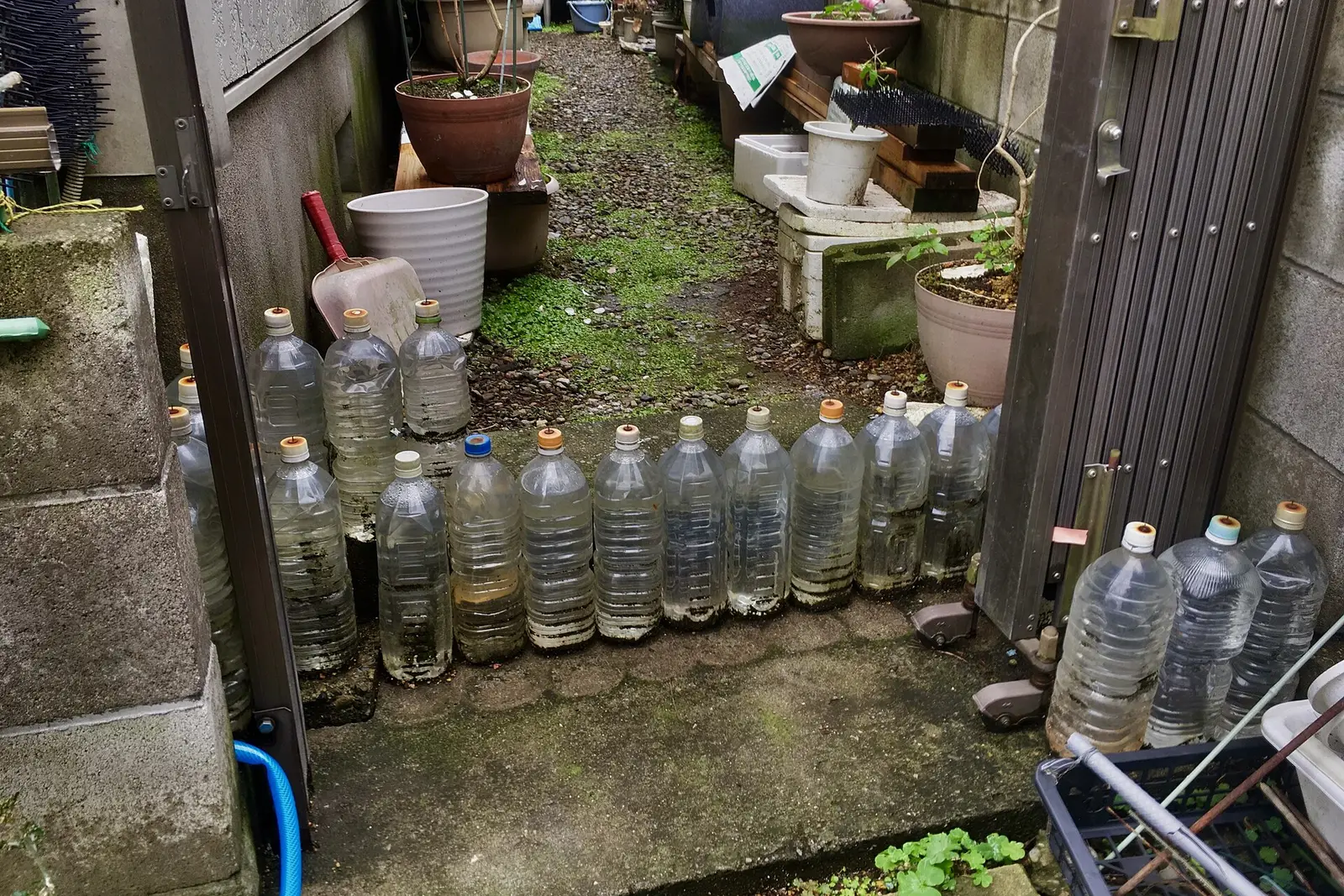
You are walking down a quiet street in Japan and see a row of plastic bottles full of water, lined up along a wall or around a garden. Why do Japanese houses have water bottles outside? Because the owners hope the bottles will keep stray cats away, even though no official source says they work. This guide explains what you are seeing, what city advice says, the fire risk, the rules in numbers, and what to do if you see them.
What you are seeing
Clear plastic drink bottles, filled with water and capped, stand in a line on the ground. You find them along the base of a wall, beside a gate, or around flower pots. In the photo above, the labels are gone and some bottles have turned green inside.
Nobody is going to drink them. They are there for the cats.
The short answer
Japanese houses have water bottles outside because the owners hope the bottles will keep stray cats from using the garden or the doorway as a toilet. The idea is called nekoyoke, cat repellent. Japan's Consumer Affairs Agency names the practice, but tells people to avoid it because of fire.
What city advice says
Japanese cities publish their own advice on keeping cats away. Higashiyamato, a city in western Tokyo, lists 32 methods in its 2024 guide. They include vinegar, coffee grounds, citrus peel, thorny plants, pine cones, sharp gravel and motion-sensor buzzers.
Water bottles are not on the list. The city also says plainly that none of the 32 methods has been proven by science. The list was built from what people shared.
The same guide gives one firm warning. Cats are protected animals in Japan, and a method that counts as cruelty is a crime.
The fire risk
A round bottle full of water works like a lens. Sunlight passing through it can focus on one small spot. If something dry sits there, it can start to burn. In Japanese this is shuuren kasai, a fire from focused sunlight.
In November 2020, Japan's Consumer Affairs Agency warned about these fires. It said a fire investigation had shown that plastic bottles can act as a lens. It then told people to avoid placing water bottles around buildings to keep cats away.
City fire pages describe real cases. Okayama reports a water bottle left in a garden that focused sunlight and set cardboard on fire. Kashiwa, near Tokyo, reports a fire started by a water bottle on a balcony or under the eaves.
The rules in numbers
- 20: reports of fires from focused sunlight in Japan's national accident database, April 2010 to September 2020
- January, November, April: the months with the most cases
- 3 p.m. to 4 p.m.: the hour with the most of these fires in Tokyo Fire Department data
- 32: cat-repellent methods in Higashiyamato's guide, none of them water bottles
- Article 44: Japan's animal welfare law sets up to 5 years in prison or ¥5 million for needlessly killing or injuring a cat
Do water bottles really keep cats away?
No official source we read says they do. Higashiyamato leaves them off its list of 32 methods, and the national consumer agency tells people not to use them.
Why are these fires more common in winter?
Because the sun sits lower in the sky. Okayama and Kashiwa both say winter sunlight reaches deeper into rooms, and Okayama adds that dry winter air helps a small fire spread.
Are these fires common?
No. Okayama says the chance of a fire is not high. The agency still warns that when the sun, the bottle and something dry line up, it can happen anywhere.
If you see them
Leave them where they are. They belong to the house, and the owner chose to put them there.
If you are staying in Japan longer and cats keep visiting your garden, skip the bottles. Check your city office's website for its own advice instead.
You will see the bottles most often while walking Japan's narrow residential streets. Look up as well as down: a few old houses still have rocks on the roof, and those have a reason too.
More on Japan Explained
 JAPAN EXPLAINED3 min read
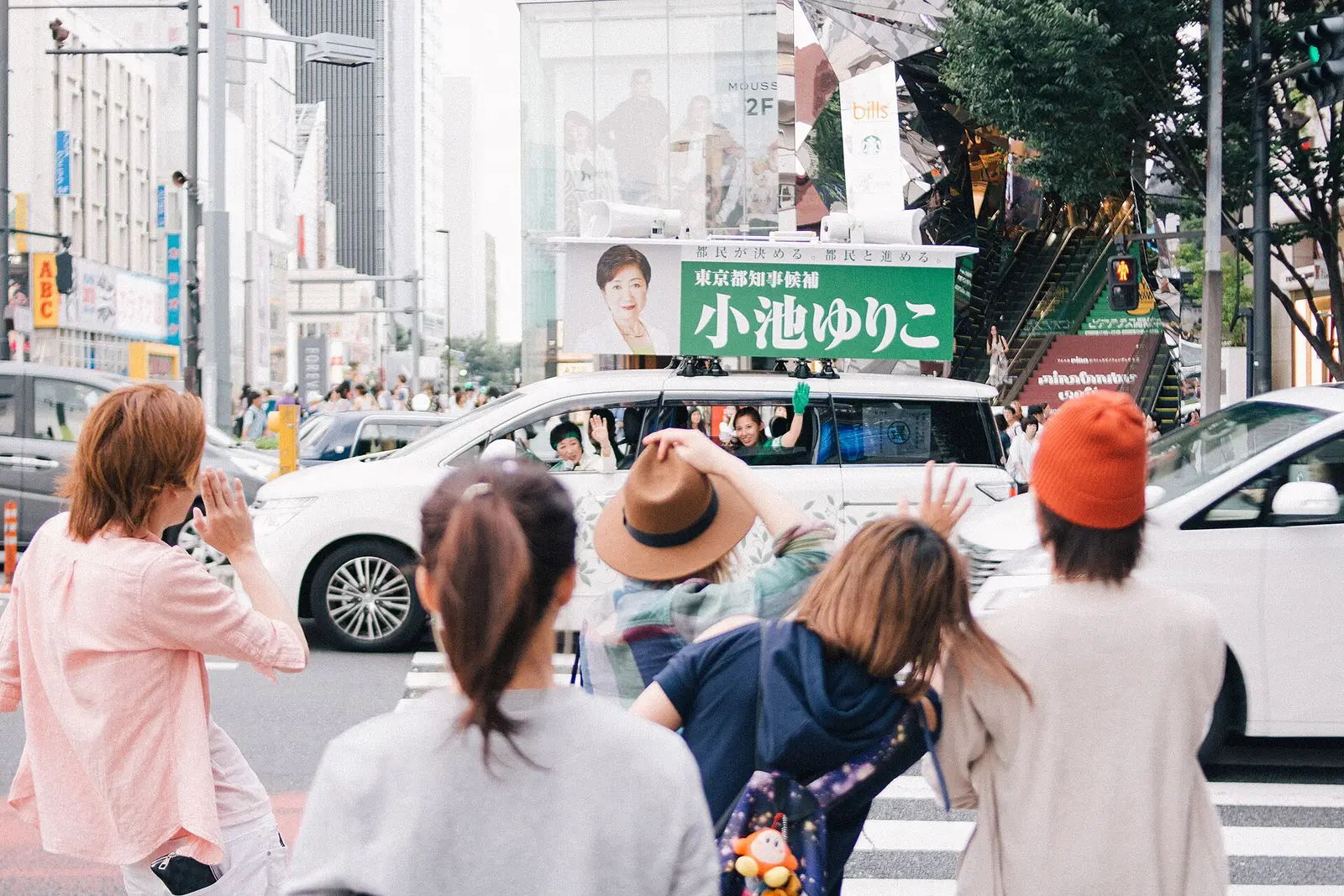
Japan's Election Vans: Why They Only Shout the Candidate's Name
White vans, loudspeakers and one name on repeat. The election law that makes them sound like that.
 JAPAN EXPLAINED3 min read
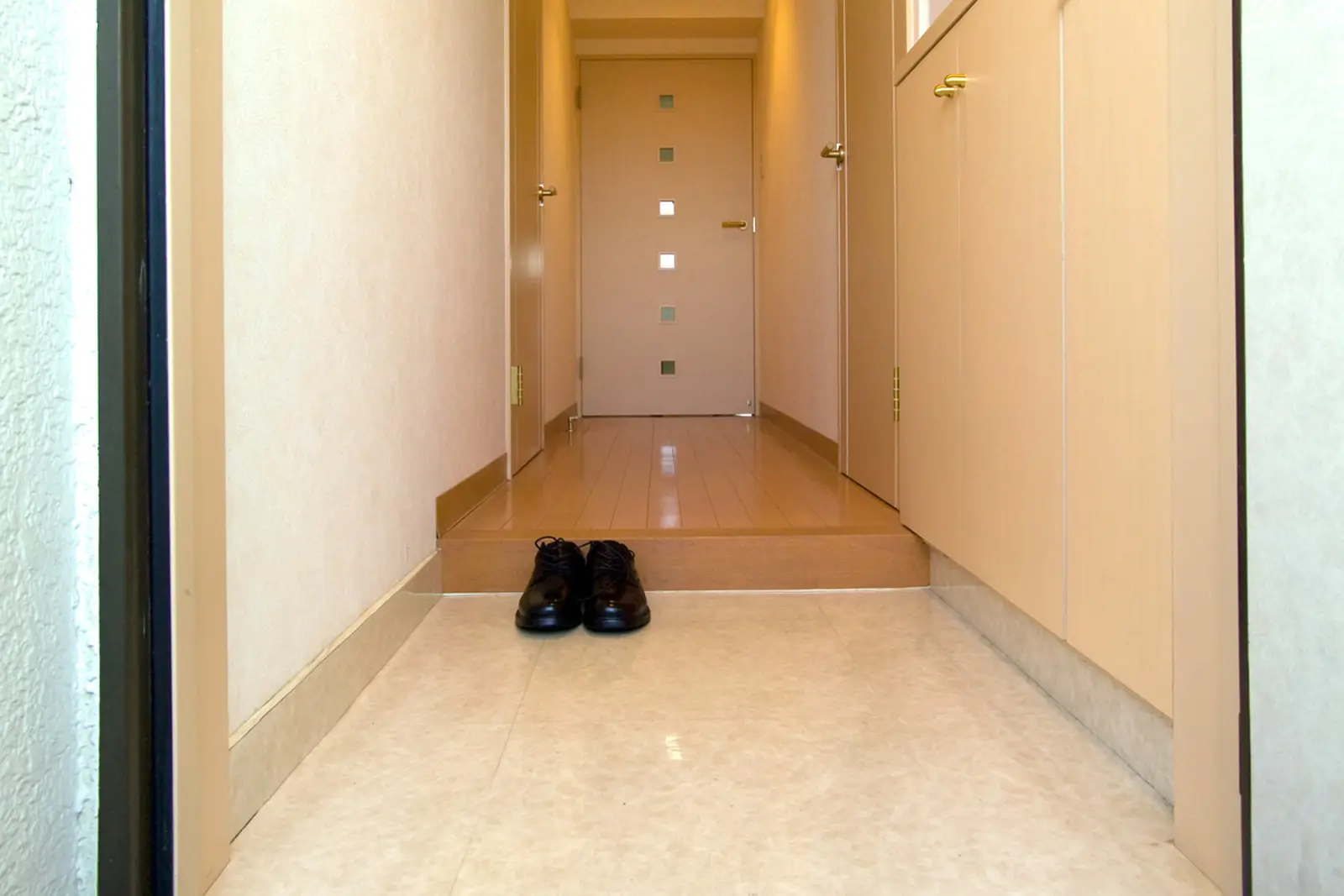
Why Do Japanese Front Doors Open Outwards? The Shoes
Doors that swing out toward you. The shoes behind them, and what Japan's building rules actually say.
 JAPAN EXPLAINED3 min read
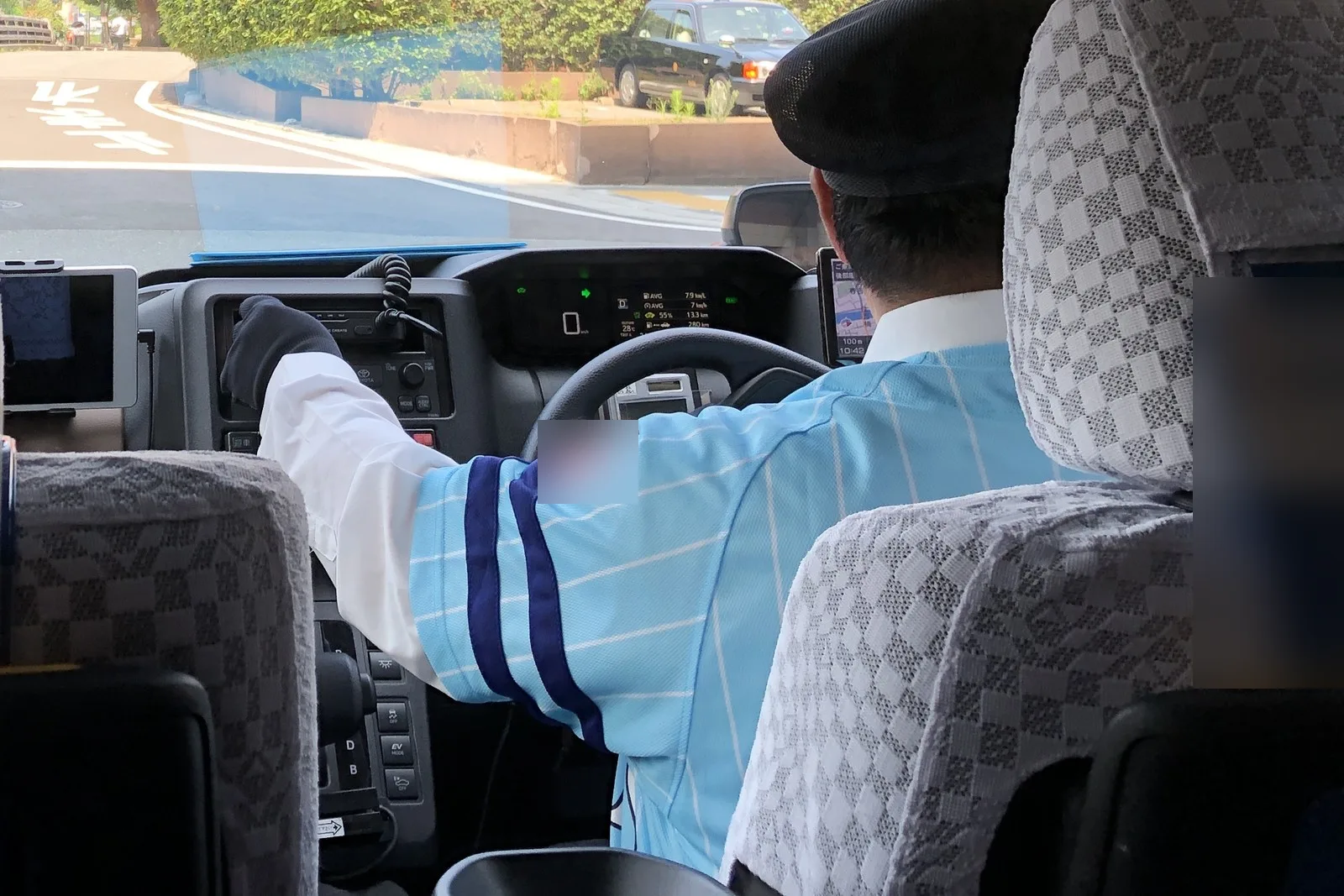
Why Do Japanese Taxis Have Lace Seat Covers? The Clean Rule
White lace on the back seat. The national rule on clean taxis, and how the covers got there.